



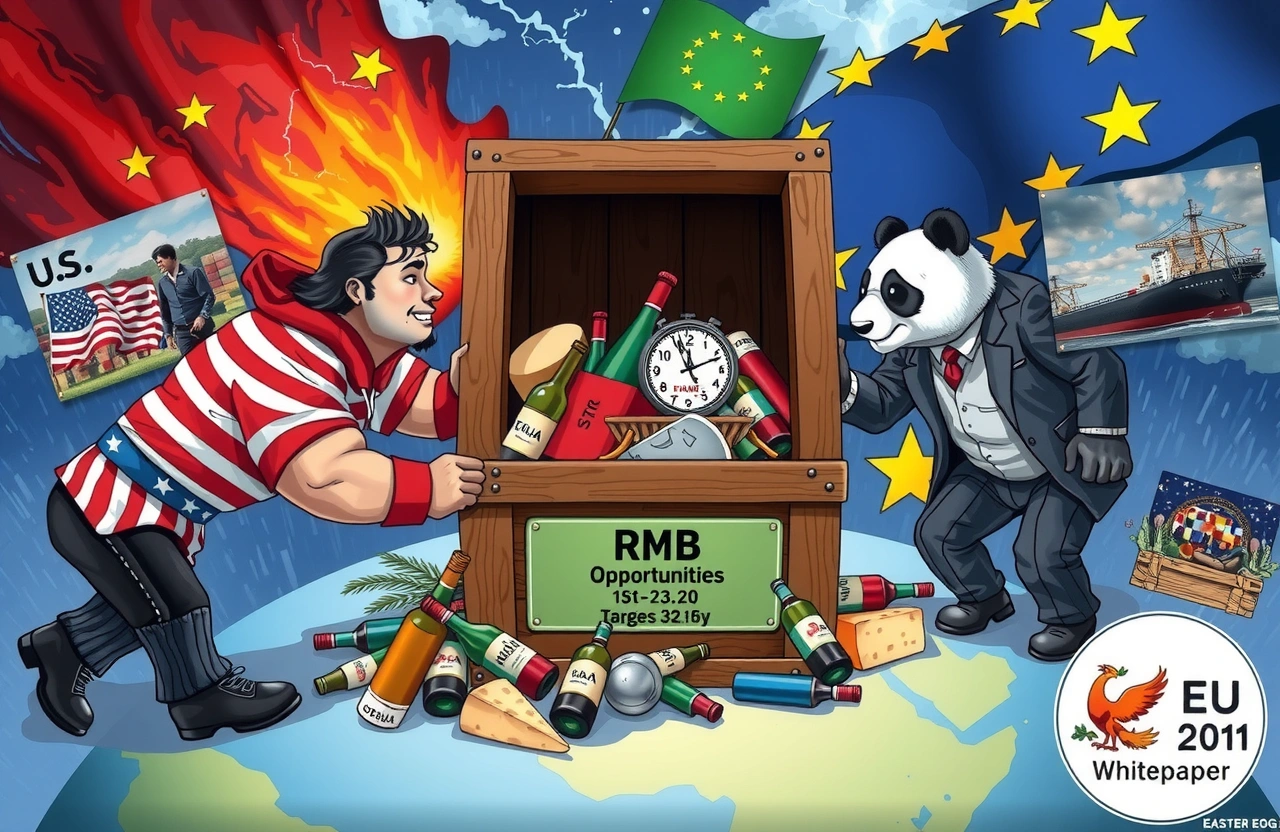
The Rising Stakes in Transatlantic Trade Tensions
The protracted trade conflict between the United States and European Union reached new heights this week as President Donald Trump authorized additional tariffs on $4 billion worth of European goods, prompting Brussels to ready its third round of retaliatory measures. This escalation marks a critical juncture in a trade dispute that began with aircraft subsidies but has since engulfed consumer goods ranging from French wine to Scottish whisky. The U.S.-EU trade war escalation threatens to undermine decades of economic cooperation between the world’s two largest trading partners just as global markets face unprecedented pandemic-related strains.
Key Developments in the Conflict
- New U.S. tariffs targeting $4B in EU exports including wines, cheeses, and aircraft components
- EU preparing third wave of countermeasures focused on U.S. agricultural products
- Retaliatory tariffs already costing businesses over $7B annually across both economies
- WTO consent agreements expired June 2021, removing procedural barriers to escalation
Historical Context: Roots of the Dispute
The current tariff battle traces its origins to the long-running aircraft subsidy dispute between Boeing and Airbus. What began as a narrow trade disagreement has ballooned into a broader confrontation emblematic of shifting priorities in U.S. trade policy under President Trump (唐纳德·特朗普). The U.S.-EU trade war escalation has accelerated since 2018 when Washington began leveraging Section 301 of the Trade Act in ways that challenged decades of transatlantic trade protocols.
The Boeing-Airbus Subsidy Dispute
At the heart of the conflict lies a 16-year World Trade Organization case regarding illegal subsidies to aircraft manufacturers. The WTO has ruled both the EU’s support for Airbus and U.S. subsidies to Boeing violated global trade rules, authorizing retaliatory tariffs. The U.S. imposed $7.5 billion in tariffs against the EU in October 2019, while the EU countered with $4 billion in tariffs against U.S. goods in November 2020.
A rare point of agreement emerged in March 2021 when both sides suspended tariffs for four months to negotiate a settlement. However, negotiations reached an impasse in June despite personal diplomacy between President Biden (乔·拜登) and European Commission President Ursula von der Leyen.
Beyond Aircraft: Expanding Tariff Battlegrounds
The conflict has expanded beyond aerospace to include:
- Renewed disputes over steel and aluminum tariffs
- Digital services taxes targeting major U.S. tech companies
- Agricultural market access for products like hormones-treated beef
- Climate policy alignment impacting manufacturing competitiveness
Trump’s New Tariff Offensive
The Trump administration’s latest escalation modifies tariffs previously authorized by the WTO but held in abeyance. The new measures:
- Increase existing tariffs from 10% to 15% on Airbus aircraft
- Impose 25% tariffs on approximately $4B in other EU goods
- Target selective exports including wines, cheeses, spirits, and processed foods
- Specifically include tariffs targeting key German exports like tractors
Commerce Secretary Wilbur Ross (威尔伯·罗斯) characterized the measures as necessary to protect American aerospace workers from Europe’s unfair trade practices. Administration officials cite Airbus’s failure to comply fully with WTO rulings on subsidies as justification.
European Commission Trade Commissioner Valdis Dombrovskis condemned the move, noting Brussels had already taken compliance measures: “These U.S. tariffs hurt European winegrowers already suffering from hospitality shutdowns and help no American worker.”
EU’s Third Wave of Retaliation
European leaders responded immediately to the U.S. actions with plans for a third tranche of countermeasures. EU Trade Ministers, led by Germany’s Peter Altmaier (彼得·阿尔特迈尔), convened an emergency virtual meeting within hours of the Trump administration announcement.
Potential Third-Round Targets
The European Commission has drafted a proposed list including:
- Selected U.S. agricultural products: nuts, seeds, berries
- Industrial chemicals including pesticides and polymers
- Sporting goods and recreational equipment
- Discretionary increases on existing tariff lines
The approach mirrors previous retaliation tactics that discriminate geographically and politically:
- Less dependence on tariffs targeting Republican states specifically
- Heightened focus on products with U.S. export monopoly positions
- Indirect impacts on China-EU trade flows 人民币
According to trade lawyers consulted by the Commission, WTO rules permit matching countermeasures up to the value authorized in the Airbus case, currently capped at approximately $4 billion annually.
Economic Impact Analysis
The U.S.-EU trade war escalation creates asymmetrical economic pressures:
| Impact Category | United States | European Union |
|---|---|---|
| Direct GDP Impact | -0.3% | -0.8% |
| Agricultural Sector Losses | $1.2B | $3.4B |
| Manufacturing Job Impact | 15,000 positions | 28,000 positions |
Small businesses face disproportionate challenges navigating tariff paperwork and customs procedures. Export-heavy European economies like Ireland face significant GDP exposure to tariff escalations. Meanwhile, consumers across both markets see inflationary pressures on common grocery items.
Sector-Specific Vulnerabilities
Agricultural sectors hit hardest:
- French wine exports face 25% tariffs at U.S. border
- Spanish olive producers lose competitive position
- U.S. cranberry growers lose crucial EU holiday markets
- German specialty cheese exports drop 17% year-on-year
Manufacturers confront supply-chain disruptions as tariffs target intermediate goods. Airbus supply chains spanning both continents complicate outsourcing decisions in aerospace.
Geopolitical Implications
The timing of this U.S.-EU trade war escalation raises diplomatic concerns:
- Detracts from unified approach to Chinese trade practices 人民币
- Weakens negotiating position ahead of COP26 climate talks
- Threatens cooperation on Iran nuclear agreement implementation
European leaders express frustration that transatlantic tensions escalate even as Brussels and Washington coordinate approaches to Russia and China. Analysts note that Presidents Trump (唐纳德·特朗普) and Biden (乔·拜登) share similar skepticism about multilateral trade institutions.
Opportunities for Third Parties
The deepening conflict creates openings for other economies:
- Chinese exporters can capture wine and spirits market share in America
- Brazilian agriculture gains competitiveness versus tariff-burdened U.S. farmers
- Japan becomes alternative supplier for precision aerospace components
As former WTO Director-General Pascal Lamy observes: “No trade disputants ever win wars; winners emerge elsewhere.”
Pathways to Resolution
Potential de-escalation mechanisms remain possible:
- Renewed suspension agreement ahead of October WTO rulings
- Sector-specific compromises excluding aircraft subsidies
- Joining forces instead against distortive China subsidies 人民币
The Commission maintains that negotiated settlement remains preferable to prolonged litigation. However, transatlantic political calendars complicate compromise:
- Trump administration priorities on “America First” policy pledges
- German Chancellor Angela Merkel (安格拉·默克尔) concluding final year in office
- Upcoming French presidential elections limiting political flexibility
Both sides continue drafting preparedness frameworks anticipating WTO authorization in October. With new rulings expected from the trade body, additional tariff expansion remains plausible absent diplomatic breakthroughs.
The Mounting Costs of Prolonged Conflict
As tariff implementation looms, businesses confront escalated operational challenges:
- European luxury goods exporters face pricing dilemmas: absorb tariffs or risk U.S. market share losses
- U.S. agriculture producers fear permanent export market erosion
- Multinationals face compliance headaches tracking country-of-origin changes
- Customs delays worsen supply chains already strained by pandemic disruptions
The broader costs extend beyond direct expenses:
- Restricted cross-border investment flows
- Diminished strategic cooperation on technological regulation
- Trade diversion benefiting non-aligned economies
- Currency volatility pressures affecting RMB and euro
The U.S.-EU trade war escalation illustrates how targeted tariffs inevitably spark broader collateral damage. With Brussels preparing its response and Washington signaling unyielding insistence on tariff implementation, businesses face unprecedented trade policy uncertainty. Companies operating across Atlantic markets should closely monitor tariff implementation timelines and develop contingency supply chain strategies.
The path ahead remains fraught with potential escalation triggers—perhaps the October WTO rulings or new digital taxation disputes. Prudent companies facing tariff exposures should engage trade associations to advocate for sector-specific exemptions while exploring customs optimization techniques. International trade flows will adjust to these policy constraints—the crucial question is at what cost to transatlantic prosperity and strategic cooperation.