



Key Takeaways
– Deng Feng (邓峰), Executive Director and Vice President of UBTECH, highlights that robots entering home applications face significant hurdles due to customization and complexity.
– Global investor interest remains strong, with UBTECH securing a $10 billion partnership and high trading volumes, indicating confidence in long-term robotics growth.
– The delay in home adoption underscores broader challenges in AI integration, suggesting focused investment in industrial and commercial robotics meanwhile.
– Market participants should monitor regulatory developments and technological breakthroughs that could accelerate home-ready robotics.
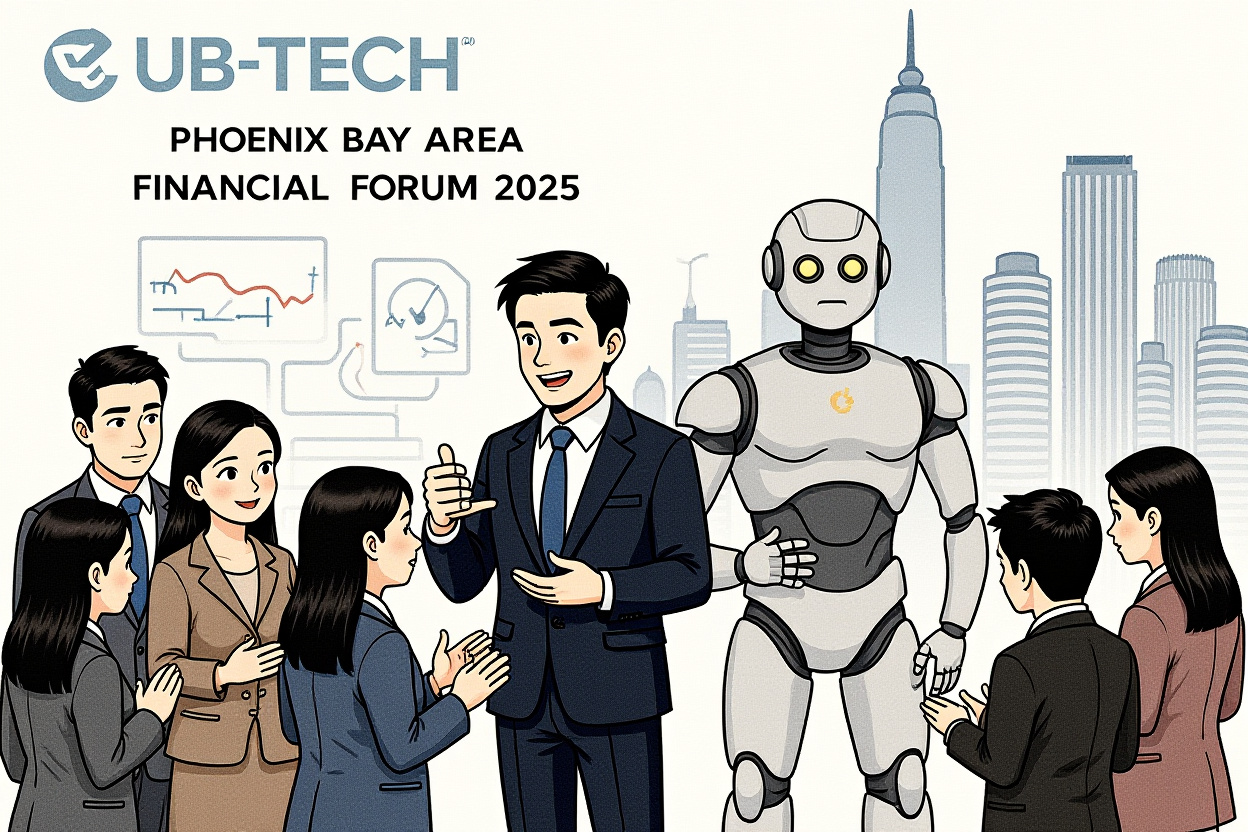
As the global tech community converges at forums like the Phoenix Bay Area Financial Forum 2025, insights from industry leaders shape investment strategies. Deng Feng (邓峰) of UBTECH recently cast a realistic outlook on the timeline for robots entering home applications, emphasizing that while excitement builds, practical barriers remain. This perspective is crucial for investors navigating China’s rapidly evolving equity markets, where AI and robotics stocks often see volatile swings based on hype versus reality. The focus on robots entering home applications serves as a anchor for understanding broader market trends.
The Current Landscape of Robotics in China
China’s robotics sector is a cornerstone of its technological advancement, driven by policy support and innovation. Companies like UBTECH are at the forefront, yet the path to widespread adoption, especially for robots entering home applications, is fraught with challenges.
UBTECH’s Role in the Market
UBTECH, a leading humanoid robotics firm, exemplifies China’s ambitions in AI. With recent backing from major funds, including a subscription from the world’s largest sovereign fund and a $10 billion deal with InfiniCapital, the company’s market confidence is palpable. Its average daily trading volume of 1.063 billion HKD surpasses many A-share and Hong Kong-listed peers, reflecting investor appetite. However, Deng Feng (邓峰) cautions that this enthusiasm must be tempered with realism about application timelines, particularly for robots entering home applications.
Global Interest and Local Realities
Challenges in Home Application AdoptionThe dream of robots assisting in households is appealing, but practical obstacles delay its realization. Deng Feng (邓峰) points to customization demands and environmental complexity as key barriers.
Customization Demands in Household Settings
Home environments require highly personalized interactions, from cleaning schedules to elder care preferences. Current robotics technology struggles with this level of adaptability. For instance, a robot designed for one family’s layout may fail in another, limiting scalability. This variability is a core reason why robots entering home applications are not imminent, as mass production would need to accommodate infinite customizations.
Complex Scenarios and Task Variability
Unlike controlled industrial settings, homes present unpredictable scenarios—like handling fragile items or navigating cluttered spaces. Deng Feng (邓峰) explains that robots lack the AI sophistication for such tasks, citing UBTECH’s research where test units achieved only 60% efficiency in simulated home trials. These complexities mean that robots entering home applications require advances in machine learning and sensor technology, which are still years away from maturity.
UBTECH’s Strategic Position and Market Performance
Despite the hurdles, UBTECH’s financial health signals long-term optimism. Its strategies offer clues to where robotics investment is heading.
Investment Inflows and Partnerships
The $10 billion partnership with InfiniCapital and sovereign fund interest underscore confidence in UBTECH’s vision. These moves align with China’s Made in China 2025 initiative, which prioritizes robotics. However, Deng Feng (邓峰) emphasizes that current funds are funneled into R&D for sectors like healthcare and logistics, where ROI is clearer, rather than pushing prematurely for robots entering home applications.
Trading Volumes and Investor Sentiment
High daily trading volumes indicate market liquidity but also speculation. Analysts from CICC (中金公司) note that while UBTECH’s stock sees active trading, it’s often driven by AI hype rather than immediate profits. This volatility suggests that investors should focus on fundamental progress, such as patents filed or pilot projects, to gauge when robots entering home applications might become viable.
Expert Insights on the Robotics Timeline
Deng Feng (邓峰)’s views are echoed by other experts, providing a balanced perspective on development pace.
Deng Feng’s Analysis at the Forum
Comparative Global PerspectivesGlobally, companies like Boston Dynamics focus on commercial uses first. A report from the World Economic Forum indicates that home robotics adoption in advanced economies is also slow, with safety and cost being universal concerns. This context validates Deng Feng (邓峰)’s stance, showing that robots entering home applications is a global challenge, not just a Chinese one.
Future Outlook and Investment Implications
Looking ahead, breakthroughs in AI could accelerate timelines, but investors should remain cautious.
Potential Technological Breakthroughs
Guidance for Market ParticipantsInvestors should diversify into robotics subsectors with nearer-term returns, like industrial automation. Monitoring regulatory updates from bodies like the Ministry of Industry and Information Technology (工业和信息化部) can provide cues. The key takeaway is that robots entering home applications will be a gradual process, requiring patience and strategic positioning.
Synthesizing the Path Forward
Deng Feng (邓峰)’s insights remind us that technological evolution is iterative. While robots entering home applications remains a future goal, current opportunities lie in supporting infrastructure and R&D. Investors are advised to engage with quarterly reports from firms like UBTECH and attend industry forums for real-time updates. By focusing on incremental progress, the market can build toward a future where home robotics is not just possible but practical.