



The Blueprint for American AI Dominance
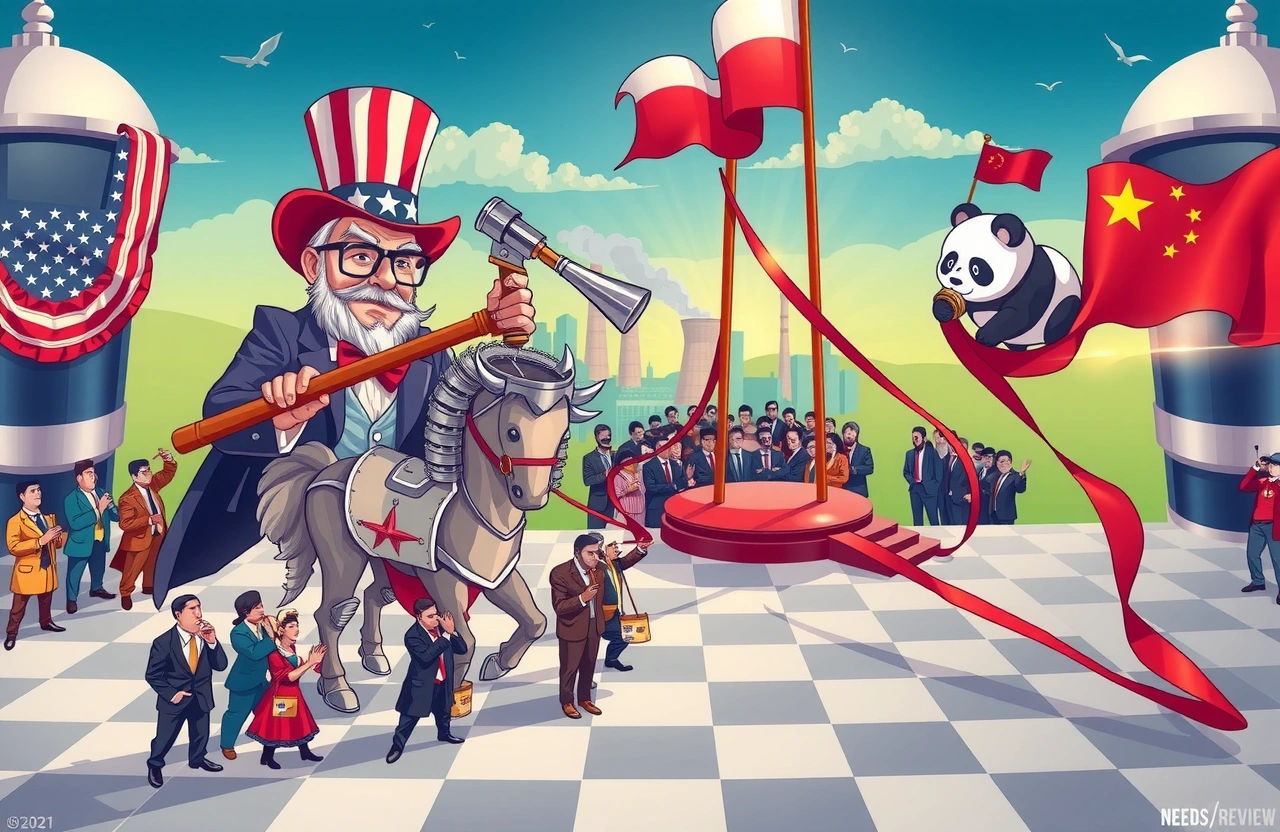
The Trump administration is set to fundamentally reshape America’s artificial intelligence landscape with an ambitious ‘AI Action Plan’ scheduled for release next week. Polished during months of deliberation, this 20-page strategy responds to mounting pressure from technology leaders who argue that outdated regulations throttle growth. With China rapidly advancing in AI development and semiconductor manufacturing, this initiative prioritizes two pillars: exporting U.S.-designed advanced chips and accelerating the construction of energy-hungry data centers. These moves position America to structurally dominate the $1.8 trillion global AI economy while strategically bypassing divisive topics like AI transparency and copyright that could stall progress. The timing is critical—AI compute demand surged 41% year-over-year, yet bureaucratic bottlenecks delay new data centers by 12-18 months on average.
Core Philosophy: Pro-Growth and Regulatory Efficiency
The AI Action Plan explicitly embraces a “light-touch” approach that prioritizes market expansion over restrictive oversight. “Our framework unleashes innovators while preventing government from picking winners,” confirms a senior administration official involved in drafting. Unlike European regulations demanding algorithmic transparency, the U.S. strategy intentionally sidesteps debates around AI-generated content ownership and model disclosure requirements. This philosophy intentionally mirrors Trump’s previous deregulatory successes in energy and finance, applying similar principles to what Goldman Sachs estimates will become a 26% share of U.S. GDP by 2030.
Export Surge: Fueling Global Chip Dominance
At the plan’s operational core is an executive order directing federal agencies to actively promote American semiconductor exports through financing tools like the U.S. Export-Import Bank. This formalizes the administration’s tactical shift toward strengthening technology alliances after delayed approvals cost U.S. chipmakers $9 billion in lost Middle Eastern contracts last year alone.
Strategic Priority: Keeping Allies on U.S. Tech
White House advisers David Sacks and Sriram Krishnan championed provisions ensuring partner nations like the UAE and Saudi Arabia operate AI infrastructure exclusively with U.S. components. “Frozen export licenses for NVIDIA H100 chips became a national security liability,” explains former Pentagon AI chief Lt. Gen. Jack Shanahan. Key mechanisms include Export-Import financing for developing nations and streamlined Commerce Department reviews for Category 1 advanced semiconductors.
The Geopolitical Calculus
As China expands semiconductor manufacturing capacity by 60% annually, Trump’s team counters with coordinated advantages:
- Priority licensing for AWS, Google Cloud, and Oracle government cloud contracts
- Tax credits covering 15-20% of export compliance costs
- Fast-track visa processing for engineers installing overseas AI systems
Revolutionizing Data Center Infrastructure
AI’s insatiable hunger for computational power demands radical infrastructure evolution—each next-generation model consumes electricity equivalent to 175,000 households annually. The AI Action Plan tackles this through unprecedented permitting reform and energy policy changes.
Permitting Overhaul: Cutting the Red Tape
The Federal Permitting Improvement Steering Council will receive expanded authority to override local zoning delays under Section 234 of the FAST Act. “We’re eliminating redundant environmental reviews that currently add 400 days to projects,” notes Deputy Energy Secretary Dave Turk. Accelerated approvals target:
- Modular micro-grids bypassing traditional utilities
- Priority transmission line construction corridors
- Pre-approved cooling system blueprints using recycled water
Powering the Compute Revolution
Trump’s announcement spotlights Pennsylvania’s recently secured $92 billion investment—showcasing how energy policy enables AI growth. During the Pittsburgh Energy Summit, companies like Caterpillar and Marathon Petroleum committed to:
- Build five liquid-cooled hyperscale data centers near shale gas deposits
- Develop small modular reactors (SMRs) exclusively for AI computing loads
- Train 12,000 technicians through federal apprenticeship programs
“Abundant natural gas lets us deliver electricity at 2.7 cents/kWh—half the EU average,” notes Energy Secretary Dan Brouillette. The administration’s GIS tool identifies over 47 million acres of federal land suitable for AI-related development.
Navigating Regulatory Minefields
By design, the AI Action Plan artfully dodges three politically explosive issues that stalled previous legislation:
The Third Rail Topics
- AI Copyright: No position on whether Midjourney creators or users own outputs
- Model Transparency: Rejects calls for “black box” disclosure like the EU AI Act
- Algorithmic Accountability: Silent on bias testing requirements
Victoria LaCivita, tech policy spokesperson, confirms the deliberately narrow scope: “We’re providing runway lights—not speed limits.”
The “Woke AI” Factor
A related executive order targeting perceived political bias in AI systems will complement the main strategy. Federal contractors developing facial recognition or content moderation tools must certify algorithmic neutrality—with enforcement handled through existing Hatch Act mechanisms.
Market Implications and Industry Response
Tower Semiconductor CEO Russell Ellwanger hails the export push: “This unlocks markets we’ve courted for years.” C3.ai shares surged 8% prematurely after briefing leaks. Yet critics warn that deferring regulation courts disaster—”Unconstrained exports risk powerful AI systems reaching Syria or Belarus,” cautions Arms Control Association’s Shannon Torrens.
The AI Action Plan arrives amid peak market readiness:
| Sector | Projected Growth Path |
|---|---|
| Chip Fabrication | $143B additional capacity by 2027 |
| Energy Infrastructure | 37 new gas turbine plants announced |
| Construction | 400k specialized jobs forecasted |
Sprinting Ahead in the Global Tech Race
With its twin focus on export enablement and infrastructure modernization, Trump’s AI Action Plan strategically bets that velocity trumps complexity. Early texts frame AI dominance as non-negotiable for economic security—”compute advantage defines 21st century power” appears verbatim. Though sidestepping deep accountability debates carries long-term risks, immediate dividends appear certain: Jensen Huang confirmed plans for three additional U.S. GPU foundries hours before the official announcement. For CIOs weighing cloud commitments globally, this recalibrates valuations overnight—expect domestic incentives like Utah’s new heat-reuse tax credit to ignite regional competition. Success ultimately hinges on execution velocity; Treasury’s newly established AI Investment Clearinghouse begins accepting fast-track applications starting Monday.
Businesses should immediately audit:
- Federal incentive eligibility through Defense Production Act Title III
- Power purchase agreement (PPA) renegotiation timelines
- Export control classification details for AI training tools
The window for transformative advantage opens now—delay risks irrelevance as Miami Grand Prix advertising spots sold out to quantum computing startups before the policy ink dried.