



Summary
- Circle soared then crashed 25% from peak after stablecoin IPO hype despite massive transaction volumes (>$25 trillion)
- Revenue faces triple threat from Fed rate cuts eroding treasury yields, Coinbase taking 62% of income, and Apple/Amazon looming competition
- USDC’s SVB-backed crisis caused 55% outflow but recovered through strict transparency policies that outshine Tether
- The GENIUS Act legitimizes stablecoins while strategically expanding U.S. Treasury demand through forced asset reserves
- Circle’s dependency on Coinbase includes alarming terms allowing USDC issuance rights forfeiture if payments lapse
When Market Euphoria Meets Reality
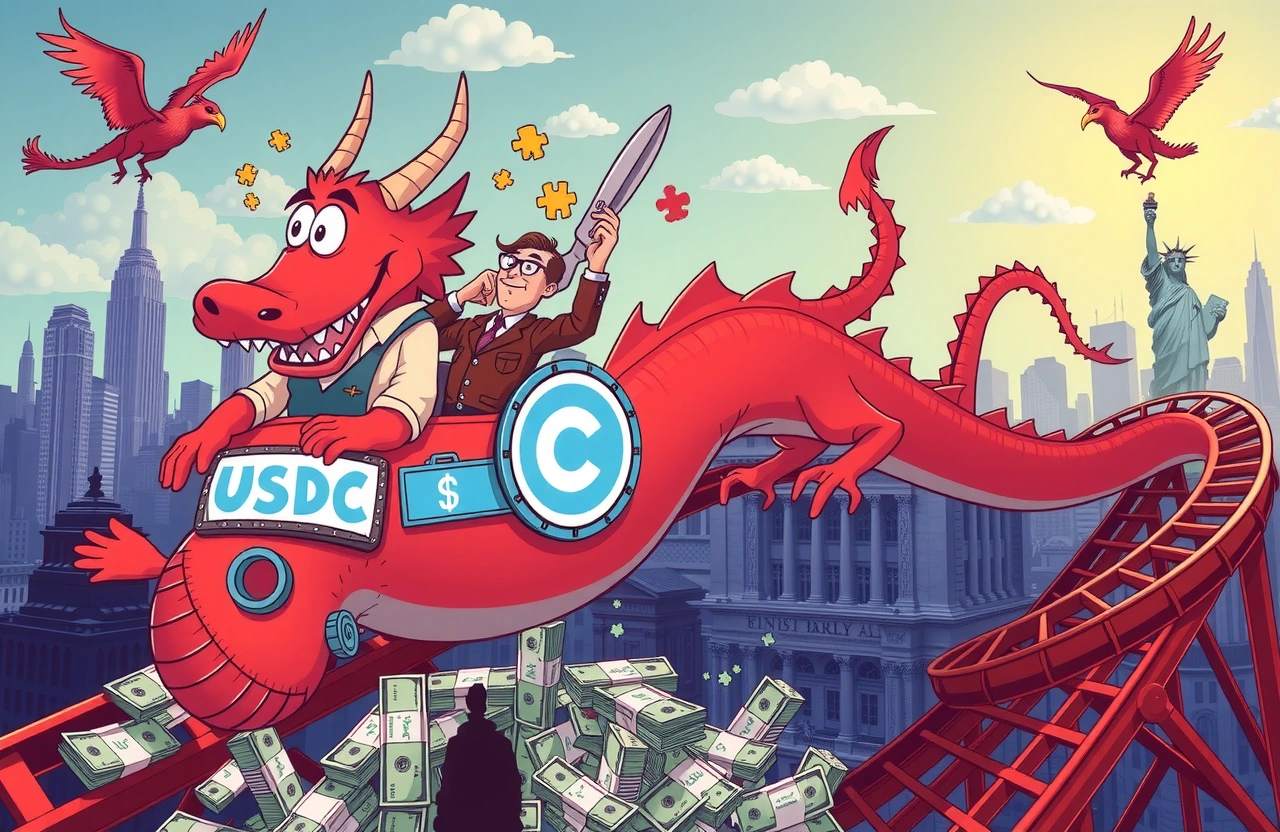
Circle’s June 2025 Nasdaq debut epitomized crypto’s Wall Street arrival – shares rocketed 864% to $299 within weeks as investors chased the stablecoin trailblazer. Yet by mid-July, reality pierced the fervor: a 25% plunge erased $125 billion in market cap despite Circle processing $6 trillion of transactions in Q1 alone. This volatility highlights how stablecoin stocks embody the very instability they promise to solve. With the Federal Reserve poised to cut rates, Circle’s treasury-dependent revenues face compression while Coinbase extracts 62% of profits through asymmetric partnerships. Simultaneously, Apple and Amazon are exploring stablecoin plays that could dwarf incumbents. Though USDC pioneered transparent reserves and survived a bank-run crisis, structural vulnerabilities threaten Circle’s valuation.
Stablecoin Mechanics: More Than Digital Dollars
The Depository Receipt Blueprint
Stablecoins function as anchored digital proxies for fiat currency using a dual-layer framework mirroring American Depositary Receipts (ADRs). Each token represents fractional ownership of underlying assets held by regulated custodians like BlackRock. When users acquire USDC, Circle deposits equivalent dollars into U.S. Treasury bills—issuing crypto certificates that bypass traditional banking channels. This structure solved two problems: providing dollar access without jurisdiction limits while avoiding securities classification battles. The breakthrough came with April 2025’s GENIUS Act, which explicitly defined USD-backed stablecoins as payment instruments under Treasury oversight. Unlike China’s digital yuan (e-CNY) issued by the People’s Bank of China (中国人民银行), Circle operates purely as a private-sector utility for settlement efficiency.
Reserve Transparency Distinguishes Contenders
Tether’s dominance (62% market share) masks critical vulnerabilities—its reserves historically contained over 60% commercial paper versus Circle’s 100% cash/treasuries rotated monthly through Deloitte audits. During Circle’s 2023 Silicon Valley Bank crisis, USDC briefly traded at $0.88 when $33 billion deposits froze. Yet swift Fed intervention restored confidence through asset segregation practices that flagged Tether’s legacy opacity Bloomberg reported 2024 Treasury subpoenas examining Tether’s backing claims.
The Rollercoaster Growth Trajectory
| Period | Issuance Volume | Redemption Volume | Net Change | Avg. Circulation |
|---|---|---|---|---|
| 2022 | 1676.1 | 1654.7 | +21.4 | 498.6 |
| 2023 | 958.3 | 1159.8 | -201.4 | 304.7 |
| 2024 | 1413.4 | 1219.0 | +194.4 | 333.4 |
| 2025 Q1 | 532.2 | 371.0 | +161.2 | 541.4 |
Breakneck Transaction Growth
Ignoring Circle’s stock drama reveals stablecoins’ profound adoption: 2024 saw $15.6 trillion in transfers—eclipsing Visa and Mastercard combined according to Chainalysis data. The ecosystem processed 500 trillion RMB equivalent, rivaling China’s entire bank card network scales. Daily volumes exceed national GDPs—Tether’s USDT trades $120 billion/day consecutively while USDC facilitates cross-border payments at 1/10th traditional remittance costs. This growth stems from developing economies where currency volatility makes dollar-pegged tokens preferable to weaker sovereign alternatives. However, volume doesn’t prevent instability.
Cracks in Circle’s Armor
The Coinbase Dependency Trap
Circle’s incomplete ecosystem forces reliance on Coinbase—an unbalanced dependence codified during their Centre Consortium divorce:
- Revenue Share: Coinbase claims 50% of treasury interest permanently regardless of infrastructure costs
- Priority Bailouts: USDC reserves get diverted to Coinbase users first during crises
- Trademark Triggers: Circle forfeits USDC trademark rights if delayed Coinbase payments occur twice
The toll intensifies annually: Coinbase captured $9.08 billion (61%) of Circle’s 2024 reserves yield. This parasitic relationship caps Circle’s net income at $157 million on $16.6 billion revenue. With Coinbase demanding 70% reportedly? Circle faces unsustainable overheads.
Rate Cuts Looms Over Profit Margins
Circle derives 96% revenue from Treasury bill yields—currently 5.4% quarterly returns translating to 4.2% annualized. With Fed Chair Jerome Powell hinting at imminent rate cuts, each 1% decline slashes Circle’s income by $6 billion/year based on $600 billion reserves. Meanwhile, departures like CFO Jeremy Fox-Geen (杰里米·福克斯-吉恩) signal recognition of this precariousness.
Enter the Giants: The “Pennsylvania Plan”
The GENIUS Act’s reserve requirements reveal Washington’s stabilizing ambitions—channeling global stablecoin demand toward U.S. debt. Dubbed the “Pennsylvania Plan”, federal strategy secures Treasury buyers through compliant USD-pegged tokens enforced via:
- Mandatory asset composition: Only cash/short-term treasuries
- Outsourcing issuance: Apple and Amazon possess vault-ready compliance infrastructure
- Mainstreet incentives: Apple USD holders earning rewards through App Store credits
Former Treasury Secretary Steven Mnuchin (史蒂文·姆努钦) hinted rollout preparations publicly affirming tech firms’ “unique capacities” during August’s Jackson Hole Symposium. For Circle, already squeezed by Coinbase, competing against tech giants makes market position untenable.
The Forked Path Forward
Circle’s IPO ignited stablecoin legitimacy but faces fundamental vulnerabilities: interest compression dissolving treasury profits, partner exploitation restricting margins, and political shifts enabling giants. Only three roads exist:
- Acquisition target: Financial superapps (e.g., PayPal or Revolut) seeking custody partnerships
- Regulatory diversification: Accelerating Euro-pegged EURC adoption under MiCA frameworks
- Infrastructure independence: Developing proprietary wallets/Visa integrations bypassing Coinbase
The cautionary tale resonates beyond Wall Street: innovations promising stability often inherit systemic fragilities they combat. Investors must recognize that behind Circle’s technical resilience lies structural frailty increasingly exposed. Diversify beyond hype—true financial innovation requires architectural robustness, not tokenized promises.