



Executive Summary
– Xiaomi Group (小米集团) Chairman Lei Jun (雷军) disclosed strategic insights during his annual speech, highlighting the pivotal role of the Xiaomi YU7 as a backup plan amid uncertainties around the SU7 model.
– The Xiaomi YU7 is positioned as a sporty SUV directly competing with Tesla Model Y, with optimizations in range (835 km CLTC) and space, addressing internal debates on market trends.
– Initial market response has been strong, with 240,000 orders locked within 18 hours of release, though delivery challenges and capacity expansions are critical focus areas.
– Lei Jun emphasized learning from Tesla through disassembly of Model Y units, underscoring a methodical approach to innovation in China’s competitive electric vehicle sector.
– This move signals Xiaomi’s ambition to leverage its tech expertise in automotive, with implications for investors monitoring supply chain and regulatory shifts.
Xiaomi’s Automotive Ambitions Under Lei Jun’s Leadership
In a candid revelation during his sixth annual speech, Xiaomi Group (小米集团) Chairman Lei Jun (雷军) shed light on the high-stakes development of the company’s electric vehicle lineup. The speech, held on September 25, underscored the strategic importance of the Xiaomi YU7 as a contingency plan during a period of uncertainty for the flagship SU7 model. Lei Jun’s transparency offers a rare glimpse into the decision-making processes at one of China’s most watched tech giants, as it navigates the turbulent waters of the automotive industry.
The context of this disclosure is critical: China’s electric vehicle market is experiencing rapid growth, fueled by government incentives and shifting consumer preferences. For international investors, understanding Xiaomi’s approach provides insights into how tech firms are pivoting to capitalize on this expansion. The Xiaomi YU7 represents not just a product launch but a testament to the company’s resilience and adaptive strategy in a sector dominated by established players like Tesla and local giants such as BYD (比亚迪).
Navigating Market Dynamics
Lei Jun recalled the summer of 2022, when the SU7 was in its most critical development phase. He admitted that confidence in the SU7 was low internally, with many team members expressing skepticism. This moment coincided with the success of Ideal Auto’s (理想汽车) L9 model, which popularized the “TV, refrigerator, large sofa” design philosophy for family-oriented SUVs. The trend saw numerous manufacturers, including NIO (蔚来) and Xpeng (小鹏), emulating this approach, creating a surge in competition for spacious, extended-range vehicles.
However, Lei Jun argued that blindly following trends could lead to saturation. He emphasized that the total addressable market for超大空间SUV (super-large space SUVs) was limited, and entering that segment without differentiation would be futile for Xiaomi. This perspective highlights a broader lesson for businesses: innovation often requires resisting short-term trends in favor of long-term viability. For investors, it underscores the value of companies that prioritize unique value propositions over me-too strategies.
Strategic Positioning of the Xiaomi YU7
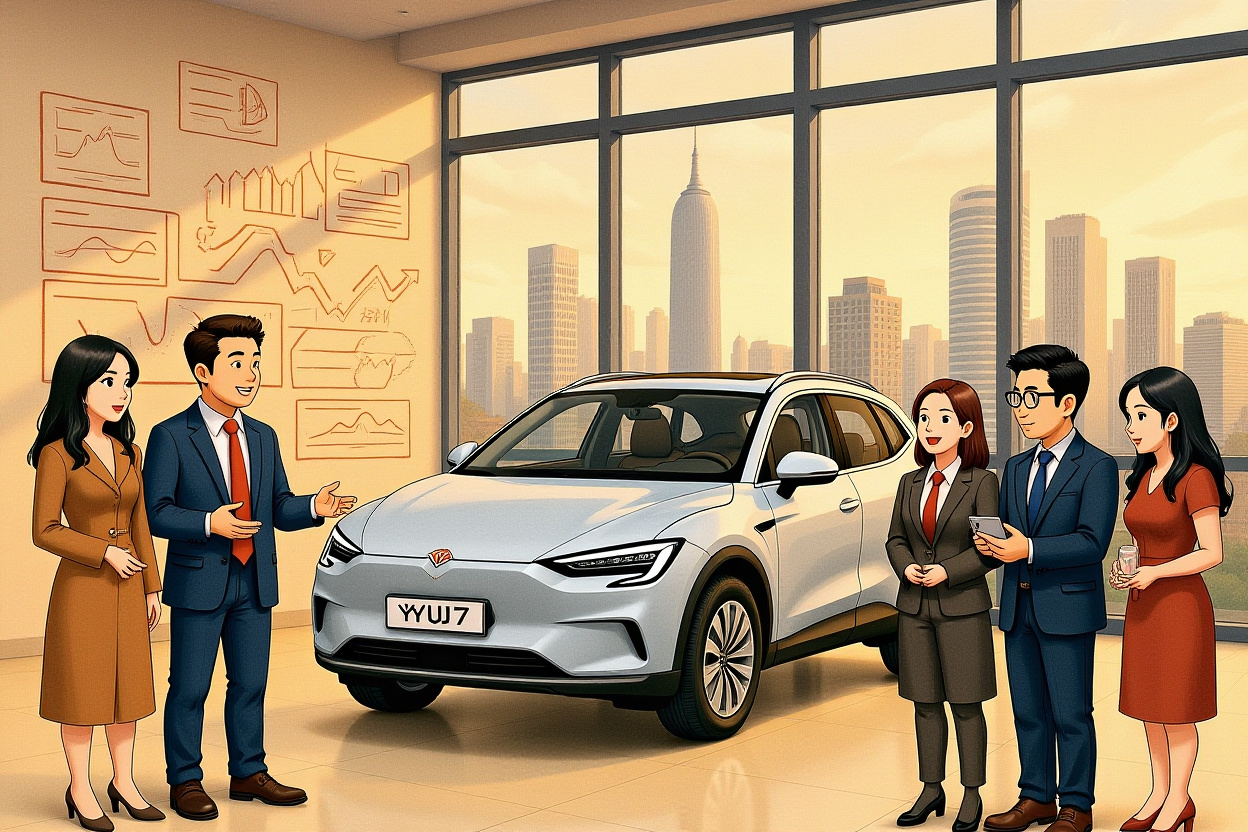
The development of the Xiaomi YU7 was marked by a deliberate shift away from mainstream trends. Instead of targeting the family SUV segment, Lei Jun and his team chose to benchmark the Tesla Model Y, positioning the YU7 as a sporty SUV aimed at performance-conscious consumers. This decision involved a hands-on learning process, where the team purchased and disassembled three Tesla Model Y units to study their components in detail. Such an approach reflects Xiaomi’s methodical culture, rooted in its smartphone success, where reverse engineering and improvement have been key to rapid innovation.
By focusing on the Xiaomi YU7 as a direct competitor to the Model Y, the company is tapping into a niche that has historically been dominated by luxury brands. Sporty SUVs like those from Porsche or BMW have rarely found mass-market success, but Xiaomi aims to change that by offering comparable features at a more accessible price point. The YU7’s standard version is priced at 253,500 yuan, undercutting the Tesla Model Y焕新版 (refreshed version) by approximately 10,000 yuan, while boasting a superior CLTC range of 835 km versus 593 km.
Overcoming Internal Skepticism
One of the major hurdles was addressing concerns about the practicality of a sporty SUV’s interior space. Lei Jun revealed that the R&D team conducted multiple design iterations to demonstrate that the Xiaomi YU7’s cabin could match or exceed the Model Y’s spaciousness. Through detailed simulations and prototypes, they proved that the vehicle could comfortably accommodate typical user needs, alleviating fears that it might sacrifice utility for style. This iterative process is a hallmark of Xiaomi’s product development, emphasizing data-driven decisions to build consensus.
Moreover, the team initially planned a standard version with a 620 km range, but real-world testing revealed limitations. After several long-distance drives, feedback indicated that range anxiety remained a concern. In response, Xiaomi scrapped the lower-range variant and rebranded the长续航Pro版 (Long Range Pro version) as the standard model, increasing the range by over 200 km without a price hike. This customer-centric adjustment showcases how Xiaomi leverages user feedback to refine offerings, a strategy that could enhance brand loyalty in a competitive market.
Market Reception and Performance Metrics
The launch of the Xiaomi YU7 exceeded expectations, with lock-in orders reaching 240,000 units within just 18 hours. This explosive response underscores the pent-up demand for affordable yet high-performance electric vehicles in China. According to Lei Jun, cumulative deliveries surpassed 40,000 units within two months and 19 days, signaling strong initial execution. However, data from the乘联分会 (Passenger Car Association) indicates a shift in dynamics: while Xiaomi Auto delivered 36,396 vehicles in August, the SU7 model dropped out of the top-selling list for the first time in 10 months, suggesting deliveries fell below 20,000 units.
Internal sources suggest that August deliveries were nearly split evenly between the SU7 and YU7, highlighting the latter’s rapid ascent. This bifurcation could reflect strategic resource allocation or evolving consumer preferences. For investors, it raises questions about product lifecycle management and the need for balanced portfolios to mitigate risks. The strong start for the Xiaomi YU7 also points to effective marketing and supply chain coordination, though challenges in scaling production remain a watch point.
Delivery Optimization Efforts
On the same day as Lei Jun’s speech, reports emerged that Xiaomi Auto is implementing measures to shorten delivery cycles, with some models potentially arriving six weeks earlier than scheduled. An insider attributed this to智能化技术改造 (intelligent technological transformations) aimed at boosting factory capacity. By integrating automation and data analytics, Xiaomi aims to streamline manufacturing and reduce wait times, a critical factor in retaining customer satisfaction amid high demand.
This focus on operational efficiency aligns with broader industry trends, where companies like Tesla have leveraged Gigafactories to scale rapidly. For Xiaomi, success in this area could strengthen its competitive edge, but it requires careful management of supply chain disruptions and regulatory compliance. Investors should monitor announcements from the Ministry of Industry and Information Technology (工业和信息化部) for policy updates that might impact production timelines.
Implications for the Chinese EV Landscape
Xiaomi’s push with the YU7 reflects a larger transformation in China’s automotive sector, where tech firms are increasingly challenging traditional automakers. The emphasis on sporty SUVs like the Xiaomi YU7 could catalyze a new segment, encouraging innovation in design and performance. Lei Jun’s strategy of benchmarking against Tesla—a global leader—demonstrates ambition to not just compete domestically but also eye international expansion eventually, pending regulatory approvals and market conditions.
From an investment perspective, the performance of the Xiaomi YU7 will be a key indicator of Xiaomi’s ability to diversify beyond consumer electronics. Strong sales could boost investor confidence in the company’s long-term growth, while any stumbles might highlight the risks of venturing into capital-intensive industries. Additionally, the focus on range and affordability aligns with government initiatives like the “双积分” (dual-credit) policy, which rewards energy-efficient vehicles, potentially providing tailwinds for Xiaomi’s offerings.
Expert Insights and Future Outlook
Industry analysts note that Xiaomi’s approach with the YU7 could pressure rivals to accelerate their own innovations. “Lei Jun’s transparency about the development process is unusual but effective in building trust,” says Zhang Wei (张伟), an auto analyst at CITIC Securities (中信证券). “If Xiaomi can maintain this momentum, it could capture a significant share of the mid-range EV market.” However, challenges such as battery supply constraints and evolving consumer tastes require agile responses.
Looking ahead, the success of the Xiaomi YU7 will depend on sustained execution in delivery and quality control. Investors should watch for quarterly reports from Xiaomi Auto and regulatory filings with the China Securities Regulatory Commission (中国证监会) for updates. As the global EV race intensifies, Xiaomi’s journey offers valuable lessons in strategic pivoting and customer-centric innovation.
Key Takeaways and Forward Guidance
Lei Jun’s revelations highlight the critical role of the Xiaomi YU7 in Xiaomi’s automotive strategy, emphasizing learning from competitors and adapting to market feedback. The model’s strong initial reception, coupled with efforts to optimize deliveries, positions Xiaomi as a formidable player in China’s EV market. For business professionals and investors, this case underscores the importance of monitoring product cycles and operational efficiencies in high-growth sectors.
To stay informed, subscribe to updates from authoritative sources like the China Association of Automobile Manufacturers (中国汽车工业协会) and consider diversifying portfolios to include tech-driven auto stocks. As Xiaomi continues to execute on its vision, the Xiaomi YU7 could well become a benchmark for how tech giants disrupt traditional industries.