



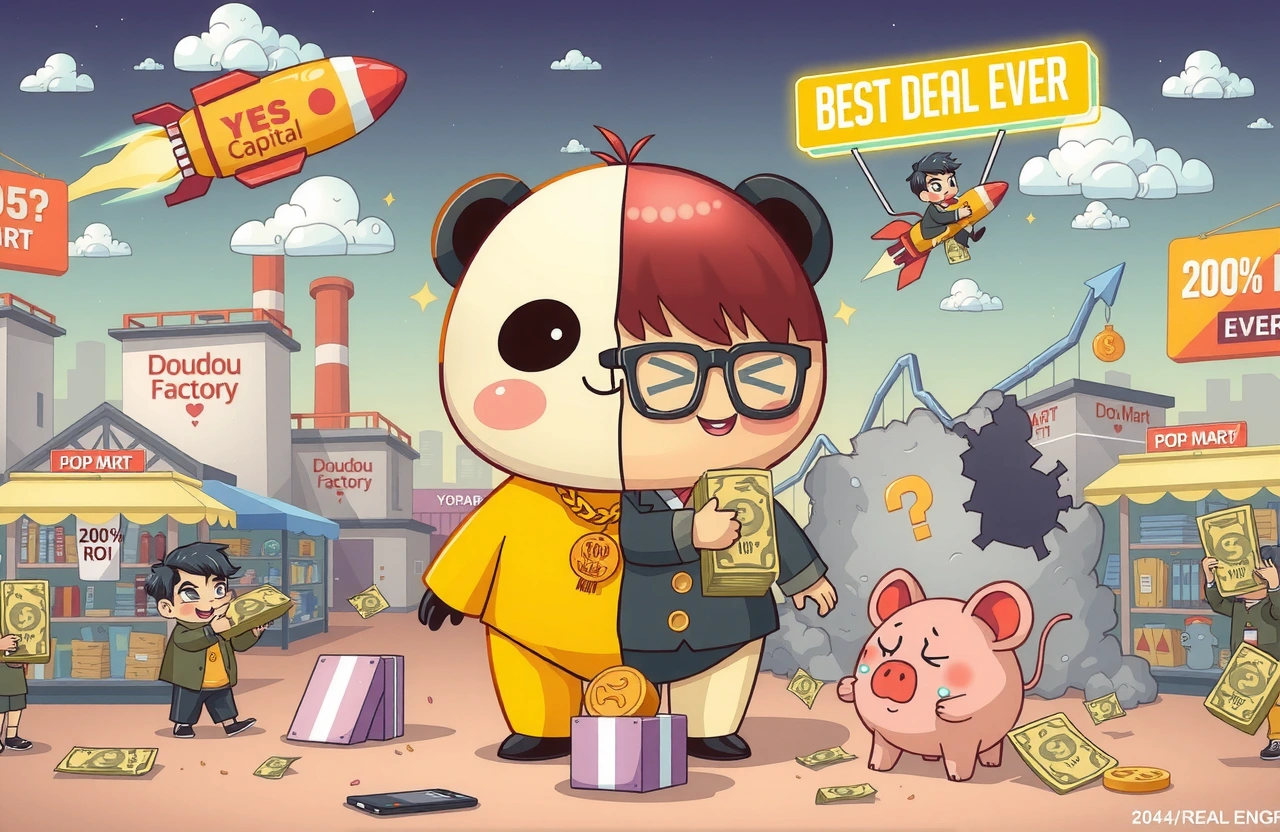
The Rise and Fall of a Wealth Mirage
When Labubu blind boxes became China’s 2023 toy phenomenon, a little-known niche exploded into a promised land of riches. Entrepreneurs flooded the Labubu doll clothing market chasing claims of ‘monthly $4,200 incomes’ and ‘6-figure business revenues.’ Yet just 30 days later, the bubble popped—leaving disillusioned newcomers with unsold inventory and dashed dreams.
Key Developments
- Pop Mart’s Labubu sales surged 200% in early 2023
- Secondary markets saw blind box prices jump 20x
- Venture capitalists shifted focus to entertainment IP monetization
- Predicted $2.5B growth in global doll clothing by 2025
- 80% of new entrants reported losses within 60 days
The Labubu Frenzy Ignites Opportunity
As Pop Mart announced its 200% revenue surge in early 2023—fueled by Labubu blind boxes selling out in seconds—dedicated collectors drove secondary market prices to unprecedented highs. The original ¥99 ($14) Labubu 3.0 hidden edition commanded ¥2,300 ($325) among enthusiasts.
Ancillary Market Boom
For collectors like Zhou Yu (周雨), dressing their dolls became integral to ownership psychology. ‘After paying hundreds for the Labubu itself, ¥50 outfits feel trivial,’ she explains. Merchants quickly noted enthusiasts upgrading to ¥300+ premium designs.
Sellers like Lin Xiaoya (林小牙) saw select creations resell for 300% markups. According to Statista, this aligned with the global doll clothing market growing at 12% CAGR toward $2.5 billion by 2025.
The Gold Rush Peaks
By May 2023, Labubu-centric factories scrambled to meet demand. Doudou (豆子), a Shenzhen manufacturer, described operating at maximum capacity: ‘We added hundreds of new contacts daily.’
Influencer Success Stories
Tales of sudden wealth spread rapidly. Gu Huijie (谷会杰), dubbed ‘Yiwu’s top businesswoman,’ expanded to three stores employing 500 staff—her monthly revenues allegedly exceeding $140,000. Social media celebrated teenage ‘handmade clothing artisans’ earning $4,000 monthly.
Online courses capitalized on momentum. ¥1,999 ($280) ‘doll entrepreneur’ tutorials attracted 800+ buyers monthly.
Reality Hits Hard
However, most entrants discovered harsh truths. Shen Zhu (沈筑), known as ‘Piggy Ding’ online, recalled: ‘I considered quitting my job after imagining instant riches. Two months in, I hadn’t even recouped costs.’
Entry Barriers
- Intense competition diluted pricing power
- Design piracy eroded unique value propositions
- Manufacturer delays caused inventory mismatches
As Shen Zhu puts it: ‘Only the established 1% profited. The rest of us subsidized the hype.’
Market Implications
The crash exposed vulnerabilities in trend-chasing entrepreneurship. Doudou confirmed order volumes decreased 70% by July. ‘Now when newcomers ask about setups, I emphasize realistic timelines,’ she says.
Sustainable Alternatives
- Develop multi-character compatibility across franchises
- Prioritize proprietary techniques (e.g., embroidered fabrics)
- Establish partnerships with manga publishers for licensed designs
Pathways Forward
Shen Zhu reflects: ‘My consolation? Pure passion for designing—this remains my artistic outlet.’ Yet she warns newcomers: ‘Calculate fabric and labor costs before dreaming of Lamborghinis.’
For sustainable success in niche markets, validate demand longevity before scaling. Analyze copyright landscapes thoroughly and build communities before monetizing. The Labubu bubble offers this timeless lesson: real wealth flows from solving perpetual needs—not chasing temporary frenzies.