



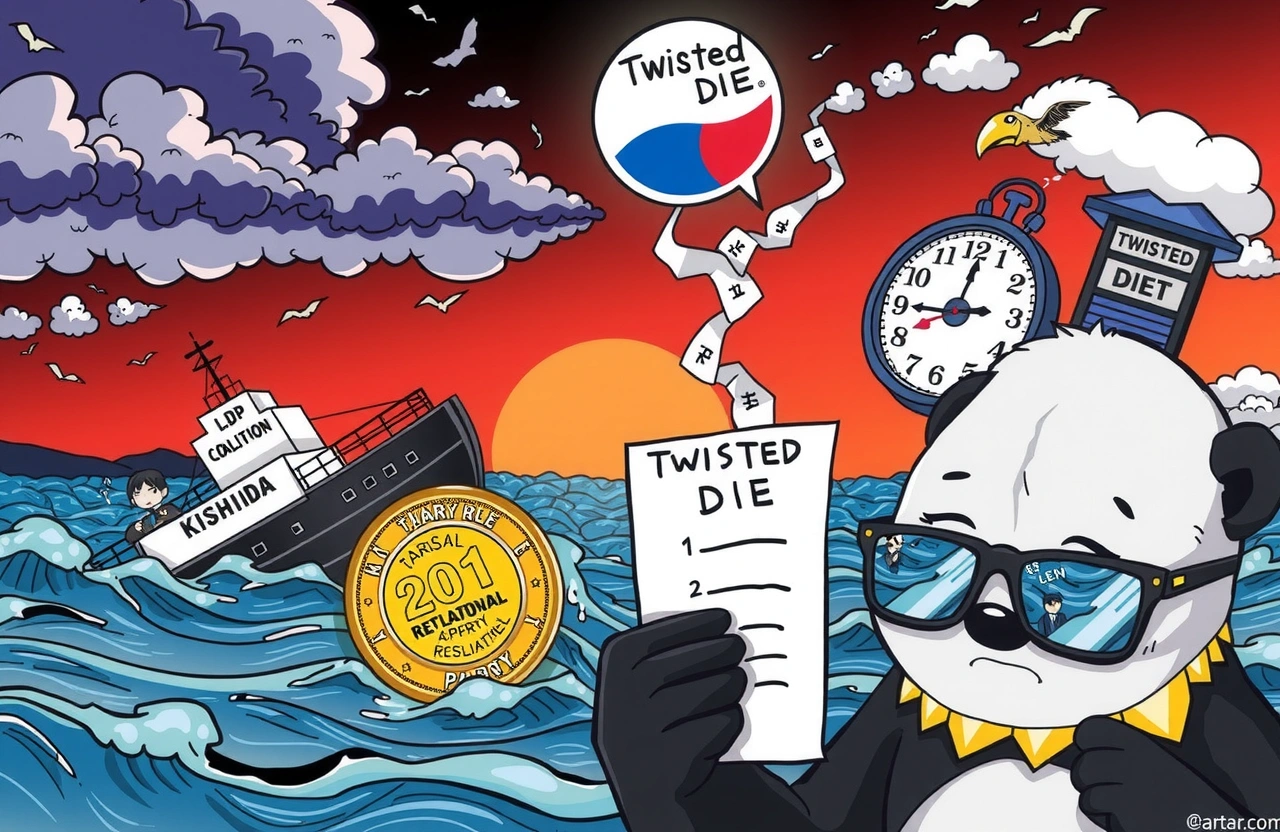
The Crucial Point: Japan’s Political Turning Point
The Upper House election commencing on July 21 represents far more than routine parliamentary turnover—it’s a decisive referendum that could realign Japan’s political direction and international standing. With Prime Minister Fumio Kishida’s approval ratings collapsing to 20.8% and ruling coalition control at risk, this critical election will determine the nation’s approach to economic revitalization, US-Japan trade negotiations, and social priorities amid surging populist movements.
Key Developments
– Balloting for Japan’s 125-seat Senate concludes with exit polls expected by July 20 evening local time
– Ruling coalition requires 50+ seats to retain majority amid sinking public support
– Right-wing Japan First Party surges with nationalist agenda emphasizing ‘Japanese priority’ policies
– Financial markets brace for potential political gridlock and stalled US trade talks
– Analysts warn voter demands for tax cuts/reforms constitute rejection of ‘financial repression’ economic policies
Initial results will emerge before dawn on July 21, setting immediate course for Kishida’s besieged administration and US-Japan trade discussions facing an August 1 deadline.
The Governing Coalition’s Precarious Position
Prime Minister Kishida’s Liberal Democratic Party (LDP) faces an unprecedented credibility crisis as it seeks to defend its governing majority. Having lost significant ground in last October’s elections and June municipal contests, the LDP-led coalition urgently requires 50 Senate seats to preserve control—a target now jeopardized by cabinet approval ratings plunging below the critical 30% danger threshold. Veteran politician Takemi Keizo, a five-term Senator, recently confessed he’d ‘never experienced campaigning this difficult,’ underscoring the coalition’s vulnerability.
Kishida’s Last Stand
During final campaign appearances in Tokyo, Kishida framed the vote as a choice between responsibility and chaos. Defending his controversial ¥20,000 citizen payout program as necessary aid for Japan’s economic ’emergency,’ he lambasted opposition calls for consumption tax abolition: ‘Irresponsible promises doom nations.’ Despite invoking apocalyptic warnings, he failed to halt hemorrhaging support—particularly among youth alienated by stagnant wages and perceived policy impotence.
The Populist Surge: Japan First Party’s Rise
Beyond traditional party dynamics, nationalist movement Japan First Party has emerged as the election’s breakout force. Rallying 20,000 supporters in Tokyo’s Shiba Park this week, party leader Kusunoki Sugihara declared: ‘Our national strength erodes daily—we resist destructive globalisation.’ Despite criticism labelling their ‘Japanese First’ slogan xenophobic, Kusunoki maintains the phrase challenges ‘corporate globalization harming citizens.’
The party’s momentum defies expectations: internal polling targeting six seats has been revised upward as analysts now predict 10-15 wins. Their popularity signals deepening discontent with establishment politics, especially regarding:
- Inflation management failures
- Perceived cultural dilution from immigration
- Cronyism within major parties
Governmental Paralysis Threats
A fragmented Senate outcome threatens to produce divided governance (‘twisted Diet’), which Morgan Stanley analysts warn could bring legislation to a standstill. Government paralysis scenarios foresee Kishida managing a minority cabinet requiring ad hoc opposition support for every bill—shattering policy predictability and chilling foreign investment.
Financial Institutions Brace for Impact
The election’s shadow already darkens markets, with Japan Government Bond (JGB) yield curves exhibiting volatile steepening patterns this week. Morgan Stanley’s July 18 analysis notes traders price coalition losses as nearly inevitable—possibly forcing Kishida into minority government rather than partnership expansion. Such scenarios risk reversing smooth policy implementation dependent upon:
- Tackling inflation through BOJ rate adjustments
- Debt stabilization planning
- Corporate taxation frameworks
Nomura’s Dire Stalemate Forecast
Nomura Securities presents bleaker possibilities: outright LDP collapse forcing Kishida’s resignation would instantly halt constructive US-Japan trade discussions. Former negotiator Tara Jenkins notes: ‘The August 1 tariff deadline requires coordinated leadership neither side possesses mid-transition.’ Failure risks escalating retaliatory US tariffs to 25%—hammering exporters upon which Japan’s economy disproportionately relies.
President Donald Trump’s recent letters to Kishida threaten hiking prospective Japan tariffs beyond already proposed 24% thresholds. This saber-rattling intensified market anxiety about protectionist domino effects.
The Financial Repression Referendum
Deutsche Bank strategist Mallika Sachdeva identifies this election’s hidden dimension—a popular verdict on Japan’s economic ‘financial repression.’ Her team contends Japan stabilized its massive governmental debt through negative real interest rates transferring household wealth to state coffers, but voter tolerance has evaporated amid painful inflation surges.
Demands for tax cuts/reform thus signify citizen pushback against technocratic agendas—forcing Treasury yields to decade highs. Nikkei polls show inflation management now surpasses pensions/economic growth as voter priority #1—verifying socialization hardship concerns.
US Parallel Implications
The electoral reaction warns advanced economies pursuing similar debt-shrinkage strategies. America’s Federal Reserve confronts comparable pressures as citizens resist inflationary policies benefiting creditors over taxpayers.
Japan’s government risks transforming from reformers navigating complex tradeoffs into hostages of populist resentment.
Broader Consequences Beyond Japan
Beyond inevitable domestic impacts, Sunak Miura (Asahi Shimbun Foreign Editor) emphasizes the election’s international significance: ‘Tokyo’s stability affects Pacific military coordination and semiconductor cooperation chains.’ Meanwhile, worsening Sino-Japanese relations means American diplomats closely monitor power consolidation capacities.
Beyond Immediate Results: Markets Must Adapt
Investors should prepare for volatility irrespective of the Senate election outcome. Prevention-focused strategies should emphasize:
- Yen diversification amid BOJ uncertainty
- Export-sector hedging against tariff implementations
- Domestic-consumption firm weighting resilience
The declining yen’s impacts mean monetary policymakers globally will analyze developments for precedent lessons.
A Democracy Facing Existential Decisions
Japan’s Upper House election presents vivid implications about democratic governance confronting demographic decline and foreign policy crosscurrents. Citizens choose between continuity principles enabling pragmatic international engagement or nationalist agendas risking isolation during globally interconnected crises. History suggests governments failing such legitimacy tests rarely regain momentum—meaning Kishida’s political lifespan likely ends with calamitous performance. However, salvaging fragmented governance requires acknowledging voters’ rejections of detached econometrics: People want lives tangibly improved.
Monitor Japan’s evolving political realities closely. Multinational organizations require calibrated preparations integrating geopolitical feedback properly assessing commercial rulebook changes ahead. Standby to act decisively once electoral interpretations emerge.