



Key Developments
- Fed Governor Christopher Waller makes strongest public case yet for immediate July rate cut amid labor market concerns
- San Francisco Fed President Mary Daly advocates preemptive easing before inflation hits target
- Atlanta Fed President Raphael Bostic cautions against premature cuts citing tariff-driven inflation risks
- Fed Governor Adriana Kugler warns tariff effects may push PCE inflation to 2.5%
- Markets price September rate cut at just above 50% despite policy divergence
Fed Policy Crossroads Emerges
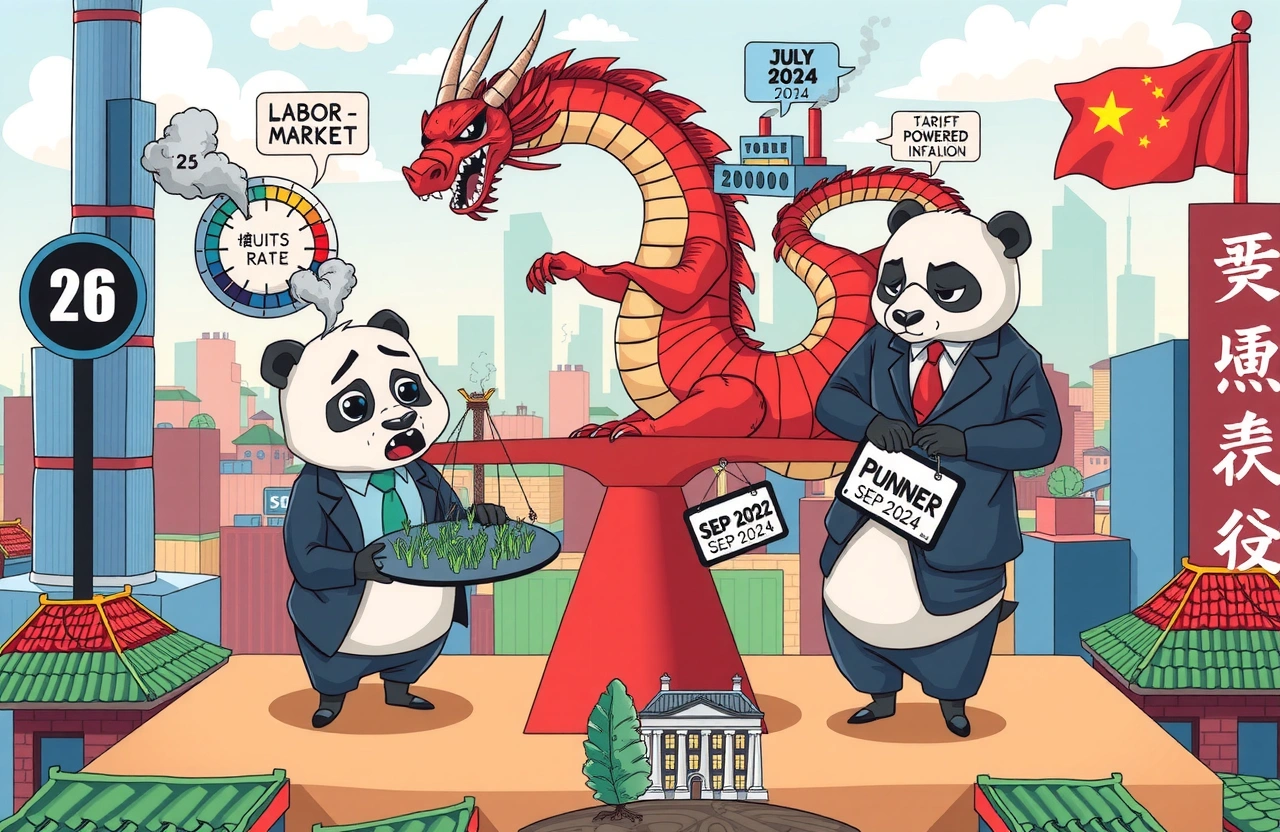
The Federal Reserve faces its most consequential policy debate in years as senior officials publicly clash over whether to cut interest rates in July. This extraordinary divergence pits Federal Reserve Governor Christopher Waller’s urgent call for immediate easing against hawkish warnings from Atlanta Fed President Raphael Bostic and Governor Adriana Kugler about premature action. At stake: whether to prioritize emerging labor market softness or stubborn inflation pressures amplified by tariff impacts. With Fed Chairman Jerome Powell navigating this deep policy rift, the central bank’s credibility hangs in the balance as markets hang on every utterance.
Dovish Camp: The Case for Preemptive Action
Led by Fed Governor Christopher Waller, the dovish faction argues the central bank should cut rates immediately rather than waiting for conclusive economic deterioration. In a striking departure from Fed protocol, Waller broke ranks during Wednesday’s New York speech.
Labor Market Vulnerabilities Drive Urgency
Waller framed his argument around emerging labor market risks: “Taken together, soft and hard data points clearly signal a weakening employment environment,” he declared. Unlike previous Fed commentary, Waller emphasized proactive policy: “When we see risks to employment materializing this substantially, waiting for conclusive proof could mean acting too late.” His analysis derives from multiple metrics including rising continuing jobless claims, slowing payroll growth, and sinking quit rates.
Daly’s Forward-Looking Policy Calculus
San Francisco Fed President Mary Daly reinforced Waller’s stance in subsequent remarks, insisting policymakers can’t afford to wait for inflation to neatly hit the Fed’s 2% target. “Remaining passive invites unnecessary economic harm,” Daly cautioned during her CNBC interview. She contends tariffs’ inflationary effects remain counterbalanced by a services disinflation trend. Daly recommends initiating cuts before economic indicators turn negative.
Hawkish Counteroffensive: Inflation Front Burner
The hawkish faction counters with stark inflation warnings, arguing that premature easing risks undermining progress against price pressures.
Bostic Sounds Tariff Warning
Atlanta Fed President Raphael Bostic delivered Thursday’s most forceful rebuttal: “June’s CPI data signaled potential inflationary inflection,” he stated. “We’re witnessing tariff effects manifest in consumer prices faster than anticipated.” Bostic points to building supply chain disruptions and small business surveys showing increasing price pressures. His conclusion remains unequivocal: “Maintaining current policy levels offers our best inflation-control strategy.”
Kugler’s Inflation Projections
Fed Governor Adriana Kugler heightened hawkish concerns presenting analysis suggesting the Personal Consumption Expenditures Price Index could climb to 2.5% this month. “Tariffs ripple effects remain underestimated,” Kugler warned during her Brookings Institution appearance. She anticipates amplified impacts as companies exhaust existing inventories by Q4 2024. Her position rests on business interviews confirming tariff pass-through strategies.
The Tariff Wildcard
Former President Donald Trump’s tariffs represent the policy unknown fueling Fed disagreement. Recent tariff rounds have targeted $18 billion in Chinese goods across strategic sectors including steel, aluminum, semiconductors, and electric vehicles.
Supply Chain Disruptions Materialize
Shipping data shows 12% fewer East Asian vessel bookings since May tariffs took effect – a leading indicator of import contraction. Manufacturers report lengthening lead times for tariff-affected components including semiconductors and battery materials. This Fed rate cut debate intensifies as tariff impacts remain difficult to model given simultaneous inventory drawdowns. New York Fed President John Williams acknowledged modeling gaps: “We’ll likely see tariff pressures escalate through 2025,” he conceded.
Industry Impact Analysis
Recent Federal Reserve Bank analyses reveal:
- Automotive sector facing 7-9% input cost increases
- Solar panel installations delayed due to component shortages
- Electronics manufacturers reporting 8-week order delays
- Retailers implementing selective price hikes
Policy Implications
The profound disagreement manifests in June’s Summary of Economic Projections (SEP) where forecasts bifurcated dramatically:
- 10 policymakers projected ≥2 rate cuts in 2024
- 7 participants foresaw no cuts before 2025
- Projected inflation variance doubled versus March projections
This divergence means September’s meeting becomes pivotal – with markets currently pricing cuts at 53% probability. Goldman Sachs analysts note “unusual lack of consensus” threatens forward guidance credibility.
The Path Forward
The Fed rate cut debate ultimately turns on forthcoming economic indicators. Two metrics will prove decisive:
Labor Market Monitoring
- July payrolls (August 2 release)
- JOLTS quit rate trajectory
- Underemployment rate movements
Inflation Gauges
- June Core PCE data (July 26)
- August CPI shelter component
- Inflation Expectations of Michigan Survey
These releases could tilt policy either toward immediate accommodation or sustained restraint. As Waller emphasized: “Policy shouldn’t chase events, but anticipate them.” This proactive approach faces resistance on inflation grounds. Ultimately, Fed communications suggest whichever indicator deteriorates first may dictate their policy path.
Navigating Monetary Uncertainty
The hardening policy positions represent more than technical disagreement – they reflect fundamentally different economic philosophies. The dovish camp embraces symmetric risk-taking to avoid recession while hawks prioritize anchoring inflation expectations. Market volatility will likely persist through summer as this Fed rate cut debate dominates financial discourse. Investors should monitor Friday’s retail sales release and next week’s flash PMIs for directional clues.
The Fed rarely faces such acute policy tension absent explicit crisis. The emerging tariff-driven inflation and labor market cooling creates the perfect storm for fundamental disagreement. Chairman Powell navigates treacherous terrain between competing risks: cut too soon and risk inflation resurgence versus hold too long and potentially sacrifice employment gains. Informed stakeholders should prepare financial positioning across multiple scenarios while tracking real-time indicators through the Federal Reserve Economic Data portal.