



Summary
– Decathlon pursued premium pricing strategy through expanded high-end product lines
– Core customers rejected price increases while failing to attract affluent shoppers
– Profit dropped 15.47% despite 3.8% revenue growth in 2024
– China market expansion stalled with store closures in major cities
– Identity crisis leaves brand stuck between price-sensitive and premium markets
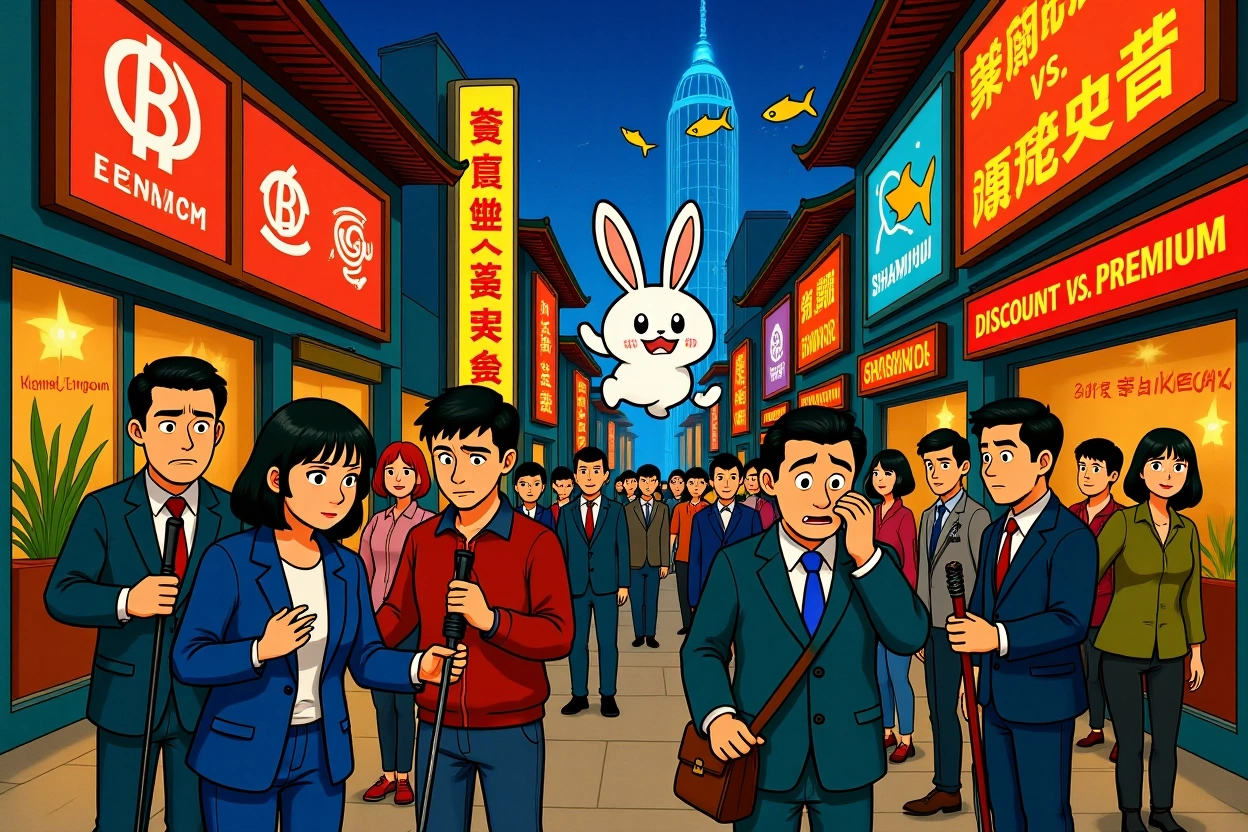
Remember Decathlon? Walk into a store today, and you might find a confusing mix of budget-friendly yoga mats and specialist sailing jackets priced over $1,400. This jarring contrast reveals Decathlon’s risky upscale transformation costing them dearly. In 2024, the sporting goods giant reported shocking profits plummeting 15.47%. Decathlon’s upmarket strategy attempted to elevate them beyond their ‘affordable basics’ reputation into premium sports equipment territory – but alienated their core customer base without winning over wealthy shoppers. This misstep highlights a fundamental brand identity crisis: Can a retailer catering to budget-conscious families successfully morph into a specialized performance equipment provider? We’ll analyze Decathlon’s pricing strategy missteps, retail transformation challenges, and what this strategy failure reveals about navigating China’s polarized consumer landscape.
The Price Shock: Core Customers Fleeing Stores
Decathlon built its reputation on democratizing sports access – think $10 quick-dry shirts and $25 camping tents that became staples for students and budget-conscious families. That changed abruptly in 2023 when customers encountered new price tags like:
– Licensed cycling jersey increased from $15 to $48
– Basic hiking shoes jumping from $28 to $160+
– Camping starter kits surpassing the $300 threshold
Four Shanghai outlets now display $1,400+ carbon fiber racing bikes and professional-grade ski equipment prominently beside clearance racks. Customer reactions appear in comments like “Now I see price tags first and quality second.” According to Retail Analytics Asia, average transaction value decreased 11% year-on-year as the quintessential “buy five basic items” shopping pattern vanished.
Social media amplifies the discontent:
– “Decathlon’s hiking poles cost more than Decathlon-branded tents? What messaging is this?”
– “My Decathlon loyalty dissolved when children’s swim goggles increased 70%”
– “The sailing jackets look impressive, but why would sailors trust Decathlon over dedicated marine brands?”
The retailer failed to recognize how deeply price anchored their reputation. The attempted Decathlon’s upmarket strategy violated psychological pricing expectations established over decades, driving shoppers toward competitors maintaining accessible price points.
The Misguided Transformation Blueprint
Decathlon deployed textbook premiumization tactics under new CEO Barbara Martin, recruited specifically to helm the upscale transition. Major initiatives included:
Brand Architecture Overhaul
– Launching premium sub-brands: Kiprun running ($180 shoes), Van Rysel cycling ($5,200 bikes)
– Cutting entry-level SKUs by approximately 30% across stores
– Digital dashboard enhancements letting Shanghai customers simulate gear performance
“We’re evolving from sports supermarket to specialist consultancy” declared China Marketing Director Ming Li at the Nanjing flagship opening. Yet expensive showroom enhancements coincided with Shanghai suburban outlet closures – signaling conflicting priorities.
The Identity Crisis Deepens
Consumer perception gap analysis reveals severe misalignment:
| Consumer Perception | Brand Intention |
|———————|—————-|
| Practical parent purchases | High-performance solutions |
| Bargain basics | Technical innovation |
| Starter equipment | Lifetime sports commitment |
Sports retail analyst Chen Wei observes the paradox: “Spending $12,000 renovating a Beijing store to sell $10 swim caps shows fundamental misunderstanding premium requires entire experience consistency, not select high-ticket items wedged between budget staples.”
The Decathlon’s upmarket strategy exemplifies the trap brands face switching segments. Consequently, mid-market competitors benefited significantly:
– Uniqlo activewear sales grew 31% in Q4 2022
– Warehouse chain sport sections expanded capacity 18%
– Alibaba Sports reported 40% budget equipment growth
China Market Fatigue Exposes Global Weakness
China signaled early warnings about unsustainable growth:
– Expansion rate slowed from 24% annually (2013-2018) to 8% post-pandemic
– Closed 17 metro locations between January-October 2023
– Online market share dropped behind domestic rivals Toread and Anta
The stalled footprint matters critically:

Globally, stark deceleration reveals systemic vulnerability:
| Year | Total Revenue | Growth Rate | Profit Margin |
|——|—————|————-|—————|
| 2021 | $162.4 billion | +21.3% | 6.8% |
| 2022 | $153.7 billion | +1.15% | 5.9% |
| 2023 | $154.2 billion | +0.32% | 4.9% |
The shrinking margins powerfully undermine Decathlon’s upmarket strategy amidst premium competitors achieving very different results:
– Arc’teryx gross margins increased to 59.2%
– Lululemon captured 6% market share
– Lining premium sports lines achieved 97% sell-through
The collision became visible: Decathlon invested deeply toward premiumization while cheaper competitors innovate quicker and premium brands strengthen niche loyalty.
Navigating Dual Marketing Audiences
The fundamental challenge? Disconnected marketing narratives confuse both segments:
Budget Sensitive Consumers
Core messaging focuses on:
– Family affordability
– Casual recreation accessibility
– Value engineering excellence
Premium Aspirational Consumers
Messaging emphasizes:
– Technical performance specs
– Specialist validation
– Community exclusivity
Decathlon’s recent advertising encapsulates the schizophrenia – YouTube commercials showcase college athletes training with $200+ Van Rysel cycling computers beside $12 folding chairs prominently displayed.
Singapore researcher Tomas Chin notes the unsustainable tension: “Simultaneously courting recreational kayak buyers ($299 inflatable kayaks) and elite cycling enthusiasts ($8,000 TT bikes) requires impossible communications balance.” Brands succeeding targeting distinct tiers typically utilize:
– Clear price-tier segmentation
– Separate branding architecture
– Sales channel differentiation
The experimental Decathlon’s upmarket strategy demonstrated precisely why straddling segments rarely succeeds.
A New Chapter Under Javier López
With Barbara Martin exiting abruptly after tricky results, veteran Executive Javier López confronts daunting restoration essentials:
Urgent Inventory Corrections
– Budget essentials stock rotating slower by 23 days
– Premium bike collections average shelf life exceeding 9 months
– Seasonal clearance campaigns discounting newly launched gear
Rebalancing Portfolio Distribution
Analysts suggest emphasizing:
– Sub-brand separation through distinctive retail environments
– Re-expanded entry-tier footprint outside metros
– Specialist store-within-store concepts for Van Rysel/Kiprun
Pragmatically, López faces market polarization requiring clearer strategic choices.
The retail universe evolves fundamentally – winners connect authentically around clearly defined purpose and community:
– REI thrives cultivating outdoor enthusiast identities
– Decathlon built community celebrating accessible participation
– Premiumization sacrificed that defining accessibility ethos
Retail consultant Li Ming observes operators like Costco successfully navigating identical currents because they “maintain distinctive character while enabling premium exploration. Crucially, Decathlon drifted from its founding democratic athleticism core without compensating storytelling or experiential premium.”
Decathlon pioneered accessibly priced innovation resetting industry expectations – ironically, abandoning that differentiation launched their current dilemma. Correcting course requires acknowledging identities evolve slower than products.
Restoring Decathlon requires decisive choices around authentic growth opportunities. Retail leaders navigating turbulent landscapes succeed balancing transformation fundamentals.