



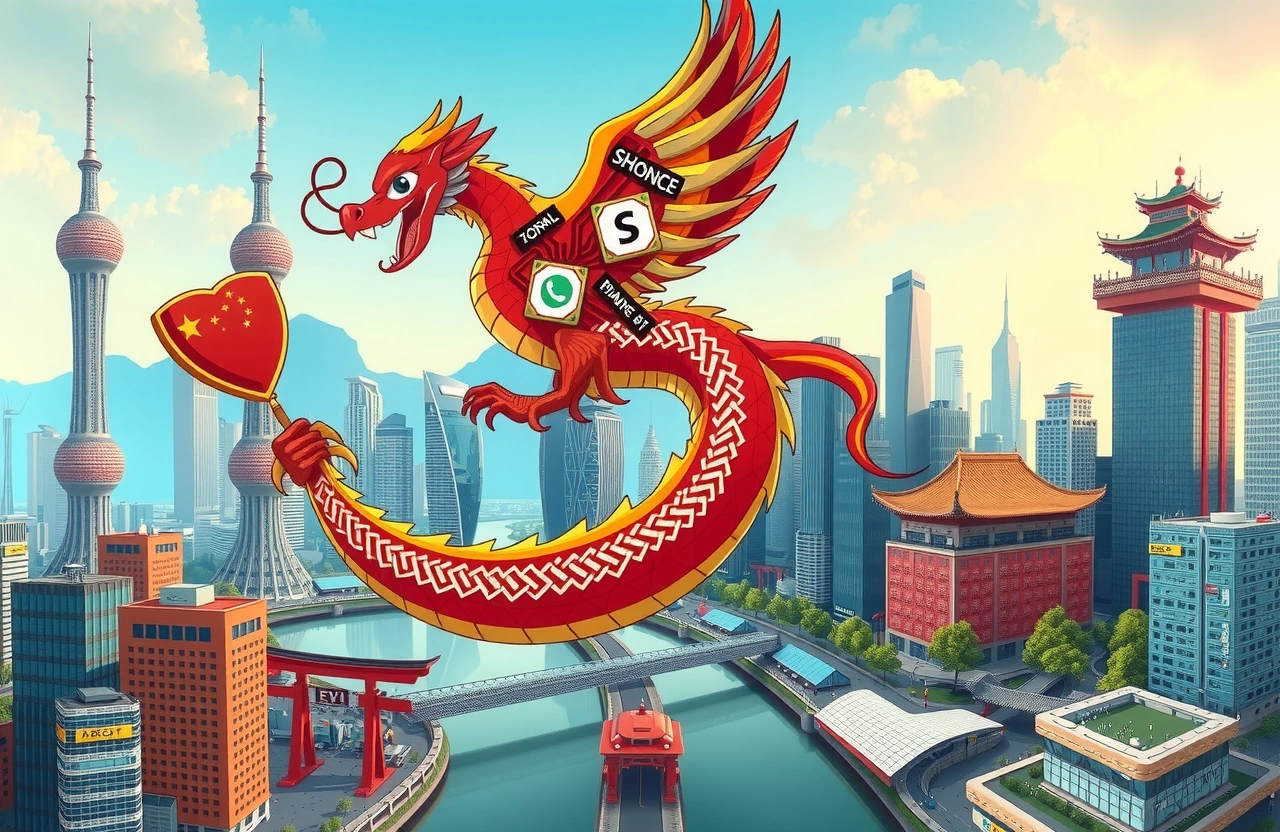
The Semiconductor Squeeze and China’s Strategic Pivot
Global electronics manufacturing faces unprecedented disruption as integrated circuits disappear from supply chains worldwide. Smartphone factories suspend production lines, automobile giants idle assembly plants, and consumer electronics brands scramble for dwindling inventories. At the epicenter of this storm stands China’s technology sector – both victim and architect in navigating this crisis. Chinese enterprises acutely experience this shortage while simultaneously accelerating indigenous innovation paths.
The Perfect Storm: Forces Driving Chip Scarcity
- Exponential demand growth from 5G devices and cloud computing
- COVID-era factory shutdowns disrupting silicon wafer production
- Geopolitical trade barriers limiting equipment transfers
- Allocation disputes between automotive and consumer electronics sectors
China’s Evolving Semiconductor Policy Framework
The State Council’s evolving Made in China 2025 guidelines prioritizes semiconductor self-sufficiency through coordinated policy frameworks blending investment, talent development, and research infrastructure. Since 2021, policymakers allocated over $150 billion through initiatives bridging public-private sector cooperation.
National Integrated Circuit Investment Funds
Commonly called the “Big Funds,” these state-backed financing vehicles capitalized leading domestic chipmakers including Semiconductor Manufacturing International Corp (SMIC) and Hua Hong Semiconductor. Phase III established in May 2024 targets advanced packaging and specialty chip development.
Talent Acceleration Programs
China entrenches incentives attracting semiconductor engineers globally. Top researchers receive upwards of $1 million housing allowances alongside streamlined visa processing through programs directed by Ministry of Industry and Information Technology officials.
Domestic Production Capacity Expansion
Chinese foundries rapidly scale capabilities despite ASML lithography equipment restrictions. SMIC progressed to 7nm nodes using existing deep ultraviolet (DUV) systems while developing alternative chip-stacking approaches. Regional clusters demonstrate complementary specialization.
Shanghai – Yangtze River Delta Hub
- SMIC’s advanced logic wafer capacity
- Hua Hong Semiconductor power management ICs
- Pureboard PCB manufacturing infrastructure
Shenzhen – Guangdong-Hong Kong-Macau Corridor
Integrated circuitry ecosystems surrounding Huawei and Tencent headquarters enable rapid prototyping collaborations. Private equity increasingly flows into Shenzhen-based startups like GTA Semiconductor.
Market Impacts Across Chinese Industries
Supply chain volatility differently affects sectors dependent on silicon components. Automakers suffered steepest output declines while industrial IoT developers found alternative solutions through customization partnerships.
Automotive Sector Contractions
Contemporary Amperex Technology (CATL) delayed battery management systems awaiting microcontrollers. Production forecasts revised downward by China Association of Automobile Manufacturers.
Consumer Electronics Adaptation
Xiaomi consolidated chip orders favoring Qualcomm and MediaTek while investing in domestic imaging sensor producers like OmniVision Technologies.
International Partnership Strategies
Beijing balances trade reprisals with selective technology transfers. Taiwan Semiconductor Manufacturing Company (TSMC) maintained China JV expansions despite US restrictions. Memory manufacturers like Yangtze Memory Technologies pursue open licensing partnerships globally.
European Equipment Access Channels
ASML maintained service teams supporting installed base DUV tools on the mainland. Chinese entities secured secondary equipment through Singapore and Malaysia intermediary channels.
Future Supply Chain Projections
Leading economists predict partial market stabilization by late 2025 albeit with permanently fragmented sourcing patterns. Constraints persist in areas requiring sub-5 nanometer geometries absent extreme ultraviolet (EUV) lithography access.
Specialization Pathway Models
- Mature node dominance for automotive and industrial chips
- Chiplet integration advancing beyond monolithic designs
- RISC-V architecture adoption acceleration
Industry Transformation Imperatives
Supply shifts compel Chinese innovators toward specialized niches avoiding head-to-head competition with dominant global players. Experts cite positioning opportunities including:
- Automotive-grade silicon carbide power solutions
- Industrial internet-of-things (IIoT) microcontrollers
- AI-accelerator application-specific integrated circuits
Proceedings from China Semiconductor Industry Association conferences emphasize collaborative capacity optimization between fabless designers and state-aligned manufacturing partners. Premier Li Qiang’s recent “Whole Nation System” remarks underscore collective resource coordination.
Strategic diversification beyond smartphones towards less geopolitically contested industrial ecosystems accelerates across 2024 corporate planning sessions. Leading electronics enterprises report reshoring key components domestically wherever international sourcing remains unreliable.
China’s semiconductor campaign continues evolving through pragmatic adaptations addressing foreign dominance while realistically acknowledging innovation timelines. Visionary startup ecosystems emerge around Shanghai and Shenzhen foundations combining semiconductor veterans with government-backed specialists. What final format emerges remains fluid, but market indicators increasingly validate China’s growing role across mature node integrated circuits.
Corporate procurement managers should triple-source vulnerable components immediately while exploring collaborations with emerging suppliers. Technology executives must evaluate specialized semiconductor niches supporting China’s signature auto electrification and industrial automation initiatives.