



Summary:
– China secured $48 billion in pharmaceutical licensing deals during first-half 2025, capturing 32% of global transactions despite geopolitical tensions.
– Multinational companies like AstraZeneca and Pfizer accelerate partnerships with Chinese firms to address looming patent expirations on blockbuster drugs.
– Cost-efficient R&D and breakthroughs in ADC/BsAb therapies position China as a strategic innovation partner for Western drug developers.
– Chinese biotechs leverage offshore deals to overcome domestic funding shortages while expanding global influence.
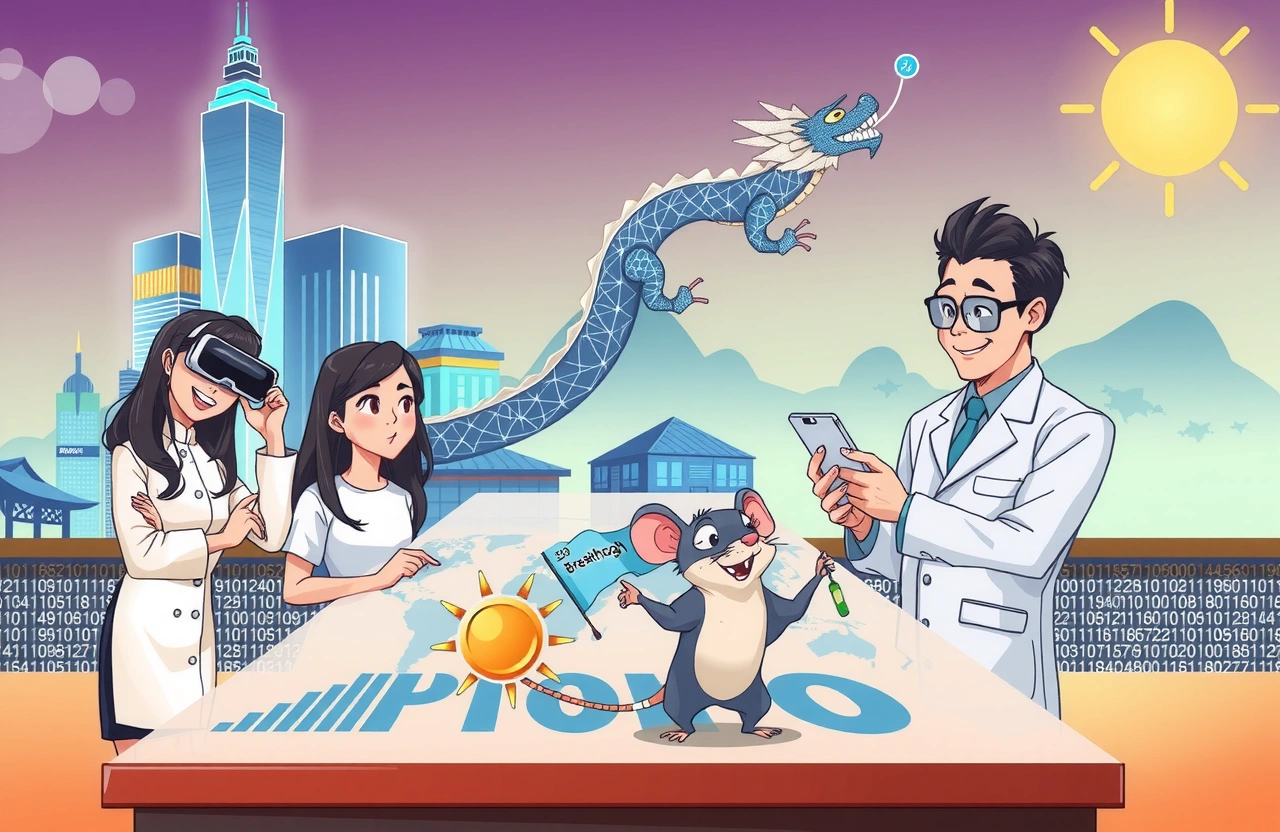
Amid tightening healthcare budgets and intensifying geopolitical friction, a seismic shift is transforming medicine’s innovation geography. During just six months of 2025, China secured pharmaceutical licensing deals worth $48 billion – representing nearly one-third of worldwide transactions according to industry trackers. The nation once regarded as a generic drug manufacturer now emerges as an indispensable partner for multinational giants confronting patent cliffs and pipeline gaps. This redistribution of power gradually redefines how breakthrough therapies reach patients globally.
China’s Emergence as a Global Biopharma Powerhouse
In a landmark transition, China now anchors 18% of international licensing collaborations and 32% of transaction value according to Jefferies Group reports. This unprecedented scale positions Beijing as the epicenter of pharmaceutical dealmaking, eclipsing traditional hubs like Boston and Basel.
Morgan Stanley analysts highlighted AstraZeneca’s aggressive positioning, with six China-focused partnerships exceeding $136 billion and including landmark arrangements:
– $5.2 billion cooperation with Sinopharm’s pharmaceutical division
– Joint development initiative with Jiangsu Hengrui Pharmaceuticals
Strategic Partnerships Reshaping Market Dynamics
Pfizer executed 2025’s single-largest deal through a $6 billion oncology partnership with China-based Sansheng Pharmaceuticals. Meanwhile, Lilly and Merck diversified portfolios through early-stage agreements with Shanghai-based innovators. These collaborations starkly contrast with tariffs imposed during US-China trade tensions by former President Donald Trump – proving commercial imperatives trump political friction.
Multinationals’ Patent Cliff Crisis Driving China Collaborations
Major pharmaceutical firms face an innovation emergency as therapies generating over $300 billion annually lose patent protection between 2025-2030. Keytruda, Eliquis, and Opdivo – treatments commanding >$20 billion yearly sales – will confront generic competition while European and American payers implement unprecedented price controls.
China’s Triple Advantage: Speed, Efficacy, Cost
Facing internal R&D timelines exceeding a decade, Western players increasingly outsource innovation to Asian partners where:
– Clinical trial recruitment occurs 20-30% faster
– Development costs run 40-60% below US/EU benchmarks
– Novel modalities like antibody-drug conjugates achieve superior response rates
As Sanofi CEO Paul Hudson acknowledged: “Chinese trials deliver actionable data months ahead of Western counterparts at half the budget.”
Four Forces Propelling China’s Pharma Dominance
China’s biotech ascendancy stems from converging vectors transforming research stewardship worldwide.
Policy Cultivation and Capital Allocation
Beijing’s 2015 drug regulatory reforms accelerated approvals while the Shanghai Stock Exchange STAR Market funded hundreds of preclinical ventures. Private capital followed aggressively – illustrated by Qiming Venture Partners’ Gary Rieschel remarking: “The DeepSeek moment for Chinese biotech is now.”
Crucially, returning diaspora scientists including BeiGene founder John Oyler and Zai Lab co-founder Samantha Du accelerated global-standard research infrastructure, establishing target identification and validation labs outpacing translational research hubs.
Technological Breakthroughs Commanding Premium Valuations
China dominates escalating ADC and bispecific antibody development:
– ADC assets constitute 58% of licensing deal structures
– BeiGene and RemeGen pioneered novel antibody scaffolds
In therapeutic areas like autoimmune disorders and oncology, Chinese trials deliver clinically meaningful improvements in progression-free survival according to FDA audit reports.
Navigating China’s Biotech Evolution
Despite stellar financial metrics, structural imbalances persist across mainland’s innovation ecosystem.
Capital Constraints Forcing Strategic Pivots
Drying VC funding plunged 44% year-over-year throughout 2024, compelling developers to prioritize non-dilutive licensing. As Rieschel noted: “Regional rights exchanges provide breathing room to build global trial capabilities absent overseas revenues.” Top firms established joint ventures guaranteeing international commercial infrastructure.
Globalization Gambits Beyond Licensing
Forward-thinking companies employed complementary approaches:
– Establishment of US/EU clinical operations
– Direct overseas commercialization (e.g. Hengrui’s camrelizumab)
– Portfolio diversification through acquisitions
Therapeutics attracting premium valuations included:
– Next-generation immune checkpoint inhibitors
– Tumor microenvironment modulators
– CNS-penetrant antibodies
The Road Ahead for Global Pharma
With Goldman Sachs analysis confirming Chinese biotechs contribute 33% of global pipeline innovation yet trade at just 14% of US peer valuations, capital reallocation appears inevitable. Structural reshoring remains limited by IP sensitivity – manufacturing components now integrate localized API sourcing through Sino-European JVs like WuXi STA’s Belgian facility.
Competitive dynamics will prioritize integrated global portfolios wherein Western commercial strength merges with Asian innovation velocity. Companies failing to localize discovery partnerships risk exclusion from therapeutic breakthroughs potentially defining next-decade medicine.
Industry stakeholders must reassess strategic positioning: cultivate Chinese research collaborations immediately through specialized BD teams with linguistic capabilities or accelerate inorganic pipeline expansion targeting ADC innovators. Medicine’s new geography demands nothing less than total reinvention.