



The New Policy Landscape
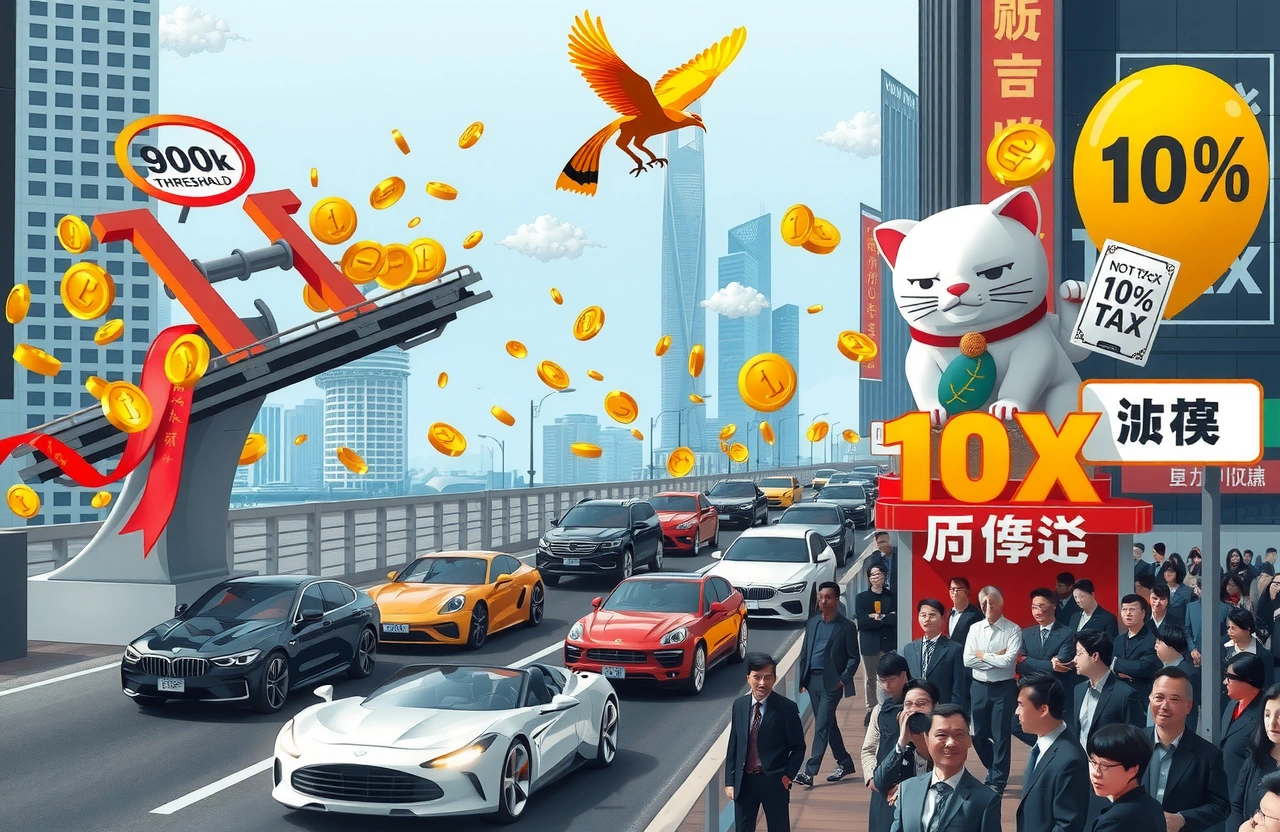
China’s Ministry of Finance and State Taxation Administration announced sweeping changes to luxury vehicle taxation on July 17th, lowering the ultra-luxury car consumption tax threshold from 1.3 million yuan to 900,000 yuan (excluding VAT). Effective July 20, 2025, this adjustment now includes electric, fuel cell, and hybrid vehicles under the 10% retail consumption tax coverage, fundamentally reshaping premium automobile pricing strategies overnight.
Calculation Mechanics
The actual impact point for consumers begins at 1,017,000 yuan OTR price (900,000 yuan vehicle price plus 117,000 yuan VAT). This represents an 18.9% effective price increase for models priced between the previous exemption threshold and the new cutoff line.
Market Contraction Revealed
Chinese Automobile Dealers Association data reveals steep declines in luxury vehicle sales during H1 2025, with deliveries above the new tax threshold plummeting 49% year-on-year to just 37,000 units. Traditional combustion engines continue dominating this segment, comprising nearly 90% of ultra-luxury sales despite rapid EV adoption in mainstream segments.
H1 2025 Sales Performance
- Overall luxury market: 1.45 million units
- Vehicles within tax adjustment zone: Approximately 20,000 units
- Market concentration analysis
Brand Vulnerability Assessment
Market concentration magnifies policy impacts, with five automakers controlling over 98% of China’s ultra-luxury segment. This creates asymmetric exposure to pricing adjustments that could trigger significant sales realignment.
Market Share Breakdown
- Section 1: German dominance
- Mercedes-Benz: 48% share (16,000 units)
- Porsche: 18% share (6,800 units)
- Section 2: Luxury SUV specialists
- Land Rover: 23% share (8,500 units)
- Section 3: Premium contenders
- Lexus: 8% share (3,000 units)
- Bentley: 3% share (1,100 units)
Consumer Impact Dynamics
The additional tax burden introduces complex purchasing psychology into high-value transactions. For premium vehicles now sliding into taxable territory, price increases ranging from 85,000-159,000 yuan may trigger one of three consumer responses.
Behavioral Shifts Expected
Field data indicates budget-conscious luxury buyers exhibit:
- 12-18 month purchase postponements
- Downward migration to tax-exempt models
- Accelerated consideration of Chinese alternatives
Current Pricing Strategies
Automakers deploy tactical responses to soften tax impacts, including manufacturer subsidies and strategic pricing. Porsche significantly discounts Cayenne and Panamera models through dealer incentives while Maserati expands Quattroporte financing programs. Mercedes-Benz deploys certified pre-owned promotions for S-Class models.
Domestic Disruptors Emerge
Chinese automakers actively fill the ultra-luxury vacuum created by European brands’ tax challenges. BYD’s Yangwang U8 premium off-roader starts at 1.09 million yuan as Hongqi launches the Jinkuihua Guoya executive sedan at 1.28 million yuan.
Strategic Positioning
- Zunjie S800 positioned below 900,000 yuan threshold
- Dongfeng Mengshi 917 wilderness capabilities
- Battery technology advantages in registration
Industry Implications & Strategies
Automakers should re-evaluate China entry strategies through product localization and powertrain optimization. Prepare tiered pricing architectures with tactical luxury tax management and prioritize certified pre-owned programs to maintain volume.
Consumers navigating tax uncertainty should escalate purchase timing, scrutinize bundled incentive packages, and demand comprehensive total-cost-of-ownership projections. Industry analysts now project a temporary luxury market contraction while domestic brands accelerate development cycles.
The Road Ahead
With tax adjustments redistributing market share, automakers must rapidly recalibrate value propositions. Domestic challengers gain advantage through intelligent pricing, benefiting BYD and Hongqi while intensifying pressure on Porsche and Land Rover. Future innovation cycles must prioritize tax-efficient architecture through localized production and EV integration.
Engage dealer representatives immediately for pre-implementation purchase options ahead of July 20th policy enactment. Subscribe to our policy alerts for real-time regulatory analysis affecting premium vehicle acquisitions.