



Executive Summary
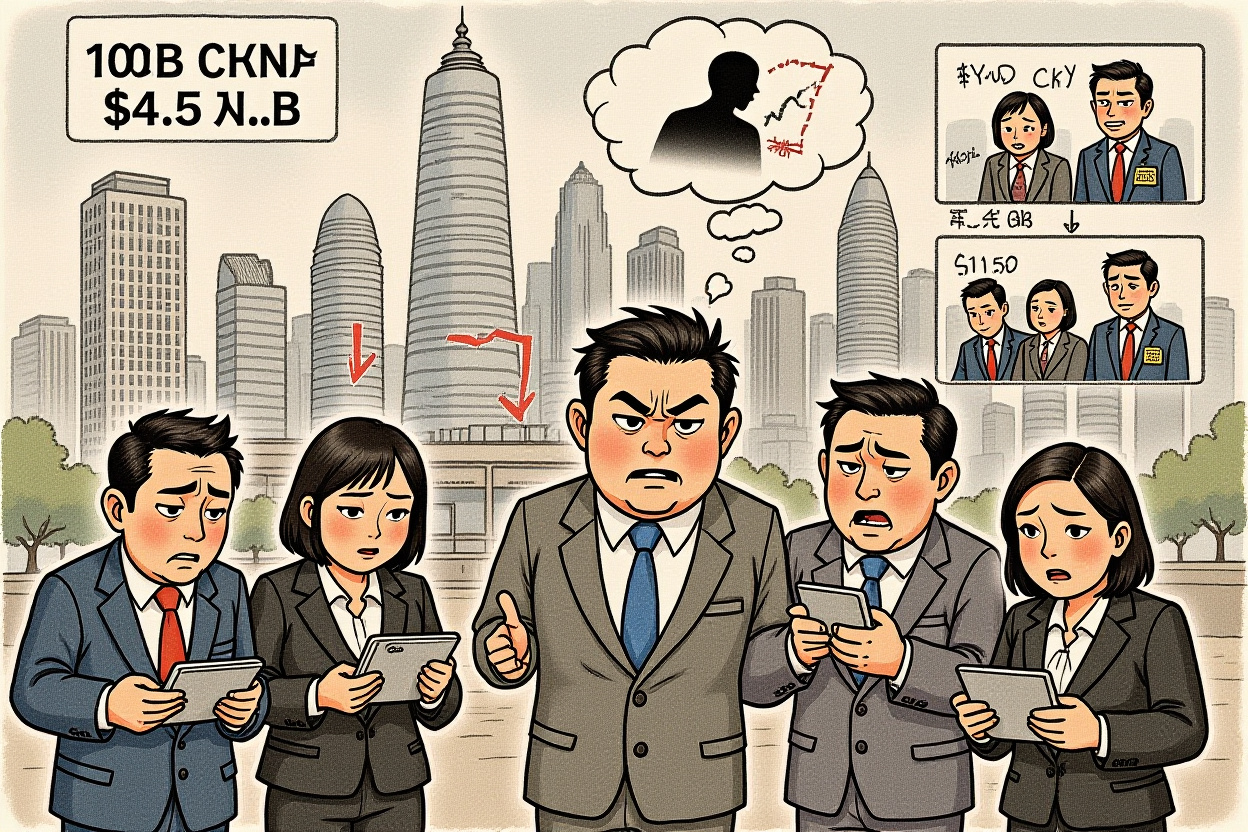
The detention of Xiangyuan Holding Group’s chairman marks a pivotal moment in a widening financial crisis. Key takeaways for investors and market participants include:
– Yu Faxiang (俞发祥), the billionaire founder and controller of the Xiangyuan empire, was taken into custody by Shaoxing police on criminal charges, sending shockwaves through related listed companies.
– The core of the Xiangyuan Group crisis stems from the default of over 100 billion yuan (approximately $14.5 billion) in financial products sold through the Zhejiang Financial Asset Exchange Center (浙金中心), exposing severe liquidity pressures.
– Listed subsidiaries Xiangyuan Culture & Tourism Co., Ltd. (祥源文旅) and Anhui Jiaojian Construction Co., Ltd. (交建股份) have seen their shares plummet and over 8 billion shares frozen, threatening control stability.
– A government-led working group has intervened, highlighting regulatory concerns over systemic risks and the need for enhanced due diligence in China’s complex credit environment.
– This event underscores the persistent vulnerabilities in China’s corporate debt and shadow banking sectors, with implications for market stability and investor confidence in the year ahead.
The Sudden Fall of a Zhejiang Magnate
In a dramatic turn of events that has captivated China’s financial circles, Yu Faxiang (俞发祥), the high-profile chairman and actual controller of Xiangyuan Holding Group Co., Ltd. (祥源控股集团有限责任公司), was placed under criminal coercive measures by the Shaoxing Public Security Bureau. The announcement, made public on December 22 via filings from his listed companies, immediately triggered a sell-off in related stocks and raised urgent questions about the health of one of Zhejiang’s prominent business empires. This development is not an isolated incident but the culmination of a rapidly escalating Xiangyuan Group crisis that has been brewing for weeks, revealing deep fissures in a conglomerate built on real estate and tourism.
From Rags to Riches: The Yu Faxiang Story
Yu Faxiang (俞发祥), born in 1971 in Shengzhou, Zhejiang, epitomized the self-made success story prevalent among China’s private entrepreneurs. He founded Xiangyuan Holding and, through aggressive expansion, built a diversified portfolio spanning tourism, marine parks, and infrastructure construction. His flagship listed assets included Haichang Ocean Park (海昌海洋公园), Anhui Jiaojian Construction Co., Ltd. (交建股份), and Xiangyuan Culture & Tourism Co., Ltd. (祥源文旅). At his peak, Yu’s personal wealth was estimated at 14.5 billion yuan, landing him at position 465 on the Hurun Rich List as of October 2025. His detention underscores the precarious nature of wealth tied to highly leveraged business models in China’s evolving economic landscape.
The Empire at a Glance: Xiangyuan’s Key Holdings
The Xiangyuan Group crisis is magnified by the scale and interconnectedness of its operations. Beyond the listed entities, the group controlled a vast network of real estate projects and financial platforms. The group’s total assets were reportedly around 60 billion yuan, but with liabilities estimated at 40 billion yuan, the margin for error was thin. The core vulnerability lay in its reliance on short-term financing through wealth management products to fund long-term, illiquid real estate developments—a common but risky practice that has undone several Chinese conglomerates in recent years.
Unmasking the Financial Time Bomb
The trigger for the current Xiangyuan Group crisis was the concentrated default of multiple financial asset income right products issued by Xiangyuan Holding on the Zhejiang Financial Asset Exchange Center (Zhejiang Financial Asset Trading Center Co., Ltd., 浙金中心). Starting November 28, a series of products with Yu Faxiang (俞发祥) providing joint liability guarantees began missing payments, sparking panic among nearly ten thousand investors. These products, marketed as low-risk with annualized returns of 4% to 5%, had underlying assets tied to receivables from Xiangyuan’s real estate projects across China.
The Zhejiang Financial Asset Exchange Center (浙金中心) Channel
浙金中心 operated as a provincial financial asset exchange, a type of platform often used by companies to raise funds outside traditional banking channels—part of China’s vast shadow banking system. Xiangyuan leveraged this platform extensively, issuing over 200 products with a total transaction scale exceeding 100 billion yuan, according to investor compilations. The cancellation of the exchange’s trading qualifications earlier this year severed Xiangyuan’s ability to roll over debts, directly precipitating the liquidity crunch. Shen Baoshan (沈保山), Executive President of Xiangyuan Holding, admitted in early December that while assets theoretically covered liabilities, 30 billion yuan in real estate inventory was stuck unsold due to the sector’s downturn, crippling cash flow.
Scale of the Default: Beyond 200 Billion Yuan?
Initial reports pegged the overdue amount at over 100 billion yuan, but subsequent investigations by media like Caixin suggest the involved sums could exceed 200 billion yuan. This magnitude places the Xiangyuan Group crisis among the significant non-bank financial failures in recent memory. The products were sold to retail investors, many of whom invested life savings ranging from several hundred thousand to millions of yuan. The platform has now halted withdrawals, leaving investors like Chen Bin, who spoke to reporters, in despair: “I was preparing for retirement in my fifties. Now with this investment blow-up, I have to go back and compete with young people.”
Market Carnage and Corporate Fallout
The direct impact of the Xiangyuan Group crisis has been most visible in the stock performance and corporate governance of its listed subsidiaries. Both Xiangyuan Culture & Tourism (600576.SH) and Jiaojian Shares (603815.SH) have seen their share prices nosedive, losing over 17% and 34% respectively in December alone. More critically, the freezing of shares has raised existential questions about control and continuity.
Share Freezes: Over 8 Billion Shares Locked
On December 16, both companies announced extensive judicial freezes and awaiting freezes on shares held by their controlling shareholder, Xiangyuan Holding. For Xiangyuan Culture & Tourism, 612 million shares, representing 58.08% of total equity, were frozen, with an additional 462 million shares under awaiting freeze. For Jiaojian Shares, 274 million shares (44.32% of equity) were affected, with portions frozen by the Shanghai Financial Court, marked by judicial authorities, and subject to a six-month awaiting freeze applied for by the Shaoxing Public Security Bureau. The companies asserted their operational independence from the parent but acknowledged that if these shares face judicial disposal, the stability of control could be compromised.
Investor Communications and Damage Control
In response to the freezes, Xiangyuan Culture & Tourism stated that the freezes stemmed from three main issues: financial loan guarantee disputes involving Xiangyuan Lvkai (祥源旅开), debt risks from an associated platform of the indirect controlling shareholder, and similar disputes with Anhui Xiangyuan. The company emphasized that the Shaoxing government had formed a working group to support Xiangyuan Holding, which officially entered the group on December 12 to investigate assets and liabilities, ensure normal production, and safeguard investor rights. This intervention is a classic move in China’s approach to containing corporate debt crises, aiming for orderly resolution while preventing social unrest.
Regulatory Reckoning and Government Intervention
The rapid deployment of a government working group signals the seriousness with which authorities are treating the Xiangyuan Group crisis. The Shaoxing City Working Group to Support Xiangyuan Holding is tasked with conducting a comprehensive排查 (inventory) of assets and liabilities, overseeing debt repayment, and maintaining operations. This mirrors previous state-led rescues in China’s corporate sector, where local governments step in to manage fallout from major defaults, especially when retail investors are involved.
Broader Implications for Financial Regulation
This crisis is likely to accelerate regulatory scrutiny on financial asset exchanges and the sale of quasi-guaranteed wealth management products. The China Securities Regulatory Commission (CSRC, 中国证监会) and the People’s Bank of China (PBOC, 中国人民银行) have been gradually tightening rules on shadow banking, and the Xiangyuan case provides a stark example of the risks. Investors’ reliance on implicit guarantees from high-net-worth individuals like Yu Faxiang (俞发祥) has been shattered, highlighting the need for clearer risk disclosure and stronger oversight of underlying assets. The ongoing investigation into Yu’s alleged crimes may also focus on potential fraud, misappropriation, or illegal fundraising, common charges in such scenarios.
The Human Cost: Stories from the Ground
Beyond the numbers, the Xiangyuan Group crisis has devastated ordinary citizens. Reports from Daily Economic News (每日经济新闻) and others depict retirees and middle-class families who poured their savings into these products, lured by the promised safety and the backing of a reputable tycoon. The psychological and financial toll is immense, eroding trust in non-bank investment channels. This human element often pressures local governments to intervene, as seen here, to maintain social stability—a top priority in China’s governance model.
Path to Resolution and Market Lessons
Looking ahead, the resolution of the Xiangyuan Group crisis will involve complex debt restructuring, asset sales, and potentially, the breakup of parts of the empire. The government working group will likely prioritize repaying retail investors, possibly through staged payments funded by liquidating real estate projects or other assets. For the listed companies, strategic investors or state-backed entities might be brought in to stabilize ownership if the frozen shares are auctioned off.
Investment Takeaways for Market Participants
For institutional investors and fund managers active in Chinese equities, this episode reinforces several critical lessons:
– Conduct deep due diligence on conglomerate structures, especially those with heavy exposure to real estate and shadow financing.
– Scrutinize the quality of underlying assets in wealth management products, looking beyond issuer guarantees.
– Monitor regulatory trends closely, as crackdowns on financial exchanges can abruptly cut off liquidity for dependent firms.
– Consider the governance risks posed by overly centralized control in family-run or founder-led businesses, where legal troubles of key individuals can destabilize entire groups.
Forward Outlook for Chinese Equities
The Xiangyuan Group crisis may lead to short-term volatility in sectors like tourism and construction, but it also presents a cleansing opportunity for the market. Regulators are likely to enforce stricter disclosure requirements for related-party transactions and contingent liabilities. For global investors, this underscores the importance of a selective, research-driven approach, focusing on companies with transparent balance sheets and sustainable funding models. As China continues its economic rebalancing, such stress events, while painful, are integral to the maturation of its capital markets.
Synthesizing the Storm: What Lies Ahead
The detention of Yu Faxiang (俞发祥) and the ensuing financial unraveling of the Xiangyuan Group serve as a potent reminder of the interconnected risks in China’s corporate landscape. This crisis exposes the fragility of business models built on perpetual refinancing and the dangers lurking in the shadow banking sector. While government intervention aims to contain the immediate fallout, the long-term implications include heightened investor caution, tighter regulatory oversight, and a potential repricing of risk for similar conglomerates.
For sophisticated market participants, the call to action is clear: enhance vigilance in portfolio selection, demand greater transparency from Chinese issuers, and factor in governance and liquidity risks as central components of investment analysis. The Xiangyuan Group crisis is not merely a headline but a case study in the evolving dynamics of Chinese capitalism—one that will resonate in boardrooms and trading desks worldwide as the saga unfolds.