



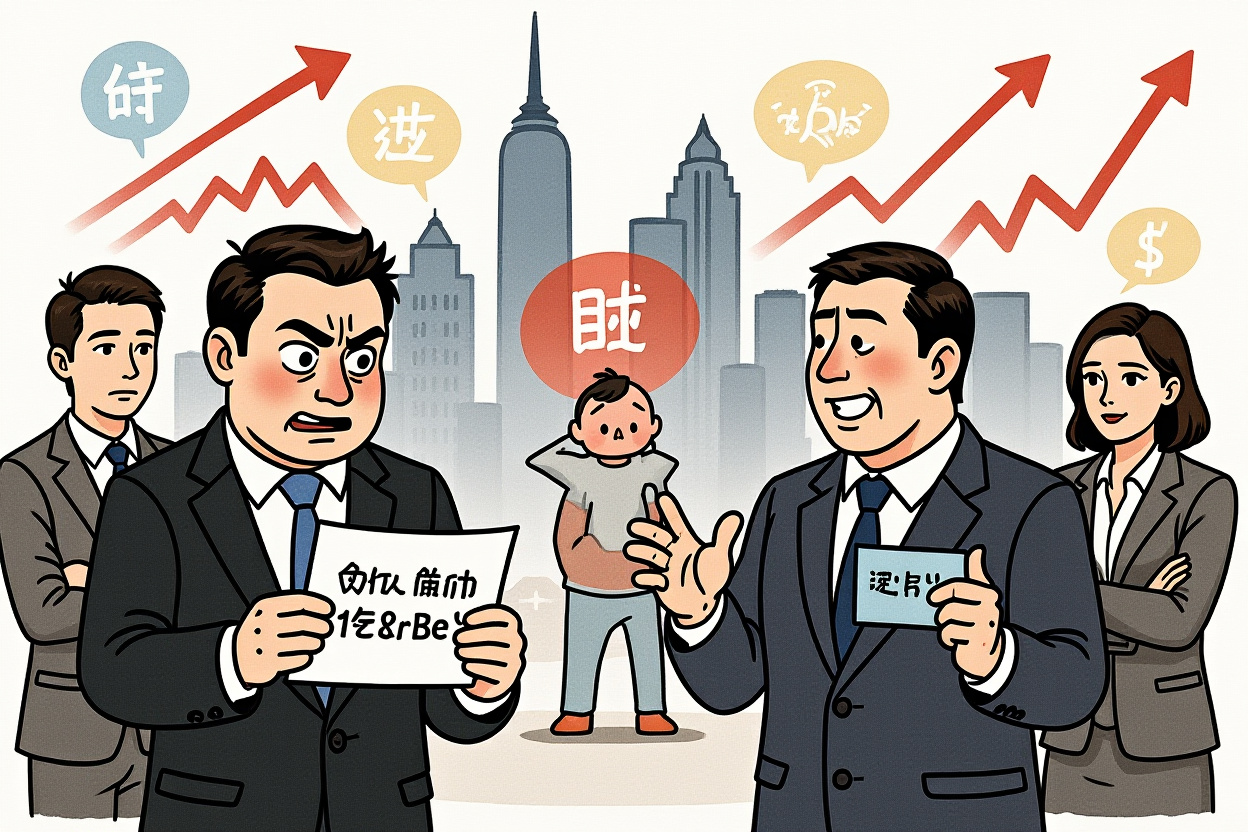
Executive Summary: Key Takeaways from the Yonghui-Sam’s Dispute
– Yonghui Supermarket (永辉超市) has publicly urged Sam’s Club (山姆会员商店) to cease ‘forced choice’ practices with suppliers, alleging unfair competition in China’s membership retail market.
– This controversy emerges as Yonghui reports cumulative net losses of 116.4 billion yuan over five years, underscoring severe financial strain amid strategic reforms.
– Sam’s Club, a dominant player in membership retail, faces renewed scrutiny over supplier relations, with past similar allegations from competitors like Carrefour (家乐福) and Hema (盒马).
– The dispute highlights intensifying supply chain competition in China’s retail sector, driven by consumer demand for quality and cost-efficiency, with implications for market fairness and regulatory oversight.
– Investors should monitor Yonghui’s turnaround efforts under new leadership and Sam’s expansion plans, as these dynamics could reshape investment opportunities in Chinese equities.
The Retail Rivalry Escalates: Yonghui’s Open Letter to Sam’s
In a dramatic escalation of tensions within China’s hyper-competitive membership retail sector, Yonghui Supermarket (永辉超市) has issued a public call to Sam’s Club (山姆会员商店), urging an end to supplier ‘forced choice’ practices. This move underscores the high stakes in a market where control over supply chains can make or break profitability.
Details of the ‘One Don’t, Six Do’s’ Proposal
Through its own brand, Quality Yonghui (品质永辉), the company released an open letter on March 16, directly addressing Sam’s MM brand. The letter outlines a ‘one don’t, six do’s’ framework aimed at fostering fair competition. The core ‘don’t’ is a clear plea: don’t force suppliers into ‘forced choice’ arrangements. Quality Yonghui emphasized that requiring suppliers to pick sides constitutes unfair competition and hinders industry growth. Instead, it advocates for collaborative supplier relationships, arguing that良性竞争 (benign competition) is essential for market health. The letter notes that Quality Yonghui is a nascent brand, likening it to a ‘toddler learning to walk,’ while Sam’s MM is in its ‘prime,’ making fair play crucial for all players, whether domestic or international.
The ‘six do’s’ include commitments to better quality, clean formulations, fair pricing, employee welfare, ESG (environmental, social, and governance) initiatives, and continuous innovation. According to Yonghui’s 2025 third-quarter report, its own brand has launched nine products, such as orange juice and laundry detergent, indicating efforts to diversify offerings. Industry sources suggest that Yonghui’s public stance likely stems from actual encounters with supplier ‘forced choice’ pressures, exacerbating its operational challenges, though concrete evidence has not been publicly provided by Yonghui. Some suppliers to Sam’s have denied exclusivity pressures, pointing to industry norms where ‘custom products’ don’t necessarily imply ‘exclusive agreements.’
Historical Context: A Recurring Allegation in Retail Wars
This is not the first time Sam’s Club has faced accusations of supplier ‘forced choice.’ In 2021, Carrefour China (家乐福中国) and Alibaba’s Hema (盒马) publicly alleged that Sam’s pressured suppliers to avoid partnerships with competitors, leading to product shortages during Carrefour’s membership store launch in Shanghai. Sam’s denied these claims at the time, stating no official evidence supported the allegations. Retail analyst Shen Jun (沈军) commented that intensifying competition and rising consumer expectations have increased reliance on premium suppliers, often sparking exclusivity disputes. This pattern suggests that supplier ‘forced choice’ practices may be an ongoing tactic in China’s retail landscape, warranting closer scrutiny from investors and regulators.
Sam’s Club: A Membership Retail Juggernaut in China
Sam’s Club, owned by Walmart (沃尔玛), has established itself as a benchmark in the membership retail model globally. In China, its strategic pivot has made it a formidable force, reshaping market dynamics and supplier relationships.
Aggressive Expansion and the ‘Hundred Store Plan’
Since its first Chinese store opened in Shenzhen in 1996, Sam’s initially expanded slowly, with only about 20 locations by 2020. However, recent years have seen a dramatic acceleration. From 2020 to 2025, Sam’s added nearly 40 new stores in China, and for 2026, it plans 13 more across cities like Beijing and Qingdao, aiming for 76 total stores by year-end. This push aligns with the ‘hundred store plan’ championed by Walmart China CEO Zhu Xiaojing (朱晓静), reflecting a focused investment in membership retail over traditional Walmart hypermarkets. In 2024, Walmart divested its entire stake in JD.com (京东),套现 (cashing out) approximately $3.7 billion to prioritize its Chinese operations, including Sam’s. This expansion fuels competition, as Sam’s leverages its scale to secure supplier advantages, potentially leading to more ‘forced choice’ scenarios.
Market Dominance and Competitive Frictions
Sam’s success is built on a model of bulk sales, premium quality, and exclusive products, which requires tight supplier integration. While this drives consumer loyalty, it can strain relationships with competitors. The past allegations from Carrefour and Hema highlight how Sam’s market position might influence supplier behavior. As Shen Jun noted, the competition for优质供应商 (high-quality suppliers) has intensified, making exclusive deals more appealing for retailers seeking differentiation. This environment raises questions about market fairness, especially as Sam’s continues to grow. Investors should watch for regulatory interventions, as China’s antitrust authorities have previously cracked down on ‘forced choice’ practices in e-commerce, which could extend to physical retail.
Yonghui Supermarket’s Financial Struggles: A Five-Year Loss Saga
Yonghui’s public challenge to Sam’s comes against a backdrop of severe financial distress, with cumulative losses highlighting the urgency of its turnaround efforts. The company’s woes provide context for its aggressive stance on supplier ‘forced choice’ issues.
Analyzing the 116.4 Billion Yuan Loss Streak
According to financial data, Yonghui has reported net losses annually from 2021 to 2025, totaling 116.4 billion yuan. The 2025 performance forecast alone predicts a net loss of 21.4 billion yuan. Key factors include a strategic shift from ‘scale expansion’ to ‘quality growth,’ involving the renovation of 315 stores and closure of 381 underperforming locations. These moves incurred significant costs: asset write-offs and one-time expenses of about 9.1 billion yuan, lost gross profit from store closures estimated at 3 billion yuan, and additional costs from employee severance and lease penalties. Moreover,对外投资 (overseas investments) like Advantage Solutions stock led to a 2.36 billion yuan fair value loss, and asset impairments added 1.62 billion yuan. This financial hemorrhage has eroded market confidence, with Yonghui’s stock price dropping approximately 66% from its peak to 3.98 yuan per share, and market capitalization shrinking to 36.119 billion yuan.
Strategic Overhauls and Leadership Changes
In response, Yonghui has embarked on radical reforms. In 2024, Miniso (名创优品)-controlled Juncai International acquired a 29.4% stake for 6.27 billion yuan, becoming the largest shareholder. Miniso founder Ye Guofu (叶国富) expressed ambitions to transform Yonghui into a ‘Chinese Sam’s in the model of Pang Donglai (胖东来),’ a respected regional retailer known for employee welfare and customer service. To bolster its supply chain, Yonghui hired She Xianping (佘咸平), a veteran with experience at Sam’s, Hema, and RT-Mart, as vice president and chief product officer. These steps aim to enhance product sourcing and own-brand development, such as Quality Yonghui. However, the company remains in a ‘transitional pain period,’ with reforms yet to yield profitability. The supplier ‘forced choice’ dispute complicates this journey, as access to key suppliers is critical for quality and cost control.
Broader Implications for China’s Retail and Investment Landscape
The Yonghui-Sam’s clash reflects larger trends in China’s retail sector, where supply chain dominance and ethical practices are becoming battlegrounds with direct implications for investors.
Supply Chain Ethics and Regulatory Risks
Supplier ‘forced choice’ practices, if proven, could violate China’s Anti-Monopoly Law and Fair Competition Guidelines, potentially triggering regulatory action. Authorities like the State Administration for Market Regulation (SAMR) have increased scrutiny on独占协议 (exclusive agreements) in digital markets, and physical retail might follow. For investors, this introduces regulatory risk factors: companies engaging in ‘forced choice’ could face fines or operational restrictions, impacting stock performance. Conversely, firms advocating for fair play, like Yonghui, might gain reputational benefits but need to demonstrate compliance. Market participants should monitor announcements from SAMR and related bodies for enforcement actions that could reshape competitive dynamics.
Investment Considerations in a Shifting Market
This dispute highlights the importance of supply chain resilience in retail investments. As membership models grow—driven by urbanization and premiumization—companies with robust, ethical supplier networks may have a competitive edge. Data from the China Chain Store & Franchise Association shows membership retail sales rising by 15% annually, attracting capital inflows. However, the ‘forced choice’ controversy suggests that growth may come at the cost of market fairness. Investors should assess companies based on ESG criteria, supplier diversity, and innovation capabilities. For instance, Yonghui’s focus on ESG in its open letter aligns with global investment trends, potentially appealing to sustainability-focused funds. Analysts recommend diversifying exposure across retailers with different strategies to mitigate risks from supply chain disputes.
Path Forward: Can Yonghui Emulate Success Amidst Adversity?
Yonghui’s future hinges on executing its transformation while navigating competitive pressures, including those related to supplier ‘forced choice.’ Lessons from industry leaders offer a blueprint, but challenges remain.
Learning from Sam’s and Pang Donglai Models
Sam’s success is built on efficient logistics, member exclusivity, and strong supplier partnerships—often through long-term contracts that may border on exclusivity. Yonghui aims to blend this with Pang Donglai’s emphasis on employee satisfaction and community engagement, as noted by Ye Guofu. However, replicating Sam’s supply chain prowess requires time and capital, which Yonghui lacks amid losses. The hiring of She Xianping is a step toward sourcing expertise, but overcoming Sam’s incumbent advantages in supplier ‘forced choice’ scenarios will be tough. Industry observers suggest that Yonghui could focus on niche categories or regional strengths to differentiate, rather than direct confrontation on supply chains.
Strategic Recommendations for Stakeholders
For investors, Yonghui’s stock presents a high-risk, high-reward opportunity if reforms gain traction, but caution is advised due to persistent losses and competitive headwinds. Monitoring quarterly reports for reductions in operational costs and growth in own-brand sales is crucial. For corporate executives, this dispute underscores the need for transparent supplier policies to avoid regulatory backlash. Engaging in industry dialogues or自律公约 (self-regulatory pacts) on fair competition could mitigate ‘forced choice’ risks. For regulators, enhancing oversight of retailer-supplier contracts may foster a healthier market. Ultimately, the resolution of this ‘forced choice’ issue will test China’s commitment to competitive integrity in retail, with ripple effects across equity markets.
In summary, Yonghui Supermarket’s public challenge to Sam’s Club over supplier ‘forced choice’ practices marks a critical moment in China’s retail evolution, set against a backdrop of staggering financial losses. The dispute highlights the intense competition for supply chain control in the membership sector, with implications for market fairness, regulatory policy, and investment strategies. As Yonghui pursues a turnaround under new leadership, and Sam’s continues its expansion, stakeholders must weigh ethical practices against growth ambitions. Investors should stay informed on regulatory developments and company-specific metrics to navigate this dynamic landscape. Consider diversifying portfolios with retailers demonstrating strong ESG profiles and innovative supply chain solutions to capitalize on China’s evolving consumer markets.