



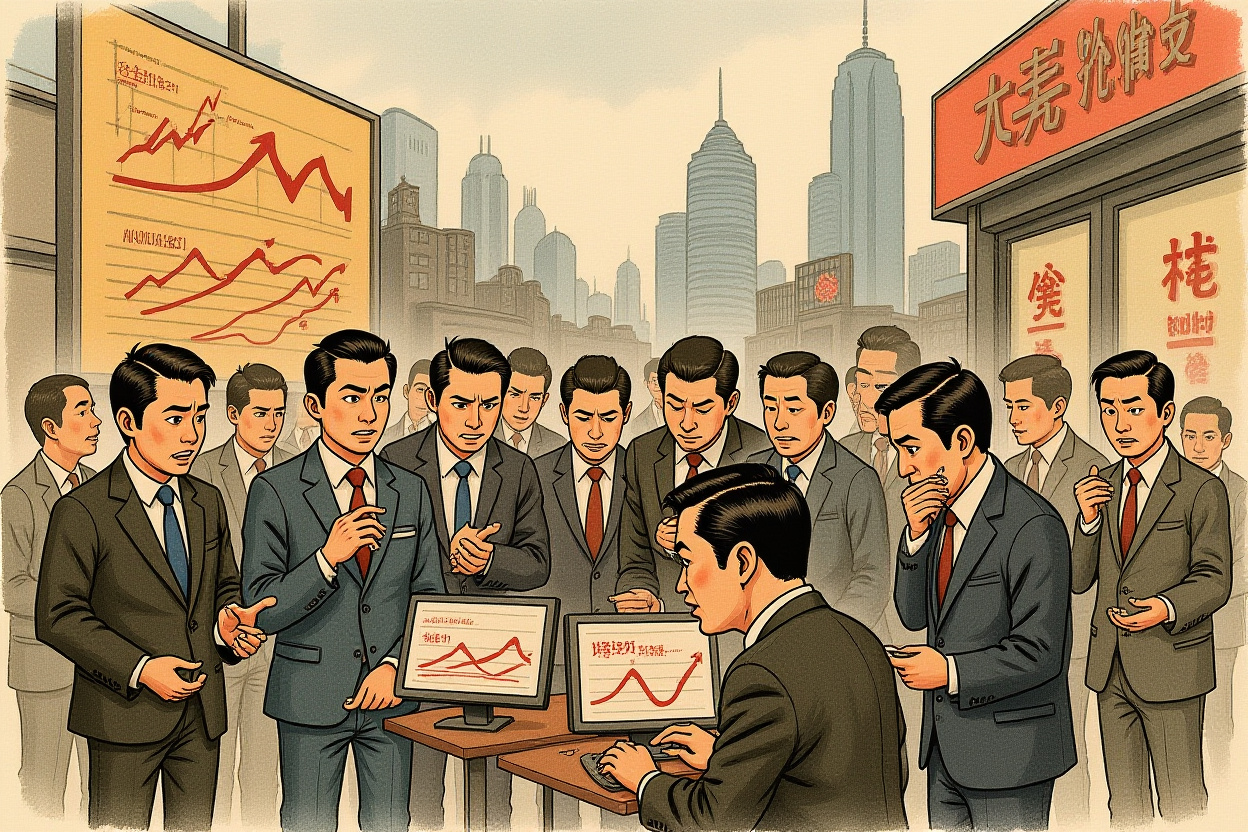
– Yakult closes Guangzhou Factory No. 1 as part of business restructuring, reflecting a significant sales decline in the Chinese market.
– Daily sales in China have plummeted from 625.7 million bottles in 2022 to 443.9 million in 2024, with Guangzhou sales nearly halving.
– Increased competition from local brands like Mengniu and Yili, offering higher probiotic counts at lower prices, is eroding Yakult’s market share.
– Consumer shifts toward healthier alternatives and skepticism about probiotic benefits are driving the lactic acid bacteria drink market’s contraction.
– Yakult’s recovery efforts show slight improvement in 2025, but challenges in regaining peak performance persist amid industry-wide headwinds.
In a stark reflection of changing consumer tastes, 养乐多本社株式会社 (Yakult Honsha Co., Ltd.) has announced the closure of its Guangzhou First Factory, underscoring a dramatic Yakult sales decline that has seen daily bottle sales in China drop by nearly 50% since 2021. This move follows the shuttering of the Shanghai plant in 2023, as the iconic probiotic drink brand grapples with intensified competition and shifting market dynamics. The Yakult sales decline is not an isolated incident but part of a broader trend affecting the lactic acid bacteria beverage sector, raising critical questions about the future of functional drinks in China’s rapidly evolving consumer landscape.
Factory Closures and Production Consolidation
The decision to close Guangzhou Factory No. 1, effective November 30, marks a pivotal moment in Yakult’s China strategy. This facility, operational since 2002, will see its production shifted to the more modern Guangzhou Second Factory and the Foshan plant, aiming to optimize resources and reduce fixed costs. This consolidation is part of a wider restructuring that began with the dissolution of 上海益力多乳品有限公司 (Shanghai Yakult Dairy Products Co., Ltd.) and the integration of its operations under 养乐多(中国)投资有限公司 (Yakult (China) Investment Co., Ltd.).
Historical Context and Operational Adjustments
Yakult entered China in 2002, starting in Guangzhou under the name 益力多 (Yakult) and expanding to Shanghai in 2003. The Guangzhou First Factory was instrumental in establishing its presence, but with total production capacity across three Guangdong facilities reaching 6 million bottles daily, overcapacity has become apparent. The closure reduces Yakult’s Chinese production bases from six to five, echoing similar moves in other regions. For instance, the Shanghai factory’s integration in 2023 involved transferring production to sites in Tianjin and Wuxi, highlighting a strategic pivot toward efficiency amid the ongoing Yakult sales decline.
Impact on Local Economy and Supply Chain
Factory closures often ripple through local economies, affecting employment and supplier networks. In Guangzhou, the shutdown could impact jobs and logistics, though Yakult has emphasized that business continuity will be maintained through other facilities. This realignment reflects a necessary response to the Yakult sales decline, but it also signals a cautious approach to capital expenditure in a market where demand has softened significantly.
Analyzing the Yakult Sales Decline
The Yakult sales decline is starkly illustrated by financial reports from 养乐多本社株式会社 (Yakult Honsha Co., Ltd.). Between 2022 and 2024, daily sales in China fell from 625.7 million bottles to 443.9 million, a drop of over 28%. In Guangzhou alone, sales plummeted from 259.6 million bottles daily in 2022 to 184.6 million in 2024, with the first quarter of 2025 averaging just 149 million bottles—nearly 50% below the 282 million bottles sold daily in 2021. This Yakult sales decline aligns with peak sales of 760.9 million bottles daily in 2019, indicating a sustained downward trend that has reshaped the company’s market position.
Regional Variations and Market Performance
Sales data reveals geographic disparities, with southern China, particularly Guangzhou, experiencing the sharpest declines. This regional weakness may stem from localized competition and consumer preferences. Meanwhile, other areas like Beijing and Tianjin have shown relative resilience, though not enough to offset overall losses. The Yakult sales decline is further compounded by a broader slump in the lactic acid bacteria drink category, which saw its share of the beverage market shrink from 18.2% to 16.6% in Q3 2025, according to industry analytics.
Comparative Performance with Global Operations
Globally, Yakult has maintained stronger sales in markets like Japan and Southeast Asia, where brand loyalty and product innovation have cushioned against downturns. However, the Yakult sales decline in China—its second-largest market—highlights unique challenges, including a more fragmented competitive landscape and faster-changing consumer habits. This contrast underscores the need for localized strategies to address the Yakult sales decline effectively.
Market Dynamics Driving the Sales Slump
The Yakult sales decline is rooted in evolving consumer behaviors and intensified competition. Once a pioneer in probiotic health claims, Yakult now faces skepticism from increasingly health-conscious consumers who question the efficacy of “100 billion live lactic acid bacteria” and gravitate toward lower-sugar options. The rise of alternatives like cold-brew yogurt, prune juice, and other functional beverages has fragmented the market, reducing the appeal of traditional lactic acid drinks.
Consumer Trust and Health Perception Shifts
Surveys indicate that Chinese consumers are more discerning about health claims, with many viewing high-sugar products like Yakult as less beneficial. This erosion of trust has accelerated the Yakult sales decline, as buyers opt for transparently labeled, science-backed alternatives. The brand’s historical reliance on catchy slogans—such as “Have you drunk it today?”—is no longer sufficient to retain market share in an era where ingredient integrity matters most.
Competitive Pressures from Local Brands
Domestic rivals have aggressively targeted Yakult’s core market. 蒙牛乳业 (Mengniu Dairy) with its 优益C (Youyi C) and 伊利集团 (Yili Group) with 每益添 (Meiyitian) offer products boasting 50 billion lactic acid bacteria per 100ml—five times Yakult’s claim—often at lower price points. This price-value proposition has lured cost-sensitive consumers, exacerbating the Yakult sales decline. Additionally, brands like 味全 (Weiquan) have leveraged distribution agility and digital marketing to capture younger demographics, further squeezing Yakult’s margins.
Yakult’s Strategic Responses and Innovation Efforts
To counter the Yakult sales decline, the company has launched new products, including a low-sugar variant in 2016 (the “little blue bottle”), a 50-billion-bacteria low-sugar version in 2023 (the “little gold bottle”), and a peach-flavored offering in 2024 (the “little pink bottle”). These innovations aim to align with health trends and diversify the portfolio, yet they have not fully reversed the Yakult sales decline, suggesting that product updates alone are insufficient in a rapidly changing market.
Effectiveness of Product Launches and Marketing
While new flavors and formulations have generated short-term buzz, they have struggled to achieve sustained growth. The Yakult sales decline persisted despite these efforts, indicating that deeper issues—such as brand perception and competitive pricing—need addressing. Marketing campaigns have yet to fully reconnect with younger consumers who prioritize authenticity and digital engagement over traditional advertising.
Operational Efficiency and Cost Management
Beyond product innovation, Yakult has focused on streamlining operations, as seen in the factory consolidations. By centralizing production, the company aims to reduce overhead and improve profitability, even as the Yakult sales decline pressures revenue. This operational tightening may provide a buffer, but it must be paired with strategic growth initiatives to ensure long-term viability.
Broader Industry Implications and Future Outlook
The Yakult sales decline mirrors challenges across the lactic acid bacteria drink sector. 均瑶健康 (Junlebao Health), a major domestic player, reported a 78.5% profit drop in H1 2025, highlighting industry-wide pressures. As the market contracts, consolidation and innovation will likely accelerate, with survivors needing to adapt to a post-pandemic consumer base that values functionality, sustainability, and affordability.
Projected Market Recovery and Growth Opportunities
Yakult’s slight rebound in Q1 2025—with daily sales up 3.9% to 383.1 million bottles—suggests potential for stabilization, but recovery to pre-decline levels remains distant. Opportunities exist in targeting niche segments, such as elderly consumers seeking digestive health, or expanding into e-commerce and direct-to-home delivery services, which Yakult already pilots in cities like Beijing and Shanghai. Partnerships with health platforms or influencers could also help mitigate the Yakult sales decline by rebuilding trust and relevance.
Strategic Recommendations for Investors and Stakeholders
For investors monitoring the Yakult sales decline, key indicators to watch include quarterly sales data, market share shifts, and the success of new product rollouts. Diversifying into adjacent health categories or exploring mergers with local brands could offer pathways to growth. Ultimately, overcoming the Yakult sales decline will require a balanced approach of innovation, cost control, and consumer re-engagement.
The Yakult sales decline serves as a cautionary tale for global brands in China’s fast-moving consumer goods sector. While factory closures and operational tweaks provide short-term relief, long-term success hinges on understanding local preferences and responding with agility. As Yakult navigates this transition, its ability to reinvent itself—perhaps through digital transformation or deeper health collaborations—will determine whether it can recapture its golden era momentum. For market participants, the lessons are clear: in today’s competitive landscape, even iconic brands must evolve or risk obsolescence.