



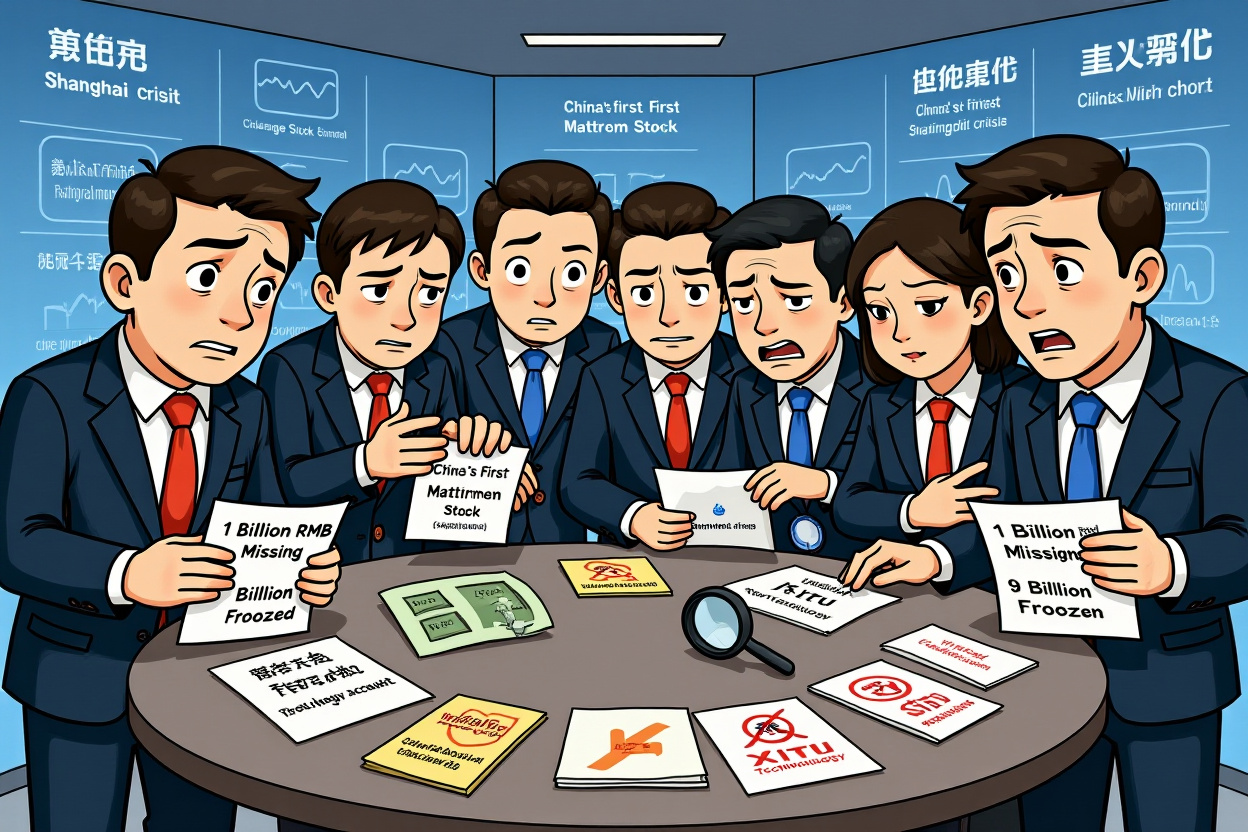
1. Xilinmen, China’s premier listed mattress manufacturer, is reeling from a massive internal fraud incident where 1 billion RMB was illegally transferred from a subsidiary’s account, exposing critical governance flaws.
2. The company has frozen approximately 9 billion RMB in related accounts as a protective measure, bringing total funds involved to over 10 billion RMB, or 42.69% of its monetary assets, severely impacting liquidity.
3. This scandal has triggered immediate regulatory scrutiny from the Shanghai Stock Exchange and raised serious questions about the firm’s internal controls and corporate governance, signaling broader market risks.
4. Financial data reveals underlying pressures, including profit declines and high pledge ratios by controlling shareholders, compounding the crisis and eroding investor confidence.
5. The incident underscores the imperative for robust due diligence and enhanced oversight mechanisms in Chinese equities, urging investors to reassess risk exposure.
A Wake-Up Call for Corporate China
In a stunning revelation that has sent shockwaves through China’s capital markets, Xilinmen Furniture Co. Ltd. (喜临门), often hailed as ‘China’s first mattress stock,’ finds itself at the center of a debilitating internal fraud scandal. Overnight, what appeared to be a steady player in the consumer goods sector has been exposed for a severe internal control failure, with 1 billion RMB embezzled and an additional 9 billion RMB frozen in protective measures. This event not only jeopardizes the company’s financial stability but also casts a long shadow over corporate governance standards within Chinese listed entities, prompting urgent questions from regulators and investors alike. For global market participants, this internal control failure serves as a critical case study in the vulnerabilities that can lurk beneath the surface of even established firms, emphasizing the need for heightened vigilance in equity analysis and portfolio management.
The Internal Fraud Unfolds: A Breakdown in Corporate Defenses
The crisis came to light on March 27, when Xilinmen (SH603008) issued a market-shattering announcement. The company disclosed that it had discovered an illegal transfer of 1 billion RMB from the bank account of its wholly-owned subsidiary, Xitu Technology Co., Ltd. (喜途科技有限公司). This subsidiary, established to spearhead hotel channel expansion, became the epicenter of a significant internal control failure, exposing glaring vulnerabilities in the firm’s oversight mechanisms. The sheer scale of the theft—equivalent to roughly $140 million—highlights how lapses in monitoring can lead to catastrophic financial losses, especially in a context where rapid expansion often outpaces internal safeguards.
Details of the Embezzlement and Immediate Response
Preliminary investigations suggest that insiders leveraged their positions to orchestrate the unauthorized transfer from a general account at the Industrial and Commercial Bank of China Hangzhou Branch. In response, Xilinmen moved swiftly to contain the damage, filing a police report on March 26 and initiating criminal proceedings. Concurrently, the company imposed protective freezes on three additional bank accounts held by subsidiaries, locking up approximately 9 billion RMB to prevent further unauthorized movements. The cumulative impact is staggering: over 10 billion RMB is now implicated, representing 26.54% of Xilinmen’s latest audited net assets and a whopping 42.69% of its monetary funds. This internal control failure has not only drained liquidity but also triggered a credibility crisis, as investors question how such a breach could occur in a publicly traded company with presumably robust checks and balances.
Key steps taken by Xilinmen include:
– Immediate notification to law enforcement and regulatory authorities.
– Protective freezing of multiple bank accounts to mitigate further risk.
– Internal audits to trace the flow of funds and identify culpable individuals.
Regulatory Lightning Rod: The Shanghai Stock Exchange Reacts
Almost instantaneously, the Shanghai Stock Exchange (上海证券交易所) intervened, issuing a regulatory work letter to Xilinmen on the evening of March 27. The directive targeted a broad spectrum of stakeholders, including the company itself, its directors, senior management, and controlling shareholders. Regulatory authorities are expected to demand a thorough explanation of the internal control lapses, the specifics of the fund transfer process, and how such a substantial sum could bypass established safeguards. This scrutiny underscores the market’s low tolerance for governance failures, especially in a listed entity with Xilinmen’s profile. The exchange’s rapid action reflects growing pressure to uphold transparency and accountability in Chinese equities, as similar incidents in the past have eroded international investor trust.
Financial Health Under Siege: Pre-existing Vulnerabilities Amplified
Beyond the immediate fraud, Xilinmen’s financial metrics reveal underlying strains that this crisis exacerbates. The company’s recent performance has been marred by profitability challenges, making this internal control failure all the more damaging to its recovery prospects. For sophisticated investors, understanding these pre-existing conditions is crucial to assessing the full impact of the scandal and predicting future performance.
Profitability Erosion and Revenue Disconnect
According to its Q3 2025 report, Xilinmen exhibited signs of ‘increasing revenue without increasing profit.’ While revenues saw marginal growth, profit metrics declined: total profit fell by 8.50% year-over-year to 1.40 billion RMB, net profit attributable to shareholders dropped 6.10% to 1.33 billion RMB, and core operating profit decreased 6.16% to 1.34 billion RMB. This trend is not isolated; from 2020 to 2024, revenues climbed steadily from 5.623 billion RMB to 8.729 billion RMB, but net profits fluctuated wildly, peaking at 559 million RMB in 2021 before dipping to 322 million RMB in 2024. Such volatility highlights operational inefficiencies and competitive pressures in the home furnishings sector, suggesting that the internal control failure may be symptomatic of deeper managerial issues.
High Pledge Ratios and Liquidity Alarms
Adding to the woes, Xilinmen’s controlling shareholders have engaged in significant share pledging. As of January 2026, pledges accounted for 59.01% of their total holdings, or 21.46% of the company’s total shares. More alarmingly, 283 million RMB in pledged financing is due within six months, with another 200 million RMB maturing within a year. While the company asserts that the frozen funds won’t critically disrupt operations, the combination of pledged liabilities and depleted cash reserves paints a precarious liquidity picture. Market reaction has been punitive, with stock prices facing downward pressure post-announcement, reflecting investor skepticism about the firm’s ability to navigate this internal control failure. This situation underscores the importance of monitoring shareholder financing activities as part of comprehensive risk assessment in Chinese equities.
Strategic Missteps: From Hope to Hazard in Subsidiary Management
The subsidiary at the heart of the scandal, Xitu Technology, was once a strategic beacon for Xilinmen. Established in December 2020 with a 50 million RMB investment, it was tasked with developing hotel channel business to drive growth and brand visibility. However, this ambitious venture has morphed into a liability, illustrating the perils of inadequate oversight during expansion. This internal control failure serves as a cautionary tale for companies aggressively pursuing diversification without commensurate governance frameworks.
The Fall of Xitu Technology: A Case Study in Control Lapses
Xitu Technology’s descent from strategic asset to risk vector underscores a critical lesson for Chinese corporates: rapid growth must be matched by robust internal controls. The subsidiary’s mandate—to cultivate new revenue streams—was undermined by the very internal control failure that allowed 1 billion RMB to vanish. This incident raises red flags about how Xilinmen monitors its offshoots, particularly those in nascent or non-core segments. Investors must ponder whether other subsidiaries harbor similar vulnerabilities, making this a cautionary tale for the entire industry. For instance, inadequate segregation of duties and lack of real-time auditing in Xitu Technology likely contributed to the breach, highlighting common pitfalls in subsidiary management.
Historical Diversification and Refocusing Efforts
Xilinmen’s foray into unrelated businesses, such as its 2015 acquisition of绿城文化传媒 (Greentown Culture Media) for 720 million RMB—renamed晟喜华视 (Shengxi Huashi)—initially boosted profits but later became a drag. By 2020, the company exited the影视 (film and television) sector to refocus on furniture, yet profitability has remained elusive. This backtracking suggests that strategic clarity alone cannot compensate for weak execution and oversight. The current scandal with Xitu Technology echoes past misadventures, indicating that systemic issues in governance and control persist. Experts argue that such internal control failures often stem from a culture that prioritizes expansion over risk management, a trend observed in other Chinese firms that have faced similar crises.
Broader Implications for Chinese Equity Markets and Investors
The Xilinmen debacle transcends a single company’s troubles, serving as a microcosm of larger themes in Chinese equities. For international investors and fund managers, this internal control failure is a stark reminder of the governance risks embedded in some Chinese listed firms. As China’s markets integrate further into global finance, incidents like these can influence capital flows and valuation multiples, making proactive risk assessment essential.
Corporate Governance Standards in the Spotlight
China’s regulatory bodies, including the中国证券监督管理委员会 (China Securities Regulatory Commission, CSRC), have been pushing for higher governance standards, but incidents like Xilinmen’s reveal gaps in enforcement and compliance. The Shanghai Stock Exchange’s rapid response is positive, but it also highlights reactive rather than proactive oversight. Investors should monitor how regulators handle this case, as it could signal tighter scrutiny on internal controls across the board, potentially affecting valuation models for Chinese stocks. For example, enhanced disclosure requirements for subsidiary operations or mandatory internal audit certifications might emerge as regulatory responses to such internal control failures.
Due Diligence and Risk Assessment Imperatives
For sophisticated market participants, this scandal underscores the need for deeper due diligence. Key areas to scrutinize include:
– Subsidiary governance and fund management protocols, especially in newly established or strategic units.
– Shareholder pledge levels and their implications for financial stability, using tools like the上海证券交易所 (Shanghai Stock Exchange) disclosure platform.
– Consistency between strategic announcements and operational execution, as evidenced by historical performance data.
– Historical patterns of diversification and refocusing, which can indicate management’s adaptability or impulsiveness.
By integrating these factors into investment theses, professionals can better shield portfolios from similar internal control failures. Resources like the CSRC announcements and independent audit reports should be regularly consulted for early warning signs. Additionally, engaging with local analysts who understand cultural and regulatory nuances can provide invaluable insights.
Path Forward: Recovery, Reforms, and Market Reconciliation
For Xilinmen, the road ahead is fraught with challenges. Restoring confidence will require transparent communication, tangible reforms, and perhaps strategic realignments to address the root causes of this internal control failure. The company’s ability to navigate this crisis will be a test of its resilience and a signal to the market about the maturity of Chinese corporate governance.
Immediate Steps and Long-term Reforms
In the short term, Xilinmen must cooperate fully with law enforcement to recover the embezzled funds and provide clear updates to regulators and shareholders. Internally, a comprehensive audit of all subsidiaries and bank accounts is essential, followed by the implementation of enhanced control measures, such as dual-authorization systems for large transactions and regular independent reviews. Long-term, the company may need to reconsider its expansion strategy, ensuring that new ventures are backed by proportionate oversight. Engaging with governance experts and possibly restructuring the board to include more independent directors could help rebuild trust. The focus phrase ‘internal control failure’ must become a catalyst for systemic change, not just a headline, as Xilinmen works to mend its reputation.
Strategic Adjustments and Investor Communications
Xilinmen should also reassess its financial strategy, particularly regarding shareholder pledges and liquidity management. Communicating a clear plan to address upcoming debt maturities and stabilize cash flows will be critical. For investors, the company’s ability to articulate and execute these reforms will be a key indicator of its resilience. Monitoring upcoming earnings calls and regulatory filings will provide insights into whether this internal control failure is being addressed meaningfully. Moreover, the company might consider:
– Establishing a dedicated risk management committee reporting directly to the board.
– Investing in digital surveillance tools for real-time monitoring of financial transactions.
– Enhancing whistleblower protections to encourage early detection of irregularities.
Synthesizing the Crisis: Key Takeaways and Forward Guidance
The Xilinmen internal fraud scandal is a multifaceted crisis with far-reaching consequences. It exposes not only a severe internal control failure within a prominent Chinese listed company but also broader vulnerabilities in corporate governance and risk management across the market. For investors, this incident serves as a potent reminder to elevate due diligence, particularly in assessing subsidiary operations and internal safeguards. As regulators intensify their scrutiny, companies like Xilinmen must embrace transparency and reform to regain market confidence. The path to recovery will be arduous, but for those navigating Chinese equities, vigilance and informed analysis remain paramount. Stay updated with reliable sources, such as official exchange announcements and financial news outlets, and consider consulting with financial advisors to navigate the evolving landscape of risks and opportunities in China’s dynamic capital markets. By learning from this internal control failure, stakeholders can foster a more resilient investment environment that rewards integrity and robust governance.