



Executive Summary
In a dramatic move underscoring the pressures facing China’s consumer sector, one of the nation’s most prominent restaurant chains has announced a massive restructuring. Here are the critical takeaways from Xibei’s latest crisis:
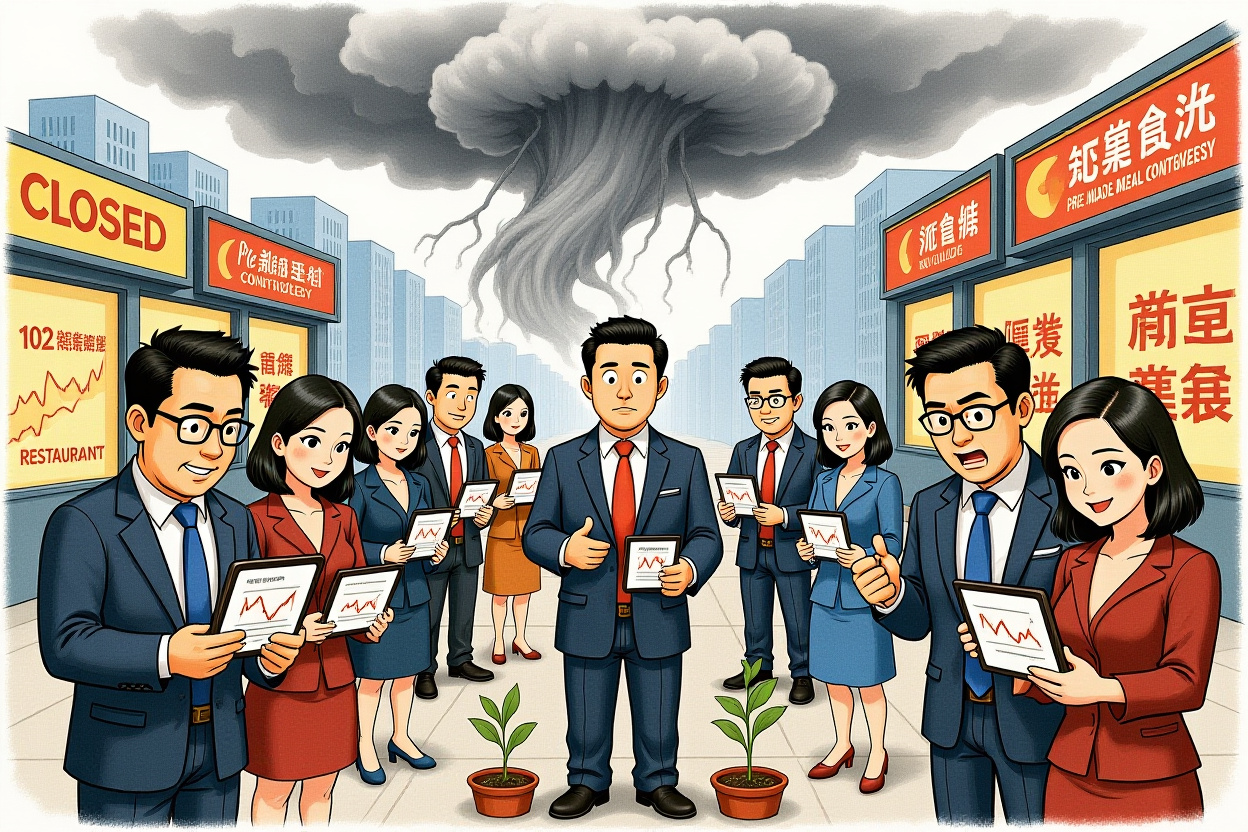
– Xibei Catering Group (西贝餐饮集团) will close 102 underperforming stores nationwide, representing approximately 30% of its total footprint, in a bid to stem massive financial losses.
– The decision follows a devastating pre-made meal controversy that erupted in September 2025, leading to a precipitous drop in customer traffic and brand reputation, with no single store turning a profit since.
– Founder and Chairman Jia Guolong (贾国龙) has publicly admitted strategic failures, apologized to stakeholders, and pledged a personal commitment to the company’s survival battle, emphasizing he holds no overseas assets.
– The closure process will be managed with commitments to full employee wage payments and customer refunds, even as the company implements price cuts, massive coupon campaigns, and employee salary hikes to stabilize remaining operations.
– This event serves as a critical case study for the broader Chinese dining industry, highlighting the fragile balance between scale, consumer trust, and operational resilience in a post-pandemic economy.
The Announcement That Rocked China’s Dining Sector
On January 15, internal meeting documents and a store closure list began circulating on Chinese social media, sending shockwaves through the investment community. The reports alleged that Xibei Catering Group (西贝餐饮集团) was preparing to shutter 102 restaurants in one fell swoop. The news was swiftly confirmed by the company’s founder, Jia Guolong (贾国龙), to multiple media outlets, including National Business Daily (每日经济新闻). This decision marks a pivotal moment in the company’s history and intensifies its ongoing survival battle. The closures will affect roughly 4,000 employees and represent a radical contraction for a chain once seen as a bellwether for China’s mass-market dining scene.
The confirmation came alongside stark financial revelations. Since the pre-made meal debacle of September 2025, not a single Xibei outlet has been profitable. Cumulative losses have now soared past the 5 billion yuan mark. For a business built on volume and rapid expansion, these figures are catastrophic. Jia Guolong (贾国龙) noted in a recent interview that January 2026 saw a 50% year-on-year plunge in store business, painting a dire picture of the immediate challenges. This survival battle is not just about closing doors; it’s about fundamentally rethinking the brand’s value proposition in a market where consumer preferences have dramatically shifted.
Timeline of a Downward Spiral
The roots of the current crisis can be traced back to late 2025. A public dispute with influencer Luo Yonghao (罗永浩) over the use of pre-made or semi-finished ingredients in Xibei’s kitchens ignited a firestorm of consumer criticism. The controversy tapped into growing public skepticism about food quality and transparency in chain restaurants. Almost overnight, Xibei’s reputation for wholesome, Northwestern Chinese cuisine was tarnished. Social media sentiment turned overwhelmingly negative, leading to a visible drop in foot traffic. The company’s aggressive response, including issuing over 3 billion yuan in consumer coupons in 2025 alone, failed to arrest the decline. This sequence of events set the stage for the drastic restructuring now underway.
Founder’s Mea Culpa and Strategic Reckoning
In a rare display of corporate contrition, Jia Guolong (贾国龙) has shouldered the blame for the company’s predicament. Speaking to media in December 2025, he admitted to having taken sleeping pills for 40 consecutive nights due to stress and described being inundated with unending problems. His public apology was unequivocal: I admit my mistakes. I apologize to customers, to employees, and to myself. He acknowledged having long ignored the voice of the customer, a critical failure in the service-oriented restaurant industry. This moment of introspection is central to Xibei’s revised survival battle plan.
From Personal Brand to Back-to-Basics Operations
A significant pivot in strategy involves Jia Guolong (贾国龙) himself. He has declared an end to building his personal IP (intellectual property), a common practice among Chinese entrepreneurs who leverage their fame for brand promotion. I will step back and focus on doing the actual work, he stated. This reflects a broader shift away from marketing-driven growth towards a relentless focus on operational excellence, product quality, and customer service at the remaining stores. The survival battle will be won not by celebrity endorsements but by the daily grind of restaurant management.
The Anatomy of the Restructuring: Closing 102 Stores
The decision to close 102 locations is not merely a cost-cutting exercise; it is a calculated retrenchment designed to preserve the company’s core. The stores identified for closure are primarily those with the lowest revenue, and the process will be phased throughout the first quarter. Jia Guolong (贾国龙) outlined the principles guiding this painful process in a detailed social media post, framing them as non-negotiable commitments in this survival battle.
Upholding Commitments to People and Patrons
The human and customer relations aspects of the downsizing are being handled with notable care, likely in an effort to mitigate further brand damage. All employees affected by the closures will receive their full wages without deduction. For customers, stored-value cards will remain usable at any operating Xibei outlet, and refunds will be provided immediately upon request. Demonstrating a commitment to service integrity, Jia Guolong (贾国龙) noted that some stores scheduled to host Lunar New Year’s Eve banquets will remain open for an extra month to honor those reservations before closing. This approach, while costly, aims to maintain a shred of goodwill and trust during the survival battle.
Broader Implications for China’s Restaurant Industry
Xibei’s crisis is symptomatic of larger headwinds buffeting China’s food and beverage sector. After years of breakneck expansion fueled by easy capital and optimistic consumption forecasts, the industry is facing a reality check. Consumer spending is cautious, operational costs are rising, and competition is ferocious. The pre-made meal controversy that triggered Xibei’s woes is not an isolated incident; it reflects a deeper consumer demand for authenticity and transparency. This survival battle at Xibei is being closely watched by rivals and investors alike as a potential harbinger of wider consolidation.
A Sector Under Pressure
Data from the China Cuisine Association (中国烹饪协会) indicates that while overall dining revenue has recovered post-pandemic, profit margins across the industry have compressed. Many chains are grappling with over-expansion into lower-tier cities where demand did not materialize as expected. Furthermore, the rise of food delivery platforms has altered dining habits, forcing traditional sit-down restaurants to adapt their models. Xibei’s struggle highlights the peril of losing touch with core customers while scaling. Its survival battle may prompt other chains to re-evaluate their store networks, supply chain integrity, and customer communication strategies before a similar crisis strikes.
The Survival Battle Plan: Stabilization and Forward Moves
Closing stores is only one part of the equation. To navigate its survival battle, Xibei has deployed a multi-pronged strategy focused on retaining its remaining customer base and motivating its workforce. Contrary to industry trends of layoffs and pay cuts, Xibei has increased employee salaries to boost service quality and morale. This is a gamble, betting that a better-paid, more stable frontline staff will deliver the experience needed to win back patrons. Coupled with strategic price reductions on menu items and the continued issuance of coupons, the company is fighting for every customer transaction.
Financial and Operational Recalibration
The goal is to concentrate resources on a leaner network of roughly 300 high-potential stores. This involves intense scrutiny of rent agreements, supply chain logistics, and menu engineering to improve unit economics. Jia Guolong’s (贾国龙) personal financial disclosure—that he owns no overseas assets and only one property in Beijing—is a symbolic move to align his fate entirely with the company’s. It sends a signal to employees and investors that leadership is all-in on this survival battle. The focus phrase, survival battle, encapsulates this entire ethos: a relentless, all-hands-on-deck effort to return the business to fundamentals and profitability.
Pathways to Survival: Analysis and Outlook
Can Xibei Catering Group (西贝餐饮集团) actually survive this tumultuous period? Market analysts are divided. Some point to the company’s strong brand recognition and loyal regional customer base as assets that can be leveraged in a comeback. Others note that the damage to consumer trust from the pre-made meal scandal may be long-lasting, especially in a market with endless dining alternatives. The success of the survival battle will hinge on execution: can the company consistently deliver higher quality and service at its remaining locations, and can it communicate this change effectively to a skeptical public?
Expert Perspectives and Market Sentiment
Industry observers, like those at LatePost (晚点LatePost) who recently interviewed Jia Guolong (贾国龙), note that the restaurant sector is entering a phase of natural attrition. The Lunar New Year period often leads to workforce turnover, which may aid Xibei’s restructuring. However, the fundamental challenge remains. The company must prove it has learned from its mistakes. Its survival battle is not just about closing unprofitable stores; it’s about reigniting a culture that prioritizes the customer experience above all else. Investors in Chinese consumer equities will be monitoring Xibei’s same-store sales data and customer sentiment indices in the coming quarters for signs of a turnaround.
Lessons from the Frontlines of Chinese Consumer Business
The Xibei saga offers profound lessons for corporate executives and investors focused on China. First, scale without sustainable unit economics is a recipe for disaster. Second, in the age of social media, brand reputation can evaporate overnight, making crisis management and proactive consumer engagement essential. Third, leadership accountability, as demonstrated by Jia Guolong’s (贾国龙) frank admissions, can be a first step towards rebuilding trust. The company’s ongoing survival battle is a real-time case study in corporate resilience.
For international investors, this event underscores the importance of deep due diligence on consumer brands in China. Factors like supply chain control, corporate governance, and brand equity durability are critical. The high-profile stumble of a major player like Xibei may create opportunities for more agile competitors or even M&A activity in the fragmented dining sector. However, it also serves as a cautionary tale about the risks inherent in rapid expansion models.
The Founder’s Final Word and the Road Ahead
In his social media statement, Jia Guolong (贾国龙) concluded with a personal vow: I have two mottos: do only one thing in life, Xibei. Love only one person in life, my wife Zhang Liping (张丽平). This poetic commitment underscores his personal stake in the outcome. The road ahead is undoubtedly steep. The company must navigate the operational complexity of mass store closures, manage creditor relationships, and reignite growth in its core markets—all while battling negative public perception. Yet, the very public nature of this survival battle has galvanized attention. If Xibei can successfully transform itself into a leaner, more customer-centric operation, it may yet write a comeback story for the ages.
For now, the focus for stakeholders is on the execution of the restructuring plan. Employees, customers, and investors should watch for transparent communication regarding store closure schedules, financial reporting on the impact of cost-saving measures, and any shifts in strategic direction. The survival battle of Xibei is far from over, but its first major move—a painful but necessary contraction—has been made. The coming months will determine whether this fight secures the company’s future or marks the beginning of its end.