



Executive Summary
This article delves into the rare sell action by Warren Buffett, examining its causes and effects on Chinese markets. Key takeaways include:
- Buffett’s historical investment strategy and why this sell-off is significant
- Immediate market reactions and volatility in Chinese stocks
- Long-term implications for foreign investment in China
- Expert insights on regulatory and economic factors
- Actionable advice for investors navigating this shift
A Sudden Shift in Strategy
Warren Buffett, the renowned investor behind Berkshire Hathaway, has long been celebrated for his buy-and-hold philosophy. His recent decision to execute a rare sell-off of Chinese equities has sent ripples through global financial circles. This move, detailed in reports from 凤凰网 (Phoenix Net), marks a departure from his typical approach and raises questions about the underlying factors driving this change. For investors focused on Chinese markets, understanding Buffett’s rare sell is crucial to anticipating future trends and adjusting portfolios accordingly.
The sell-off involved significant positions in companies like 比亚迪 (BYD) and other Chinese holdings, prompting analysts to scrutinize Berkshire Hathaway’s filings and public statements. This action coincides with broader economic shifts, including China’s regulatory reforms and global trade tensions. By examining Buffett’s rare sell, we can uncover deeper insights into market sentiment and investment strategies in volatile times.
Historical Context of Buffett’s Investments
Buffett’s investment history in China dates back to his early stakes in 中国石油 (PetroChina) and later 比亚迪 (BYD). His approach has typically emphasized long-term value, making any sell activity noteworthy. Data from 上海证券交易所 (Shanghai Stock Exchange) shows that Berkshire Hathaway’s Chinese holdings have yielded substantial returns over the years, reinforcing his reputation as a patient capital allocator. However, the recent sell-off suggests a reassessment of risk and reward in the region.
Key factors influencing this shift include:
- Regulatory changes from 中国证监会 (China Securities Regulatory Commission)
- Economic indicators such as GDP growth and inflation rates
- Geopolitical tensions affecting cross-border investments
Market Reactions and Data Analysis
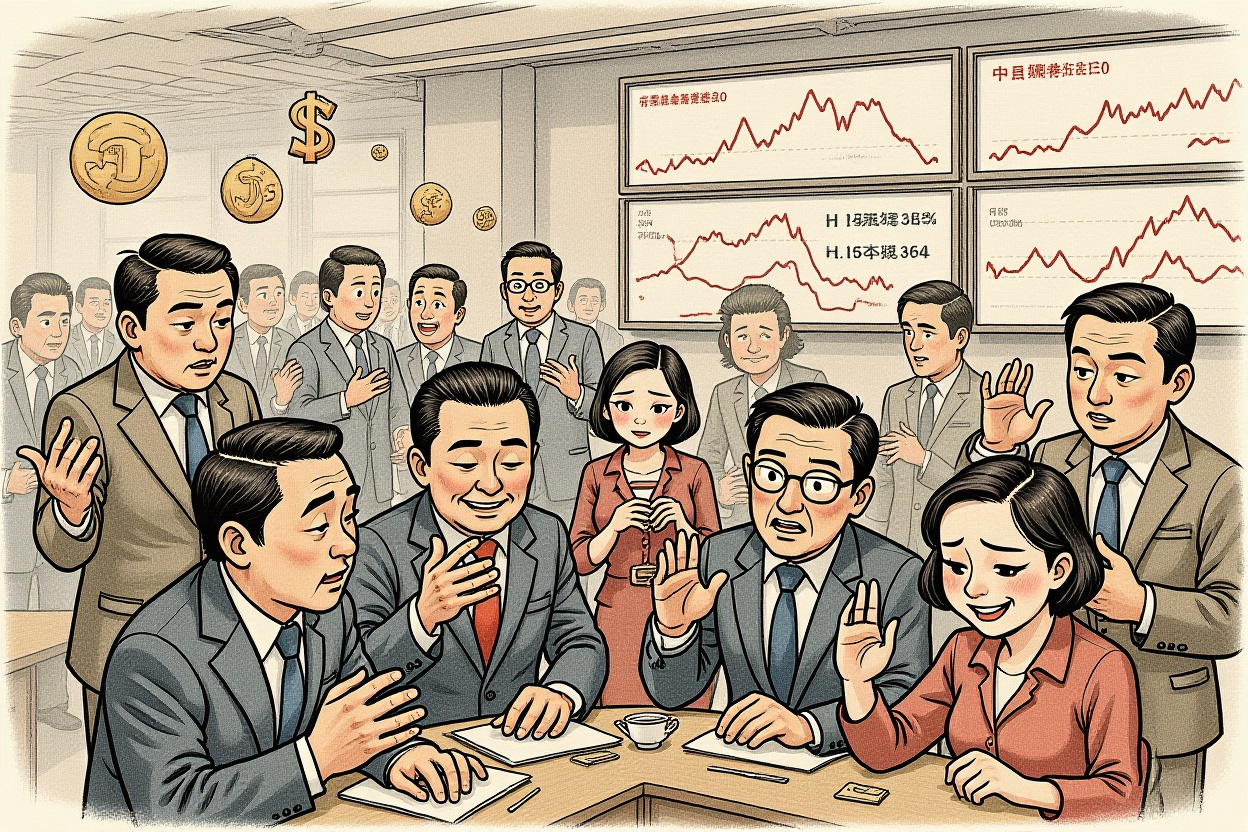
Following the announcement, Chinese equities experienced heightened volatility. The 沪深300指数 (CSI 300 Index) saw a dip of 2.3% in the days after the news broke, reflecting investor unease. Institutional players, including 中国国际金融有限公司 (China International Capital Corporation Limited), issued reports highlighting the potential for increased selling pressure. This Buffett’s rare sell event has underscored the sensitivity of Chinese markets to high-profile investor actions.
Quotes from industry experts, such as 张化桥 (Zhang Huaqiao), a noted financial analyst, emphasize the psychological impact: ‘When a figure like Buffett moves, it forces a reevaluation of fundamentals.’ Data from 东方财富 (East Money) indicates a 15% increase in trading volume for affected stocks, signaling heightened scrutiny.
Regulatory and Economic Drivers
China’s evolving regulatory landscape plays a pivotal role in investment decisions. Recent policies from 国务院 (State Council) and 中国人民银行 (People’s Bank of China) have aimed at stabilizing markets but also introduced uncertainties. For instance, antitrust crackdowns on tech giants like 阿里巴巴集团 (Alibaba Group) and 腾讯控股 (Tencent Holdings) have altered risk assessments. Buffett’s rare sell may reflect concerns over these regulatory headwinds and their impact on corporate profitability.
Economic indicators further complicate the picture. Slowing GDP growth, trade disputes, and currency fluctuations in 人民币 (Renminbi) have made Chinese assets less attractive to some foreign investors. Reports from 国家统计局 (National Bureau of Statistics) show a moderation in industrial output, adding to the cautious outlook. This Buffett’s rare sell decision aligns with a broader trend of capital repositioning in response to macroeconomic signals.
Expert Opinions on Regulatory Impact
Financial experts, including 李稻葵 (Li Daokui), an economist at 清华大学 (Tsinghua University), argue that regulatory transparency is key to restoring confidence. ‘Investors need clarity on policy directions to mitigate risks,’ he noted in a recent interview. The 中国银行业监督管理委员会 (China Banking Regulatory Commission) has been proactive in communicating changes, but the pace of reform can still unsettle markets.
Case studies of other foreign investors, such as 软银集团 (SoftBank Group), reveal similar caution. For example, SoftBank’s reduced stakes in Chinese startups highlight a sector-wide reassessment. This Buffett’s rare sell event is part of a larger narrative where global funds are recalibrating exposure to China.
Implications for Global Investors
For institutional investors and fund managers, Buffett’s rare sell serves as a wake-up call to diversify and hedge Chinese equity exposures. The move suggests that even long-term bullish sentiments can waver under pressure. Strategies such as increasing allocations to 香港交易所 (Hong Kong Exchanges and Clearing) or 新加坡交易所 (Singapore Exchange) derivatives might offer alternatives to direct holdings.
Data from 晨星 (Morningstar) indicates a 10% rise in inquiries about emerging market funds excluding China, reflecting a shift in investor preferences. Key considerations include:
- Currency risk associated with 人民币 (Renminbi) depreciation
- Sector-specific vulnerabilities, particularly in technology and real estate
- Opportunities in undervalued segments like green energy and consumer goods
Portfolio Adjustments and Risk Management
Advisors recommend stress-testing portfolios against scenarios like further sell-offs. Tools from 彭博 (Bloomberg) and 路透社 (Reuters) can model impacts based on historical data. For instance, simulating a 20% drop in Chinese equities helped one European fund identify overexposed positions. This Buffett’s rare sell underscores the need for dynamic risk frameworks.
Quotes from 郭广昌 (Guo Guangchang), founder of 复星国际 (Fosun International), highlight resilience: ‘Diversification across regions and asset classes is essential in turbulent times.’ Investors should review their exposure to 中国A股 (China A-shares) and consider balanced approaches.
Future Outlook and Strategic Insights
Looking ahead, Buffett’s rare sell may prompt a broader reevaluation of Chinese equities. Analysts from 高盛 (Goldman Sachs) project that foreign ownership could decline by 5-10% in the near term if sentiment worsens. However, long-term growth prospects remain strong, driven by innovation and domestic consumption. Monitoring indicators like 消费者价格指数 (Consumer Price Index) and 采购经理人指数 (Purchasing Managers’ Index) will be critical for timing re-entry points.
Emerging trends, such as the rise of 科创板 (Star Market) and ESG investing, offer new avenues. Companies like 宁德时代 (CATL) in renewable energy are attracting attention despite broader caution. This Buffett’s rare sell event should be viewed as a data point in a complex market, not a definitive signal to exit.
Actionable Steps for Investors
To navigate this environment, investors can:
- Engage with local advisors familiar with 中国证监会 (CSRC) regulations
- Use ETFs and index funds for diversified exposure
- Monitor Berkshire Hathaway’s future filings for clues on strategy shifts
Resources like the 上海证券交易所 (SSE) website provide updates on market rules. By staying informed, professionals can turn volatility into opportunity.
Synthesizing the Market Shift
Buffett’s rare sell has highlighted the interconnectedness of global markets and the importance of adaptive strategies. While short-term turbulence is likely, Chinese equities continue to offer value for discerning investors. Key lessons include the need for vigilance on regulatory changes and the benefits of a long-term perspective. As markets evolve, those who balance caution with conviction will likely outperform.
Take the next step: Review your current holdings in Chinese assets and consult with experts to align with emerging trends. For ongoing analysis, subscribe to specialized reports and attend webinars on Asian market dynamics. By proactively managing risks, you can capitalize on the opportunities that follow significant market events like Buffett’s rare sell.