



Executive Summary:
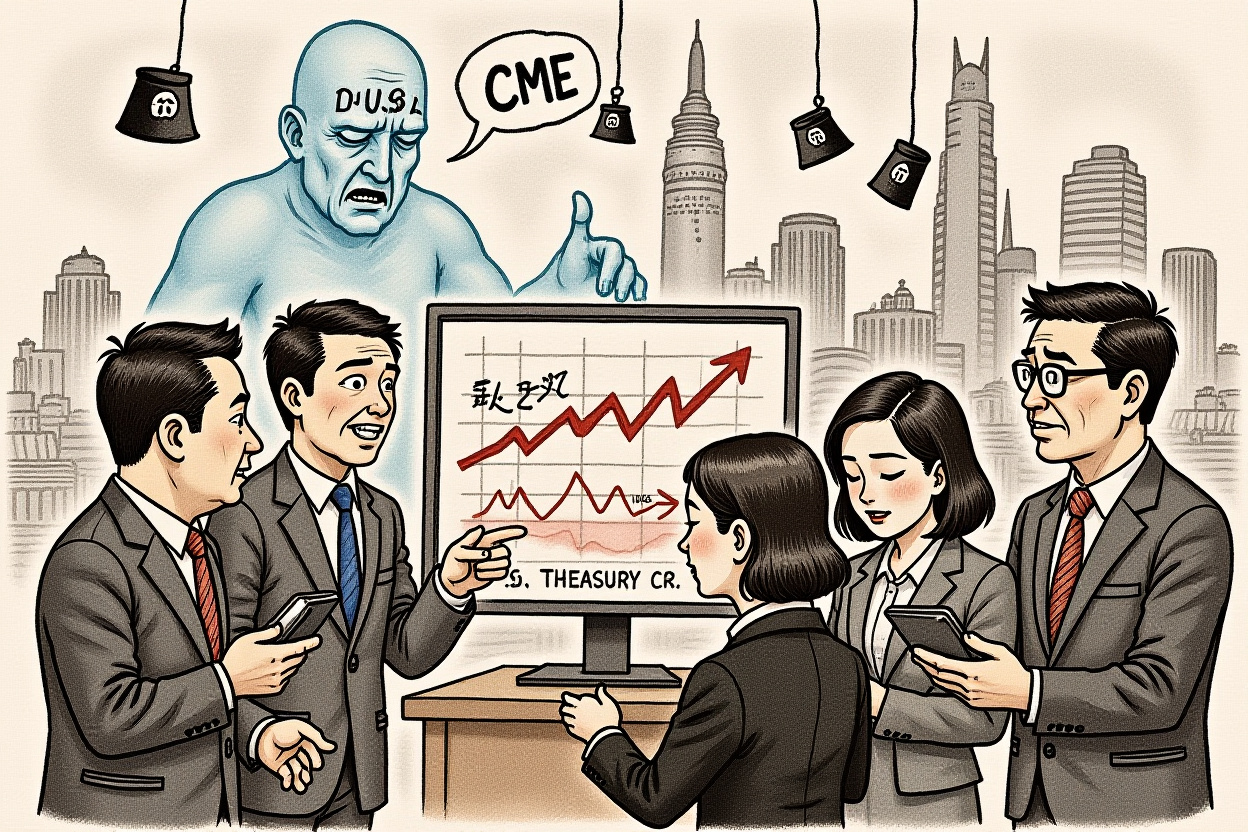
– CME Group CEO Terry Duffy (特里·达菲) warns that U.S. government intervention in oil futures markets could trigger an “epic disaster” by undermining market confidence.
– Speculation mounts that the U.S. Treasury Department (美国财政部) may be the “mystery seller” behind recent extreme volatility in crude oil prices.
– A social media blunder by U.S. Energy Secretary Wright (赖特) has added to market confusion, raising questions about government competence or potential fraud.
– Alternative measures to control oil prices, such as strategic reserve releases or tax suspensions, are being considered, but direct market intervention poses severe risks.
– For global investors, particularly in Chinese equities, these developments highlight the need to monitor energy market shocks and regulatory actions closely.
The global financial community is grappling with a potential crisis as warnings emerge about U.S. Treasury intervention in oil derivatives markets. According to a March 13 report in the Financial Times (金融时报), the head of CME Group (芝商所集团), the world’s largest futures exchange operator, has issued a stern caution to the Trump administration: any attempt to manipulate oil prices through derivatives market intervention during the U.S.-Iran conflict could spark an “epic disaster.” This alarm bell rings loudly for international investors, especially those with stakes in Chinese equity markets, where energy sector volatility can send ripples across portfolios. The very notion of government tampering in freely traded commodities threatens the bedrock of market confidence, a principle crucial for sophisticated professionals navigating today’s interconnected financial landscape. As we delve into the implications, the focus on U.S. Treasury intervention in oil derivatives markets becomes central to understanding both immediate risks and long-term market integrity.
The Epic Disaster Warning: CME’s Stark Caution on Market Intervention
The derivatives market stands at a precarious juncture following dire statements from CME Group (芝商所集团). CEO Terry Duffy (特里·达菲) has explicitly framed government manipulation as a catalyst for catastrophe, emphasizing that such actions could erode trust in price discovery mechanisms essential for global commodities like crude oil. This warning isn’t merely rhetorical; it reflects deep-seated concerns about the stability of financial systems when political motives override market fundamentals. For investors in Chinese equities, where energy companies rely on transparent pricing, the stakes are particularly high.
Terry Duffy’s Direct Message to the Trump Administration
Speaking at a conference in Boca Raton, Florida, Duffy left no room for ambiguity. He stated, “The market does not like government intervention in pricing,” arguing that if the U.S. government介入期货市场 to curb rising crude oil prices, it would severely weaken market confidence. His comments came amid media reports that the U.S. Treasury is considering measures including干预期货市场 to lower oil prices, alongside the Trump administration’s announcement of strategic petroleum reserve releases. Duffy highlighted that investors’ loss of faith in the market’s ability to determine key commodity prices could lead to disaster, a sentiment echoed by analysts who fear reduced liquidity and increased volatility. This scenario underscores the perils of U.S. Treasury intervention in oil derivatives markets, where even rumors can distort trading patterns.
Historical Precedents and Market Confidence
History offers cautionary tales about government intervention in commodity markets. Past efforts, such as price controls during the 1970s oil crises, often resulted in shortages, black markets, and eventual price spikes that harmed economies. Duffy pointed out that when investors doubt pricing integrity, they may exit markets, exacerbating price swings. For Chinese markets, this is relevant because companies like PetroChina (中国石油) and Sinopec (中国石化) use derivatives for hedging; any disruption could impact their cost management and stock performance. A collapse in confidence could also affect the Shanghai International Energy Exchange (INE) crude oil futures, which have gained traction as a regional benchmark. Thus, the warning from CME serves as a reminder that market-based systems thrive on predictability, and U.S. Treasury intervention in oil derivatives markets risks undermining that foundation globally.
Unraveling the Mystery Seller: Is the U.S. Treasury Shorting Crude Oil?
Recent days have witnessed wild swings in crude oil prices, with Brent crude soaring to nearly $120 per barrel before plunging below $100, all within hours. This volatility has traders speculating about a “mystery seller,” with many pointing fingers at the U.S. Treasury Department (美国财政部). Such unprecedented moves raise questions about whether official entities are actively shorting the market to achieve political goals, a tactic that could have far-reaching consequences for global energy investments.
Analyzing the Recent Oil Price Volatility
On Monday, Brent crude prices experienced a dramatic spike and crash, characteristic of large, unexplained trades. Tim Skirrow (蒂姆·斯基罗), head of derivatives at Energy Aspects, noted that clients are persistently asking, “who is the big seller?” Market whispers suggest the selling may originate from the U.S. Treasury, possibly offloading near-month futures contracts to depress prices. While consulting firm Rapidan Energy Group (拉皮丹能源集团) called such a move “unprecedented,” its analysts acknowledged in reports that, given current panic, the possibility cannot be ruled out. Data from the U.S. Commodity Futures Trading Commission (CFTC) shows increased speculative activity, but the source remains opaque. For Chinese investors, this ambiguity complicates decisions, as oil price signals influence sectors from manufacturing to transportation, impacting stocks on exchanges like the Shenzhen Stock Exchange (深圳证券交易所).
Expert Insights and Denials from Washington
Despite the speculation, official channels have pushed back. The U.S. Treasury declined to comment, but a source familiar with Treasury Secretary Bessent’s (贝森特) thinking denied any institutional intervention. A U.S. Department of Energy spokesperson also stated the department isn’t involved in oil derivatives trading. However, the lack of transparency fuels suspicions, highlighting the risks of U.S. Treasury intervention in oil derivatives markets. John Kilduff, a partner at Again Capital, remarked, “When governments dabble in markets, it creates uncertainty that can persist for years.” For global professionals, this underscores the need to verify information through multiple sources, such as regulatory filings or independent data from the China Securities Regulatory Commission (中国证监会), to navigate potential market distortions.Government Missteps and Market Chaos: The Energy Secretary’s Social Media Blunder
Compounding market anxiety are confusing signals from government officials. On Tuesday, U.S. Energy Secretary Wright (赖特) posted on social platform X that the U.S. Navy had escorted an oil tanker through the Strait of Hormuz, causing oil prices to tumble instantly. The post was deleted minutes later, and the White House denied the claim, with Wright clarifying that naval escorts were unlikely before month’s end. This episode has been labeled everything from incompetence to potential fraud, eroding trust in government communications and amplifying volatility.
The Impact of Inaccurate Information on Oil Prices
John Evans (约翰·埃文斯), an analyst at PVM Oil Associates in London, questioned whether Wright’s post was “another case of complete incompetence” or “a fraud.” Such incidents demonstrate how unverified information can trigger knee-jerk trading, with Brent crude dropping over 3% in response before rebounding. In the context of U.S. Treasury intervention in oil derivatives markets, this blunder raises concerns about the government’s overall approach to market stability. For Chinese equity investors, it highlights the importance of filtering noise from reliable data, especially when trading energy stocks that react swiftly to geopolitical news. Tools like real-time alerts from the Shanghai Stock Exchange (上海证券交易所) can help mitigate such risks.
Broader Implications for Policy Credibility
When key officials disseminate inaccurate information, it damages long-term policy credibility, making it harder for markets to anticipate government actions. This can lead to increased risk premiums and hedging costs. For instance, if investors doubt the U.S. government’s commitment to market integrity, they might demand higher returns for holding oil-related assets, affecting valuations worldwide. In China, where policy signals from bodies like the National Development and Reform Commission (国家发展和改革委员会) are closely watched, similar missteps could destabilize sectors. Thus, the Energy Secretary’s error serves as a warning: in an era of instant communication, veracity is paramount to prevent self-inflicted market wounds.Alternative Avenues for Price Control: Beyond Derivatives Intervention
While the specter of direct market manipulation looms, the U.S. government has other tools to influence oil prices. These include releasing strategic petroleum reserves, suspending federal gasoline taxes, relaxing environmental regulations, or temporarily banning U.S. oil exports. Each option carries trade-offs, but none risk the systemic damage associated with U.S. Treasury intervention in oil derivatives markets.
Strategic Petroleum Reserve Releases and Other Measures
The Trump administration’s decision to tap strategic reserves is a conventional approach, aiming to boost supply and curb prices. However, analysts note that such releases may have limited impact if global demand remains robust or geopolitical tensions escalate. Alternatives like tax suspensions could provide consumer relief but face political hurdles. For example, a federal gasoline tax holiday might reduce pump prices but strain infrastructure funding. From a Chinese perspective, these measures affect global oil demand dynamics, influencing imports and the performance of energy stocks on the Hong Kong Stock Exchange (香港交易所). Investors should monitor announcements from the U.S. Energy Information Administration (EIA) for supply data, while also considering China’s own strategic reserves managed by the National Energy Administration (国家能源局).
Weighing the Risks and Benefits of Market Manipulation
Direct intervention in futures markets might offer short-term price relief, but as CME’s Duffy emphasized, it undermines market-based pricing. Derivatives exchanges rely on confidence; if participants fear government tampering, liquidity can dry up, increasing costs for hedgers and speculators alike. For Chinese markets, where derivatives usage is growing, any erosion of trust could hamper risk management strategies. A report from the Bank for International Settlements (BIS) warns that market manipulation can lead to contagion, affecting related assets like currency pairs or bonds. Therefore, while U.S. Treasury intervention in oil derivatives markets might seem tempting, the long-term costs likely outweigh the benefits, urging policymakers to seek more transparent alternatives.
Global Ramifications for Chinese Equity Markets and Investors
The unfolding drama in U.S. oil markets has significant implications for Chinese equity markets and the broader Asian financial landscape. As the world’s largest crude oil importer, China’s economy and stock market are highly sensitive to oil price fluctuations, making this a critical issue for institutional investors and corporate executives worldwide.
Linkages Between Oil Prices and Chinese Energy Stocks
Chinese energy companies, such as PetroChina (中国石油) and Sinopec (中国石化), are directly affected by crude oil prices. When prices rise, input costs increase, potentially squeezing margins, while price drops can boost profitability but also signal weaker global demand. Moreover, Chinese investors use derivatives on exchanges like the Dalian Commodity Exchange (大连商品交易所) to hedge exposures; any disruption in global derivatives markets could impair these strategies. The potential for U.S. Treasury intervention in oil derivatives markets adds uncertainty, necessitating closer scrutiny of earnings reports and commodity correlations. For instance, a 10% swing in oil prices can translate to significant moves in the CSI 300 Energy Index, impacting portfolio allocations.
Strategies for Navigating Increased Volatility
In this environment, savvy investors should consider several approaches. First, diversify portfolios to include sectors less tied to energy, such as technology or consumer staples. Second, use options and other derivatives to manage risk, but ensure counterparties are reliable. Third, monitor regulatory announcements from both U.S. and Chinese authorities, like the China Banking and Insurance Regulatory Commission (中国银行保险监督管理委员会), for policy shifts. Fourth, stay informed about geopolitical developments, such as tensions in the Middle East, through sources like the International Energy Agency (IEA). Finally, engage with financial advisors to adjust strategies dynamically. The key takeaway is that in times of potential government intervention, flexibility and due diligence are paramount to protect investments.
Regulatory Perspectives: Lessons from U.S. and Chinese Markets
The situation highlights contrasting regulatory philosophies between the U.S. and China, offering lessons for global market participants. While the U.S. often emphasizes market freedom, recent events show how political pressures can lead to interventionist tendencies. In contrast, China’s approach involves more direct state influence, but with a focus on stability through bodies like the China Securities Regulatory Commission (中国证监会).
U.S. Regulatory Framework and Its Vulnerabilities
Chinese Regulatory Responses and Market StabilityIn China, regulators have taken steps to insulate markets from external shocks, such as implementing circuit breakers on stock exchanges and promoting yuan-denominated (人民币) oil futures. The Shanghai International Energy Exchange (INE) crude oil contract has gained traction, offering an alternative benchmark. Chinese authorities, including People’s Bank of China Governor Pan Gongsheng (潘功胜), often emphasize stability over short-term gains. For global professionals, this means that while Chinese markets may experience volatility, regulatory interventions are typically more predictable, aimed at curbing excessive speculation. Monitoring announcements from the State Administration of Foreign Exchange (国家外汇管理局) can provide clues on capital flow impacts.Synthesizing the Risks and Moving Forward
The warning from CME Group serves as a stark reminder of the delicate balance between market forces and government action. While policymakers may be tempted to intervene to stabilize prices during crises, such moves can have unintended consequences, including loss of market confidence and increased volatility. The speculation around U.S. Treasury intervention in oil derivatives markets highlights the need for transparency and caution in an interconnected global economy.
For global investors, particularly those focused on Chinese equities, this episode underscores the importance of robust risk management and vigilant monitoring. As events unfold, prioritize fundamentals over rumors, diversify exposures across sectors and geographies, and seek reliable information from authoritative sources. Engage with financial advisors to navigate uncertainties, and consider the long-term implications of regulatory changes. The call to action is clear: in the face of potential market distortions, stay informed, adaptable, and proactive to safeguard investments and capitalize on opportunities in dynamic markets.