



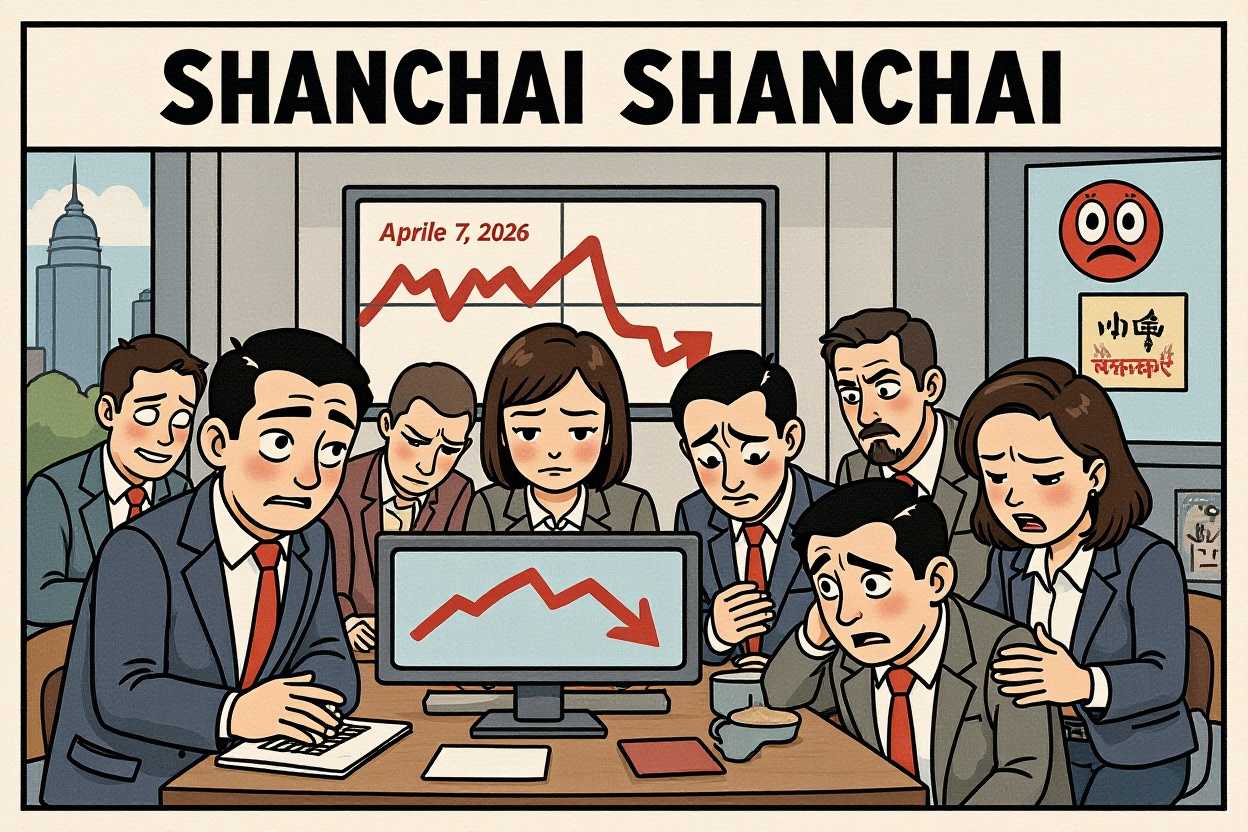
Executive Summary: Key Market Takeaways
The trading session on April 7, 2026, presented a challenging environment for investors in Chinese equities, particularly those listed on U.S. exchanges. Here are the critical insights from the day’s market movements:
- The Nasdaq Golden Dragon China Index (纳斯达克中国金龙指数) declined 0.46%, reflecting a broad sell-off in U.S.-listed Chinese stocks amidst weaker U.S. indices.
- Macroeconomic uncertainties, including interest rate concerns and geopolitical tensions, contributed to risk aversion, disproportionately affecting technology and Chinese equity sectors.
- Sector rotation was evident, with healthcare and insurance stocks like Humana and UnitedHealth Group posting significant gains, highlighting defensive positioning.
- Long-term investors should view this volatility as an opportunity to reassess portfolios, focusing on fundamentals and regulatory developments in China’s capital markets.
- Monitoring the Nasdaq Golden Dragon China Index remains crucial for gauging sentiment toward U.S.-listed Chinese stocks and anticipating potential A-share market correlations.
The April 7 Market Session: A Broad-Based Decline
The day opened with pessimism across major U.S. indices, setting a negative tone for global equities, including Chinese companies listed overseas. This section breaks down the key data points and immediate reactions.
U.S. Indices and Technology Sector Weakness
All three major U.S. stock indices closed lower on April 7, 2026. The Dow Jones Industrial Average fell 0.63%, the S&P 500 dropped 0.53%, and the Nasdaq Composite declined 0.58%. This downward movement was led by weakness in large-cap technology stocks, with Apple (AAPL) shedding over 2% and others like Tesla (TSLA), Oracle (ORCL), Microsoft (MSFT), Nvidia (NVDA), and Qualcomm (QCOM) also trading lower. The tech sell-off reflected broader concerns about valuation and slowing growth, which often spill over to risk-sensitive assets like U.S.-listed Chinese stocks.
Spotlight on the Nasdaq Golden Dragon China Index Decline
Amid the broader market dip, the Nasdaq Golden Dragon China Index (纳斯达克中国金龙指数), a key benchmark for U.S.-listed Chinese stocks, fell 0.46%. This index tracks American Depositary Receipts (ADRs) of Chinese companies and serves as a vital sentiment gauge. The decline was widespread, with notable losers including Century Internet (世纪互联) down over 3%, Hesai Technology (禾赛科技) down over 2%, and Pony.ai (小马智行), Nio (蔚来), and Xunlei (迅雷) each falling more than 1%. Giants like Alibaba Group (阿里巴巴集团), JD.com (京东集团), Baidu Group (百度集团), NetEase (网易), and New Oriental (新东方) also edged lower. This collective downturn underscores the sensitivity of U.S.-listed Chinese stocks to both U.S. market dynamics and China-specific factors.
Decoding the Sell-Off: Key Drivers and Catalysts
The drop in U.S.-listed Chinese stocks did not occur in isolation. Multiple interconnected factors converged to drive the sell-off, offering lessons for risk assessment and portfolio management.
Macroeconomic Headwinds and Geopolitical Tensions
Global investors grappled with renewed fears over inflation and potential interest rate hikes by the U.S. Federal Reserve, which can dampen appetite for growth-oriented equities. Additionally, ongoing geopolitical frictions between the U.S. and China, particularly regarding trade and technology transfer, added a layer of uncertainty. For U.S.-listed Chinese stocks, this translates to heightened regulatory risks and concerns about market access. The performance of these stocks often mirrors shifts in diplomatic relations, making them a barometer for bilateral economic ties.
Sector-Specific Pressures on Chinese Tech Stocks
Many U.S.-listed Chinese companies are in the technology and consumer sectors, which faced particular pressure. Factors included slowing user growth in key markets, increased competition, and evolving regulatory frameworks in China. For instance, China’s continued emphasis on data security and antitrust enforcement has led to volatility for tech giants. Investors should review recent filings with the U.S. Securities and Exchange Commission (SEC) for insights into company-specific challenges. The sell-off in U.S.-listed Chinese stocks highlights the need for deep due diligence on corporate governance and compliance.
Comparative Analysis: How Other Sectors Performed
While U.S.-listed Chinese stocks struggled, other market segments showed resilience, indicating a rotation into defensive assets. This contrast provides context for overall market sentiment.
Resilience in Healthcare and Insurance Stocks
In a stark contrast to the tech downturn, healthcare and insurance stocks rallied. Humana (HUM) surged over 7%, and UnitedHealth Group (UNH) jumped more than 8%. These gains were driven by strong earnings reports and optimistic guidance about Medicare Advantage plans. For investors, this sector performance suggests a flight to safety and income-generating assets amid volatility. It also underscores the diversification benefits of including healthcare exposures when investing in volatile segments like U.S.-listed Chinese stocks.
Broader Market Sentiment and Risk Aversion
The divergence between falling tech stocks and rising healthcare shares points to a broader risk-off sentiment. Market participants may be rebalancing portfolios ahead of economic data releases, such as U.S. employment figures or China’s GDP reports. Tools like the CBOE Volatility Index (VIX) can help gauge fear levels. For U.S.-listed Chinese stocks, this environment means that short-term price movements may be exaggerated by algorithmic trading and sentiment swings, rather than fundamental deterioration.
Historical Context and Trend Analysis
To fully understand the April 7 decline, it’s essential to place it within the longer-term trajectory of U.S.-listed Chinese equities. Historical patterns offer clues about future directions.
Volatility Patterns in U.S.-Listed Chinese Equities
U.S.-listed Chinese stocks have historically experienced higher volatility compared to broader U.S. indices. Events like the 2021-2022 regulatory crackdowns in China and delisting concerns have led to sharp sell-offs and recoveries. Data from financial platforms like Bloomberg or Refinitiv shows that the Nasdaq Golden Dragon China Index (纳斯达克中国金龙指数) often reacts more sharply to news flow. Investors should analyze volume trends and options activity to assess whether the current decline is a temporary blip or part of a deeper trend.
Long-Term Outlook for Chinese ADRs
Despite short-term volatility, the long-term investment case for U.S.-listed Chinese stocks remains nuanced. Many of these companies, such as Alibaba Group (阿里巴巴集团) and JD.com (京东集团), are leaders in China’s digital economy with robust fundamentals. However, risks include potential delisting from U.S. exchanges if audit disputes persist, as well as currency fluctuations between the RMB and USD. Resources like the Public Company Accounting Oversight Board (PCAOB) announcements provide updates on regulatory progress. A balanced approach, focusing on companies with strong cash flows and transparent reporting, can help navigate the cycles in U.S.-listed Chinese stocks.
Investor Strategies and Risk Management
In light of the April 7 sell-off, investors must adapt their strategies to manage risk and identify opportunities. Here are actionable insights for different investor profiles.
Navigating Short-Term Volatility
For traders and short-term investors, volatility in U.S.-listed Chinese stocks can present both risks and opportunities. Techniques include using stop-loss orders to limit downside, hedging with options or inverse ETFs, and monitoring technical indicators like moving averages. It’s also crucial to stay informed about real-time news from sources like the China Securities Regulatory Commission (CSRC) or U.S. Federal Reserve statements. Since U.S.-listed Chinese stocks often gap at the open, pre-market analysis is key.
Opportunities in the Pullback for Value Investors
Value-oriented investors may see the decline in U.S.-listed Chinese stocks as a chance to acquire quality names at discounted valuations. Focus on companies with low price-to-earnings ratios, strong balance sheets, and competitive moats. For example, some Chinese tech firms have seen their ADRs trade below intrinsic value due to sentiment overhangs. Conducting fundamental analysis and comparing valuations to Hong Kong-listed counterparts (H-shares) can uncover mispricings. Remember, patience is vital when investing in cyclical sectors like U.S.-listed Chinese stocks.
Regulatory and Policy Implications
The performance of U.S.-listed Chinese stocks is inextricably linked to the regulatory environments in both China and the United States. Understanding these frameworks is essential for forecasting market movements.
China’s Evolving Regulatory Landscape
In recent years, China has implemented stricter regulations on technology, education, and data privacy, impacting many companies listed overseas. Agencies like the Cyberspace Administration of China (CAC) and the State Administration for Market Regulation (SAMR) have increased oversight. For U.S.-listed Chinese stocks, this means that corporate earnings and growth projections must account for compliance costs and potential business model shifts. Investors should review official announcements from these bodies to anticipate regulatory trends.
Implications of U.S.-China Relations on Market Access
Bilateral tensions affect market access for U.S.-listed Chinese stocks. The Holding Foreign Companies Accountable Act (HFCAA) in the U.S. requires compliance with audit inspections, with non-compliance leading to delisting risks. Progress in negotiations between the U.S. Public Company Accounting Oversight Board (PCAOB) and Chinese authorities is a critical watchpoint. Additionally, policies from the People’s Bank of China (中国人民银行) regarding monetary easing or tightening can influence RMB stability, affecting ADR valuations. Staying updated through diplomatic channels and financial news is crucial for assessing the landscape for U.S.-listed Chinese stocks.
Synthesizing Insights and Forward Guidance
The April 7, 2026, market session highlighted the persistent volatility and interconnected drivers affecting U.S.-listed Chinese stocks. Key takeaways include the importance of macroeconomic monitoring, sector diversification, and regulatory awareness. While short-term headwinds persist, the long-term growth narrative for China’s economy and its leading companies remains intact, offering potential for patient investors.
To stay ahead in this dynamic environment, consider subscribing to specialized market reports or consulting with financial advisors who focus on Asian equities. Regularly track indices like the Nasdaq Golden Dragon China Index (纳斯达克中国金龙指数) and leverage tools for risk management. By adopting a disciplined, research-driven approach, you can navigate the complexities of U.S.-listed Chinese stocks and capitalize on emerging opportunities in Chinese equity markets.