



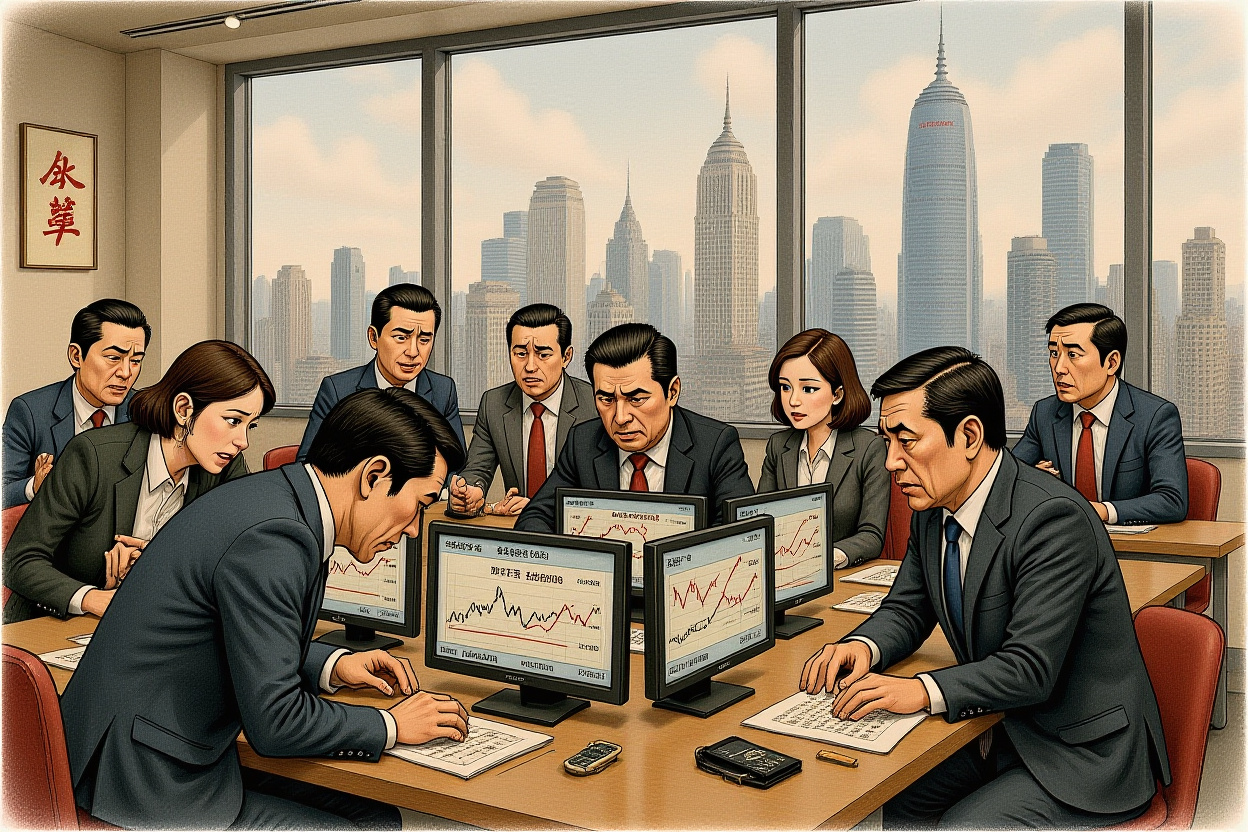
The imminent high-stakes negotiations between the United States and Iran have triggered a wave of anticipatory tension across financial hubs worldwide. With a 24-hour window to potentially de-escalate longstanding geopolitical friction, institutional investors are recalibrating portfolios, acutely aware that the outcomes will directly influence asset valuations from oil futures to Chinese technology stocks. Global capital markets are holding their breath, awaiting clarity that could either unleash a relief rally or plunge markets into a new cycle of volatility. For professionals focused on Chinese equities, this event underscores the unavoidable intersection of geopolitics and finance, where Middle Eastern diplomacy can swiftly alter risk appetites in Shanghai and Shenzhen.
Executive Summary: Critical Takeaways for Market Participants
Immediate Market Implications
The 24-hour negotiation deadline has placed global financial systems on high alert, with several key implications for investors:
– Oil price volatility is the primary transmission channel, with Brent crude futures serving as a real-time barometer for negotiation progress or breakdown.
– Chinese equity markets, particularly the 上海证券交易所 (Shanghai Stock Exchange) and 深圳证券交易所 (Shenzhen Stock Exchange), are exposed through energy-intensive sectors and supply chain dependencies.
– Safe-haven assets, including gold and the U.S. dollar, are likely to see increased demand if talks stall, pressuring emerging market currencies like the Chinese yuan (人民币).
– Regulatory bodies, including the 中国证券监督管理委员会 (China Securities Regulatory Commission), may issue guidance to stabilize domestic markets, influencing trading strategies.
– Historical data indicates that geopolitical shocks in the Middle East have previously led to correlated sell-offs in Asian equities, making this a precedent-sensitive event.
Strategic Actions for Investors
In this compressed timeframe, sophisticated investors should:
– Monitor live diplomatic communications and official statements from both U.S. and Iranian delegations.
– Adjust exposure to Chinese equities in the 能源 (energy), 国防 (defense), and 科技 (technology) sectors, which are most sensitive to geopolitical shifts.
– Utilize hedging instruments such as options on the 沪深300指数 (CSI 300 Index) to manage downside risk during the uncertainty window.
– Review commodity-linked investments, as oil price movements will immediately affect profitability for Chinese industrial giants like 中国石油化工集团公司 (Sinopec Group).
The global capital markets are holding their breath, and proactive risk management is now the dominant strategy in trading rooms from Hong Kong to London.
The Geopolitical Stakes: U.S.-Iran Relations at a Crossroads
Historical Context and Escalating Tensions
Relations between the United States and Iran have been fraught for decades, cycling through periods of intense confrontation and fragile diplomacy. The current negotiation table follows a series of incidents that brought the two nations to the brink of direct conflict, including maritime skirmishes in the Strait of Hormuz and disagreements over nuclear proliferation. For global investors, understanding this history is crucial; past escalations have repeatedly triggered oil supply fears, leading to spikes in energy prices and subsequent inflation concerns that dampen equity market performance worldwide. Chinese economic planners, particularly at the 国家发展和改革委员会 (National Development and Reform Commission), closely watch these developments due to China’s status as the world’s largest crude oil importer.
Key Negotiation Points and Potential Outcomes
The talks are expected to revolve around three core issues: nuclear program restrictions, sanctions relief, and regional security assurances. Each scenario carries distinct market implications:
– **Breakthrough Agreement:** A comprehensive deal could see the lifting of U.S. sanctions on Iranian oil exports, potentially flooding the market with additional supply and depressing oil prices. This would be a net positive for energy-importing economies like China, reducing input costs for manufacturers and boosting corporate earnings. Equity markets might rally on reduced inflation fears.
– **Partial Progress or Extension:** A commitment to further talks without immediate resolution could maintain status quo volatility. Markets may remain range-bound, with continued premium priced into oil and defensive sectors.
– **Talks Collapse:** A diplomatic failure risks immediate military posturing, likely causing oil prices to surge above $100 per barrel. This would reignite stagflation worries, hammer risk assets globally, and force central banks, including the 中国人民银行 (People’s Bank of China), to reconsider monetary policy trajectories.
As global capital markets hold their breath, the probability-weighted outcomes are being factored into algorithmic trading models and discretionary portfolios alike.
Global Market Reactions: From Commodities to Equities
Immediate Impact on Commodity Markets
Commodity markets are the frontline responders to U.S.-Iran geopolitical developments. The 24-hour countdown has already increased trading volumes and volatility in key contracts:
– **Oil:** Brent and WTI crude futures have exhibited heightened sensitivity, with options markets pricing in a 15-20% move depending on the outcome. A sustained price above $95 per barrel could pressure the profit margins of Chinese airlines and logistics companies.
– **Gold:** The precious metal has strengthened as a traditional safe-haven, with inflows into gold ETFs monitored by institutions like the 世界黄金协会 (World Gold Council). Chinese retail and institutional investors often increase gold holdings during geopolitical stress, viewing it as a hedge against yuan depreciation.
– **Industrial Metals:** Copper and aluminum prices may see indirect pressure from broader risk-off sentiment, affecting Chinese mining stocks listed on the 香港交易所 (Hong Kong Exchanges and Clearing).
These commodity gyrations directly feed into the 生产者物价指数 (Producer Price Index) in China, influencing the 中国人民银行 (People’s Bank of China)’s inflation assessments and, consequently, liquidity conditions for equities.
Equity Market Volatility and Sectoral Rotations
Global equity indices have entered a phase of elevated implied volatility, as measured by the VIX index and its Asian counterparts. Specific sectoral impacts are becoming clear:
– **Energy Sectors:** Integrated oil companies may benefit from higher prices in a conflict scenario, while downstream refiners suffer. In China, stocks like 中国海洋石油总公司 (CNOOC) could see gains, whereas 中国东方航空股份有限公司 (China Eastern Airlines) might face headwinds.
– **Defense and Aerospace:** Increased geopolitical tension typically boosts defense budgets and related stocks. Chinese defense firms, often state-backed, could attract speculative interest.
– **Technology and Supply Chains:** Any disruption to Middle Eastern stability threatens global shipping routes, impacting the just-in-time supply chains critical to Chinese tech giants like 华为技术有限公司 (Huawei Technologies).
The interconnectedness means that even if U.S.-Iran negotiations occur thousands of miles away, the reverberations are felt instantly in the trading terminals of Shanghai. Global capital markets are holding their breath, and sectoral rotations are already underway as fund managers reposition for multiple contingencies.
Chinese Equity Markets in the Spotlight
Sensitivity to Energy Price Swings and Inflation
China’s equity market performance is intricately linked to energy costs due to the economy’s manufacturing-heavy composition. A sustained oil price shock could quickly translate into higher 生产者物价指数 (PPI), squeezing corporate margins and potentially slowing the economic recovery monitored by the 国家统计局 (National Bureau of Statistics). Historical analysis shows that for every 10% rise in oil prices, the 沪深300指数 (CSI 300 Index) has historically underperformed global peers by an average of 3-5% over the following quarter, assuming no policy intervention. The 中国证券监督管理委员会 (China Securities Regulatory Commission) has tools to stabilize markets, such as guiding state-owned funds, but the fundamental pressure remains. As global capital markets hold their breath, Chinese asset allocators are scrutinizing energy inventories and alternative supply arrangements with Russia and Saudi Arabia to mitigate dependency risks.
Defense, Technology, and Currency Implications
Beyond energy, specific Chinese equity sectors face unique exposures:
– **Defense:** Geopolitical instability often leads to increased defense spending. Listed subsidiaries of major state-owned defense conglomerates could see renewed investor interest, though their valuations are also subject to policy directives from Beijing.
– **Technology:** Many Chinese tech firms rely on global semiconductor supply chains that transit strategic chokepoints near the Middle East. Prolonged tension could delay shipments, affecting production schedules for companies like 小米集团 (Xiaomi Corporation).
– **Currency and Forex Markets:** The Chinese yuan (人民币) is sensitive to risk sentiment. A flight to safety could trigger outflows from Chinese bonds and equities, pressuring the yuan. The 中国人民银行 (People’s Bank of China) has ample reserves to intervene, but such actions would influence liquidity conditions for stocks. Investors are watching the USD/CNY exchange rate closely as a sentiment gauge during the 24-hour window.
This multifaceted impact demonstrates why Chinese market participants are among the most attentive observers of the U.S.-Iran dialogue. The outcomes will not only affect short-term trading but also medium-term capital allocation decisions across the region.
Investor Strategies for the 24-Hour Negotiation Window
Monitoring Key Indicators and Data Points
In a fast-moving geopolitical environment, having a real-time dashboard is essential. Professionals should track:
– **Diplomatic Feeds:** Official statements from the U.S. State Department and Iranian Foreign Ministry, as well as analysis from trusted news agencies.
– **Market Data:** Live oil futures (Brent), gold prices, the 美元指数 (U.S. Dollar Index), and the 沪深300指数 (CSI 300 Index) futures for immediate reaction patterns.
– **Volatility Measures:** The VIX index and the 中国波指 (China Volatility Index) to gauge fear levels and option pricing.
– **Policy Signals:** Any comments or actions from the 中国人民银行 (People’s Bank of China) or 中国证券监督管理委员会 (China Securities Regulatory Commission) regarding market stability.
Setting alerts for these indicators can provide the agility needed to act before consensus moves are fully priced in. Remember, global capital markets are holding their breath, and information asymmetry can be a source of alpha during such events.
Risk Management and Hedging Approaches
Given the binary nature of the negotiation outcomes, prudent risk management is non-negotiable. Consider these tactics:
– **Portfolio Hedging:** Use put options on broad indices like the 沪深300指数 (CSI 300 Index) or the iShares MSCI China ETF to protect against downside. The cost of protection has risen but may be justified given the event risk.
– **Sectoral Adjustments:** Reduce exposure to cyclical sectors most vulnerable to oil spikes, such as transportation and consumer discretionary, in favor of more resilient utilities or healthcare stocks within the Chinese market.
– **Diversification into Safe Havens:** Temporarily increase allocations to gold-backed assets or short-duration Chinese government bonds, which are less correlated to equity swings.
– **Scenario Planning:** Model portfolio impacts under three core outcomes: deal, stalemate, or breakdown. This prepares decision-making frameworks for rapid execution once news breaks.
As global capital markets hold their breath, the ability to deploy these strategies swiftly will separate reactive investors from proactive ones. Historical precedents, such as the market reactions to the 2015 Iran nuclear deal, offer valuable lessons in timing and magnitude of moves.
Long-Term Implications for Global Capital Flows
Shifts in Safe-Haven Asset Demand and Currency Dynamics
The U.S.-Iran negotiations are a microcosm of a broader trend: the increasing influence of geopolitics on capital allocation. A lasting resolution could reinforce confidence in multilateral diplomacy, potentially reducing the long-term risk premium embedded in oil prices and benefiting energy-importing economies like China. Conversely, a collapse might accelerate a structural shift towards de-globalization, with investors seeking regional safe havens. The Chinese yuan (人民币) could experience heightened volatility as capital flows reassess geopolitical risk in Asia. Authorities at the 国家外汇管理局 (State Administration of Foreign Exchange) are undoubtedly preparing contingency plans to manage potential outflow pressures. Global capital markets are holding their breath, but beyond the 24-hour window, the event may recalibrate how risk is priced in emerging markets, with lasting effects on foreign direct investment into China.
Strategic Implications for Chinese Equities and Beyond
For Chinese equities, the long-term takeaway is the reaffirmation of geopolitical risk as a first-order driver. This may lead to:
– **Increased Correlations:** Chinese stocks could become more correlated with global volatility indices during crises, reducing the diversification benefit once assumed by international portfolios.
– **Policy Responses:** Chinese regulators might accelerate efforts to deepen domestic capital markets, such as promoting the 科创板 (Sci-Tech Innovation Board), to reduce external dependency and shield from global shocks.
– **Sectoral Winners and Losers:** Industries related to renewable energy and domestic consumption may gain favor as less geopolitically exposed, aligning with national strategies like 双循环 (dual circulation).
Investors should use this event to stress-test their China exposure and consider rebalancing towards themes insulated from Middle Eastern volatility. The interconnectedness of modern finance means that events in Tehran can echo in Shanghai, making geopolitical literacy a core competency for equity managers.
The 24-hour countdown to the U.S.-Iran negotiation outcome has crystallized the fragility of global financial stability in the face of geopolitical discord. Global capital markets are holding their breath, and the resolutions—or lack thereof—will dictate short-term trading rhythms and potentially alter long-term strategic assumptions. For professionals engaged in Chinese equities, the key is to remain agile, informed, and disciplined. Monitor the indicators, execute predefined risk protocols, and be ready to pivot based on credible information. As the deadline approaches, remember that volatility presents not only risk but also opportunity for those prepared. Stay connected to real-time analysis and regulatory updates to navigate the uncertainty and position your portfolio for the post-negotiation landscape.