



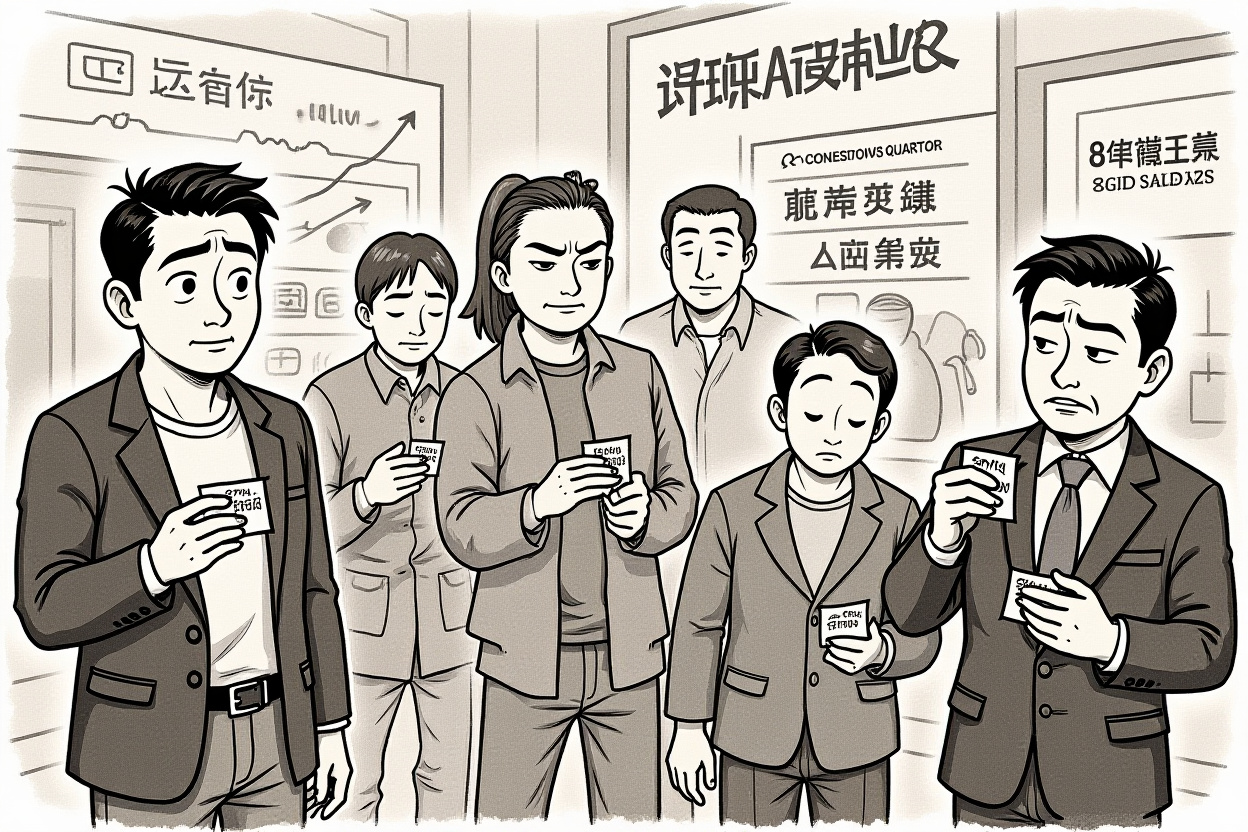
– Under Armour, celebrated as the ‘macho version of lululemon’ for its performance-focused appeal, has reported eight consecutive quarters of sales decline in China, highlighting critical brand challenges.
– The brand’s initial success hinged on capturing the ‘fitness persona’ of middle-class Chinese men, but strategic shifts diluted its core ‘macho’ identity, leading to consumer alienation.
– Frequent discounting and price instability eroded Under Armour’s premium perception, placing it in an awkward middle ground between luxury and value segments.
– Comparative financial data shows Under Armour lagging significantly behind competitors like Nike and Anta in the Chinese market, underscoring lost market share.
– This case study offers vital lessons for investors on brand consistency, pricing strategy, and the risks of diluting a niche value proposition in evolving markets.
The Meteoric Rise: From Niche Innovator to ‘Macho lululemon’
In the annals of athletic apparel, few stories are as compelling as that of Under Armour. Founded in 1996 by Kevin Plank (凯文·普朗克), a University of Maryland football player frustrated with sweat-soaked cotton gear, the brand pioneered moisture-wicking compression wear for men. This innovation carved a distinct niche, earning it the moniker ‘macho version of lululemon’ for its focus on strength and performance over fashion. While lululemon later capitalized on yoga wear, Under Armour was the true pioneer in defining a functional category—tight-fitting, technical apparel for intense athletics.
Under Armour’s growth trajectory was nothing short of spectacular. From 1996 to 2015, it posted over 20% year-on-year revenue growth for 19 consecutive years. By 2015, with sales around $4 billion, it surpassed Adidas to become the second-largest sportswear brand in the U.S., nipping at Nike’s heels. This ‘mythical leap’ was fueled by a relentless commitment to its ‘macho’ DNA: endorsements from athletes like Stephen Curry and Dwayne ‘The Rock’ Johnson, and placements in blockbuster films like ‘Fast & Furious 5’. The brand embodied raw power and determination, resonating deeply with consumers seeking a rugged fitness identity.
Capturing the Chinese Male Psyche
Under Armour entered China in 2011, opening its first store in Shanghai. Its expansion was aggressive, with 836 stores across 34 provinces and regions by 2023. The brand’s allure in China transcended mere sportswear; it tapped into a societal narrative. As middle-aged Chinese men increasingly sought to counter ‘油腻’ (oily) stereotypes, Under Armour offered a sartorial shortcut to a healthier, more vigorous image. The apparel—often simple, monochromatic, and devoid of flashy designs—was perceived as safe and masculine, straddling the line between youthfulness and maturity. This ‘fitness persona’ became a powerful driver, making Under Armour the go-to brand for those aspiring to project discipline and strength.
Financial Unraveling: The Data Behind the Decline
The brand’s recent financial performance tells a starkly different story. For the second quarter of fiscal year 2026 (ending September 30, 2025), Under Armour reported a 5% year-over-year revenue drop, marking the eighth consecutive quarter of declining sales. Net income plummeted by 111%, resulting in a $19 million loss. This downturn is particularly counterintuitive given the global boom in outdoor activities, functional apparel, and technical fabrics—sectors where Under Armour’s ‘macho’ ethos should thrive.
Asia-Pacific Woes and Competitive Benchmarks
In China, part of the Asia-Pacific region, revenue fell 14% to $180 million (approximately 1.274 billion RMB) in Q2 FY2026. Even under the extreme assumption that most Asia-Pacific sales originate from China, this figure pales in comparison to rivals. For instance, Nike’s China sales reached $1.423 billion in the latest quarter (ended November 2025), while Anta’s main brand generated 169.6 billion RMB in the first half of 2025 alone. The gap is not merely incremental but exponential, signaling a profound loss of market relevance. Data from Huajing Industrial Research Institute shows that China’s menswear market grew at a 3.26% CAGR from 2021 to 2025, disproving theories of systemic male consumption collapse. Thus, Under Armour’s issues are brand-specific, not market-wide.
Strategic Missteps: Diluting the ‘Macho’ Brand DNA
Under Armour’s decline stems partly from strategic choices that blurred its core identity. In September 2025, the brand announced actor-singer Nicholas Tse (谢霆锋) as the face of Under Armour EXPLOR, its outdoor line. Concurrently, it ended its 13-year partnership with NBA superstar Stephen Curry. These moves were widely interpreted as an attempt to pivot toward a more mainstream, lifestyle-oriented market—essentially, to compete directly with Nike on its own turf. While Tse embodies adventure, this shift risked alienating the brand’s base. The ‘macho version of lululemon’ thrived on its narrow, hardcore appeal; venturing into broader categories diluted that uniqueness, making it just another sportswear player in a crowded field.
The Perils of Brand Ambiguity
As Under Armour strayed from its roots, consumer perception shifted. Online discussions increasingly questioned product authenticity, with some users alleging that Under Armour EXPLOR items were ‘贴牌’ (white-label) products manufactured separately in coastal China, unlike the brand’s usual Southeast Asian supply chain. This skepticism eroded trust. Moreover, the departure of Stephen Curry—a symbol of athletic excellence—weakened the brand’s performance credentials. In trying to become more like Nike, Under Armour lost the very edge that made it the ‘macho lululemon’. The brand’s once-clear value proposition became muddled, leaving consumers unsure of what it stood for.
The Price Trap: Discounting and Value Erosion
Perhaps the most damaging blow to Under Armour’s equity in China has been its pricing strategy. Initially marketed as a premium, no-discount brand, it has increasingly relied on promotions. Reports from ’21st Century Business Herald’ highlight stark price disparities: for example, an Elite Vent women’s jacket priced at 799 RMB offline sold for 489 RMB online, and a sport sandal tagged at 549 RMB in stores was available for 318 RMB digitally. Frequent appearances in outlet malls, VIP.com, and ‘6折专区’ (60% off zones) on Tmall have become commonplace.
Consumer Backlash and Brand Devaluation
This price volatility has created cognitive dissonance among shoppers. Social media buzzes with simultaneous queries: ‘Why is Under Armour so expensive?’ and ‘Why is it always on sale?’ For middle-class consumers who once valued the brand as a status symbol, this feels like a ‘背刺’ (backstab). As one netizen aptly noted, ‘Ferrari is still Ferrari when it ages, but once it starts discounting, it’s just middle-aged and greasy.’ Under Armour’s descent into discounting signals a crisis of value—it’s no longer seen as a worthy investment for identity projection, nor is it cheap enough to attract bargain hunters. This places it in a precarious middle ground where it satisfies neither segment effectively.
Comparative Lessons: lululemon and the Premium Playbook
Contrast Under Armour’s trajectory with that of lululemon, which has meticulously maintained its premium positioning. lululemon rarely discounts core items, instead leveraging community engagement and innovation to justify higher price points. It expanded from yoga into adjacent categories like running and hiking without diluting its ethos of mindfulness and performance. The ‘macho version of lululemon’ moniker once highlighted Under Armour’s similar niche strength, but while lululemon doubled down on its exclusivity, Under Armour compromised its identity for growth. This divergence offers a clear lesson: in lifestyle branding, consistency in narrative and pricing is paramount.
Investor Implications for Chinese Equity Markets
For institutional investors monitoring Chinese consumer trends, Under Armour’s case underscores several key risks. Brands that fail to protect their core value proposition are vulnerable to rapid share erosion in China’s competitive retail landscape. Metrics to watch include brand sentiment on platforms like Xiaohongshu and Weibo, pricing discipline across channels, and the impact of celebrity endorsements on consumer trust. Companies like Anta and Li Ning have succeeded by balancing heritage with innovation, whereas Under Armour’s missteps highlight the pitfalls of reactive strategy. As the ‘macho lululemon’ struggles, it serves as a cautionary tale for other foreign brands navigating China’s nuanced market dynamics.
Pathways to Recovery: Can Under Armour Regain Its Edge?
Reviving Under Armour’s fortunes in China requires a back-to-basics approach. First, it must reaffirm its ‘macho’ DNA by reinvesting in performance innovation and partnerships with authentic athletes. Second, restoring price integrity is crucial—limiting discounts to preserve premium perception. Third, localized marketing that resonates with China’s fitness culture, without overextending into unrelated categories, could rebuild loyalty. The brand needs to decide whether it wants to be the ‘macho version of lululemon’ or a generalist; the former, while narrower, offers a defensible niche.
Forward-Looking Market Guidance
The Chinese athletic wear market remains robust, driven by health consciousness and outdoor trends. Under Armour’s potential recovery hinges on strategic clarity. Investors should monitor upcoming quarterly reports for signs of stabilized pricing, improved Asia-Pacific sales, and successful product launches. Additionally, tracking consumer sentiment through social media analytics can provide early indicators of brand health. For now, Under Armour’s story is a reminder that in the quest for scale, brands must not abandon the very attributes that made them unique. The ‘macho lululemon’ once inspired loyalty; with focused effort, it could again—but only if it relearns to speak the language of its core adherents.
Under Armour’s rise and fall in China encapsulate broader themes in global retail: the power of niche branding, the fragility of consumer trust, and the dangers of strategic drift. As the brand grapples with its identity, the market watches closely. For professionals in Chinese equity markets, this saga underscores the importance of due diligence on brand management and pricing strategies. Stay informed on evolving consumer trends and regulatory shifts to make nuanced investment decisions in the dynamic world of Chinese sportswear.