



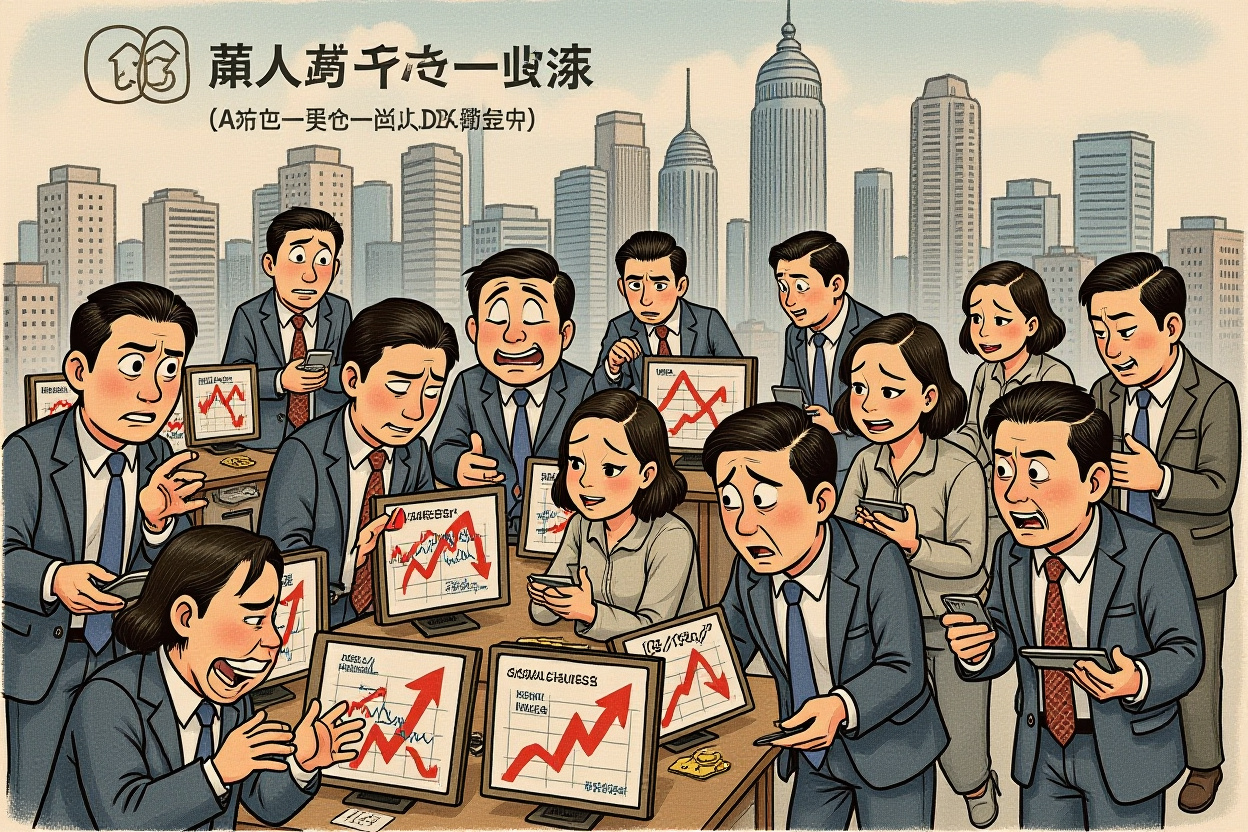
Executive Summary
– President Donald Trump’s surprise proposal to ban large institutional investors from purchasing single-family homes triggered immediate sell-offs in real estate and banking stocks across U.S. and European markets.
– Weak economic data, including lower-than-expected private sector employment figures from ADP Research, fueled concerns over slowing growth, exacerbating the global asset sell-off.
– The rebound in the U.S. dollar index (DXY) pressured risk assets, leading to significant declines in commodities like gold, silver, nickel, and copper, as well as cryptocurrencies.
– Market volatility is expected to persist as investors assess the long-term implications of Trump’s policies and monitor upcoming economic indicators for directional cues.
– This event underscores the interconnectedness of global markets and the heightened sensitivity to U.S. political and economic developments, necessitating careful risk management for international investors.
A Sudden Market Storm Erupts
Wednesday, January 7, witnessed a dramatic and synchronized plunge across major asset classes, sending shockwaves through global financial markets. European and U.S. equities, cryptocurrencies, and key industrial commodities all experienced sharp declines in a classic risk-off move. This global asset sell-off was primarily ignited by unexpected policy signals from the White House, coupled with concerning economic data that rattled investor confidence. For market participants focused on Chinese equities, such external volatility serves as a critical reminder of the spillover effects from Western policy shifts and their potential impact on Asian market sentiment and capital flows. The day’s events highlight how swiftly sentiment can turn, transforming a calm trading session into a turbulent sell-off.
The Trigger: Decoding Trump’s Policy Announcements
The immediate catalyst for the market downturn was a series of statements from U.S. President Donald Trump, disseminated via social media. These announcements targeted two key areas: the housing market and energy policy, directly impacting related sectors and broader market psychology.
Ban on Institutional Home Buying: Aiming at Affordability
President Trump declared his intention to seek congressional action to prohibit large corporate investors from purchasing single-family homes. His stated goal is to make housing more affordable for Americans, addressing what he called a diminishing ‘American Dream.’ This proposal directly threatens the business models of major players like private equity giant 黑石公司 (Blackstone), which has amassed a substantial portfolio of single-family rental homes over the past decade. The news prompted an immediate sell-off in housing-related stocks. The S&P 1500 Homebuilding Index fell as much as 2.2%, with companies like 邀请住宅 (Invitation Homes) dropping 10% and 建筑商FirstSource (Builder FirstSource) declining over 5%. Market strategist Matt Maley (马特·马利) of Miller Tabak noted, ‘This should have a material impact on their business,’ highlighting pressure on the monetization capabilities of private equity firms. However, analysts like Laurie Goodman (劳里·古德曼) of the Urban Institute questioned the measure’s efficacy, given that institutional investors own a relatively small share of the overall housing market.
Energy Policy Shift and Commodity Pressures
Concurrently, Trump announced that the United States would acquire and sell 50 million barrels of previously sanctioned oil from Venezuela. This signaled a potential increase in supply, contributing to the sell-off in energy stocks. Shares of 埃克森美孚 (ExxonMobil) fell over 2%, 康菲石油 (ConocoPhillips) dropped more than 3%, and 西方石油 (Occidental Petroleum) declined nearly 2%. This move, alongside the housing news, reinforced a narrative of regulatory intervention, spooking investors across sectors and fueling the broader global asset sell-off.Broad-Based Market Reactions and the Sell-Off Cascade
Equity Markets: From Wall Street to Europe U.S. indices led the decline. The Dow Jones Industrial Average fell nearly 1%, with banking stocks underperforming across the board. 摩根大通 (JPMorgan Chase) dropped over 2%, 美国银行 (Bank of America) fell nearly 3%, and 富国银行 (Wells Fargo) declined over 2%. The fear was that a cooling housing market could hurt loan growth and increase credit risks for financial institutions. In Europe, the German DAX index managed a gain of nearly 1%, but the broader Stoxx Europe 600 faltered, reflecting the uneven impact but overall cautious tone. The pervasive decline in bank and real estate stocks underscored market concerns that Trump’s policies could dampen economic activity in key sectors.Commodities and Cryptocurrencies Join the Plunge
The risk-averse sentiment extended sharply into commodity and digital asset markets. COMEX gold futures fell 0.65% to $4,467.10 per ounce, and silver futures plummeted 3.77% to $77.98 per ounce. Industrial metals like nickel, copper, zinc, and aluminum also posted significant losses. Cryptocurrencies, often seen as volatile risk proxies, mirrored the downturn, with Bitcoin and Ethereum shedding value. This synchronous move highlighted how dollar strength and growth concerns can trigger a unified retreat from speculative assets, cementing the day’s theme as a comprehensive global asset sell-off.The Dollar Index Resurgence and Its Global Implications
A key undercurrent amplifying the market stress was the notable rebound in the U.S. dollar index (DXY). After a period of weakness, the dollar’s firming posture exerted downward pressure on dollar-denominated commodities and altered international capital flow dynamics.USD Strength Squeezes Commodities and Crypto
The inverse relationship between the dollar and commodities played out decisively. A stronger dollar makes raw materials more expensive for holders of other currencies, reducing demand. The rally in the DXY broke the prevailing market expectation of persistent dollar depreciation, forcing a rapid reassessment of positions in metals and energy. Similarly, cryptocurrencies, which have sometimes acted as informal inflation hedges, faced selling pressure as dollar strength reduced their relative appeal. This shift in the dollar’s trajectory was a critical component in the scale of the global asset sell-off, demonstrating its enduring role as the world’s primary financial barometer.Will the Dollar Rally Sustain?
The sustainability of dollar strength now becomes a focal question for investors. Its direction will hinge on forthcoming U.S. economic data and Federal Reserve policy signals. If economic indicators continue to disappoint, as they did on January 7, it could eventually cap the dollar’s rise due to growth concerns. However, in the short term, safe-haven flows into the dollar can persist amid uncertainty, potentially prolonging pressure on commodities and emerging market assets. For global portfolios, this necessitates a close watch on indicators like the [U.S. Treasury yields](https://www.treasury.gov) and [Fed meeting minutes](https://www.federalreserve.gov).Underlying Economic Vulnerabilities Exposed
While Trump’s announcements provided the spark, the market’s tinder was dry due to emerging signs of economic softness. The release of adjusted economic data and key metrics falling short of expectations added fundamental weight to the sell-off, transforming it from a policy scare into a growth concern.Disappointing Employment and Housing Data
According to data from ADP Research, U.S. private sector employment increased by only 41,000 jobs in December, missing the consensus economist forecast of around 50,000. This ‘small non-farm payrolls’ report suggested a cooling labor market, fueling fears that the economic expansion is losing momentum. Simultaneously, mortgage application data revealed a paradox: despite mortgage rates falling to 6.25%—their lowest since September 2024—application volume dropped 9.7% over the two-week holiday period. This indicates that lower borrowing costs are failing to stimulate housing demand, a worrying sign for consumer health and a potential validation of Trump’s concerns about affordability. These data points provided a fundamental backdrop that made the market exceptionally receptive to negative news, accelerating the global asset sell-off.Market Psychology and Fear of Slowdown
The combination of weak data and disruptive policy proposals created a potent mix of uncertainty. Investors are now questioning whether the U.S. economy can achieve a ‘soft landing’ or if tighter policy (or disruptive interventions) might tip it into a slowdown. This anxiety is reflected in the broad-based nature of the selling, which transcended specific sectors affected by Trump’s comments. The market is effectively pricing in a higher risk premium, which could lead to continued volatility until clearer economic trends emerge.Expert Analysis and Strategic Implications for Investors
Navigating this new landscape requires parsing diverse expert opinions and understanding the potential long-term ramifications. The global asset sell-off of January 7 is more than a one-day event; it signals a shift in market drivers that could define the coming quarters.Diverging Views on Policy Impact
Industry experts offer contrasting assessments. As Matt Maley (马特·马利) pointed out, the proposed housing ban could materially affect private equity returns. However, housing policy analyst Laurie Goodman (劳里·古德曼) cautions that the impact on overall prices may be limited unless the definition of ‘large’ investor is sufficiently broad. Similarly, energy market analysts debate whether the Venezuelan oil move will significantly alter global supply balances or is more symbolic. These divergences mean investors must look beyond headlines and assess the executable likelihood and scale of proposed policies. The initial market reaction often overshoots, creating potential dislocations for discerning investors to exploit.Positioning for Continued Volatility and Opportunity
For international investors, especially those with exposure to Chinese equities, this episode underscores several key lessons. First, U.S. political risk is resurgent and can transmit volatility globally almost instantaneously. Second, the correlation between the dollar, commodities, and risk assets remains high during stress periods. Strategic responses may include:– Reviewing portfolio allocations to sectors directly mentioned in policy announcements, such as financials, real estate, and energy.
– Increasing hedge ratios using instruments like options or inverse ETFs during periods of expected high volatility.
– Monitoring Chinese market reactions closely, as domestic A-shares may decouple or show resilience based on local policy support, but offshore listings (e.g., H-shares, ADRs) often follow global sentiment.
– Watching for potential opportunities created by oversold conditions in quality assets caught in the indiscriminate global asset sell-off.