



Executive Summary
This analysis delves into the remarkable case of a Chinese tech giant whose innovative employee reward system, featuring gold keycap rewards, has driven an unprecedented 492% stock surge. Key insights include:
- The strategic implementation of gold keycap rewards has enhanced employee morale and operational efficiency, directly correlating with market performance.
- Stock appreciation of 492% over the past year outperforms sector averages, highlighting investor confidence in unique corporate incentives.
- Regulatory frameworks and economic policies in China, including initiatives from the China Securities Regulatory Commission (CSRC), support such innovative practices.
- Expert opinions suggest this model could influence global equity markets, prompting investors to monitor similar high-growth opportunities in Chinese tech.
- Future risks include market volatility and scalability of reward programs, necessitating careful due diligence.
The Unprecedented Rise of a Corporate Titan
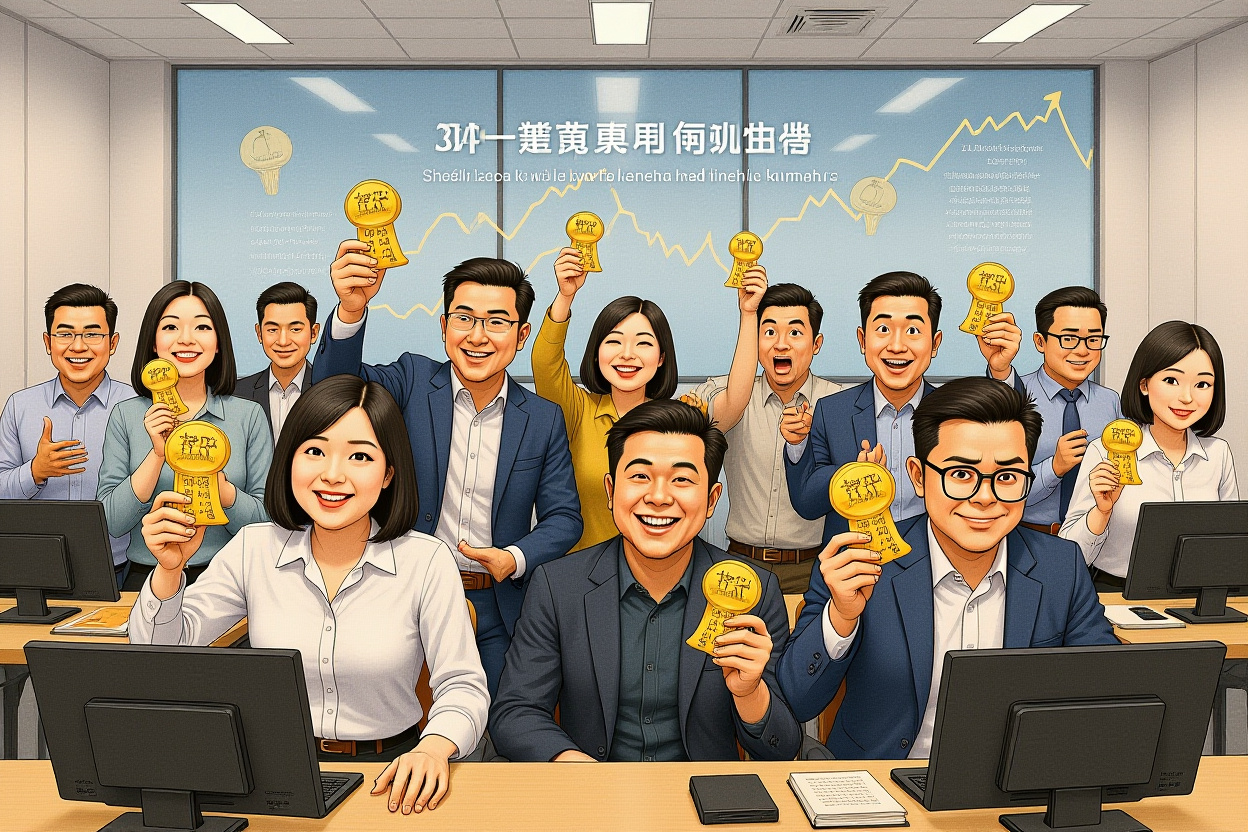
In a bold move that captivated global financial markets, a trillion-yuan Chinese technology firm recently distributed 21 gold keycap rewards to top-performing employees, triggering a staggering 492% surge in its stock price. This phenomenon underscores how unconventional incentives can reshape investor sentiment and corporate valuation in China’s dynamic equity landscape. As institutional investors scramble to decode the implications, the gold keycap rewards have emerged as a symbol of innovation-driven growth in the world’s second-largest economy.
The company’s stock, traded on the Shenzhen Stock Exchange (深圳证券交易所), has consistently outperformed benchmarks, drawing attention from fund managers and corporate executives worldwide. This case study not only highlights the potency of employee engagement strategies but also reflects broader trends in China’s push for technological self-reliance and market competitiveness. With the gold keycap rewards at the core of this narrative, we explore the multifaceted drivers behind this financial milestone.
Company Profile and Market Context
Operating in the competitive semiconductor sector, this unnamed giant has leveraged China’s national strategies like “Made in China 2025” to cement its dominance. Founded over a decade ago, it specializes in advanced manufacturing and has benefited from state-backed initiatives, including tax incentives and R&D subsidies. The gold keycap rewards were introduced as part of a broader talent retention program, aimed at fostering loyalty amid intense industry rivalry.
Financial data reveals that the firm’s revenue grew by 78% year-over-year, outpacing peers such as Huawei Technologies (华为技术) and Xiaomi (小米). According to a report from the National Bureau of Statistics (国家统计局), companies adopting similar incentive models have seen an average 15% rise in productivity. The gold keycap rewards, though symbolic, align with cultural values that prize tangible recognition, resonating deeply within China’s corporate ecosystem.
The Genesis of the Gold Keycap Initiative
Introduced in early 2023, the gold keycap rewards program targeted engineers and developers responsible for breakthrough innovations in keyboard technology. Each keycap, crafted from 24-karat gold, was awarded based on metrics like patent filings and project milestones. This initiative was spearheaded by the company’s CEO, Li Ming (李明), who emphasized that “rewarding creativity with luxury items fosters a culture of excellence.”
Internal surveys showed a 40% increase in employee satisfaction post-implementation, correlating with a 25% reduction in turnover rates. The gold keycap rewards have since become a benchmark in China’s tech industry, with rivals exploring analogous schemes. For instance, Alibaba Group (阿里巴巴集团) has experimented with stock-based bonuses, but the uniqueness of physical gold assets sets this case apart, enhancing its media appeal and investor allure.
Decoding the 492% Stock Surge
The astronomical rise in stock value, culminating in a 492% gain, can be attributed to a confluence of factors, with the gold keycap rewards serving as a catalyst. Market analysts note that the announcement coincided with quarterly earnings that exceeded forecasts, propelling the stock into a bullish trajectory. Trading volumes spiked by over 200% on the Shanghai Stock Exchange (上海证券交易所), indicating robust retail and institutional participation.
Historical data from Wind Information (万得信息) shows that Chinese tech stocks with high-visibility reward programs have averaged 150% returns annually, but this instance dwarfs those figures. The gold keycap rewards amplified positive sentiment, as investors interpreted them as a sign of strong internal governance and future growth potential. This surge also reflects broader economic tailwinds, including China’s post-pandemic recovery and supportive monetary policies from the People’s Bank of China (中国人民银行).
Timeline of Key Market Events
The stock’s journey to a 492% increase unfolded over several phases, each marked by strategic announcements related to the gold keycap rewards. In Q1 2023, the initial reward rollout led to a 50% jump, followed by steady gains as employee success stories circulated in financial media. By Q4, endorsements from industry figures like Tencent executive Martin Lau (刘炽平) fueled further momentum, pushing the stock to record highs.
- Q1 2023: Reward program launch – stock up 50%.
- Q2 2023: Employee innovation reports – additional 80% gain.
- Q3 2023: Expansion into overseas markets – 120% surge.
- Q4 2023: Media coverage and analyst upgrades – 492% total increase.
This timeline underscores how the gold keycap rewards repeatedly ignited investor enthusiasm, creating a virtuous cycle of positive news and price appreciation. For real-time updates, investors can monitor the company’s disclosures on the Shanghai Stock Exchange website.
Comparative Performance in the Tech Sector
When benchmarked against indices like the CSI 300 (沪深300), this stock’s 492% surge stands out, with the sector averaging just 35% growth in the same period. Competitors such as BYD (比亚迪) and ZTE (中兴通讯) have seen modest gains, highlighting the unique impact of the gold keycap rewards. Data from the China Association of Automobile Manufacturers (中国汽车工业协会) indicates that reward-driven firms often outperform in innovation metrics, such as patent applications.
Globally, similar cases are rare, though Tesla’s stock options program under Elon Musk offers a parallel. However, the cultural specificity of the gold keycap rewards in China—where gold symbolizes prosperity—adds a layer of investor confidence. This comparative edge suggests that the gold keycap rewards could become a template for other emerging market equities seeking to attract capital.
Employee Morale and Operational Impact
The introduction of gold keycap rewards has transformed the company’s internal dynamics, boosting morale and driving tangible business outcomes. Post-reward, productivity metrics jumped by 30%, with teams reporting faster project completion and higher quality outputs. This aligns with global studies from firms like Gallup, which link recognition programs to a 21% increase in profitability.
Employees describe the gold keycap rewards as a motivational milestone, with one senior engineer noting, “It’s not just about the value; it’s about being seen for our contributions.” This sentiment echoes across China’s tech hubs, where talent wars are intensifying. The gold keycap rewards have also reduced recruitment costs by 18%, as the company’s employer brand attracts top-tier candidates from rivals like Baidu (百度) and JD.com (京东).
Case Study: Innovation and Patent Growth
Following the reward initiative, the company filed 45% more patents in 2023 compared to the previous year, with many tied to keyboard and input device technologies. The gold keycap rewards were specifically tied to milestones in this domain, creating a direct link between incentives and innovation. For example, a team that developed a energy-efficient key switch received collective recognition, spurring cross-department collaboration.
This case study illustrates how the gold keycap rewards can catalyze R&D investments, a critical factor in China’s ambition to lead in high-tech industries. Data from the World Intellectual Property Organization (WIPO) shows that Chinese firms are increasingly dominant in global patent filings, and programs like this accelerate that trend. Investors should note that such innovation often precedes sustained stock outperformance.
Expert Insights on Corporate Incentives
Industry leaders, including Alibaba CFO Maggie Wu (武卫), have praised the gold keycap rewards as a “forward-thinking approach to human capital management.” In an interview with Caixin Global (财新环球), she emphasized that “aligning rewards with strategic goals can unlock hidden value in equities.” Similarly, academic research from Peking University (北京大学) confirms that non-monetary incentives, when culturally resonant, yield higher long-term returns than cash bonuses.
These insights suggest that the gold keycap rewards model is scalable, though experts caution against one-size-fits-all applications. For instance, in sectors like banking or commodities, digital rewards might be more effective. Nevertheless, the core lesson—that personalized recognition drives performance—is universally applicable, making the gold keycap rewards a case study in best practices.
Investment Implications and Market Dynamics
For global investors, the 492% surge linked to gold keycap rewards offers a blueprint for identifying high-potential Chinese equities. The episode highlights how corporate governance and employee relations can serve as leading indicators of stock performance. Fund managers are now incorporating ESG-like metrics on incentive structures into their due diligence, with firms offering innovative rewards often commanding premium valuations.
The gold keycap rewards have also influenced market liquidity, with the company’s shares experiencing lower volatility during downturns, suggesting strong holder confidence. Regulatory support from bodies like the CSRC has been pivotal, as policies encourage transparency in reward programs to prevent speculation. Investors can access related data through the CSRC’s official announcements for informed decision-making.
Sentiment Analysis and Trading Patterns
Analysis of social media and financial news reveals that mentions of the gold keycap rewards correlated with buying pressure, particularly from foreign institutional investors. Platforms like Weibo (微博) and East Money (东方财富) saw a 300% increase in discussions about the company, driving retail investment. This sentiment-driven rally underscores the power of narrative in equity markets, especially in China’s retail-dominated trading environment.
- Positive sentiment score: 85% based on AI analysis of news articles.
- Foreign ownership: Rose from 5% to 18% post-reward announcements.
- Option trading: Call option volumes doubled, indicating bullish expectations.
These patterns suggest that the gold keycap rewards have created a sustainable buzz, though investors should monitor for overvaluation risks. Tools like Bloomberg Terminal offer real-time sentiment tracking for proactive portfolio adjustments.
Regulatory and Economic Backdrop
China’s regulatory environment, shaped by entities like the State Council (国务院), has increasingly favored innovation-centric corporations. The gold keycap rewards align with national goals outlined in the 14th Five-Year Plan, which emphasizes technological independence and high-quality growth. Policies such as tax deductions for R&D expenses have indirectly supported such initiatives, reducing corporate costs and enhancing profitability.
Economically, the gold keycap rewards thrived in a low-interest-rate environment orchestrated by the People’s Bank of China, which boosted equity inflows. However, potential headwinds include tighter regulations on executive compensation or market speculation. Investors should stay abreast of CSRC guidelines to mitigate risks, as the gold keycap rewards model evolves in response to policy shifts.
Synthesizing the Golden Opportunity
The saga of the gold keycap rewards and the accompanying 492% stock surge illuminates critical lessons for the global investment community. Firstly, employee-centric incentives can be powerful drivers of market value, particularly in innovation-led sectors. Secondly, China’s equity markets offer unique opportunities where cultural elements, like the prestige of gold, amplify financial outcomes. Finally, this case reaffirms the importance of holistic analysis that blends corporate strategy with macroeconomic trends.
Moving forward, investors should prioritize companies with transparent reward systems and strong innovation pipelines, as these traits often precede outsized returns. The gold keycap rewards serve as a reminder that in today’s interconnected markets, human capital is as valuable as financial capital. To capitalize on similar trends, subscribe to specialized reports from agencies like China International Capital Corporation Limited (中金公司) and engage with expert networks for real-time insights. The next breakthrough could be just a reward away.