



Executive Summary
Tailg (台铃), a leading Chinese electric two-wheeler manufacturer, has officially commenced listing辅导 for a Hong Kong IPO targeted for 2026, aiming to become the third industry giant after Yadea and Aima to go public. This move comes at a pivotal moment for the sector, marked by regulatory overhaul and shifting consumer demands.
Key takeaways for investors and market watchers:
– Tailg’s impressive journey from a repair shop to a 120 billion yuan revenue behemoth faces its sternest test yet with the stringent GB 17761-2024 national standard, which mandates comprehensive safety upgrades and compliance across vast dealer networks.
– A growing wave of consumer complaints, particularly regarding battery lifespan and after-sales service, threatens brand equity and could draw intense scrutiny from Hong Kong exchange regulators during the Tailg’s Hong Kong IPO review process.
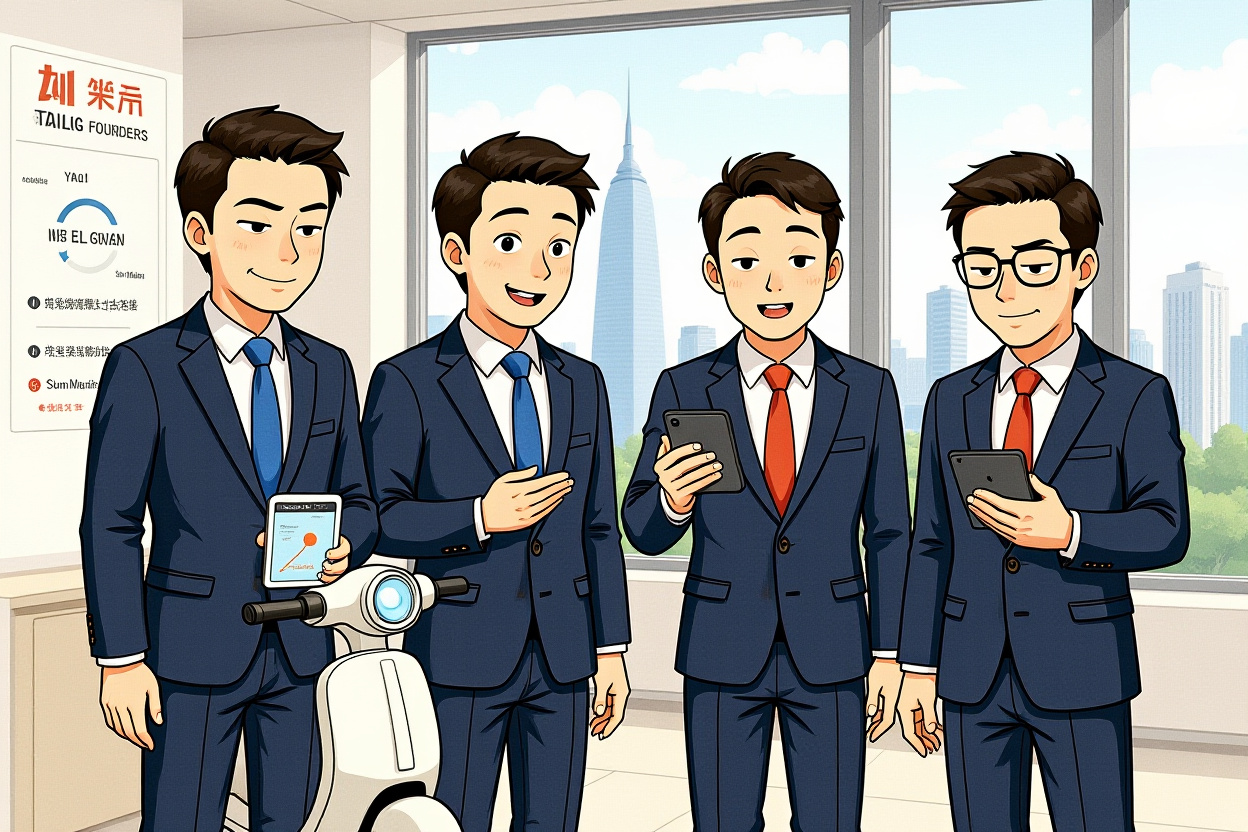
– The company’s highly concentrated ownership structure, held by founder brothers Sun Muqian (孙木钳), Sun Muchai (孙木钗), Sun Muchu (孙木楚), and partner Yao Li (姚立), presents corporate governance challenges and could complicate meeting HKEX’s public float requirements.
– The industry’s competitive dynamics are rapidly evolving towards smart, premium products, where rivals like Niu and Ninebot have gained traction, pressuring Tailg to accelerate its innovation in connectivity and user experience to justify its valuation.
– The success of Tailg’s Hong Kong IPO will hinge on its ability to demonstrate robust compliance systems, address quality control issues, and articulate a clear strategy for value-led growth in a post-volume expansion era.
A Company at the Crossroads: The IPO That Defines an Era
The Chinese electric two-wheeler market, a critical component of urban mobility and a multi-billion dollar industry, is undergoing a profound transformation. At the heart of this shift is Tailg’s ambitious push for a public listing. The Tailg’s Hong Kong IPO represents more than just a capital-raising event; it is a litmus test for whether traditional volume-driven champions can successfully navigate the dual pressures of heightened regulation and discerning consumer expectations. With annual revenue surpassing 120 billion yuan and a global footprint, Tailg’s story is one of remarkable ascent. However, its path to the Hong Kong Stock Exchange is now strewn with obstacles that could make or break its market debut and influence the sector’s trajectory for years to come.
From Guangdong Workshop to Global Powerhouse: The Tailg Growth Story
The origins of Tailg read like a classic tale of entrepreneurial grit. In 2003, following Shenzhen’s motorcycle ban, three brothers from a repair background—Sun Muqian (孙木钳), Sun Muchai (孙木钗), and Sun Muchu (孙木楚)—saw an opportunity in the nascent electric bike market. They moved to Longgang, Shenzhen, and built their first vehicle in a small workshop, essentially a scaled-up family repair shop.
Scaling at Breakneck Speed
Two decades later, that makeshift operation has evolved into an industrial behemoth. Tailg now operates ten major R&D and manufacturing bases with an annual production capacity exceeding 15 million units. Its distribution network spans over 30,000 stores worldwide, with products sold in more than 90 countries. The company’s revenue, which soared to approximately 120 billion yuan in 2024, solidifies its position among the industry’s top three players. This growth was largely fueled by deep penetration into lower-tier cities and price-sensitive segments, such as delivery riders and rural commuters.
The Foundations and the Cracks
While this focus on practicality and affordability drove volume, it also shaped a product DNA that is now being challenged. As the market matures, consumers, especially younger demographics, increasingly prioritize smart features and technological sophistication. According to an iResearch (艾瑞咨询) 2025 survey, intelligent functionality has become the third most important factor in purchase decisions. When competitors like Ninebot (Segway) and Niu (小牛) captivate Gen Z with features like smart home integration and advanced rider-assist systems, Tailg’s response—its Tai-Link intelligent driving system—has yet to achieve leading market penetration or mindshare. This gap highlights a strategic vulnerability as Tailg’s Hong Kong IPO approaches, where growth narratives must extend beyond sheer scale.
The Regulatory Guillotine: GB 17761-2024 and Its Implications
If market competition is a marathon, regulatory change is a sprint with immediate consequences. The updated Electric Bicycle Safety Technical Specification (GB 17761-2024), commonly known as the “New National Standard,” which took full effect on September 1, 2025, represents the most significant regulatory overhaul in years. For Tailg’s Hong Kong IPO, this standard is not a backdrop but a central risk factor.
Decoding the New Mandates
The new standard introduces rigorous requirements aimed at curbing long-standing safety issues. Key provisions include enhanced fire resistance, anti-tampering measures, and improved braking systems. Crucially, it mandates a “one vehicle, one battery, one charger, one code” hardware mutual recognition mechanism designed to eliminate illegal modifications at a systemic level. Non-compliant vehicles were prohibited from sale entirely after the transition period ended on December 1, 2025.
Compliance Risks in a Vast Network
For Tailg, with its sprawling network of over 30,000 retail outlets, ensuring uniform compliance is a monumental task. Pre-implementation enforcement actions revealed vulnerabilities. For instance, in June 2025, the Shanghai Market Supervision Administration highlighted典型案例 involving Tailg dealerships illegally lengthening saddles and boosting battery voltage. Such incidents underscore the challenge of aligning frontline sales incentives with strict regulatory adherence. Any significant compliance failure could lead to product recalls, fines, or regional sales bans, directly impacting revenue and casting a shadow over the Tailg’s Hong Kong IPO timeline. Investors will closely examine the company’s internal controls and dealer management protocols in the prospectus.
Erosion of Trust: Navigating the Consumer Complaint Storm
Beyond regulatory walls, Tailg faces a growing crisis of consumer confidence. As of November 2025, one major consumer投诉平台 hosted over 2,000 valid complaints against the brand, with two issues dominating: “after-sales service buck-passing” and “severely degraded battery range.”
The Battery and Service Dilemma
Numerous consumers report that the actual mileage of some models is only about 60% of advertised figures, with battery performance deteriorating sharply within a year of purchase. Compounding the problem, grievances often point to a lack of accountability, where official customer service and local stores deflect responsibility. This erosion of user experience damages brand loyalty and repeat purchase rates—key metrics for sustainable growth.
IPO Scrutiny and Quality Assurance
For Hong Kong exchange regulators assessing Tailg’s Hong Kong IPO application, this pattern of complaints will likely trigger detailed inquiries into the company’s quality management systems, warranty policies, and consumer rights protection frameworks. A history of unresolved issues can be perceived as a systemic failure, potentially affecting valuation and investor appetite. Tailg must demonstrate concrete steps to improve product reliability and service accountability to reassure both regulators and future shareholders.
Governance and Structure: The Family Hold on a Public Future
The narrative of the “Chaozhou brothers” building an empire through unity is compelling, but it introduces complex governance questions for a public company. Control remains tightly held by founders Sun Muqian (孙木钳), Sun Muchai (孙木钗), Sun Muchu (孙木楚), and early partner Yao Li (姚立), who collectively own 100% of the company.
Internal Dynamics and Talent Strategy
This concentrated ownership, while enabling swift decision-making during the growth phase, may now pose limitations. In a battle for top engineering and managerial talent, Tailg could struggle to offer equity incentive packages as attractive as those from rivals with more diversified ownership and board structures. The agility and scientific rigor of decision-making in a fast-paced tech-infused market may also be tested against more professionally governed peers.
The HKEX Public Float Hurdle
Externally, this structure collides with HKEX listing rules, which require a minimum public float of 25% (potentially reducible to 15% for companies with market capitalization over HK$10 billion). Tailg’s current 100% insider ownership means a substantial dilution is necessary upon listing, likely resulting in a public float that barely meets the minimum threshold. This raises concerns about stock liquidity and could prompt the exchange to seek additional commitments from the controlling shareholders, adding complexity to the Tailg’s Hong Kong IPO process. The market will watch how the company balances founder control with the demands of public market governance.
The Competitive Gauntlet: Smart Trends and Premium Pressures
The electric two-wheeler industry’s growth logic is decisively shifting from “volume expansion” to “value enhancement,” centered on intelligence and premiumization. This shift forms the critical context for evaluating Tailg’s future prospects and its IPO narrative.
The New Guard’s Advantage
Companies like Niu (小牛) and Ninebot (九号公司) have successfully carved out niches by marketing connected, design-forward vehicles with over-the-air updates and advanced safety features. They appeal to urban, tech-savvy consumers willing to pay a premium, a segment that has traditionally been less of a focus for Tailg. iResearch data indicates that smart feature adoption is a key growth driver, and lagging here could limit Tailg’s average selling price and margin potential.
Tailg’s Countermove and Market Perception
Tailg has responded by equipping its full product line with the Tai-Link智驾系统, offering basic connectivity and navigation aids. However, industry analysts note that the system’s user adoption and technological sophistication are not yet market-leading. For the Tailg’s Hong Kong IPO to attract growth-oriented investors, the company must convincingly articulate a roadmap to close this innovation gap and capture higher-value market segments, moving beyond its reliance on volume in cost-sensitive areas.
Charting the Course to a Successful Listing
The final stretch before Tailg’s Hong Kong IPO demands a clear and executable strategy to address the multifaceted challenges outlined. The company’s ability to present a coherent plan will be paramount in securing regulatory approval and investor confidence.
Strategic Imperatives for Tailg
First, reinforcing compliance infrastructure is non-negotiable. This involves:
– Implementing rigorous training and monitoring programs for its entire dealer network to prevent violations of the new national standard.
– Investing in traceability technology to ensure “one vehicle, one code” integrity from factory to customer.
Second, rebuilding consumer trust requires tangible actions:
– Revamping battery sourcing and testing protocols to deliver on range promises.
– Overhauling the customer service framework to ensure accountability and swift grievance resolution, possibly through a centralized digital platform.
Third, corporate governance modernization is essential. While retaining founder vision, Tailg could benefit from:
– Appointing independent directors with expertise in technology, consumer brands, and capital markets well before the IPO.
– Designing a competitive equity incentive plan to attract and retain top talent crucial for its smart transformation.
The Investor Perspective and Final Call
For institutional investors evaluating the Tailg’s Hong Kong IPO, the key metrics will extend beyond historical revenue. Scrutiny will fall on margins, R&D expenditure as a percentage of sales, customer satisfaction scores, and the robustness of ESG (Environmental, Social, and Governance) disclosures related to product safety and supply chain management. The offering’s pricing and valuation will heavily reflect the market’s assessment of Tailg’s success in mitigating the identified risks.
Weighing the Journey Ahead
Tailg’s quest for a Hong Kong listing is a microcosm of the broader evolution in China’s electric two-wheeler industry. The company’s formidable revenue base and extensive reach provide a strong foundation, but the path is fraught with regulatory, operational, and competitive hurdles. The new national standard acts as a forced catalyst for industry-wide upgrade, while consumer complaints signal a market that is demanding higher quality and accountability. Tailg’s concentrated ownership, a source of past strength, must now evolve to meet the transparency and governance standards of the public markets.
The success of Tailg’s Hong Kong IPO will ultimately depend on how convincingly the company can demonstrate that it is not just a survivor of the old volume-driven era but a proactive leader ready for the value-centric future. For fund managers and corporate executives watching this space, the lead-up to the 2026 listing offers a critical period to monitor Tailg’s execution on compliance, quality improvements, and smart technology integration. The decision to invest should be preceded by diligent analysis of the company’s forthcoming prospectus for concrete evidence that these challenges are being met head-on. The race to the Hong Kong Stock Exchange is on, and for Tailg, it’s a race that will test every facet of its business model.