



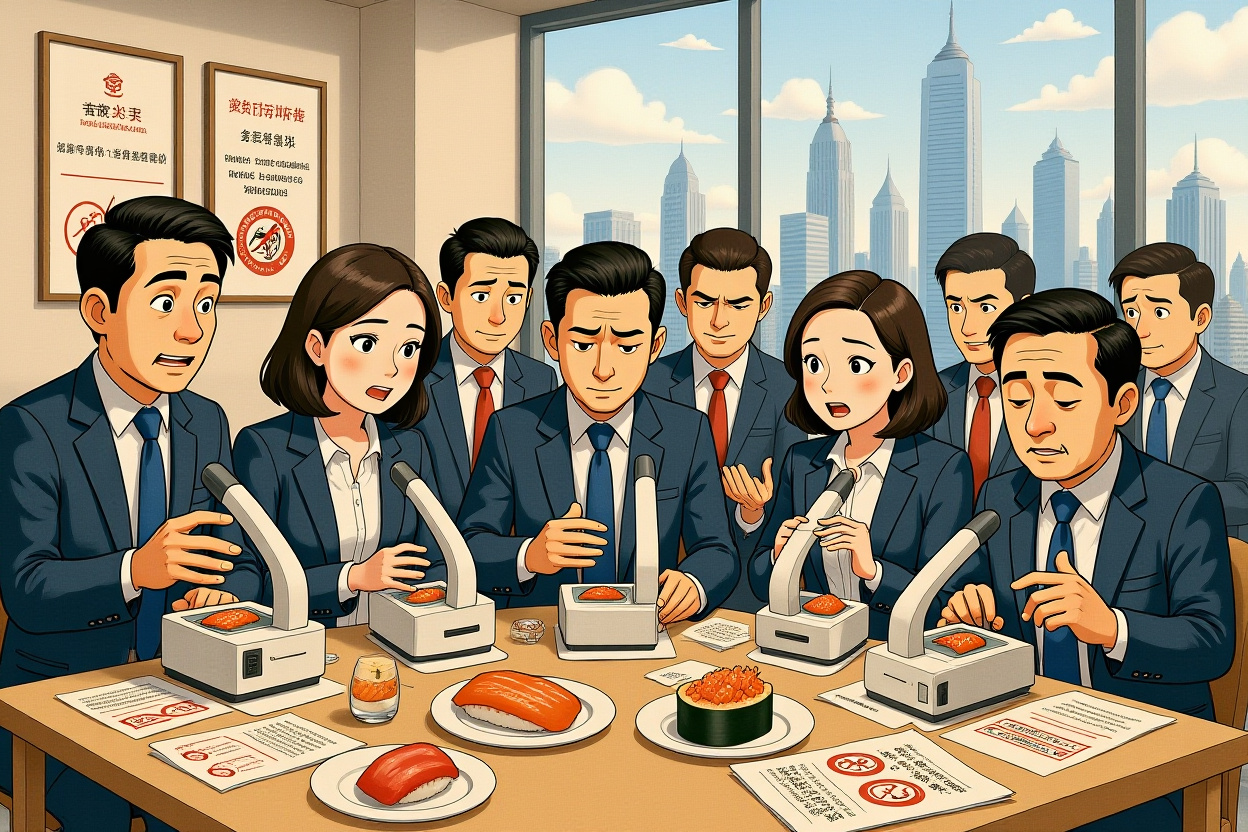
– A consumer in Beijing discovered parasite eggs in sushi at Sushiro (寿司郎), leading to regulatory investigation by local市场监管部门 (Market Supervision Bureau).– Despite the scandal, Sushiro’s门店 (stores) continue to see high demand, with queues often exceeding 3,000 tables, highlighting its immense popularity as a网红品牌 (internet-famous brand).– This incident exposes systemic challenges in maintaining food safety during rapid expansion, a critical issue for foreign餐饮 (food and beverage) chains in China.– Sushiro’s localization strategy, including supply chain domesticization and menu adaptation, is under scrutiny as safety protocols must keep pace with growth.– The timing near China’s 315 Consumer Rights Day amplifies scrutiny, emphasizing the need for robust compliance to sustain long-term brand trust.
The Sushiro Food Safety Scandal: A Parasite Egg Crisis Unfolds
In China’s dynamic dining landscape, where viral trends can make or break brands overnight, a single food safety failure can erase years of consumer goodwill. The recent Sushiro food safety scandal, involving the discovery of parasite eggs in its sushi, has ignited widespread alarm. This incident strikes at the heart of trust for a chain that has captivated Chinese consumers with affordable prices and unprecedented popularity. As regulatory bodies step in, the Sushiro food safety scandal serves as a stark reminder that no brand is immune to the consequences of compromised standards, especially when expansion outpaces oversight.
Consumer Outcry and Initial Brand Response
A consumer in Beijing reported finding a parasite egg on a tuna slice at Sushiro’s长安天街店 (Chang’an Tianjie store) after waiting three hours to dine. Social media platforms like小红书 (Xiaohongshu, Little Red Book) amplified the claim, showing video evidence. The store’s staff acknowledged the issue, confirming the异物 (foreign object) was a parasite egg and offering to cover medical costs if health problems arose. However, when pressed for compensation, the offer was limited to a meal refund, described by the consumer as inadequate. This response highlights a gap in crisis management, where immediate damage control often falls short of addressing deeper safety concerns. Similar incidents emerged in深圳 (Shenzhen), where another门店 (store) downplayed the issue, suggesting it was normal and只需换一碟 (only required replacing the plate).
Regulatory Investigation and Public Accountability
Following the爆料 (exposure), the门头沟市场监督局 (Mentougou Market Supervision Bureau) announced an立案调查 (filed investigation) on March 4, seizing剩余金枪鱼板块 (remaining tuna portions) as evidence. Authorities emphasized their commitment to protecting consumer权益 (rights) and严肃查处 (strictly punishing) violations. This regulatory move is particularly significant ahead of China’s 315 Consumer Rights Day, an annual event spotlighting product and service quality. The Sushiro food safety scandal now faces intensified scrutiny, with outcomes likely to influence broader industry practices. As of now, the涉事门店 (involved store) remains operational, with online reservations fully booked, indicating that consumer interest persists despite the controversy.
Sushiro’s Meteoric Rise: From Niche to National Phenomenon
Since entering China in 2021, Sushiro has transformed from a Japanese import into a cultural sensation, often dubbed日料界的瑞幸 (the Luckin Coffee of Japanese cuisine). Its growth mirrors the消费理性化 (rational consumption) trend, where consumers seek value without sacrificing experience. The brand’s success is built on a combination of affordability, speed, and social engagement, but the Sushiro food safety scandal threatens to undermine this carefully crafted image.
Unprecedented Demand and Social Media Frenzy
Sushiro’s门店 (stores) consistently draw massive crowds, with peak waits exceeding 14 hours in上海 (Shanghai) and queues of over 3,000 tables at北京西单大悦城店 (Beijing Xidan Joy City store). This demand is fueled by:– High性价比 (cost-performance ratio): Most dishes are priced between 8-15元 (yuan), with promotions like 10元金枪鱼大腩 (10 yuan tuna belly) making luxury accessible.– Interactive dining: Tabletop screens feature games and抽奖 (lotteries), appealing to年轻客群 (young demographics) and families.– Social currency: The叠盘挑战 (plate-stacking challenge) has become a viral打卡 (check-in) activity on platforms like小红书 (Xiaohongshu), reinforcing brand visibility.However, this popularity has also spawned黄牛 (scalpers) and operational strains, as noted in social media discussions.
Business Model and Market Expansion Strategy
According to its母公司 (parent company) FOOD & LIFE Companies’财报 (financial report), overseas revenue—driven largely by China—reached 428.78亿日元 (billion yen) in late 2025, with a 12.6% profit margin. The company credits China’s持续扩张 (continuous expansion) for this growth, with 171门店 (stores) in大中华区 (Greater China) as of December 2025. Plans to increase global outlets to 190-193 in 2026 hinge on further Chinese market penetration. This aggressive scaling, while financially rewarding, raises questions about whether safety protocols can keep pace, as seen in the Sushiro food safety scandal.
Recurring Food Safety Issues: A Pattern of Neglect?
The parasite egg incident is not isolated. Sushiro has faced multiple食安问题 (food safety problems) in China, pointing to systemic risks. On投诉平台 (complaint platforms) like黑猫投诉 (Hei Mao Tou Su, Black Cat Complaints), consumers have reported issues ranging from异物混入 (foreign object contamination) to蟑螂出没 (cockroach infestations). The涉事门店 (involved store) in Beijing, which opened only a month prior, already holds the lowest rating among local outlets on大众点评 (Dianping), with some calling it全北京最拉胯的寿司郎 (the worst Sushiro in Beijing). This pattern suggests that rapid growth may be compromising quality control.
Historical Complaints and Regulatory Actions
– In 2025, several门店 (stores) were penalized for hygiene violations, including improper food handling and pest control.– Common complaints on黑猫投诉 (Hei Mao Tou Su) cite食材新鲜度 (ingredient freshness), service quality, and营销争议 (marketing disputes), indicating broader operational challenges.– The current investigation mirrors past cases where brands faced fines or closures, yet Sushiro’s ongoing operations show the complex balance between enforcement and market demand.
The Expansion-Safety Dilemma
For生食海鲜 (raw seafood), standards require freezing at -20°C for 7 days or -35°C for 15 hours to kill parasites. Any lapse in进货渠道 (procurement channels),冷链运输 (cold-chain logistics), or加工流程 (processing procedures) can lead to failures. The Sushiro food safety scandal underscores this vulnerability, especially as the chain prioritizes翻台率 (table turnover rate) and cost-efficiency. Experts warn that without robust internal audits, even localized supply chains can falter, risking consumer health and brand reputation.
Localization and Supply Chain Management: Adapting to China
To sustain growth, Sushiro has embarked on deep本土化 (localization), shifting from imported to domestic sourcing. This strategy aims to reduce costs and enhance safety, but the recent scandal tests its efficacy. The Sushiro food safety scandal brings into focus whether these adaptations are sufficiently rigorous.
Supply Chain Domesticization for Safety and Cost
Sushiro now sources seafood primarily within China:– 海胆 (Sea urchin) and江瑶贝 (scallops) from大连 (Dalian).– 鹅肝 (Foie gras) from山东 (Shandong).– 鳗鱼 (Eel) from广东顺德 (Shunde, Guangdong).This move minimizes import risks and logistics delays, potentially improving freshness. However, it requires stringent oversight of local suppliers, as domestic regulations vary. The parasite egg incident suggests possible gaps in this network, whether in inspection or handling.
Product Adaptation and Consumer Preferences
Recognizing Chinese tastes, Sushiro has reduced生食 (raw food) offerings and added熟食 (cooked dishes) and localized flavors. This broadens appeal beyond traditional日料 (Japanese cuisine) enthusiasts. Yet, innovation must align with safety; for instance, proper freezing for raw items remains non-negotiable. The Sushiro food safety scandal highlights that localization efforts, while commercially savvy, must be underpinned by uncompromising standards to win long-term trust.
The Road Ahead: Implications for Sushiro and the Industry
The Sushiro food safety scandal is a cautionary tale for foreign brands in China’s competitive F&B sector. As consumer awareness rises, especially around 315 Consumer Rights Day, the stakes for compliance are higher than ever. For Sushiro, the path from网红 (internet-famous) to长红 (long-lasting) depends on addressing these challenges head-on.
Brand Trust and Market Sustainability
Short-term, Sushiro’s popularity may buffer the scandal’s impact, as seen in continued reservations. But long-term, repeated incidents could erode consumer confidence, affecting loyalty and investor sentiment. The company must demonstrate that it prioritizes安全底线 (safety bottom lines) over expansion metrics. Transparent reporting on corrective actions, such as enhanced supplier audits and staff training, could help rebuild trust. The Sushiro food safety scandal should catalyze industry-wide reforms, pushing peers to invest in proactive risk management.
Investor and Consumer Takeaways
For institutional investors and fund managers, this incident underscores the importance of due diligence on operational controls in high-growth chains. Key indicators to monitor include:– Frequency of regulatory violations and consumer complaints.– Investment in供应链透明度 (supply chain transparency) and quality assurance systems.– Alignment of expansion plans with safety infrastructure, such as冷链 (cold-chain) integrity.For consumers, it’s a reminder to scrutinize brands beyond hype, leveraging platforms like黑猫投诉 (Hei Mao Tou Su) for feedback and demanding accountability.The Sushiro food safety scandal is a pivotal moment that will shape the brand’s trajectory in China. By fortifying its safety protocols and embracing rigorous oversight, Sushiro can transform this crisis into an opportunity for resilience. Ultimately, in the餐饮行业 (food and beverage industry), where health is paramount, safety isn’t just a standard—it’s the foundation of enduring success.