



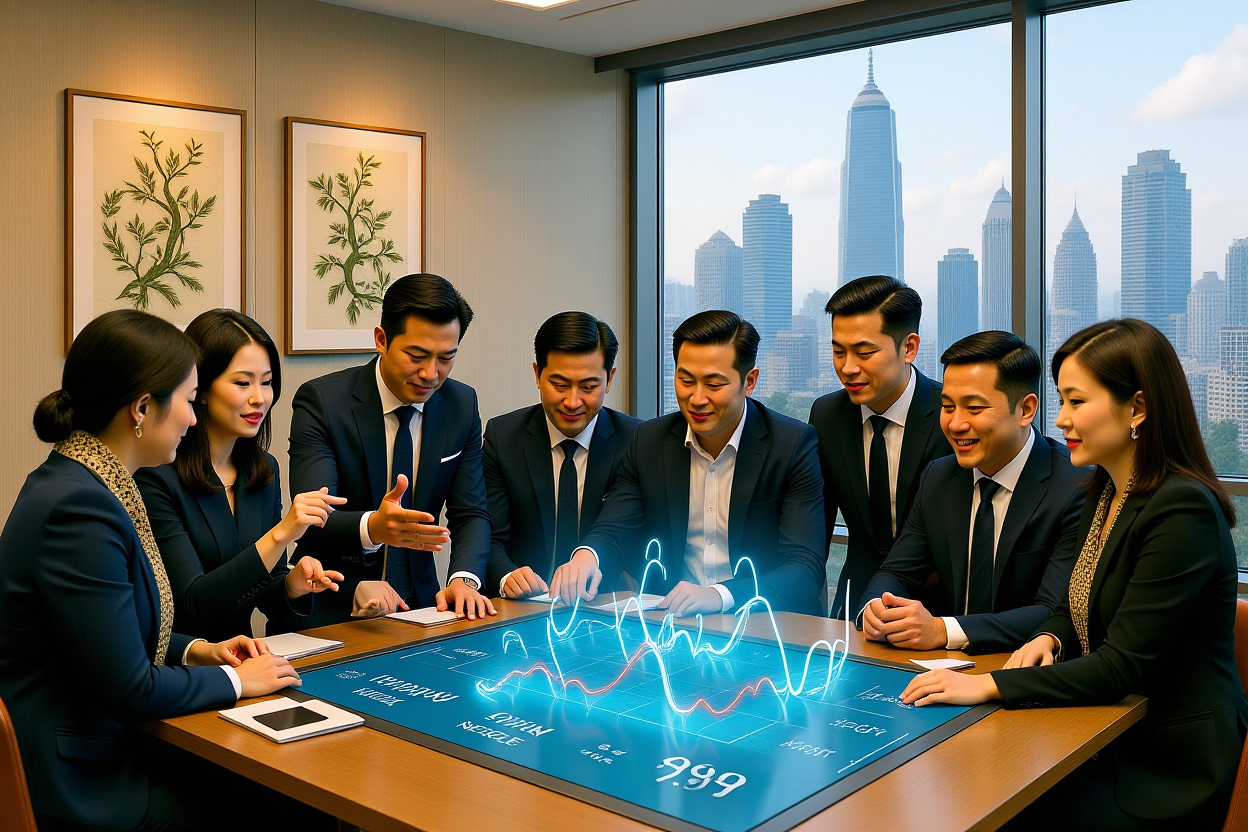
– The price of popular ‘童颜针’ (Youthful Needle) treatments in China has plummeted from over 10,000 yuan to as low as 999 yuan, signaling a dramatic shift in industry dynamics.
– A supply glut, driven by a surge in regulatory approvals for medical aesthetic devices, is transforming the market from a seller’s to a buyer’s market.
– Downstream players like SoYoung are leveraging scale to negotiate better terms with once-dominant suppliers, reclaiming pricing power.
– The industry is transitioning from opaque, high-margin models to more transparent, volume-driven, and consumer-accessible services.
– This pricing power reversal presents both challenges and opportunities for investors, with a focus shifting from brand premium to operational efficiency and value delivery.
The Battle for Affordability: A Price War Erupts
The era of exorbitantly priced, inaccessible medical aesthetics in China is facing an unprecedented challenge. What was once a niche luxury is rapidly becoming more mainstream, driven by a fierce contest over who controls the numbers on the price tag. This pricing power reversal is not just a minor market adjustment; it is a fundamental restructuring of the entire medical aesthetics value chain. At the heart of this transformation is the drastic price drop for treatments like ‘童颜针’ (Youthful Needle), a popular collagen-stimulating injectable, from a standard five-figure sum to a startling 999 yuan.
SoYoung’s Disruptive ‘Miracle Youth’ Campaign
The catalyst for this shift was the aggressive pricing strategy launched by online-to-offline platform SoYoung (新氧). In April 2025, SoYoung introduced its ‘Miracle Youth 1.0’ project, featuring 普丽妍 (PuliYan) Youthful Needle products at a price of 4,999 yuan per dose—a fraction of the typical 16,800 to 18,800 yuan supplier price. This move was a direct challenge to the established order. The reaction was swift and severe. 普丽妍 (PuliYan) instructed its national agents to cut off supplies to SoYoung, a classic supplier tactic to maintain price discipline.
Unfazed, SoYoung pivoted. By June 2025, it launched ‘Miracle Youth 2.0’ using 艾维岚 (Aivlan) Youthful Needle from 圣博玛 (ShengBoma), priced at 5,999 yuan, still well below the manufacturer’s suggested 18,800 yuan. 圣博玛 (ShengBoma) retaliated by publicly accusing SoYoung of sourcing through ‘unauthorized channels.’ The conflict escalated throughout the year. In September, SoYoung collaborated with 西宏生物 (Xihong Biology) to create a custom Youthful Needle for ‘Miracle Youth 3.0,’ slashing the price to 2,999 yuan. By November, a version with lower microsphere content was offered at a group-buy price of just 999 yuan, shattering all previous price benchmarks for the category.
Supplier Backlash and the Eventual Truce
The upstream supply chain fought back fiercely. Companies like 普丽妍 (PuliYan) blacklisted SoYoung-affiliated clinics, and 斐缦生物 (Feiman Biology) completely halted supplies of its ‘弗缦’ (Fuman) collagen products to the platform in December 2025. Yet, in a striking turnaround, January 2026 saw many of these same suppliers, including 普丽妍 (PuliYan) and 锦波生物 (Jinbo Biology), signing cooperation agreements with SoYoung. This pattern mirrored an earlier dispute where 锦波生物 (Jinbo Biology) had clashed with Meituan over discounted prices for its ‘薇旖美’ (Weiyimei) product, only to later formalize a strategic partnership. As one industry raw material supplier succinctly put it, ‘The marketplace is a battlefield, but in business, it’s all about the deal.’
The Great Reversal: From Scarcity to Abundance
The temporary ceasefires in the pricing wars are superficial symptoms of a deeper, structural change. The balance of power in China’s medical aesthetics industry is undergoing a profound pricing power reversal. For years, the upstream sector enjoyed a ‘license红利期’ (license红利期, license红利期), where obtaining a Class III medical device registration certificate from the 国家药品监督管理局 (National Medical Products Administration, NMPA) was extremely difficult. This scarcity allowed suppliers to wield immense control over prices, leaving downstream clinics with little room for negotiation.
Regulatory Floodgates Open
That dynamic has fundamentally shifted. The regulatory environment has evolved to keep pace with industry growth. In 2025 alone, the NMPA issued a record 52 Class III medical device registration certificates for aesthetic products, covering hot segments like hyaluronic acid fillers, Youthful Needles, and collagen stimulators. This unprecedented wave of approvals, as noted by industry insiders, represents a supply-side explosion. ‘If this were five or even two years ago, SoYoung’s model would have faced significant difficulties because the supply chain wasn’t sufficient,’ explained Xiao E (肖锷), founder and chairman of 美柏生物 (Meibai Biology). ‘If the entire industry had only one collagen brand and I cut off your supply, you’d have nothing. But that’s not possible now. It’s precisely because of the fully充足 (充足, sufficient) supply chain that downstream institutions have the opportunity for more differentiated operations. We call it the right timing.’
The Rise of the Buyer’s Market
Jin Xing (金星), Chairman of SoYoung, has long championed the concept of ‘医美自由’ (yimei ziyou, medical aesthetics freedom)—making procedures affordable. He now believes this goal is within reach. ‘Today, there are more and more upstream products. It’s increasingly becoming a buyer’s market. The entire cost structure will gradually move toward a level that ordinary people can afford. I am very optimistic about this direction,’ he stated in a recent media briefing. This sentiment underscores the core of the pricing power reversal: supply has finally begun to outstrip the controlled demand, empowering large-scale buyers.
The Leverage of Scale: How Downstream Players Are Winning
Pricing power in any industry is ultimately a function of relative bargaining strength. SoYoung’s strategy exemplifies how achieving critical mass in retail footprint and procurement volume can flip the script. The company disclosed that by the end of 2025, it had opened 50 clinics in 16 cities across China. With plans to add at least 35 more in 2026, focusing on key metropolitan areas like Beijing, Shanghai, Guangzhou, and Shenzhen, its scale is becoming a formidable asset.
Procurement Power as a Negotiation Tool
‘Today, many upstream companies cooperate with SoYoung not because they particularly like or are bullish on the company, but because we can provide a large enough procurement volume,’ Jin Xing (金星) revealed. He noted that SoYoung’s purchase volumes in many categories now rank among the industry’s top, with some suppliers relying on the platform for up to 30% of their sales. ‘At this point, a stable cooperative relationship forms,’ he added. The company’s disclosed procurement data is telling: 1,378 units of equipment from 18 suppliers; over 720,000 doses of injectables from 42 partners involving 39 products; a 2025 procurement金额 (金额, amount) of approximately 56 million yuan from global radiofrequency giant 索塔 (Solta Medical, maker of Thermage); and annual采购 (采购, procurement) exceeding 1 billion yuan from giants like 艾尔建 (Allergan Aesthetics) and 四环医药 (Sihuan Pharmaceutical).
Strategic Partnerships Over Adversarial Relations
This scale allows SoYoung to move beyond conflict. The recent cooperation agreements with 14 major suppliers, including former adversaries, signal a new phase. The relationship is maturing from pure antagonism to calibrated partnership, albeit one where the downstream player holds significant sway. This pricing power reversal enables platforms to dictate more favorable terms, including pricing, which they can then pass on to consumers to drive volume—a virtuous cycle that further strengthens their market position.
Implications for the Industry: Beyond the Price Tag
The fallout from this pricing power reversal extends far beyond cheaper needles. It is catalyzing a wholesale transformation of China’s medical aesthetics landscape, moving it from an era of ‘野蛮生长’ (yeman shengzhang,野蛮生长) to one of greater规范化 (规范化, standardization) and value-based competition.
Democratization and Market Expansion
The most immediate impact is increased consumer accessibility. Price barriers that once restricted medical aesthetics to the wealthy are crumbling. Treatments like Youthful Needles at 999 yuan become attainable for a massive middle-class consumer base, potentially expanding the total addressable market exponentially. This aligns with broader consumption upgrade trends in China and could accelerate the industry’s growth trajectory, making it more resilient to economic cycles.
The Shift from Price to Value Competition
As noted by industry analysts, the pricing wars have broken the long-standing monopoly on定价权 (定价权, pricing power) held by upstream firms. This forces all players to compete on new grounds. For suppliers, the old model of relying on控价 (控价, price control) to maintain high margins is untenable. They must now compete on product innovation, technical support, and brand building. For clinics and platforms like SoYoung, the challenge shifts to operational excellence, service quality, and customer retention, as margins on procedures compress. The entire industry is being pushed from ‘价格竞争’ (价格竞争, price competition) toward ‘价值竞争’ (价值竞争, value competition).
Expert Analysis and Future Trajectory
Understanding this pricing power reversal requires a view from multiple angles. Financial analysts watching the sector note that publicly traded upstream companies like 爱美客 (Imeik Technology), 华熙生物 (Bloomage BioTechnology), and 昊海生科 (Haohai BioTech) may face margin pressure in the short to medium term as their pricing authority diminishes. Conversely, downstream consolidators with scale could see improved unit economics and market share gains.
Regulatory and Economic Context
This shift occurs within a specific Chinese context. Regulatory bodies like the NMPA and the 国家市场监督管理总局 (State Administration for Market Regulation) have been actively working to curb monopolistic practices and excessive pricing in healthcare-adjacent sectors, creating a more favorable environment for such disruptions. Furthermore, China’s post-pandemic economic recovery has emphasized stimulating domestic consumption, where affordable luxury services like medical aesthetics play a role.
Quotes from Industry Leaders
Jin Xing (金星) of SoYoung summarized the new logic: ‘I believe that in the future, product supply will increase, effects will improve, and new technologies will emerge. The development of the entire market, and ultimately the price, is determined by supply and demand. We control costs in all other dimensions特别 (特别,特别) well. I believe that over time, we will be able to provide more cost-effective services.’ This forward-looking statement encapsulates the confidence of downstream players empowered by the pricing power reversal.
Navigating the New Normal in Medical Aesthetics
The dust from the price wars is settling, revealing a fundamentally altered terrain. The pricing power reversal in China’s medical aesthetics industry is a definitive trend, not a temporary fluctuation. The transition from supplier-controlled scarcity to buyer-driven abundance is reshaping profitability models, competitive strategies, and consumer expectations. For international investors and fund managers, this represents a critical inflection point. The investment thesis for Chinese medical aesthetics stocks must now account for compressed supplier margins and the rising importance of downstream scale, operational efficiency, and direct-to-consumer platforms.
The path forward is not without challenges. Companies like SoYoung must prove they can achieve profitability at these new price points while managing complex supplier relationships. Upstream innovators must double down on R&D to create truly differentiated products that can command a premium. However, the overarching direction is clear: the industry is maturing, becoming more transparent, and, most importantly, more accessible. This pricing power reversal ultimately benefits the consumer, fosters healthier competition, and lays the groundwork for sustainable, long-term growth in one of China’s most dynamic consumer sectors.
For sophisticated market participants, the call to action is to closely monitor the evolving alliances, regulatory announcements from the NMPA, and the quarterly financials of both upstream and downstream players. The winners in this new era will be those who best adapt to the realities of a market where pricing power is no longer a given, but earned through scale, innovation, and delivering undeniable value to the end-user.