



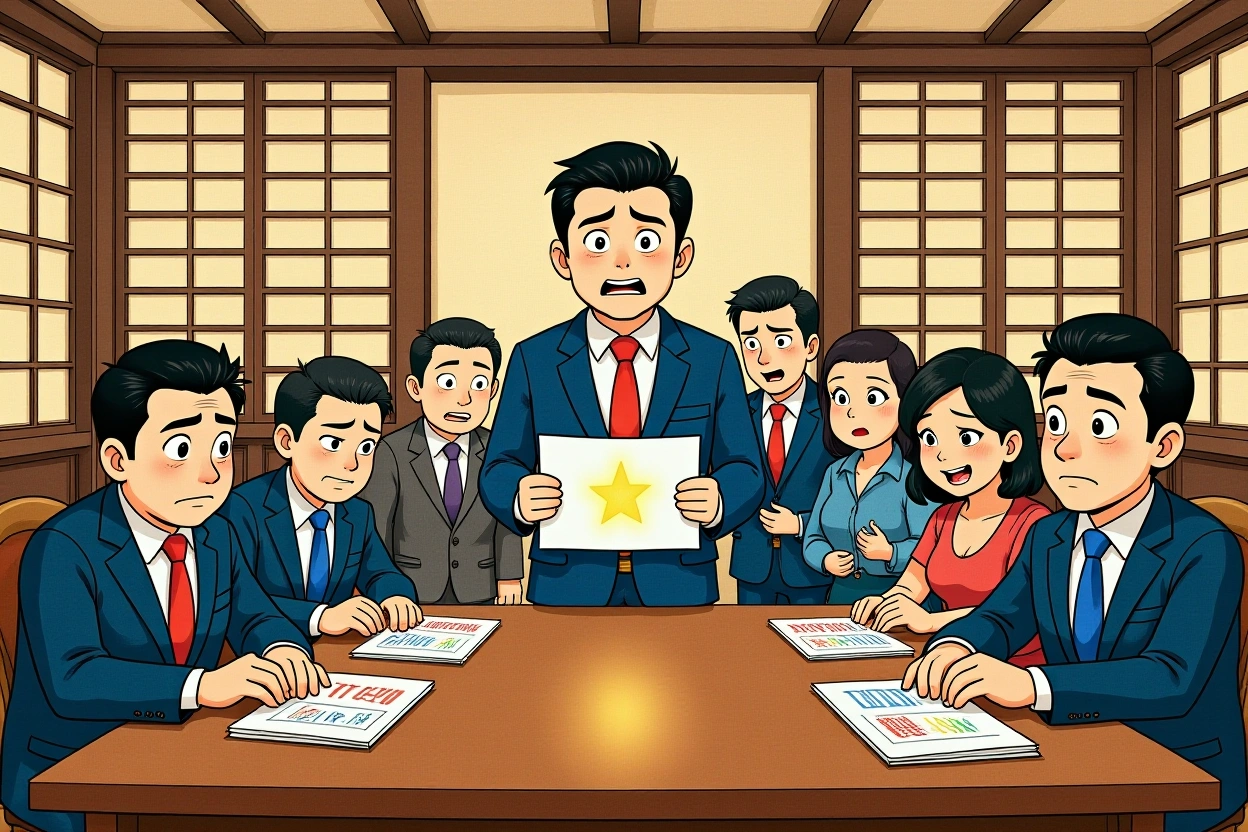
The Bonus Controversy Erupts
A contentious board meeting at medical device maker ST Kelly (300326) has exposed deep fractures in corporate governance. Despite reporting a 193.8% net profit plunge in 2024, the company proposed distributing 2.7 million yuan ($370,000) in executive bonuses. The motion passed narrowly with 5-2 votes, but not before two directors launched extraordinary public objections citing financial deterioration and governance failures. This executive bonuses controversy highlights growing investor impatience with reward systems detached from performance in China’s A-share market.
Key Developments
– ST Kelly’s board approved 2024 executive bonuses despite 193.8% net profit decline
– Directors Jin Shiqiang (金诗强) and Di Chaoping (狄朝平) opposed, citing accountability failures
– Company received ‘disclaimer of opinion’ audit report triggering ST risk warning status
– Simultaneous asset sale of profitable subsidiary raises strategic questions
The Boardroom Battle Unfolds
ST Kelly’s August 4th board meeting agenda contained 16 proposals, including the appointment of new VP Hui Yiwei (惠一微) and the controversial executive bonuses. While Hui’s appointment passed with 4 approvals and 2 abstentions, the compensation package faced stiff resistance. The executive bonuses controversy centered on whether management deserved rewards amid catastrophic financial results.
Compensation Proposal Details
The 2.7 million yuan bonus pool targeted senior leadership, with newly appointed VP Hui Yiwei set to receive 540,000 yuan annual fixed salary. According to the proposal documentation, bonuses would recognize executives’ contributions to profit creation and future planning. The compensation committee received blanket authorization to distribute amounts without performance metric disclosure, fueling the executive bonuses controversy.
The Dissenting Votes
Director Jin Shiqiang (金诗强) delivered scathing opposition remarks: ‘When annual profits collapse 193% and internal control failures trigger ST status, executives bear responsibility. Awarding performance bonuses contradicts fundamental governance principles.’ His objections mirrored market concerns about accountability in underperforming A-share firms.
Independent director Di Chaoping (狄朝平) amplified these concerns: ‘No clear KPIs justified these payments. Management failed fiduciary duties through inadequate internal controls, directly causing our risk-warning status.’ This rare public dissent from a board insider intensified the executive bonuses controversy.
Financial Freefall: The Numbers Behind the Fury
ST Kelly’s 2024 financials reveal why the executive bonuses controversy ignited shareholder anger. While revenue grew 2.96% to 985 million yuan, profits imploded:
– Operating profit: -107 million yuan (176.39% YoY decrease)
– Total profit: -110 million yuan (182.63% YoY decrease)
– Net profit: -106 million yuan (193.80% YoY decrease)
The Shenzhen-listed company specializes in orthopedic devices, surgical energy platforms, and sterilization services. Its financial collapse coincided with receiving a ‘disclaimer of opinion’ audit report on internal controls from Beijing Xinghua Certified Public Accountants. This regulatory red flag automatically triggered special treatment (ST) status, restricting share trading and exposing governance deficiencies.
Timeline to Crisis
2019-2023: Steady revenue growth averaging 8.2% annually
Q3 2024: First internal control warnings emerge
April 2025: ST designation applied by Shenzhen Stock Exchange
August 2025: Bonus proposal sparks board rebellion
Governance Under Microscope
The executive bonuses controversy spotlights systemic governance issues at ST Kelly. Di Chaoping’s opposition specifically noted the absence of predefined performance metrics, allowing discretionary rewards despite objective failure. This violates CSRC guidelines requiring transparent, performance-linked compensation frameworks.
Internal Control Breakdowns
Auditors identified multiple control failures:
– Inadequate financial reporting oversight
– Weak compliance monitoring systems
– Insufficient risk management protocols
The ‘unable to express opinion’ audit designation indicates such severe control deficiencies that auditors couldn’t verify financial statement accuracy. Under China’s Corporate Governance Code, directors face personal liability for ignoring such red flags.
Strategic Divestment Raises Eyebrows
Simultaneous with the executive bonuses controversy, ST Kelly announced plans to sell its 36.9% stake in profitable subsidiary Jienuo Medical Management Group for 162 million yuan. The transaction raises strategic questions:
– Jienuo recorded 169.78 million yuan net profit in 2024
– Valuation represented 237.24% premium to net assets
– Sale proceeds would cover 60% of 2024 losses
Independent analysts question why leadership would divest a performing asset while seeking personal rewards during a crisis. The transaction requires shareholder approval at the August 28th extraordinary general meeting, where the executive bonuses controversy will likely dominate discussions.
Buyer Background
Purchaser Shanghai Huitian Medical Technology maintains undisclosed ownership ties. Market regulators typically scrutinize related-party transactions, though none have been formally alleged. The deal’s timing amid the executive bonuses controversy ensures regulatory attention.
Broader Market Implications
This executive bonuses controversy reflects growing CSRC emphasis on responsible compensation. Recent guidelines from China Securities Regulatory Commission chair Wu Qing (吴清) specifically target ‘rewards disconnected from performance.’ The ST Kelly case demonstrates three critical market-wide issues:
Director Independence Challenges
Despite Di Chaoping’s opposition, the bonus proposal passed. This reveals structural weaknesses in China’s independent director system, where insiders often dominate boards. CSRC data shows only 38% of A-share companies have truly independent compensation committees.
Investor Activism Rising
Minority shareholders increasingly challenge questionable pay decisions. The China Association for Public Companies reports 217 compensation-related shareholder proposals in 2024, up 63% from 2023. The executive bonuses controversy at ST Kelly may inspire similar actions across the A-share market.
Regulatory Response
The Shenzhen Stock Exchange issued new guidelines in June 2025 requiring:
– Mandatory clawback provisions for bonus awards
– Detailed performance metric disclosure
– Shareholder votes on ST-company compensation
ST Kelly’s proposal predates these rules but will test their enforcement.
Path Forward: Governance Over Entitlement
The executive bonuses controversy at ST Kelly presents a watershed moment for corporate accountability. Shareholders voting on August 28th face clear choices: endorse detached reward systems or demand performance-aligned governance. Institutional investors like China Asset Management already signaled opposition, calling the proposal ‘tone-deaf.’
Practical steps for stakeholders:
– Scrutinize the August 28th meeting agenda items collectively
– Demand forensic audit of internal control failures
– Propose independent compensation committee formation
Leadership must recognize that restoring trust requires tangible accountability, not symbolic gestures. As this executive bonuses controversy demonstrates, investors now demand responsible governance matching regulatory rhetoric. The outcome will signal whether A-share companies prioritize stewardship or self-interest during crises.