



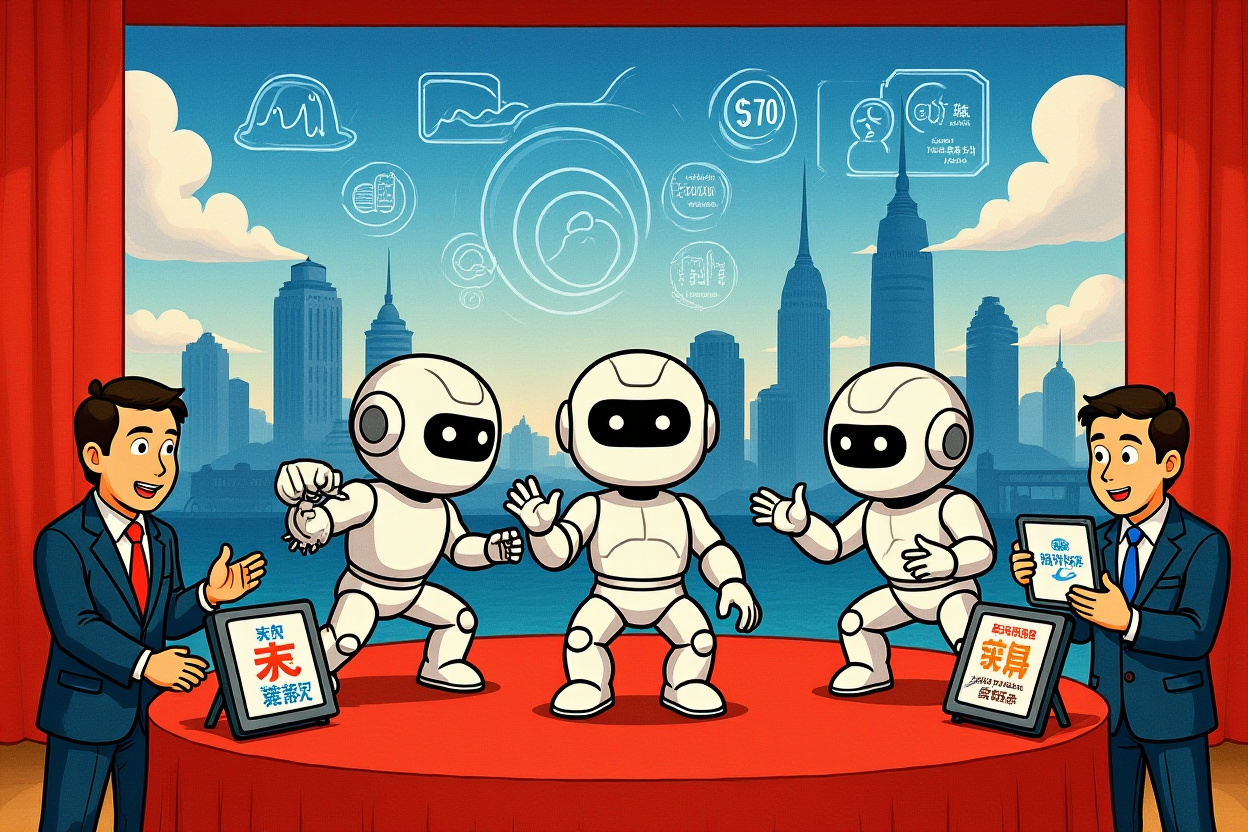
– The 2026 CCTV Spring Festival Gala emerged as a critical platform for China’s embodied AI industry, with four leading companies—Magic Atom, Galaxy Universal, Yushu Technology, and Songyan Power—showcasing humanoid robots in a nationally televised event.
– Beyond theatrical performances, the Gala highlights the transition from lab demonstrations to real-world applications, with industrial, commercial, and domestic markets posing significant challenges for scalability and profitability.
– Market growth is projected to be explosive; IDC forecasts China’s embodied AI robot user expenditure to reach $770 billion by 2030, driven by a 94% compound annual growth rate, signaling a golden era for the sector.
– The industry faces a pivotal inflection point in 2026, shifting from hype and funding rounds to a focus on tangible orders, client retention, and sustainable revenue models, with the Gala acting as embodied AI’s ultimate test ground for validation.
– Investors and professionals must assess companies based on post-Gala performance, prioritizing those that overcome reliability hurdles and demonstrate clear paths to market adoption in structured and unstructured environments.
The Spring Festival Gala as a Technological Bellwether
For decades, the CCTV Spring Festival Gala has served as more than just entertainment; it is a cultural institution that mirrors China’s technological ambitions. In 2026, this annual spectacle transformed into embodied AI’s ultimate test ground, where humanoid robots stepped from research labs onto a national stage. This shift underscores China’s strategic push to lead in advanced robotics, blending performance art with industrial policy. For global investors and market analysts, the Gala offers a unique lens into the maturity and competitive dynamics of China’s embodied AI sector, revealing both breakthroughs and bottlenecks that could influence equity valuations and investment strategies worldwide.
The 2026 edition marked a departure from past technology showcases, which often featured isolated innovations. Instead, it presented a coordinated display by four domestic embodied AI firms: Magic Atom (魔法原子), Galaxy Universal (银河通用), Yushu Technology (宇树科技), and Songyan Power (松延动力). Their collective appearance signals a maturation of the industry, moving from fragmented experimentation to a more cohesive, market-ready phase. As these companies vie for attention, the Gala acts as embodied AI’s ultimate test ground, where public perception, technical robustness, and commercial viability are scrutinized in real-time.
Historical Context and the 2026 Showcase
The Spring Festival Gala has historically spotlighted emerging technologies, from 5G networks to virtual reality, but 2026 focused squarely on embodied AI—a field encompassing robots that interact physically with their environment. Yushu Technology, which gained fame after the 2025 Gala, returned with a martial arts performance titled 武 BOT, collaborating with the Henan Tagou Martial Arts School. This repeat engagement highlights how the Gala can catapult companies into the mainstream, driving brand recognition and potential partnerships. Meanwhile, Songyan Power featured in a comedy sketch, Magic Atom supported a musical act, and Galaxy Universal appeared in a micro-film, each tailoring their robots to diverse entertainment formats.
A subtle yet telling detail lies in the official titles bestowed upon these companies: Yushu Technology was termed the “Gala Robot Partner,” Songyan Power the “Gala Humanoid Robot Partner,” Magic Atom the “Gala Intelligent Robot Strategic Partner,” and Galaxy Universal the “Gala Designated Embodied Large Model Robot.” These nuanced distinctions reflect varying technical approaches, product offerings, and strategic alignments, offering clues to investors about each firm’s niche and long-term positioning. For instance, Galaxy Universal’s emphasis on “embodied large models” suggests a focus on AI-driven cognition, whereas Yushu Technology’s broader “robot” label may indicate versatility in applications.
From Stage to Reality: The Commercialization Imperative
While the Spring Festival Gala provides unparalleled visibility, it is merely the opening act in a much longer drama. As the curtains fall, embodied AI companies must confront the harsh realities of market adoption, where performance metrics shift from applause to profitability. The industry adage rings true: robots cannot dance forever on stage. Success hinges on transitioning from controlled environments to unpredictable, real-world settings that demand reliability, cost-efficiency, and scalability. This journey is embodied AI’s ultimate test ground in its purest form, separating contenders from pretenders in a race for sustainable growth.
According to IDC data, China’s embodied AI robot user expenditure is projected to soar to $770 billion by 2030, with an annual compound growth rate of 94%. This staggering forecast underscores the sector’s potential, but also its volatility; early missteps in commercialization could derail entire companies. The Gala, therefore, serves as a catalyst, accelerating public acceptance and investor confidence. However, the true battleground lies beyond the spotlight, in factories, warehouses, and homes where robots must prove their worth through tangible outcomes like increased productivity and reduced operational costs.
Industrial Applications: The First Frontier
The most immediate and lucrative market for embodied AI is industrial automation. Factories across China face persistent labor shortages in tasks such as sorting, assembly, loading, inspection, and搬运 (搬运, handling). Robots that excel in these areas can generate swift revenue streams, but they must meet exacting standards. Industrial environments tolerate zero error; a minute of downtime can equate to significant financial losses. Unlike the Gala stage, where mistakes can be edited or repeated, production lines demand 24/7 reliability under extreme conditions like temperature fluctuations, dust, and mechanical stress.
Companies like Yushu Technology and Songyan Power are already piloting robots in manufacturing settings, but challenges remain. Key hurdles include:
– Sensor accuracy and durability in harsh environments.
– Integration with existing industrial IoT systems and legacy machinery.
– Cost reduction to compete with traditional automation solutions, which often have lower upfront investments.
– Safety protocols to prevent accidents in human-robot collaborative spaces.
Success in this arena requires not just advanced mechanics, but robust AI algorithms for adaptive decision-making. As the Spring Festival Gala demonstrated, robots can perform choreographed routines, but industrial deployment tests their ability to handle anomalies—a true embodiment of embodied AI’s ultimate test ground for practical utility.
Commercial Deployment: Navigating Complex Environments
Beyond factories, commercial settings such as retail stores, hotels, hospitals, and warehouses present a more dynamic challenge. Here, robots must operate amid crowded spaces, variable lighting, and unpredictable human interactions. The skills showcased at the Gala—like synchronized dancing or scripted dialogues—are insufficient; robots need enhanced perception, navigation, and communication capabilities. For example, a robot in a supermarket must avoid sudden obstacles like shopping carts, answer customer queries, and manage inventory, all while maintaining a user-friendly interface.
Magic Atom and Galaxy Universal are exploring these domains, but progress is incremental. Critical factors for commercial success include:
– Advanced computer vision and lidar systems for real-time obstacle avoidance.
– Natural language processing for seamless human-robot interaction, akin to the engagements seen in Gala sketches.
– Modular design allowing customization for different retail or service niches.
– Energy efficiency to support extended operational hours without frequent recharging.
Market trials in cities like Shanghai and Shenzhen are underway, with early adopters reporting mixed results. While robots can handle repetitive tasks, complex scenarios often reveal limitations in AI reasoning, highlighting why the Gala is just embodied AI’s ultimate test ground for initial validation, not final proof of concept.
The Home Frontier: The Ultimate Challenge and Opportunity
The most ambitious goal for embodied AI is penetration into household settings, where robots could assist with chores, caregiving, and entertainment. This represents the largest addressable market but also the most formidable technical and economic hurdle. Homes are unstructured environments cluttered with furniture, pets, children, and diverse floor plans, demanding unprecedented levels of safety, intelligence, and affordability. As the Spring Festival Gala hinted through family-oriented performances, public readiness is growing, but practical implementation lags far behind.
To thrive in domestic spaces, robots must overcome several barriers:
– Safety certifications to prevent injuries, especially around vulnerable groups like the elderly or infants.
– Affordability, with mass-market prices likely needing to fall below $10,000 to achieve widespread adoption, compared to current models often exceeding $50,000.
– Ease of use, requiring intuitive interfaces that do not necessitate technical expertise.
– Emotional intelligence, enabling robots to respond appropriately to human emotions and social cues.
Companies are investing heavily in R&D, but breakthroughs may take years. The Gala’s portrayal of robots as friendly companions helps normalize the technology, yet real-world testing in pilot households—truly embodied AI’s ultimate test ground—will determine if dreams of a robot in every home are feasible or fanciful.
Technical Hurdles and Safety Concerns
In domestic applications, technical challenges multiply. Robots must handle slippery floors, narrow doorways, and delicate objects without causing damage. AI models trained in controlled settings often falter when faced with the chaos of daily life. For instance, a robot designed to fetch items might struggle if a pet suddenly blocks its path, a scenario far removed from the scripted interactions of the Spring Festival Gala. Safety is paramount; a single malfunction could lead to injuries or property loss, eroding consumer trust.
Regulatory frameworks are evolving to address these risks. Chinese authorities, including the Ministry of Industry and Information Technology (工业和信息化部), are drafting standards for home robotics, focusing on:
– Mechanical safeguards to limit force and speed in human proximity.
– Data privacy protections, as robots equipped with cameras and microphones could raise surveillance concerns.
– Interoperability with smart home ecosystems, promoting seamless integration.
These developments will shape market entry timelines, making compliance another layer of embodied AI’s ultimate test ground for companies aiming at the consumer sector.
Market Implications and Investment Outlook
The Spring Festival Gala has ignited investor interest, but savvy professionals must look deeper. The embodied AI sector is at a crossroads, with 2026 poised as a inflection year. Priorities are shifting from capital fundraising and flashy demonstrations to securing real contracts and achieving operational scale. This transition is embodied AI’s ultimate test ground for financial sustainability, where companies without viable business models may face consolidation or failure.
Investment opportunities abound, but they require careful discernment. Key areas to watch include:
– Supply chain advancements, particularly in core components like servomotors, sensors, and AI chips, where domestic producers are reducing reliance on imports.
– Partnerships with large enterprises in logistics, healthcare, and manufacturing, which can provide steady revenue streams.
– Government incentives under initiatives like “Made in China 2025” (中国制造2025) and the 14th Five-Year Plan, offering subsidies and research grants.
– Global expansion, as Chinese firms compete with international players like Boston Dynamics and Tesla in markets across Asia and Europe.
For institutional investors, due diligence should focus on companies with proven post-Gala traction, such as Yushu Technology’s reported 12 major event appearances and 7 dedicated robot competitions since 2025. However, metrics like repeat customer rates and margin profiles will ultimately determine long-term value.
IDC Projections and Growth Trajectory
The IDC forecast of $770 billion in user expenditure by 2030, with a 94% CAGR, paints a rosy picture, but it hinges on successful commercialization. This growth is driven by factors such as:
– Aging demographics in China, increasing demand for robotic assistants in eldercare.
– Rising labor costs in manufacturing, pushing automation adoption.
– Technological advancements in AI and material science, lowering production costs.
– Supportive policies from the Chinese government, aiming for technological self-sufficiency.
Investors should monitor quarterly reports from embodied AI firms for signs of scaling, such as order volumes from industrial clients or pilot expansions in commercial chains. The Spring Festival Gala may have been embodied AI’s ultimate test ground for public relations, but financial statements will be the true report card.
Regulatory and Economic Context
China’s embodied AI boom does not occur in a vacuum; it is shaped by broader economic policies and regulatory frameworks. The government’s emphasis on innovation-led growth, coupled with strategic rivalries in global tech, creates a favorable yet demanding environment. Entities like the National Development and Reform Commission (国家发展和改革委员会) and the Ministry of Science and Technology (科学技术部) are actively promoting robotics through funding and standards, aiming to position China as a leader in what is often called the “fourth industrial revolution.”
For international investors, understanding this context is crucial. Regulatory shifts can impact market access, intellectual property rights, and competitive dynamics. For example, recent guidelines on data security (数据安全法) affect how robots collect and process information, influencing product design. Additionally, trade tensions with the United States could disrupt supply chains for critical components, though domestic alternatives are rapidly emerging.
The Spring Festival Gala, as a state-sponsored event, symbolizes this top-down support, but it also imposes expectations. Companies that thrive post-Gala will likely be those that align with national priorities, such as reducing import dependency or enhancing social welfare through technology. Thus, the Gala is not just embodied AI’s ultimate test ground for technical prowess, but also for strategic alignment with China’s macroeconomic goals.
Global Competition and Positioning
While the Gala highlights domestic achievements, Chinese embodied AI firms face stiff international competition. Companies like Tesla with its Optimus robot and Japan’s SoftBank with Pepper are vying for similar markets. Chinese strengths lie in manufacturing scalability and cost efficiency, but weaknesses persist in cutting-edge AI algorithms and brand recognition abroad. The Gala serves as a platform to showcase homegrown innovation, potentially boosting export prospects.
To compete globally, Chinese companies must:
– Invest in proprietary AI research to reduce reliance on open-source models.
– Forge alliances with overseas distributors and service providers.
– Navigate foreign regulations, which may be stricter on safety and privacy.
– Differentiate through culturally tailored applications, such as robots for traditional Chinese medicine or education.
The journey from the Spring Festival Gala stage to global markets is long, but with the right strategies, embodied AI could become a flagship export, reinforcing China’s technological ascendancy.
Synthesizing the Path Forward
The 2026 Spring Festival Gala has undeniably accelerated China’s embodied AI narrative, transforming it from a niche interest into a mainstream conversation. However, the euphoria of stage performances must now give way to gritty realities of implementation. As companies like Magic Atom, Galaxy Universal, Yushu Technology, and Songyan Power pivot towards industrial, commercial, and domestic applications, they will encounter formidable tests of reliability, cost, and user acceptance. This phase is embodied AI’s ultimate test ground, where theoretical potential meets practical constraints, and only the most resilient will survive.
For investors and business professionals, the takeaways are clear: monitor post-Gala execution closely, favor firms with diversified revenue streams and robust R&D pipelines, and stay attuned to regulatory developments that could sway market dynamics. The projected $770 billion market by 2030 offers immense opportunities, but risks abound in a sector still maturing. As the lights dim on the Gala, the true drama unfolds in factories, stores, and homes—where embodied AI will prove its worth, not through applause, but through performance that drives economic value.
Take the next step: dive deeper into company financials, attend industry expos like the World Robot Conference in Beijing, and consult with experts to refine your investment thesis in this rapidly evolving landscape. The future of robotics is being written now, and informed decisions today could yield substantial rewards tomorrow.