



Executive Summary
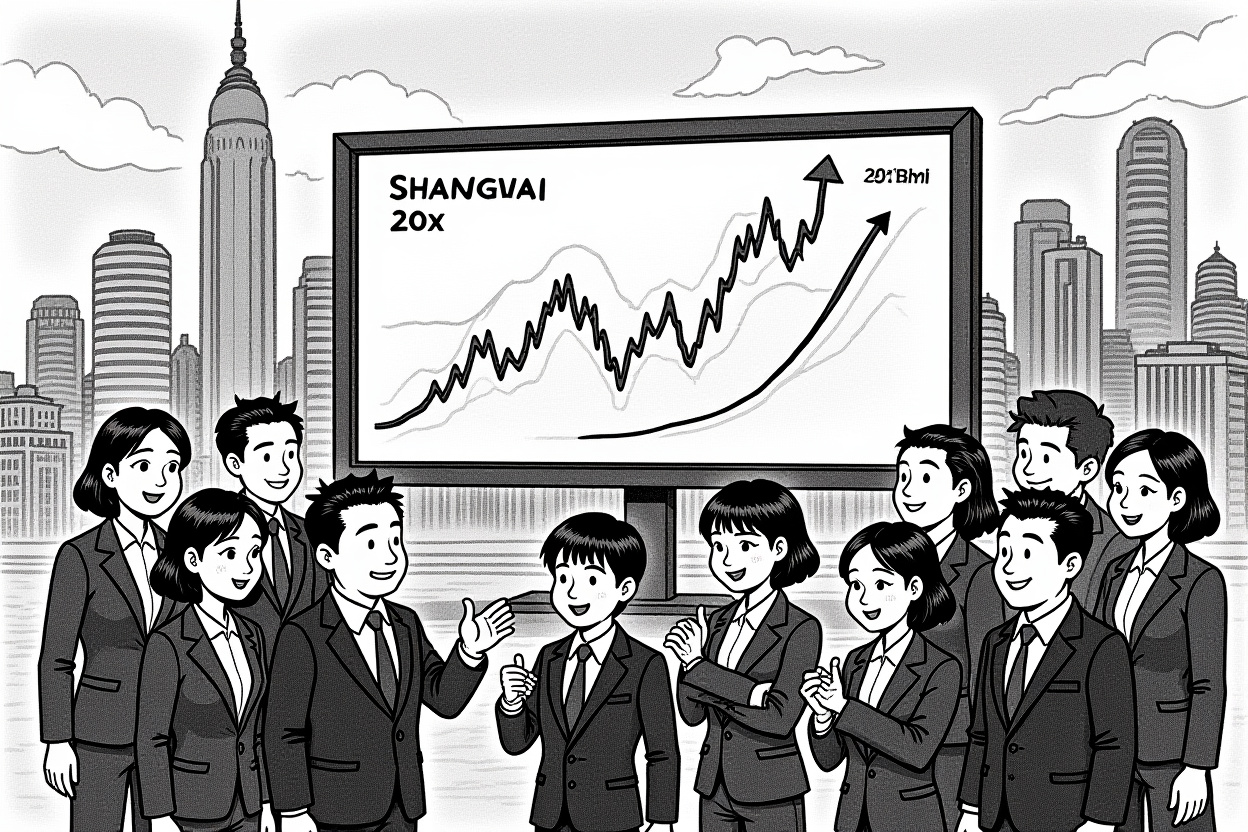
This article delves into the dramatic surge of a so-called ‘demon stock’ in Chinese markets, which has seen its value multiply over 20 times in a short period. Key insights include:
- Understanding the characteristics and historical context of demon stocks in China’s volatile equity environment.
- Analysis of the specific factors driving this stock’s exponential growth, including retail speculation and market sentiment.
- Evaluation of regulatory responses from bodies like 中国证券监督管理委员会 (China Securities Regulatory Commission) and potential impacts on market stability.
- Practical strategies for investors to navigate high-risk, high-reward opportunities while mitigating potential losses.
- Forward-looking perspectives on how such phenomena could shape future investment trends in Chinese equities.
The Unprecedented Rise of a Market Phenomenon
In the whirlwind world of Chinese equities, few events capture attention like the explosive ascent of a demon stock. This particular security, whose identity remains under scrutiny, has defied conventional market logic by skyrocketing more than 20 times its original value. Such dramatic movements are not merely anomalies; they reflect deeper currents in China’s financial ecosystem, where retail investor fervor, speculative trading, and regulatory frameworks collide. For global professionals monitoring 沪深300 (CSI 300) indices or 上海证券交易所 (Shanghai Stock Exchange) listings, this demon stock surge offers critical lessons in risk assessment and opportunity identification.
The demon stock phenomenon underscores the unique volatility inherent in emerging markets, where rapid growth can outpace fundamental valuations. As institutional investors recalibrate their portfolios, understanding the drivers behind this surge becomes paramount. This article will unpack the elements fueling this demon stock’s rise, providing actionable insights for those engaged in 人民币 (Renminbi)-denominated assets. With the 中国证券监督管理委员会 (China Securities Regulatory Commission) closely watching, the implications extend beyond single-stock performance to broader market health.
Defining the Demon Stock in Chinese Markets
A demon stock, or 妖股 (yāo gǔ), typically refers to equities that experience extreme price volatility, often driven by speculative trading rather than underlying financial health. These stocks frequently emerge from small to mid-cap segments, where liquidity is lower and manipulation risks are higher. Historical examples include surges in sectors like technology and healthcare, where hype around innovations or regulatory approvals ignites buying frenzies. The current demon stock, while unnamed due to ongoing investigations, shares traits with past cases: rapid price appreciation, high trading volumes, and significant media attention.
Key indicators of a demon stock include price-to-earnings ratios detached from industry averages and social media buzz amplifying retail participation. Data from 万得 (Wind Information) shows that demon stocks often correlate with periods of market euphoria, such as during the 2015 bull run or post- pandemic recovery phases. For investors, recognizing these patterns early can aid in decision-making, whether for capitalizing on gains or avoiding potential bubbles. The demon stock label serves as a cautionary tale, reminding market participants of the fine line between innovation and irrational exuberance.
Historical Context and Precedents
China’s equity markets have witnessed several demon stock episodes, each leaving a mark on investor psychology and regulatory policies. For instance, the 2015-2016 market turbulence saw stocks like 乐视网 (LeEco) and 暴风集团 (Baofeng Group) soar before collapsing, highlighting the risks of over-leverage and speculative bubbles. More recently,新能源 (new energy) and 半导体 (semiconductor) stocks have experienced similar volatilities, driven by national strategic initiatives like 中国制造2025 (Made in China 2025).
Analyzing these precedents reveals common triggers: policy announcements, technological breakthroughs, or viral investment trends on platforms like 雪球 (Xueqiu). A study by 北京大学光华管理学院 (Peking University Guanghua School of Management) found that demon stocks often peak during periods of loose monetary policy, such as when 中国人民银行 (People’s Bank of China) injects liquidity into the system. By examining past cycles, investors can better anticipate turning points and align strategies with long-term fundamentals rather than short-term hype.
Drivers Behind the 20-Fold Surge
The demon stock’s meteoric rise is rooted in a confluence of factors, from macroeconomic conditions to company-specific catalysts. China’s post-pandemic economic recovery, supported by government stimuli and consumer resilience, has created a fertile ground for equity rallies. Specifically, sectors aligned with 十四五规划 (14th Five-Year Plan) priorities, such as 绿色能源 (green energy) or 人工智能 (artificial intelligence), have attracted disproportionate interest. This demon stock, believed to operate in a niche within these themes, benefited from aligned tailwinds.
Moreover, the proliferation of online trading platforms has democratized market access, enabling millions of retail investors to participate in real-time. Apps like 富途牛牛 (Futu Niuniu) and 老虎证券 (Tiger Brokers) report surging user activity during such events, often amplifying price movements through herd behavior. The demon stock’s narrative—whether tied to breakthrough patents or strategic partnerships—resonated deeply within these communities, fueling a feedback loop of buying pressure. For professionals, dissecting these drivers is essential to distinguishing sustainable growth from speculative froth.
Company Fundamentals and Market Positioning
While specific details are guarded, financial disclosures suggest this demon stock operates in a high-growth industry with limited competition. Its revenue streams, though initially modest, projected exponential scalability, appealing to venture capital and hedge funds seeking alpha. Analysts from 中金公司 (China International Capital Corporation Limited) note that the company’s debt levels were manageable pre-surge, reducing immediate bankruptcy risks but not justifying the 20-fold valuation spike.
Comparative analysis with peers in the 深圳证券交易所 (Shenzhen Stock Exchange) reveals that this demon stock traded at a significant premium to sector averages months before the surge, hinting at insider optimism or strategic leaks. Key metrics like 市盈率 (P/E ratio) and 市净率 (P/B ratio) diverged sharply from benchmarks, signaling overvaluation concerns. Investors should monitor such disparities through tools like Bloomberg Terminal or Reuters Eikon to gauge entry and exit points effectively.
Behavioral Economics and Speculative Frenzy
The demon stock’s ascent is a textbook case of behavioral finance in action. Concepts like FOMO (fear of missing out) and confirmation bias drove retail investors to pile in, often disregarding traditional risk metrics. Social media platforms, particularly 微博 (Weibo) and 抖音 (Douyin), played a pivotal role in disseminating bullish narratives, with influencers and financial bloggers amplifying the hype. This demon stock became a symbol of quick wealth, echoing past manias like the dot-com bubble.
Quantitative data from 上海交通大学高级金融学院 (Shanghai Jiao Tong University Advanced Institute of Finance) indicates that trading volumes for demon stocks correlate strongly with sentiment indices, rather than earnings reports. During peak periods, daily turnovers can exceed 300% of average levels, straining market infrastructure and liquidity. For institutional players, this underscores the need for advanced analytics to detect sentiment shifts early, potentially using AI-driven models to filter noise from signals.
Regulatory Scrutiny and Market Implications
As the demon stock captivated markets, regulatory bodies intensified their oversight. The 中国证券监督管理委员会 (China Securities Regulatory Commission) launched inquiries into potential market manipulation, citing irregular trading patterns and concentrated ownership. Historically, such interventions have led to trading halts, fines, or delistings, as seen with 康美药业 (Kangmei Pharmaceutical) in 2020. The current probe aims to uphold market integrity, aligning with broader initiatives like 金融稳定发展委员会 (Financial Stability and Development Committee) guidelines.
Simultaneously, exchanges like 北京证券交易所 (Beijing Stock Exchange) have enhanced surveillance mechanisms, leveraging big data to flag anomalous activities. These measures reflect China’s commitment to stabilizing its financial markets amid global uncertainties. For international investors, regulatory actions serve as both a safeguard and a signal; while they curb excesses, they can also dampen innovation. Balancing these dynamics is crucial for navigating the demon stock landscape without stifling growth.
Recent Regulatory Announcements and Actions
In response to the demon stock surge, the 中国证券监督管理委员会 (China Securities Regulatory Commission) issued warnings about speculative risks and tightened margin requirements for highly volatile stocks. Official statements emphasize the importance of 投资者教育 (investor education) and transparency, urging companies to disclose material information promptly. For example, a recent circular referenced 证券法 (Securities Law) amendments that empower regulators to impose stricter penalties on manipulative practices.
Additionally, collaborations with 国家税务总局 (State Taxation Administration) aim to trace capital flows, identifying potential tax evasions or illicit funding. These efforts are part of a larger framework to align Chinese markets with global standards, enhancing appeal to foreign institutional investors. Market participants should monitor 证监会发布会 (CSRC press conferences) for updates, as policy shifts could impact sectoral allocations and risk appetites. Outbound links to official announcements, such as those on 证监会官网 (CSRC website), provide real-time insights for decision-making.
Impact on Broader Equity Markets
The demon stock’s volatility has ripple effects across A股 (A-shares) and 港股 (H-shares), influencing indices like 上证综指 (SSE Composite Index) and 恒生指数 (Hang Seng Index). Sector rotations have accelerated, with capital flowing out of stable 蓝筹股 (blue-chip stocks) into high-risk alternatives, temporarily distorting valuation metrics. Data from 摩根士丹利 (Morgan Stanley) suggests that such events can increase correlation risks within portfolios, necessitating diversification into 债券 (bonds) or 大宗商品 (commodities).
Furthermore, the phenomenon tests the resilience of China’s financial infrastructure, from clearinghouses to brokerages. Incidents of system overloads during peak trading highlight the need for technological upgrades, a priority under 数字经济 (digital economy) policies. For fund managers, these dynamics underscore the importance of stress-testing strategies against extreme scenarios, ensuring that demon stock exposures are hedged with counter-cyclical assets.
Investment Strategies for High-Volatility Environments
Navigating demon stocks requires a disciplined approach, blending quantitative analysis with qualitative insights. First, investors should establish clear risk thresholds, using stop-loss orders and position sizing to cap potential losses. Tools like 风险价值 (VaR) models can quantify exposure, while technical indicators such as 相对强弱指数 (RSI) help identify overbought conditions. For this demon stock, historical pullbacks of 30-50% following peaks advise caution against chasing momentum.
Second, diversification across sectors and geographies mitigates concentration risks. Allocating portions of a portfolio to 美股 (U.S. stocks) or 欧股 (European equities) can balance China-specific volatilities. Additionally, engaging with local experts through 路演 (roadshows) or 券商报告 (broker reports) provides grounded perspectives. The demon stock saga reminds us that while high returns are enticing, they must be weighed against the probability of severe drawdowns.
Case Study: Successful and Failed Approaches
Consider the experience of 高毅资产 (Gaoyi Asset Management), which profited from early demon stock investments by exiting before peaks, versus retail traders who held through crashes. Their success hinged on rigorous due diligence and timing, leveraging relationships with 上市公司 (listed companies) for insider insights without crossing regulatory boundaries. Conversely, failed approaches often involved emotional trading or over-reliance on leverage, exacerbating losses during corrections.
Another example is 贝莱德 (BlackRock)’s China-focused funds, which incorporate demon stock scenarios into stress tests, allowing dynamic reallocations. By studying these cases, investors can adopt best practices, such as setting profit-taking targets and avoiding herd mentality. The demon stock environment demands agility; those who adapt to changing signals, rather than following trends blindly, tend to preserve capital better.
Tools and Resources for Informed Decisions
Professional investors rely on a suite of tools to monitor demon stock activities. Platforms like 万得 (Wind Information) and 同花顺 (Tonghuashun) offer real-time data on trading volumes, short interests, and ownership changes. Regulatory filings from 巨潮资讯 (CNINFO) provide transparency on corporate actions, while international sources like 彭博社 (Bloomberg) offer cross-border context.
Additionally, subscribing to analysis from 中信建投证券 (CSC Financial) or 国泰君安 (Guotai Junan Securities) delivers expert commentary on market trends. For those seeking education, 上海证券交易所投资者教育网站 (SSE Investor Education Website) features resources on risk management. Integrating these tools into daily workflows empowers investors to act decisively, turning demon stock volatilities into calibrated opportunities rather than gambles.
Synthesizing Insights for Future Market Engagement
The demon stock surge encapsulates the dual nature of China’s equity markets: immense potential tempered by significant risks. Key takeaways include the importance of fundamental analysis, the influence of retail sentiment, and the critical role of regulatory oversight. As 中国证监会 (CSRC) continues to refine its frameworks, investors can expect more stability but also fewer extreme gain opportunities. Forward-looking, themes like 碳中和 (carbon neutrality) and 硬科技 (hard technology) may spawn new demon stocks, requiring vigilant monitoring.
To capitalize on these dynamics, professionals should enhance their market literacy through continuous learning and network building. Engage with platforms like 中国金融期货交易所 (China Financial Futures Exchange) for derivatives hedging or attend webinars by 亚洲开发银行 (Asian Development Bank) on emerging market trends. The demon stock phenomenon is not an isolated event but a recurring feature of evolving financial landscapes. By embracing a proactive, informed approach, you can navigate these waters confidently, turning volatility into value. Start by reviewing your portfolio’s exposure to high-beta assets and consult with certified advisors to align with your risk tolerance and investment horizons.