



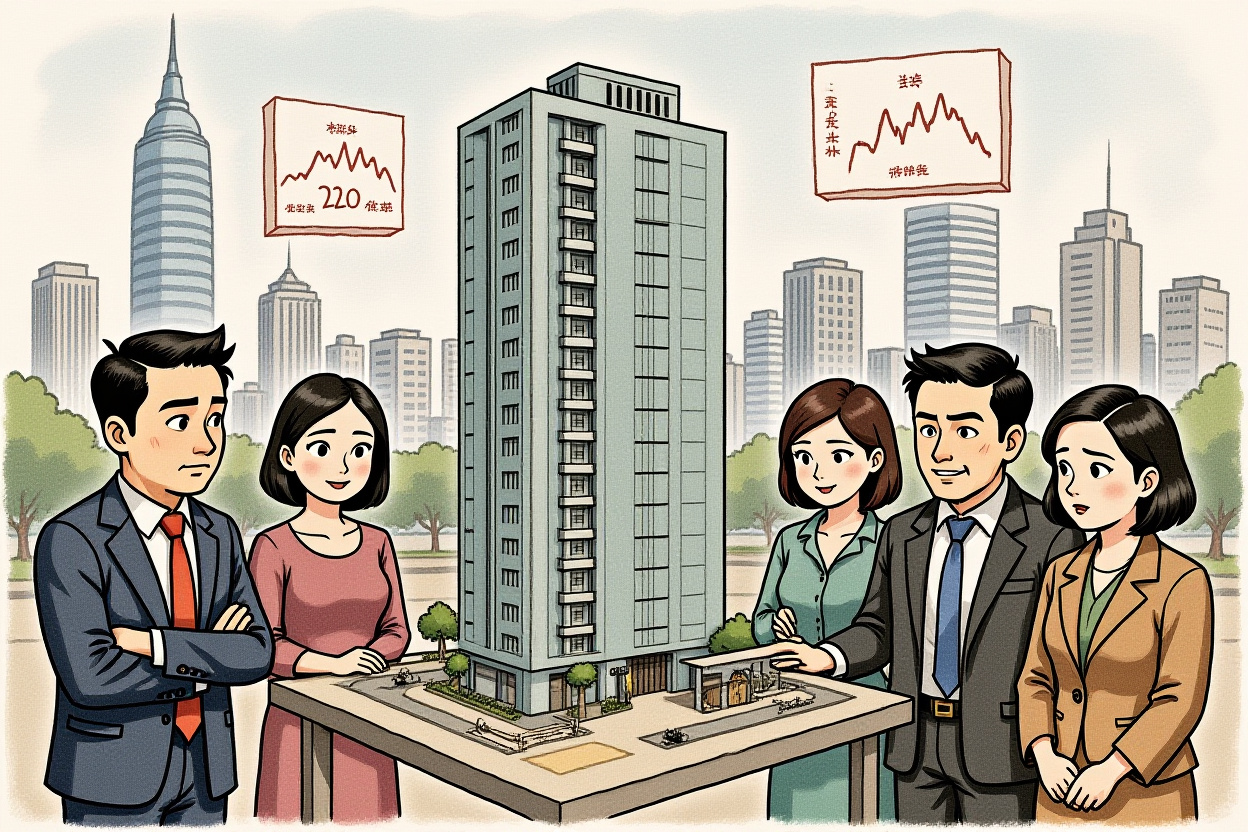
– The Greenview Baishizhou Jingting project, part of Shenzhen’s largest urban renewal initiative, has commenced delivery despite widespread skepticism and contractual delays.
– Buyers face disillusionment over unmet promises, particularly regarding a key school配套, highlighting issues of developer accountability and sales practices.
– Construction quality concerns, especially in underground parking facilities, have sparked disputes, underscoring the tension between marketing claims and delivery standards.
– Developer Greenview China Real Estate’s financial strains reveal the high stakes of mega-projects in China’s tightening real estate environment.
– The project’s future phases may involve state-owned enterprise collaboration, signaling a shift in how large-scale urban redevelopment is funded and executed in China.
After years of anticipation and mounting doubts, one of Shenzhen’s most ambitious urban renewal endeavors has reached a critical milestone. The Baishizhou urban renewal project, spearheaded by Greenview China Real Estate, has officially begun handing over units in its flagship 74-story residential tower, Greenview Baishizhou Jingting. This delivery, however, is not without controversy, unfolding against a backdrop of delayed timelines, broken promises on essential amenities, and simmering buyer discontent. For investors and observers of China’s property market, this event serves as a microcosm of the broader challenges facing urban redevelopment and developer credibility in the post-regulatory crackdown era. The focus phrase, Baishizhou urban renewal project, encapsulates a saga of ambition, risk, and the complex interplay between private enterprise and public expectation in modern Chinese cities. Understanding this project’s trajectory is essential for navigating the volatile landscape of Chinese equities, particularly in the real estate sector.
Delivery Amidst Skepticism: The Long-Awaited Handover
On February 4, Greenview China Real Estate announced via the Hong Kong Stock Exchange that the main construction work for the first phase of its key urban renewal project in Shenzhen’s Nanshan District—Greenview Baishizhou Jingting—had been completed, with government acceptance procedures finalized. The developer has initiated the formal delivery process for residential units, marking a pivotal moment for the Baishizhou urban renewal project. This handover comes after months of uncertainty and vocal criticism from buyers, who have closely monitored every delay and deviation from initial plans.
Timeline and Contractual Nuances
According to purchase contracts provided by owners, the delivery date for the first-phase residences was explicitly set for January 15, 2026. However, project representatives clarified in January that due to the project’s massive scale, a one-month grace period was contractually stipulated, meaning deliveries by February 14 would not constitute a breach. This clause, documented in signed agreements, has been a point of contention, with some buyers perceiving it as a loophole for developer leniency. The Baishizhou urban renewal project’s sheer size—with a total floor area of 3.58 million square meters and an estimated value of approximately 220 billion yuan—has inherently complicated timelines, reflecting common hurdles in China’s mega-developments.
Market Reception and Buyer Sentiment
Despite the delays, the project’s prime location in Shenzhen’s core, coupled with promises of luxury amenities and educational facilities, initially attracted significant buyer interest. Units in the first phase, comprising 1,257 residential homes in towers reaching up to 74 floors, were presold at an average备案 price of 113,500 yuan per square meter, with total prices ranging from 10.12 million to 52.84 million yuan. As reported by Daily Economic News, by late 2023, most larger units had been sold out, indicating strong market demand for high-end properties in Shenzhen. Yet, the delivery process has been marred by skepticism, with buyers like owner representative Mr. Wu (吴先生) expressing frustration over unmet expectations, which could dampen future sales and investor confidence in similar urban renewal ventures.
Broken Promises: The School配套 Controversy
One of the most contentious issues surrounding the Baishizhou urban renewal project is the failure to deliver on promised educational配套. During sales promotions, developers heavily marketed access to Nanshan Foreign Language School, a prestigious institution, with materials claiming a nine-year consistent school would be operational by September 2026. This promise was a key selling point for many families, influencing their purchase decisions in a city where school districts critically impact property values.
Sales Pitches vs. Reality
Mr. Wu (吴先生) highlighted that promotional materials, including brochures and posters, explicitly advertised the school配套, leading buyers to believe it was a guaranteed feature. However, recent updates indicate the school site has not yet commenced construction, with projections now pointing to a 2027 start and 2029 completion. The disconnect between sales assertions and actual progress has fueled accusations of misleading marketing, a common pitfall in China’s real estate sector where pre-sales dominate. Developers have stated that since mid-2024, all school-related宣传 has ceased, and materials were reviewed by market regulatory authorities, but the damage to trust is palpable among buyers who feel misled.
Government Intervention and Developer Accountability
Quality Concerns: Garage Standards and Construction IntegrityBeyond delays and school promises, the Baishizhou urban renewal project faces scrutiny over construction quality, particularly in communal areas like underground parking garages. Buyers have reported that during visits, garage floors lacked epoxy coatings, raising concerns about whether the project meets the premium standards expected for a luxury development. These issues highlight broader challenges in maintaining quality control amid tight schedules and financial pressures.
Discrepancies in Delivery Standards
Developer’s Response and Remedial ActionsFinancial Strains: Developer’s Bet and Market ImplicationsGreenview China Real Estate has essentially staked its entire fortune on the Baishizhou urban renewal project,介入 the redevelopment over a decade ago. According to the company’s 2025 interim report, its current liabilities stand at 60.57 billion yuan, with new borrowings of 7.703 billion yuan in the first half and short-term debts of about 2.914 billion yuan due within a year. In contrast, cash and bank balances were merely 342.5 million yuan, alongside restricted deposits of approximately 1.449 billion yuan. This precarious financial position underscores the high-risk nature of such mega-projects in today’s market.
Greenview China’s Financial Health
Broader Context for Chinese DevelopersFuture Outlook: Collaboration and Urban Renewal in ShenzhenLooking ahead, the Baishizhou urban renewal project’s subsequent phases are poised for transformation. Insiders suggest that the second phase has been demolished, while the third and fourth phases may undergo redesigns to align with Shenzhen’s updated regulations on residential and commercial指标. There is strong speculation about introducing central or state-owned enterprise partners to co-develop future stages, a move that could inject much-needed capital and credibility.