



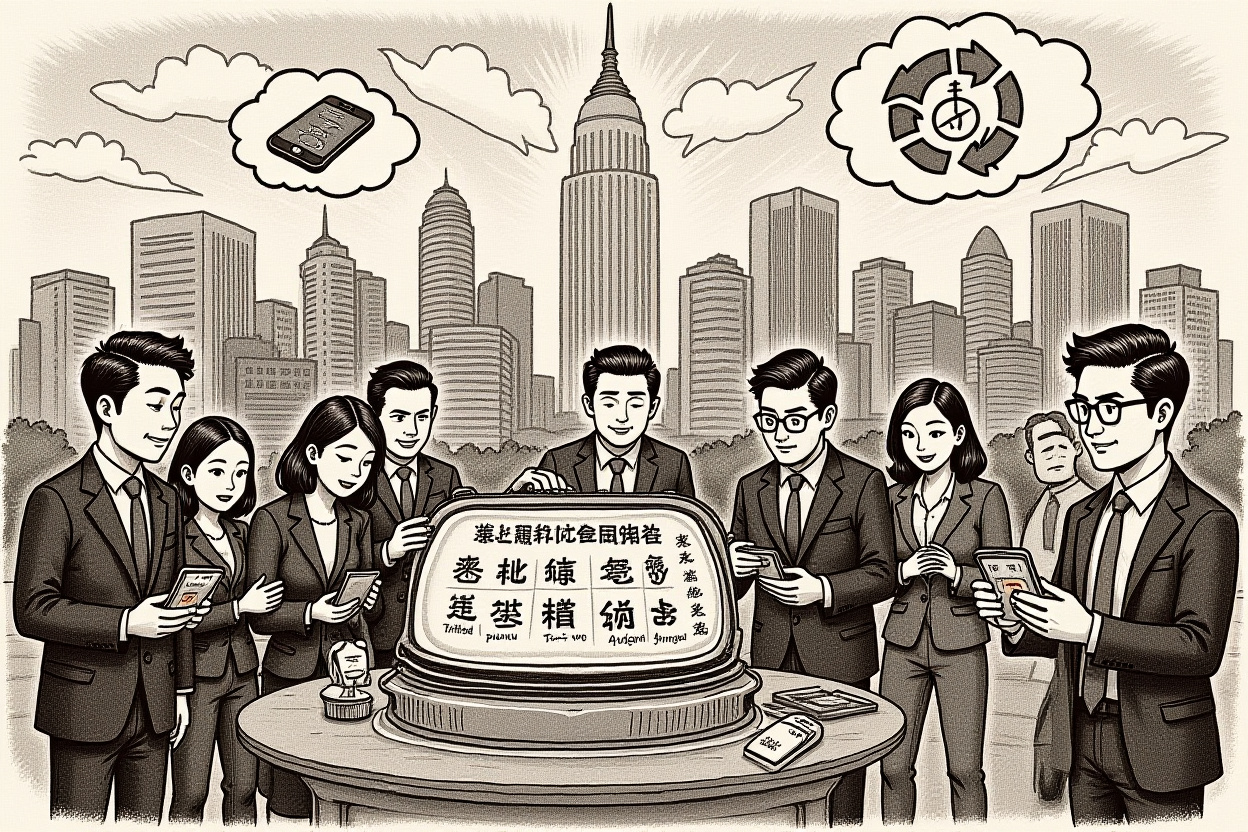
The Booming Graveyard of Unused Phones
China’s drawers and storage boxes hide a staggering economic opportunity. According to the China Association of Circular Economy, over 400 million used mobile phones are retired annually across the country. Of this massive electronic waste stream, approximately 54.2% remain idle in households, while a mere 5% find their way into formal, professional recycling channels. This enormous gap between supply and formal collection has unlocked a vast market for second-hand device circulation, creating a largely untapped resource that has fueled the rise of specialized trading platforms.
Shenhui Technology has emerged as a key player in this ecosystem. The company, which provides trade-in and recycling services, recently submitted its listing application to the Hong Kong Stock Exchange for the third time. In 2024, Shenhui captured 1.3% of China’s phone recycling market with RMB 10 billion in transaction volume, securing the third position in the industry behind giants Aihuishou (backed by JD.com) and Zhuanzhuan.
Despite its impressive market position, Shenhui’s financial metrics tell a different story. The company’s gross merchandise value is less than one-sixth of industry leader Aihuishou, while its gross profit margin sits at just one-third of its larger competitor. This profitability challenge lies at the heart of Shenhui’s IPO narrative and represents the central paradox of China’s circular economy ambitions.
The B2B Efficiency Machine
Unlike consumer-facing platforms like Xianyu or Zhuanzhuan, Shenhui Technology operates with relatively low brand recognition among the general public. This obscurity stems from its fundamentally different business model, which focuses on business-to-business transactions rather than direct consumer engagement.
Shenhui rarely collects devices directly from individual consumers. Instead, the company primarily sources used devices through partnerships with what it calls ‘procurement partners’ – retail outlets where consumers trade in old devices when purchasing new ones. These partners include physical retail stores of major consumer electronics brands like Samsung and Xiaomi, as well as offline stores operated by China’s large mobile network operators including China Mobile and China Unicom.
The operational model is elegantly efficient. Shenhui provides partner stores with monitoring and pricing systems along with corresponding training, enabling front-line sales staff to handle quality inspection and processing of used devices on its behalf. This approach allows Shenhui to rapidly scale its collection network without significant capital investment in physical infrastructure or dedicated personnel.
The Cost Structure Challenge
This asset-light model comes with its own cost structure challenges. Beyond the actual purchase cost of used devices, Shenhui must pay upstream partners a percentage-based ‘promotion service fee’ and provide commissions to retail sales staff. Additionally, the company bears logistics costs through third-party service providers. These layered expenses make profitable resale of used devices particularly challenging.
Even though Shenhui has established its own ‘Shenhui Youpin’ brand, its sales primarily target downstream merchants rather than end consumers. The company classifies and packages collected devices according to condition and functionality, then sells them in bulk to downstream merchants who ultimately distribute to consumers through their own channels.
The Auction Innovation
In recent years, Shenhui has introduced a real-time auction mechanism on its online platform to enhance operational efficiency. The system automatically sets starting prices based on factors including phone brand, condition, market回收价格 (recovery price), and target profit margins. Merchants then participate in limited-time 2-3 minute open bidding sessions.
When the highest bid exceeds the starting price, devices bypass standard quality inspection, grading, and pricing processes, shipping directly to the winning bidder. In 2024, approximately 80% of Shenhui Youpin’s sales were completed through this real-time bidding system, with each device moving from acceptance inspection to resale in under 24 hours on average.
This streamlined process accelerates cash collection while significantly improving turnover efficiency. In the first half of 2025, average inventory turnover days reached just 6.5 days, outperforming the industry average of 10-15 days. In a highly fragmented二手交易市场 (second-hand transaction market), this model not only ensures stable supply sources but also enables rapid retail network expansion with minimal capital investment.
By 2024, Shenhui reported RMB 13 billion in revenue, achieving a 20.1% compound annual growth rate over three years. Revenue grew over 40% in the first half of 2025 to reach RMB 8 billion. The company now collaborates with over 75,000 retail stores across all 31 Chinese provinces, handling annual transaction volumes exceeding one million devices.
The Fragile Alliance Network
Shenhui Technology emphasizes that its trade-in partnerships with brands represent mutually beneficial relationships. Brands effectively promote new device sales and enhance customer loyalty, while service providers gain direct access to massive user bases and secure core supply sources.
To date, Shenhui’s partnership network covers mainstream consumer electronics brands including Xiaomi, Samsung, and Vivo, plus all four major mobile operators. In 2024, the company sourced 1.286 million used consumer electronics products through upstream partner trade-in channels.
When distributed across its 75,000 partner stores, this translates to approximately 17 devices per store annually – a relatively modest contribution to new device sales for individual retail locations. The fundamental challenge sustaining these alliance relationships lies in the imbalanced market supply and demand structure.
The Scarcity of Quality Inventory
Mobile phones represent the most liquid and steadily demanded category within the second-hand economy. Devices of varying conditions and models can quickly match with buyers and complete transactions. This high liquidity creates scarcity for quality, stable inventory sources.
Consequently, the core competitive advantage for service providers lies in their ability to obtain and maintain stable supply channels. Most major used phone trading platforms benefit from backing by platform giants: Aihuishou with JD.com, Xianyu with Alibaba. These relationships provide stable traffic support through equity partnerships within giant ecosystems.
Shenhui Technology, in contrast, relies primarily on smartphone manufacturer Xiaomi as its anchor partner. In 2018, the company received nearly RMB 100 million in funding from Xiaomi Group and Shunwei Capital. As of its IPO filing, Xiaomi-affiliated capital held over 10% of Shenhui’s shares.
The dependency runs deep. In 2024, procurement from Shenhui’s top five upstream partners accounted for 67.6% of total采购金额 (procurement value), with Xiaomi alone contributing 41.5%. On the sales side, Xiaomi-brand phones represented approximately one-quarter of company revenue.
The Multi-Source Partnership Reality
Despite this close relationship, the power imbalance in these partnerships means phone brands typically employ multi-source collaboration strategies rather than exclusive partnerships. Even Xiaomi, as Shenhui’s largest procurement source and shareholder, follows this pattern.
In June 2022, Xiaomi launched its own centralized recycling platform, creating direct competition with Shenhui. Previously, Xiaomi had led a $100 million Series D1 investment round in competitor Zhuanzhuan. To maintain market share, Shenhui must offer more competitive回收报价 (recovery quotes) and front-line commissions.
Compounding these pressures, trade-in related policies implemented since last year have increased the availability of newer high-end devices in the market, driving up the company’s procurement costs. With low barriers to entry in phone recycling, industry competition remains highly fragmented – the top five players control less than 20% market share combined, leading to intense price competition.
Shenhui’s core customer base consists mainly of small and medium merchants with high price sensitivity and limited brand loyalty, making it difficult to pass cost pressures downstream. Between 2021 and 2024, Shenhui’s gross margin declined from 8.2% to 4.8%. During this period, while revenue grew over 70%, adjusted net profit shifted from a RMB 7.71 million profit to a RMB 31.22 million loss.
The Ongoing Transformation Journey
Looking ahead, Shenhui Technology plans to establish branches in Liaoning, Hebei, and Guangdong provinces over the next three years, addressing weaknesses in South China and Northeast regions. The company believes scale effects will gradually release operating leverage, further narrowing losses while market share gains help secure stronger pricing power.
However, the reality remains that weak bargaining power with both upstream and downstream partners may prevent单纯依靠规模扩张 (relying solely on scale expansion) from truly solving Shenhui’s profitability challenges.
Financial Discipline Improvements
Over the past three years, promotional discounts advanced by Shenhui to consumers on behalf of phone brands have increased, leading to continuously rising accounts receivable. To improve capital efficiency and control risk, the company has pushed for optimization of its procurement channel structure.
Non-core partners have been significantly reduced, with active procurement partners shrinking from over 3,000 in 2023 to 1,808 in the first half of 2025. Combined with reduced procurement through Samsung channels, accounts receivable advances to upstream partners decreased from RMB 287 million to RMB 94 million, turning operating cash flow positive with net inflow of RMB 44 million.
Deepening the Xiaomi Relationship
Meanwhile, strategic coordination with core procurement source Xiaomi has further deepened. In 2023, the company expanded its business to Hong Kong, becoming Xiaomi’s official trade-in service partner in the territory.
In July the following year, Shenhui Technology traveled to Singapore, Malaysia, Thailand, and Indonesia as Xiaomi’s strategic business partner for market research. Then in February 2025, the company registered PT Shanhui in Indonesia to handle overseas operations, designating Hong Kong as the regional headquarters for Southeast Asia.
The Premium Product Opportunity
Increasing supply of mid-to-high-end products presents a significant opportunity for improving sales-side profit margins. In June 2024, Shenhui established strategic cooperation with three Apple-brand authorized distributors.
By the first half of 2025, revenue from sales of used Apple phones reached RMB 244 million, surpassing Xiaomi-brand devices for the first time. Apple phones have consistently ranked among the most liquid categories in the second-hand market.
For Shenhui, securing stable sources of used iPhones means gaining opportunity to extend downstream and improve profit margins through direct-to-consumer sales. The company appears to be preparing for precisely this shift.
Pathways to Profitability
Shenhui Technology has indicated plans to continuously increase promotion and marketing investment for its own online platform, with plans to establish stores on major e-commerce platforms featuring specialized brand stores focused on mid-to-high-end used phones.
Simultaneously, the company intends to leverage short-form video content and live-stream commerce to build a more diversified sales matrix. The broad market space and active transaction environment of the used phone market present potential opportunities for industry participants. But how much profit can be挖掘出 (excavated) from this competitive red ocean remains uncertain.
The company’s future success likely depends on several strategic pivots: reducing dependency on a single major partner, developing stronger direct-to-consumer channels, expanding higher-margin product categories, and leveraging technology to further optimize operational efficiency. Each of these pathways presents both opportunity and challenge in equal measure.
The International Expansion Card
Shenhui’s moves into Southeast Asian markets represent perhaps the most promising growth vector. Markets like Indonesia, Thailand, and Vietnam are experiencing rapid smartphone adoption with growing middle classes increasingly interested in premium devices. These markets often have less developed trade-in ecosystems than China, potentially giving Shenhui first-mover advantages.
However, international expansion brings its own challenges, including regulatory compliance, logistics complexity, and cultural adaptation. The company’s partnership with Xiaomi provides natural entry into markets where the smartphone brand already has significant presence, but may also create similar dependency issues abroad.
The Brand Building Imperative
For Shenhui to capture more value from its transactions, developing stronger consumer brand recognition remains critical. While the company’s B2B model provides operational efficiencies, the ultimate premium in second-hand electronics often comes from direct consumer relationships and trust.
The planned expansion into specialized stores on major e-commerce platforms and investment in content marketing represent steps in this direction. However, building consumer trust in used electronics requires significant investment in quality assurance, warranties, and customer service – areas that may further pressure short-term profitability even as they create long-term value.
Navigating the Circular Economy Challenge
The story of Shenhui Technology encapsulates both the enormous potential and difficult realities of China’s circular economy ambitions. While the market opportunity presented by hundreds of millions of unused devices is undeniable, converting this potential into sustainable profits requires navigating complex partnerships, intense competition, and evolving consumer behaviors.
The company’s IPO journey represents more than just a capital-raising exercise – it’s a test case for whether specialized players can thrive in a market increasingly dominated by platform giants with vast ecosystems. Shenhui’s asset-light model and operational innovations provide competitive advantages, but may not be sufficient without greater control over either supply sources or consumer relationships.
For investors, the key questions revolve around whether Shenhui can reduce its dependency on Xiaomi, improve its profit margins through premium products and direct sales, and successfully expand into international markets. For the broader industry, Shenhui’s story illustrates that in the business of renewal, finding sustainable economic models remains as challenging as the technical processes of giving devices second lives.
As environmental concerns and resource efficiency gain prominence globally, companies like Shenhui Technology play increasingly important roles in building circular economies. Their financial sustainability ultimately determines whether these ecological imperatives can be met through market mechanisms, or will require continued policy support and consumer behavior changes.
The coming years will reveal whether Shenhui and similar companies can transform the hidden value in our drawers into both environmental benefits and sustainable businesses – a challenge that extends far beyond any single company to touch on fundamental questions about how we consume, discard, and renew the technology that shapes our lives.