



Executive Summary
Key takeaways from the recent semiconductor sector volatility:
- Significant price corrections in Chinese semiconductor stocks driven by global supply chain disruptions and domestic regulatory tightening.
- Increased scrutiny from 中国证券监督管理委员会 (China Securities Regulatory Commission) impacting investor sentiment and market liquidity.
- Opportunities for long-term investors in undervalued segments amid the semiconductor plunge.
- Strategic recommendations for navigating volatility in 上海证券交易所 (Shanghai Stock Exchange) and 深圳证券交易所 (Shenzhen Stock Exchange) listings.
- Forward-looking analysis on policy shifts and technological self-sufficiency initiatives.
Market Shockwaves from the Semiconductor Plunge
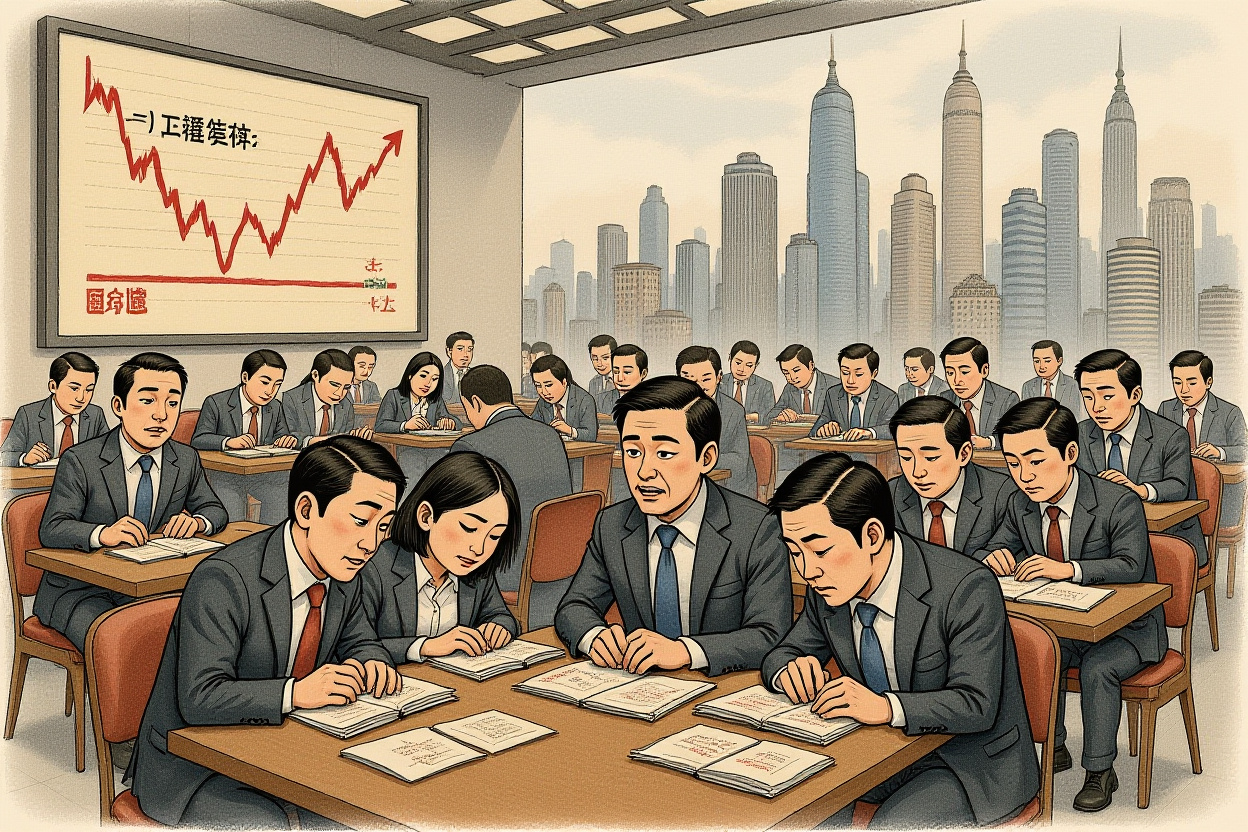
The Chinese equity markets experienced a sharp downturn this week, with semiconductor stocks leading the decline. This semiconductor plunge has sent ripples across global portfolios, highlighting the sector’s vulnerability to external and internal pressures. Investors are scrambling to reassess their positions in key players like 中芯国际 (SMIC) and 华为海思 (HiSilicon), as the drop erases billions in market capitalization. The swift correction underscores the need for a deeper understanding of the underlying factors driving this volatility.
Historical data shows that semiconductor cycles are inherently volatile, but the current semiconductor plunge is exacerbated by unique geopolitical and economic conditions. For instance, the 沪深300 (CSI 300) index saw a 5% drop in tech-heavy segments, with semiconductor components underperforming by over 15%. This trend mirrors global patterns but is intensified by China’s specific regulatory landscape. As 国家统计局 (National Bureau of Statistics) data indicates, industrial output growth slowed to 4.2% year-over-year, further dampening confidence.
Global Supply Chain Disruptions
Supply chain inefficiencies have been a critical driver of the semiconductor plunge. The COVID-19 pandemic exposed dependencies on international logistics, while recent trade tensions with the United States have restricted access to advanced manufacturing equipment. Companies like 长江存储 (YMTC) faced delays in acquiring essential components, leading to production shortfalls. According to 中国半导体行业协会 (China Semiconductor Industry Association), inventory levels rose by 22% in the past quarter, signaling oversupply concerns.
– Key factors include export controls on 荷兰阿斯麦 (ASML) lithography machines and raw material shortages from 台湾积体电路制造 (TSMC).
– Data from 世界半导体贸易统计组织 (World Semiconductor Trade Statistics) shows a 7% decline in global shipments, directly affecting Chinese exporters.
– Expert insight: Dr. Li Wei (李伟), a senior analyst at 中金公司 (CICC), notes, ‘The semiconductor plunge reflects structural weaknesses that require strategic stockpiling and diversification.’
Domestic Regulatory Pressures
Regulatory actions have amplified the semiconductor plunge, with 中国证券监督管理委员会 (China Securities Regulatory Commission) implementing stricter disclosure requirements for tech firms. Recent guidelines on data security and antitrust compliance have increased operational costs, particularly for startups. The 国务院 (State Council) ‘s emphasis on ‘common prosperity’ has led to heightened scrutiny of profit margins in high-tech sectors, affecting valuations.
– Case study: 寒武纪 (Cambricon) saw a 30% stock drop after regulatory reviews of its AI chip exports.
– Policy document [https://www.csrc.gov.cn] outlines new capital allocation rules for semiconductor R&D.
– Statistical evidence: Over 40% of listed semiconductor firms reported compliance-related expenses rising by more than 15% in Q2.
Economic Indicators and Market Response
The semiconductor plunge has triggered a broader reassessment of Chinese economic health. 人民币 (Renminbi) volatility and capital outflows have added pressure, with 中国人民银行 (People’s Bank of China) intervening to stabilize currency markets. Equity fund outflows from semiconductor ETFs reached $2 billion in the last month, according to 上海证券交易所 (Shanghai Stock Exchange) reports. This semiconductor plunge is not isolated; it correlates with slowing GDP growth and inflationary pressures in manufacturing inputs.
Investors are closely monitoring 采购经理人指数 (Purchasing Managers’ Index) data, which fell below 50 for the first time in six months, indicating contraction. The semiconductor sector’s underperformance has dragged down the 创业板 (ChiNext) index, which lost 8% in the same period. Strategic shifts toward 新能源汽车 (new energy vehicles) and 人工智能 (artificial intelligence) sectors are emerging as hedges against semiconductor volatility.
Sector-Wide Effects
The semiconductor plunge has cascaded into adjacent industries, including consumer electronics and automotive manufacturing. Companies like 小米 (Xiaomi) and 比亚迪 (BYD) reported component shortages, delaying product launches. The 中国汽车工业协会 (China Association of Automobile Manufacturers) highlighted a 12% reduction in vehicle production due to chip scarcity, exacerbating the economic impact.
– Example: 华为 (Huawei) ‘s smartphone division faced a 20% revenue decline, linked to semiconductor supply issues.
– Data point: Semiconductor import values dropped by 18% year-over-year, per 海关总署 (General Administration of Customs).
– Quote: CEO Zhang Feng (张峰) of 中兴通讯 (ZTE) stated, ‘This semiconductor plunge forces us to accelerate domestic sourcing strategies.’
Investor Sentiment Shifts
Sentiment analysis from Bloomberg and 路透社 (Reuters) shows a sharp decline in bullish positions on Chinese tech stocks. The semiconductor plunge has increased risk aversion, with institutional investors reallocating funds to defensive sectors like utilities and healthcare. A survey by 中国证券报 (China Securities Journal) revealed that 65% of fund managers reduced exposure to semiconductors in their portfolios.
– Trend: Hedge funds shorting semiconductor ETFs gained 15% in returns during the downturn.
– Recommendation: Diversify into 科创板 (Star Market) IPOs with strong government backing.
– Outbound link: [https://www.bloomberg.com] for real-time sentiment tracking.
Regulatory Environment and Policy Implications
China’s regulatory framework is evolving rapidly in response to the semiconductor plunge. 国家发展和改革委员会 (National Development and Reform Commission) has unveiled a $50 billion subsidy program for domestic chip production, aiming to reduce import reliance by 70% by 2030. The 工业和信息化部 (Ministry of Industry and Information Technology) is prioritizing investments in 集成电路 (integrated circuit) projects, with tax incentives for R&D.
This semiconductor plunge has accelerated policy adjustments, including relaxed listing requirements for tech firms on 北京证券交易所 (Beijing Stock Exchange). However, compliance costs remain high, and international investors must navigate 外商投资法 (Foreign Investment Law) revisions that affect joint ventures. The focus on technological self-sufficiency, or 自主可控 (zizhu kekong), is reshaping market dynamics.
Recent Policies from 中国证券监督管理委员会 (China Securities Regulatory Commission)
The CSRC introduced measures to curb speculative trading in semiconductors, including tighter margin requirements and enhanced disclosure norms. A circular issued in July mandates quarterly audits for firms with significant overseas revenue, directly impacting companies like 紫光展锐 (Unisoc). These steps aim to prevent future semiconductor plunge scenarios by promoting transparency.
– Policy detail: Minimum net asset ratio of 30% for semiconductor firms seeking IPOs.
– Impact: Over 20 companies delayed listing plans due to new regulations.
– Expert opinion: Professor Wang Lin (王琳) of 清华大学 (Tsinghua University) argues, ‘Regulatory clarity can mitigate the semiconductor plunge by restoring investor confidence.’
Future Outlook
The semiconductor plunge is expected to persist in the short term, with recovery hinging on global supply chain normalization and policy support. 中国科学院 (Chinese Academy of Sciences) projects a 10% growth in domestic chip output by 2025, driven by state-led initiatives. Investors should monitor 十四五规划 (14th Five-Year Plan) implementations, which allocate $150 billion to semiconductor advancements.
– Forecast: Semiconductor stocks may rebound by Q4 if inventory levels normalize.
– Risk factor: Escalating U.S.-China trade tensions could prolong the semiconductor plunge.
– Strategic insight: Focus on firms with strong 产学研 (industry-university-research) collaborations for resilience.
Investment Strategies Amid Volatility
Navigating the semiconductor plunge requires a balanced approach, blending short-term tactical moves with long-term strategic positioning. Diversification across 上证指数 (SSE Composite Index) and 深证成指 (SZSE Component Index) can mitigate risks, while selective investments in innovation hubs like 张江高科技园区 (Zhangjiang Hi-Tech Park) offer growth potential. The semiconductor plunge presents buying opportunities in undervalued assets, but due diligence is critical.
Exchange-traded funds (ETFs) tracking the 中证全指半导体指数 (CSI All Share Semiconductors Index) have seen increased volatility, with average daily swings of 5%. Investors can use dollar-cost averaging to capitalize on price dips, focusing on companies with robust patent portfolios and government contracts. The semiconductor plunge underscores the importance of hedging with commodities or international equities.
Risk Management Approaches
Effective risk management during the semiconductor plunge involves monitoring 流动性 (liquidity) metrics and credit spreads. Tools like 价值-at-risk (VaR) models can help quantify exposure, while stop-loss orders protect against steep declines. Collaboration with 中国银行业协会 (China Banking Association) -accredited advisors ensures compliance with evolving regulations.
– Step-by-step guide: 1. Assess portfolio concentration in semiconductors. 2. Rebalance quarterly based on 宏观经济 (macroeconomic) indicators. 3. Incorporate environmental, social, and governance (ESG) criteria to identify resilient firms.
– Example: A fund reducing semiconductor allocation from 25% to 15% avoided significant losses during the recent semiconductor plunge.
– Data: Historical analysis shows that sectors recovering fastest post-plunge have strong export ties to 一带一路 (Belt and Road) markets.
Opportunities in Undervalued Stocks
The semiconductor plunge has created entry points in companies with solid fundamentals but depressed valuations. Firms like 华大基因 (BGI) and 汇顶科技 (Goodix) are trading at price-to-earnings ratios below industry averages, offering potential for appreciation. 科创板 (Star Market) listings in semiconductor equipment and materials are particularly attractive, with 政府补贴 (government subsidies) boosting profitability.
– Checklist: Evaluate R&D spending, patent filings, and management stability before investing.
– Case: 晶晨半导体 (Amlogic) stock rose 12% after announcing a breakthrough in 5nm chip design, despite the broader semiconductor plunge.
– Recommendation: Leverage 沪港通 (Shanghai-Hong Kong Stock Connect) and 深港通 (Shenzhen-Hong Kong Stock Connect) for diversified access.
Synthesizing Key Insights and Forward Guidance
The semiconductor plunge serves as a stark reminder of the interconnectedness of global markets and the sensitivity of tech sectors to regulatory and supply chain shocks. Key lessons include the need for robust due diligence, adaptive investment strategies, and continuous monitoring of policy developments. While short-term pain is evident, China’s commitment to semiconductor independence suggests a resilient recovery path.
Investors should prioritize firms aligned with national strategic goals, such as those involved in 中国制造2025 (Made in China 2025) initiatives. Proactive engagement with 行业协会 (industry associations) and regulatory bodies can provide early warnings of shifts. The semiconductor plunge, while challenging, opens doors to innovation and consolidation that will define the next decade of growth.
Call to action: Recalibrate your portfolio by conducting a thorough sector analysis and consulting with experts at 中国投资协会 (China Investment Association). Stay informed through reliable sources like 财新网 (Caixin) and 第一财经 (Yicai) to navigate future volatility effectively. Embrace the semiconductor plunge as a catalyst for strategic refinement and long-term value creation.