



Executive Summary
This article delves into the mounting challenges facing Sam’s Club in China, where once-loyal middle-class members are reevaluating their commitment due to emerging trust issues. Key takeaways include:
– Sam’s Club is experiencing significant trust erosion among Chinese consumers, driven by price inconsistencies and product quality failures that contradict its premium membership promise.
– Strategic changes under new leadership, including accelerated expansion and supply chain standardization, are raising concerns about the dilution of Sam’s core value proposition.
– Financial performance remains strong with record growth, but sustainability questions loom if member satisfaction continues to decline.
– The situation highlights broader implications for membership-based retail models in China’s competitive consumer market.
– Investors and market watchers should monitor member retention metrics and quality control measures as indicators of future stability.
The Unraveling of Consumer Confidence
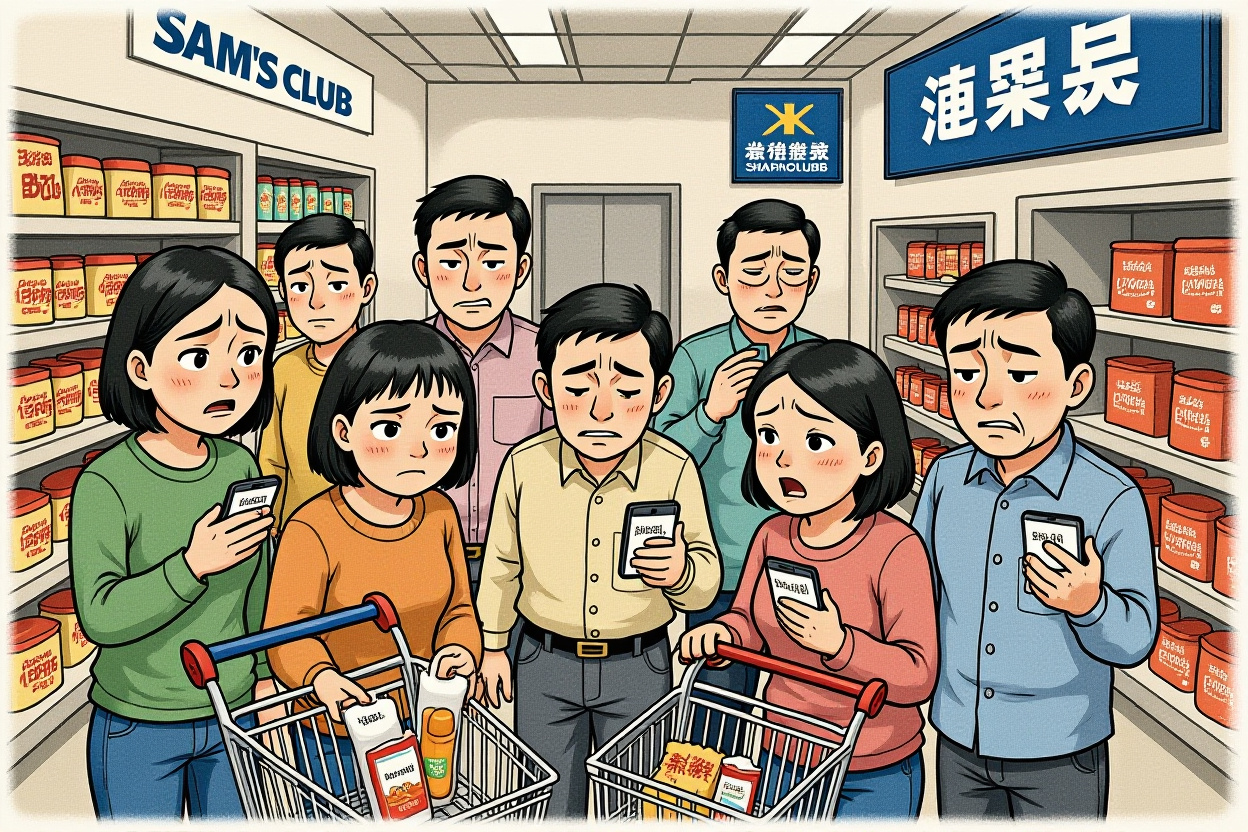
Sam’s Club, the membership-only warehouse retailer owned by Walmart Inc., finds itself at a critical juncture in China. Once celebrated as a bastion of quality and value for the country’s burgeoning middle class, the chain now faces a simmering crisis of confidence. Recent months have seen a surge in consumer complaints and social media backlash over pricing strategies and product quality, leading to what industry observers term a trust erosion that could undermine its long-term viability.
The situation reached a tipping point in July 2025 when a social media topic titled ‘Sam’s Delists Popular Items for New Products’ garnered 150 million views, catapulting the retailer into the center of public scrutiny. The discussion intensified when consumers discovered identical snacks priced at 99.9 yuan at Sam’s Club locations but available for just 39.9 yuan at discount retailers like Hao Te Mai. This pricing disparity has left many members questioning the fundamental value of their annual membership fees, which typically range from 260 to 680 yuan depending on membership tier.
Social Media Backlash and Viral Complaints
Chinese social platforms have become ground zero for consumer discontent. On Weibo, Douyin, and Xiaohongshu, thousands of posts detail frustrating shopping experiences that signal a broader trust erosion at Sam’s Club. One user lamented purchasing a snack bundle for 99 yuan only to find the identical products priced at 39 yuan elsewhere, captioned with ‘Sam’s, you owe me money!’ in a post that received over 10,000 engagements.
Another common complaint involves sudden price drops without adequate notification. A member reported buying a product on September 14 only to see its price halved just one week later, with no special promotion alert through Sam’s app. The member described the experience as ‘disgusting’ in their post, reflecting the emotional toll of such pricing practices. Perhaps most telling are the numerous declarations from long-time members vowing not to renew their membership, with one stating bluntly: ‘I’m too angry to renew my card.’
Case Studies of Price and Quality Failures
The trust erosion extends beyond pricing to fundamental product quality concerns. Multiple documented incidents reveal troubling patterns:
– A consumer purchased nuts that arrived moldy and insect-infested, sharing photographic evidence that quickly went viral
– A mother reported severe diaper rash after using Sam’s Black Gold帮 diapers on her baby, noting a pungent chemical smell in the second package opened
– In January 2025, a consumer in Fuzhou found a white foreign object in a Black Forest cake that nearly damaged her son’s tooth
– By July 2025, multiple users reported that organic soybeans maintained the same price but were downgraded from Grade 1 to Grade 3 quality
– In August 2025, consumers in Zhejiang discovered packaging discrepancies in ‘Crab Four Treasures Noodles’ where outer packaging claimed ‘handmade alkaline noodles’ while inner packets labeled them ‘non-heritage handmade sun-dried noodles’ with no alkaline listed in ingredients
These incidents, while seemingly isolated, collectively paint a picture of deteriorating standards that directly contradict Sam’s historical positioning as a curator of quality goods.
Strategic Overhaul Under New Leadership
The current trust erosion coincides with significant leadership and strategic changes at Sam’s Club China. In January 2025, former China president Wen Andehui (文安德) stepped down after nearly a decade at the helm, with Jane Ewing assuming the role of acting president overseeing strategic planning and daily operations. Ewing quickly implemented a three-pronged approach focused on rapid scale expansion, data-driven operations, and cost reduction through efficiency improvements.
Ewing’s restructuring has particularly impacted supply chain and quality control systems. She championed a unified supply chain management approach, eliminating regional differentiation that previously allowed for localized product assortments. For instance, the specialized product development team for Eastern China was dissolved, and all quality control processes were aligned with Walmart’s global standards. The stated goal was reducing redundancy and improving coordination efficiency across the organization.
Jane Ewing’s Efficiency-Driven Reforms
Under Ewing’s leadership, product development cycles have dramatically compressed. Where new items previously took 12-18 months from conception to store shelves, the timeline has been reduced to just 3-6 months. Regional bakery items exemplify this acceleration, with some products moving from development to market in as little as 90 days. While this efficiency drive supports aggressive expansion targets, it raises questions about whether sufficient quality assurance can be maintained at this pace.
The strategic shift appears closely tied to Sam’s unprecedented growth phase in China. The retailer has become Walmart’s primary growth engine in the market, accounting for nearly two-thirds of the company’s China performance. This success has emboldened leadership to pursue even more aggressive expansion, but the trust erosion emerging suggests potential trade-offs between growth and quality preservation.
Accelerated Expansion and Its Pitfalls
Sam’s Club China is in the midst of its most ambitious physical expansion since entering the market. The company plans to open 8 new stores in 2025 alone—a record annual number—bringing its total footprint to 56 locations nationwide by July 2025. This expansion strategy is supported by impressive financial results, including:
– 2024 full-year revenue exceeding 100 billion yuan in China
– Q1 2025 (ending April 30) net sales of $6.7 billion (approximately 48.2 billion yuan), representing 22.5% year-over-year growth
– Q2 2025 (ending July 31) net sales of $5.8 billion (approximately 41.6 billion yuan), achieving 30.1% year-over-year growth
However, this breakneck expansion may be contributing to the trust erosion as operational consistency becomes more challenging to maintain across a rapidly growing network. The fundamental question remains whether Sam’s can scale while preserving the quality standards that built its reputation.
The Core Value Proposition of Membership Retail
At its heart, the warehouse membership model depends on an implicit contract between retailer and consumer: members pay upfront fees in exchange for curated quality and competitive pricing that justifies the membership cost. Sam’s Club built its Chinese success on this proposition, with former leaders frequently emphasizing member-centric values. Former China president Wen Andehui (文安德) consistently stated that ‘members come first, not sales,’ while founder Sam Walton’s philosophy centered on ‘quality over sales.’
This trust-based business model means that membership fees essentially function as prepaid ‘trust deposits.’ Consumers willingly pay these fees to delegate their product selection and quality assurance to the retailer, creating what should be a mutually beneficial relationship. The current trust erosion threatens this fundamental exchange, as members increasingly question whether Sam’s is upholding its end of the bargain.
Historical Success Built on Trust
For nearly three decades in China, Sam’s Club cultivated its reputation through meticulous product curation and consistent quality. The retailer became known for exclusive offerings like discounted Maotai liquor and premium imported goods that weren’t readily available elsewhere. Members developed rituals around their Sam’s shopping trips, and possession of a membership card became a subtle status symbol among China’s urban middle class.
Zhang Qing (张青), Sam’s Club China Chief Procurement Officer, articulated this philosophy clearly in a media interview: ‘No matter how high the sales or gross margin, if a product lacks differentiation and member value, it must be delisted from Sam’s.’ This statement encapsulates the selective approach that built consumer trust, making recent product issues and pricing discrepancies particularly jarring to long-time members.
Current Challenges to the ‘Yan Xuan’ Model
The traditional ‘yan xuan’ (严选) or ‘strict selection’ model that defined Sam’s approach appears to be under pressure. As the retailer expands its assortment to appeal to broader demographics and accelerates product introductions, there are concerns that curation standards are being compromised for variety. When ‘strict selection’ evolves into attempting to offer something for everyone, the core membership value proposition weakens.
This trust erosion manifests in concrete business metrics. While Sam’s does not publicly disclose membership renewal rates, industry analysts report increasing churn concerns. Consumer surveys indicate growing price sensitivity among members, with more cross-shopping at competitors like Costco, Hema (盒马), and local discount chains. The situation represents a critical test of whether membership retail can maintain its premium positioning amid China’s increasingly competitive and value-conscious consumer landscape.
Financial Performance and Market Dynamics
Despite the emerging trust issues, Sam’s Club continues to deliver impressive financial results in China. The operation has become indispensable to Walmart’s global strategy, with the China division contributing significantly to the parent company’s international growth narrative. However, a deeper analysis suggests potential vulnerabilities behind the strong top-line numbers.
Sam’s Club China achieved a milestone in 2024 by surpassing 100 billion yuan in annual revenue, accounting for approximately 65% of Walmart’s total China business. The growth momentum continued into 2025 with double-digit percentage increases in consecutive quarters. This performance has justified the aggressive expansion strategy, but it may be masking underlying member satisfaction issues that could impact future performance.
Impressive Growth Metrics
The financial data reveals a business in rapid expansion mode:
– 2024 China revenue: >100 billion yuan
– Q1 2025 China net sales: $6.7 billion (≈48.2 billion yuan), +22.5% YoY
– Q2 2025 China net sales: $5.8 billion (≈41.6 billion yuan), +30.1% YoY
– Store count: 56 locations as of July 2025, with 8 new stores planned for 2025
– Membership base: Estimated 5-6 million paying members in China
These figures position Sam’s as a standout performer in China’s otherwise challenging brick-and-mortar retail environment. The company has successfully capitalized on rising disposable incomes and quality-conscious consumption trends among Chinese urbanites. However, the current trust erosion represents a potential threat to this growth trajectory if not addressed promptly.
Risks in Sustaining Momentum
The fundamental risk for Sam’s Club lies in the disconnect between financial performance and member satisfaction. While revenue and store numbers continue climbing, consumer sentiment appears to be deteriorating. This creates a precarious situation where current success might be borrowing from future stability. Several specific risks merit attention:
– Membership renewal rates may decline as trust erosion continues, directly impacting the recurring revenue stream that underpins the business model
– Increased competition from both international players like Costco and domestic retailers developing their own membership programs
– Potential regulatory scrutiny if consumer complaints escalate, particularly around pricing practices or product quality claims
– Reputational damage that could affect Sam’s ability to attract new members despite physical expansion
Investors should monitor these factors closely, as they could signal inflection points in Sam’s China growth story. The company’s response to the current challenges will be telling for its long-term prospects in this critical market.
The Path Forward for Sam’s Club
Addressing the trust erosion at Sam’s Club China requires a balanced approach that acknowledges both the need for growth and the imperative of preserving member trust. The retailer stands at a crossroads where strategic decisions made today will determine its position in China’s retail landscape for years to come. Several pathways could help rebuild consumer confidence while maintaining business momentum.
First, Sam’s must reevaluate its pace of expansion against operational capabilities. While rapid store growth delivers immediate revenue boosts, it strains quality control systems and dilutes the curated experience members expect. A moderated expansion tempo coupled with intensified focus on existing location excellence might better serve long-term interests. Second, the company should reconsider its product development acceleration, ensuring that shortened timelines don’t compromise the rigorous testing and selection processes that built its reputation.
Recommendations for Regaining Trust
Specific actions Sam’s Club could implement to address the trust erosion include:
– Enhanced price protection policies that automatically refund members when items they purchased recently receive significant price reductions
– Transparent communication about product changes, such as quality grade adjustments, before they appear on shelves
– Reinvestment in regional buying teams to maintain product differentiation that justifies membership fees
– Strengthened quality control checks, particularly for private label products that represent Sam’s exclusive offerings
– Improved member service protocols, including more flexible satisfaction guarantees and responsive complaint resolution
These measures would signal renewed commitment to the member-first philosophy that originally distinguished Sam’s in the Chinese market. Additionally, leadership communication should explicitly acknowledge current challenges and outline concrete steps being taken to address them.
Lessons for the Broader Retail Sector
The situation at Sam’s Club offers valuable insights for all consumer-facing businesses operating in China:
– Trust remains the most valuable currency in membership-based models, easily eroded and difficult to rebuild
– Chinese consumers are increasingly sophisticated and vocal about perceived value discrepancies, with social media amplifying individual complaints into broader narratives
– Operational efficiencies must be balanced against brand promise preservation, particularly during rapid expansion phases
– Premium positioning requires consistent delivery across all touchpoints, with failures in any area potentially undermining the entire value proposition
These lessons extend beyond warehouse clubs to luxury goods, hospitality, and any business model built on premium experiences and recurring customer relationships.
Synthesizing the Sam’s Club Situation
The trust erosion at Sam’s Club China represents more than temporary growing pains—it signals a fundamental challenge to the membership retail model in its current form. While financial performance remains strong, the discontent brewing among middle-class members suggests underlying vulnerabilities that could impact sustainability. The company’s response to this crisis will test whether a global retail giant can maintain its premium positioning while pursuing aggressive growth in the world’s most competitive consumer market.
Key takeaways for investors and industry observers include the critical importance of member satisfaction metrics alongside financial performance, the potential risks of over-prioritizing expansion speed, and the fragile nature of consumer trust in membership models. As Sam’s Club navigates this period, market watchers should monitor membership renewal rates, product quality indicators, and competitive responses for signals about the company’s trajectory. The resolution of this trust erosion will likely influence not only Sam’s future in China but also the evolution of membership retail across Asian markets.
For professionals engaged with Chinese consumer equities, the situation underscores the need to look beyond top-line growth to underlying customer loyalty indicators. Those tracking Walmart’s performance or considering investments in China’s retail sector should pay close attention to how Sam’s addresses its current challenges, as the outcomes will offer valuable insights into the sustainability of premium retail models in China’s next development phase. The coming quarters will reveal whether Sam’s Club can recalibrate its strategy to restore the member trust that made it successful, or whether the trust erosion will continue to undermine its value proposition.