



Executive Summary
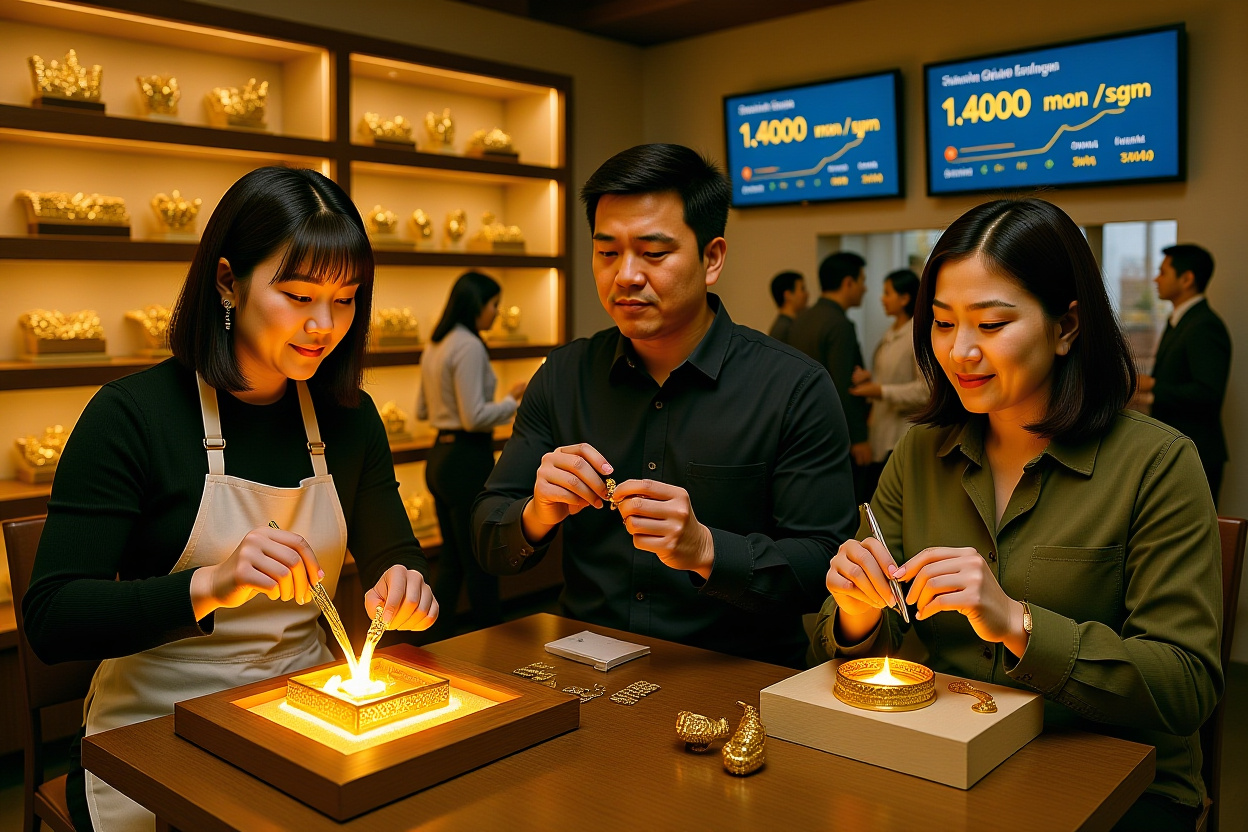
In a dramatic market shift, gold prices have soared to record levels, sparking a resurgence in gold crafting, particularly among young Chinese consumers. This trend, while offering cost savings and personalization, comes with significant hazards. Key takeaways include:
– Spot gold prices exceeded $4,555 per ounce in late March, driving domestic jewelry prices toward 1,400 yuan per gram for major brands like 老凤祥 (Lao Feng Xiang) and 周生生 (Chow Sang Sang).
– The practice of ‘打金’ (gold crafting) has gained viral traction on social media, with over 1.3 billion views, as consumers seek affordable alternatives to retail jewelry.
– Home gold crafting, or DIY smithing, is rising in popularity but poses serious safety risks and potential financial losses due to operational errors, as warned by experts like Wang Chao (王超) of the Ningbo Product Quality Inspection Institute.
– Young professionals are entering the goldsmithing trade, with wages ranging from 10,000 to 15,000 yuan monthly, injecting innovation into a traditional industry.
– Investors should monitor this consumer behavior shift for implications on gold demand, retail sectors, and broader economic indicators in China’s capital markets.
The Meteoric Rise of Gold Prices: A Global and Domestic Analysis
The recent surge in gold prices has captivated global markets, with spot gold breaching $4,555 per ounce on March 27, reflecting heightened volatility and investor sentiment. In China, this has translated directly into soaring retail costs, underscoring gold’s dual role as a luxury good and a safe-haven asset. For sophisticated market participants, understanding this price dynamics is crucial for portfolio adjustments and risk management.
Drivers Behind the Gold Rally
Multiple factors are fueling the gold price increase. Globally, geopolitical tensions, inflationary pressures, and shifts in monetary policy by central banks like the Federal Reserve have enhanced gold’s appeal. Domestically, the People’s Bank of China (中国人民银行) has maintained a steady stance on gold reserves, but consumer demand spikes are adding upward pressure. Data from the Shanghai Gold Exchange (上海黄金交易所) shows trading volumes rising by 15% year-over-year, indicating robust institutional interest.
– Economic indicators: Weakness in other asset classes, such as equities and bonds, has driven diversification into gold.
– Currency effects: A softer U.S. dollar has made gold more affordable for international buyers, including Chinese investors.
– Regulatory environment: China’s gold import policies and domestic trading regulations continue to influence supply chains, potentially tightening availability.
Impact on Chinese Jewelry and Retail Markets
The immediate effect is seen in retail jewelry prices, with major brands adjusting rates daily. For instance, 老庙黄金 (Lao Miao Gold) reported a price of 1,397 yuan per gram on March 28, up 32 yuan from the previous day. This spike is reshaping consumer behavior, as high costs push buyers toward alternative gold acquisition methods, including home gold crafting. Retail analysts note that brand premiums, which can add 20-30% to gold jewelry costs, are becoming less palatable, driving the DIY trend.
– Consumer response: Surveys indicate a 25% increase in inquiries for custom gold work compared to last year.
– Market segmentation: Luxury segments remain stable, but mid-market consumers are increasingly opting for crafting to save on costs.
The Renaissance of Gold Crafting: From Tradition to Modern Trend
Gold crafting, an ancient artisanal practice, is experiencing a remarkable revival in China, fueled by social media and economic pragmatism. This section delves into how this trend is evolving beyond nostalgia into a viable consumer and entrepreneurial movement.
The Social Media Phenomenon and Youth Engagement
Platforms like Douyin and Xiaohongshu have amplified the ‘打金’ trend, with topic views surpassing 1.3 billion. Young consumers, particularly millennials and Gen Z, are drawn to the customization and emotional value of crafting heirlooms. Videos showcase processes like melting, molding, and polishing, making gold work accessible and appealing. This home gold crafting wave is not just about savings; it represents a blend of craftsmanship, investment, and cultural expression, often termed ‘新国潮’ (new national trend).
– Case study: A Shanghai-based goldsmith reports that 70% of clients are under 35, seeking unique designs for rings and bracelets.
– Economic incentive: Crafting fees range from 10 to 40 yuan per gram for basic items, compared to retail markups of 100 yuan or more.
Professional Opportunities and Wage Structures
The trend is creating new career paths, with young goldsmiths entering the field. As noted by Zhou Baolin (周宝林), a shop manager in Shanghai’s Yuyuan area, wages average 10,000 yuan monthly, rising to 15,000 yuan for skilled artisans specializing in techniques like engraving. This influx of ’00后’ (post-2000s birth) workers is revitalizing the industry, combining traditional skills with modern aesthetics.
– Training and entry: No formal学历 (educational) barriers exist, allowing career changers and graduates to join rapidly.
– Innovation boost: Young teams enhance creativity, aligning products with contemporary fashion trends.
Home Gold Crafting: Navigating the DIY Boom and Its Perils
As gold prices climb, home gold crafting has emerged as a cost-effective alternative, but it is fraught with risks that experts urgently highlight. This section examines the practicality, safety concerns, and financial pitfalls associated with DIY approaches.
The Allure and Process of Home Gold Crafting
Home gold crafting involves consumers purchasing kits online—such as crucibles, torches, and molds—to transform old gold items into new jewelry. E-commerce platforms offer ‘打金套装’ (gold crafting sets) for 100-200 yuan, making it seem accessible. Tutorials abound, but success rates vary. The process typically includes steps like heating gold to over 1,000°C, using油泥王 (oil-based clay) for molds, and polishing, which requires precision.
– Common tools: Lists include long-nose pliers, brushes, files, and borax for fluxing.
– Perceived benefits: Savings on labor costs and the satisfaction of personal creation.
Safety Hazards and Financial Losses: Expert Warnings
Experts like Wang Chao (王超), Director of the Gold and Jewelry Testing Center at the Ningbo Product Quality Inspection Institute, caution that home gold crafting poses significant dangers. Gold melting involves extreme temperatures, risking burns or fires if not handled in ventilated spaces. Moreover, impurities in gold, such as mercury, can vaporize and cause poisoning. Beyond safety, financial losses are prevalent; operational errors lead to gold wastage exceeding 5-10% in many cases, due to issues like mold defects or焊接 (welding) failures.
– Risk assessment: Anecdotal evidence from Beijing shops shows a 40% increase in customers seeking repairs after failed DIY attempts.
– Expert quote: Wang Chao (王超) states, ‘Gold’s熔点 (melting point) is over 1,000°C, and家庭操作 (home operation) carries inherent risks. Proper ventilation and protective gear are essential, but even then, success isn’t guaranteed.’
– Financial implications: Losses from黄金损耗 (gold loss) can negate any cost savings, especially when professional remediation is needed.
Regulatory and Market Implications for Investors
This gold crafting trend intersects with broader financial markets, offering insights for institutional investors and policymakers. Understanding these dynamics can inform strategies in consumer sectors, commodities, and risk assessment.
Regulatory Perspectives and Industry Standards
Regulatory bodies like the Shanghai Gold Jewelry Industry Association (上海黄金饰品行业协会) emphasize the importance of using reputable craftsmen. Secretary-General Wang Huiqun (王惠群) advises consumers to verify workshop规模 (scale) and artisan skills before proceeding. While no specific regulations target home gold crafting, general product safety and consumer protection laws apply. Investors should watch for potential regulatory tightenings if accidents increase, which could impact related stocks in retail and manufacturing.
– Compliance notes: Gold trading in China is overseen by the中国人民银行 (People’s Bank of China), ensuring purity standards that DIYers might bypass.
– Market data: Links to association reports or exchange statistics can provide further context for due diligence.
Investment Takeaways and Economic Indicators
The rise in home gold crafting reflects shifting consumer sentiment amid inflation and economic uncertainty. For investors, this trend may signal reduced demand for branded jewelry, affecting companies like周大福 (Chow Tai Fook) or六福珠宝 (Luk Fook Holdings). Conversely, it could boost sectors selling crafting tools or raw gold. Monitoring gold price correlations with consumer behavior can offer alpha opportunities in equity markets.
– Broader implications: Gold’s role as a store of value is reinforced, but DIY trends may dilute retail margins.
– Actionable insight: Consider diversifying into gold ETFs or mining stocks while hedging against consumer sector volatility.
Synthesizing the Gold Rush: Key Insights and Forward Guidance
The convergence of record gold prices and the home gold crafting trend presents a complex landscape for market participants. Key takeaways include the need for caution in DIY endeavors, the economic viability of professional crafting, and the broader investment ramifications. As gold continues to serve as a barometer for global and domestic economic health, staying informed through reliable sources is paramount.
Looking ahead, experts predict that if gold prices stabilize, the crafting trend may persist but with heightened awareness of risks. Investors are advised to track consumer price indexes and gold reserve data from the People’s Bank of China (中国人民银行) for signals. For those engaged in home gold crafting, thorough research and professional consultation are recommended to mitigate losses.
Call to action: Subscribe to market updates and regulatory announcements to navigate this evolving sector effectively. Engage with industry reports from bodies like the Shanghai Gold Exchange (上海黄金交易所) for real-time insights, and consider professional advice before venturing into DIY gold projects or related investments.