



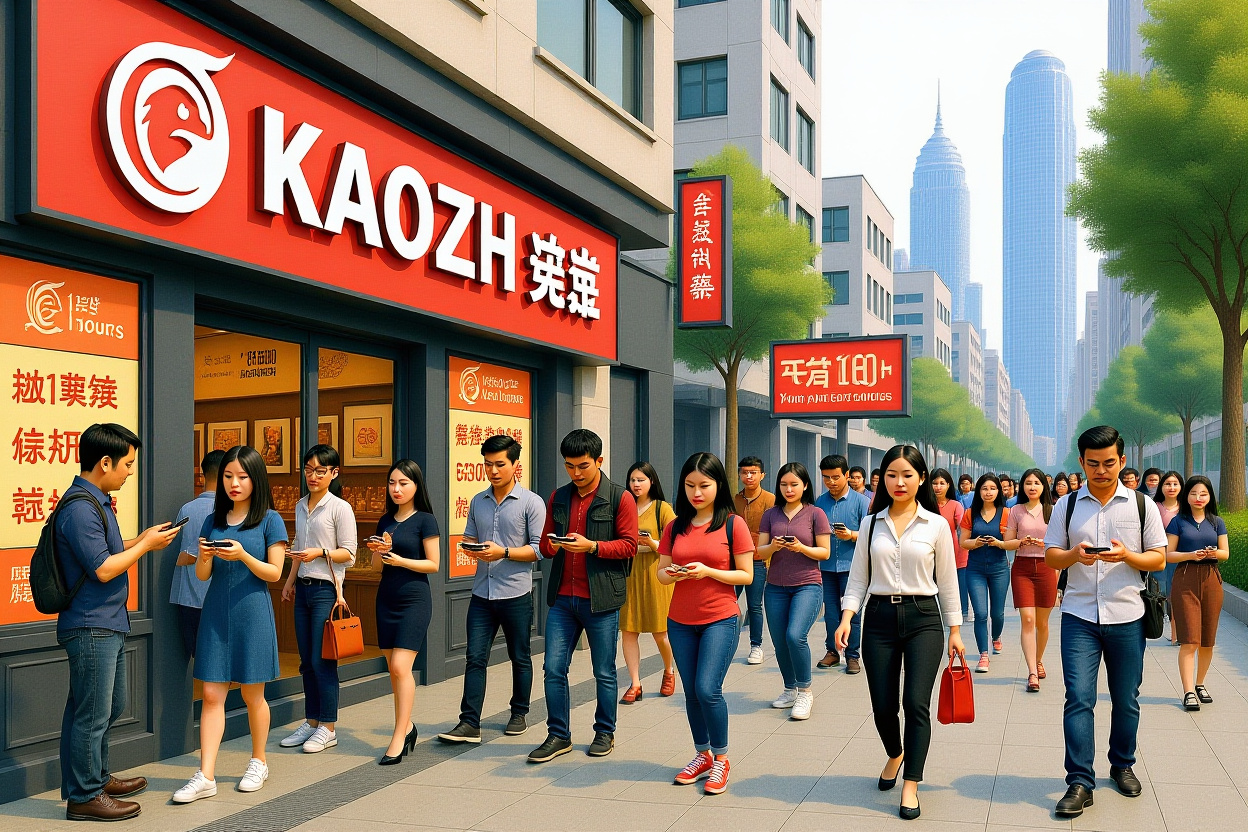
Executive Summary: Key Takeaways from the Kaozhi Phenomenon
The recent launch of Sichuan grilled fish brand Kaozhi (烤匠) in Shanghai has ignited a frenzy, with wait times soaring to 13 hours and over 6,300 tables queued. This event serves as a critical case study in China’s dynamic consumer market. For investors and market watchers, the implications are profound.
– Hyper-Inflated Launch Metrics: Kaozhi’s strategy relies on generating extraordinary queueing data for media buzz, but this hunger marketing strategy risks consumer backlash when experiences fall short.
– Secondary Market Exploitation: The scene has spawned a scalper (黄牛) economy, with queue numbers reportedly sold for profit, highlighting vulnerabilities in crowd management and brand integrity.
– Sustainability Question Mark: Historical precedents like Tai Er Sauerkraut Fish (太二酸菜鱼) show that internet-famous (网红)餐饮 brands often face a steep decline after the initial hype, struggling with product homogenization and operational scale.
– Investment Caution: For equity analysts, the spectacle underscores the need to differentiate between transient social media virality and durable brand equity built on repeat customers and unit economics.
– Regulatory and Ethical Considerations: Extreme queueing phenomena may attract regulatory scrutiny over consumer rights and fair market practices, potentially impacting brand valuations.
The Shanghai Spectacle: Decoding the 13-Hour Queue
Even the most patient diners would balk at the scene outside Kaozhi’s first Shanghai outlet. Reports indicate peak wait times reached 13 hours, with over 6,300 tables registered on the second day. By midnight, more than 4,000 parties were still waiting, some until 5 a.m. This isn’t merely a lunch rush; it’s a cultural and commercial event that encapsulates modern Chinese consumption patterns. For financial professionals, such data points are not just anecdotes—they are leading indicators of marketing spend efficacy and potential market saturation.
This hunger marketing strategy, where artificial scarcity and visible demand are cultivated, has become a textbook play for brands entering new metropolitan markets. However, the scale here is unprecedented, raising immediate questions about its authenticity and long-term cost. The queue itself has become the primary product, a performance that risks overshadowing the actual餐饮 offering.
Anatomy of a Queue: Data Points and Derived Hype
The metrics are staggering and meticulously documented. Kaozhi’s promotional materials consistently highlight queue statistics: 1,183 tables taken in a day at its second Beijing store, with an average wait of 6.5 hours. The Shanghai launch shattered these records. This data-driven narrative fuels media cycles and social sharing, creating a self-reinforcing loop of visibility. From an investment standpoint, these numbers can temporarily buoy brand perception and, by extension, valuation discussions for any parent company or future IPO candidate. Yet, they are inherently volatile metrics.
Parallels can be drawn to the “首店经济” (first-store economy) phenomenon, where cities compete to host exclusive brand debuts, driving tourism and local spending. Kaozhi is leveraging this perfectly, but the strategy is a double-edged sword. The immense foot traffic strains mall operations, local infrastructure, and, crucially, consumer patience.
The Scalper Economy: When Queues Become Commodities
Where there is overwhelming demand and limited supply, a secondary market emerges. Reports confirm the presence of queue scalpers (黄牛), with queue numbers allegedly being sold for a profit. In Beijing, a number was reportedly resold for 300 yuan. Additionally, the use of跑腿员 (delivery runners) to secure spots for a fee has been documented. This indicates a systemic vulnerability in Kaozhi’s operational model.
For a brand, the existence of a scalper market can initially seem like a badge of extreme popularity. However, it corrupts the fair access principle, alienates genuine customers, and introduces reputational risk. When consumers perceive that access is gamified or monetized by third parties, brand trust erodes. Kaozhi has stated it is taking measures to combat this, but the persistence of these practices suggests operational gaps that could deter the average consumer and attract regulatory attention.
The Marketing Engine: Fueling the Hunger Marketing Strategy
Kaozhi’s ascent is no accident. It is the product of a sophisticated, multi-channel marketing campaign designed to generate maximum pre-launch buzz. The brand’s founder, Cold Yanjun (冷艳君), hails from the television advertising industry, and this pedigree is evident in every staged rollout. The core tactic is a classic hunger marketing strategy: carefully controlling supply and stoking desire to create a perception of must-have exclusivity.
Pre-Launch Hype and Celebrity Endorsement
Prior to its Shanghai debut, Kaozhi engaged in intensive social media预热 (pre-heating), leveraging platforms like Xiaohongshu (小红书) and Weibo (微博). The brand enlisted celebrity endorsements, such as singer Zhang Yanqi (张颜齐) as a “Sichuan-Chongqing Tasting Ambassador” for its Beijing launch. The slogan “不吃火锅,就吃烤匠” (If not hotpot, then Kaozhi) was aggressively propagated. This creates a powerful sense of eventification, transforming a meal into a participatory social moment.
For marketers and investors, this demonstrates deep expertise in activating China’s digital native consumers. The cost of such campaigns is significant, but the potential ROI in terms of user-generated content and free media coverage is immense. However, the financial sustainability of constantly funding such high-octane launches for each new market is a serious question for the brand’s balance sheet.
The Psychology of FOMO and Social Proof
The endless queue is not just a logistical outcome; it is a central pillar of the marketing message. It serves as the ultimate form of social proof. When consumers see thousands willing to wait for hours, it triggers a Fear Of Missing Out (FOMO) that compels others to join. As noted by a Beijing mall保安 (security guard), many customers weren’t initially there for Kaozhi but were drawn in by the crowd.
This psychological lever is powerful but precarious. It sets an extraordinarily high expectation for the product experience. When the actual meal—a grilled fish—is consumed after a half-day wait, the marginal utility must be astronomically high to justify the investment. Early consumer feedback on social media suggests this is often not the case, with comments ranging from “the fish is just okay” to “not worth a 7.5-hour wait.” This dissonance is the primary risk of the hunger marketing strategy.
Consumer Backlash and the Reality Check
The initial wave of curiosity is inevitably followed by a wave of critique. As the novelty wears off, consumers begin to evaluate the brand on its fundamental merits: taste, service, value, and convenience. For Kaozhi, signs of this transition are already visible, posing a direct threat to the longevity of its hunger marketing strategy.
Mismatched Expectations and Service Strain
Social media platforms are now dotted with reviews stating the experience did not live up to the hype. Consumers cite issues like the signature烤鱼 (grilled fish) being “too salty and oily,” and overall flavor being “average.” The immense pressure on the kitchen and service staff to handle record volumes can lead to inconsistent quality and slow service, further damaging the brand’s reputation at the most critical juncture.
Furthermore, the brand’s “黑金匠” (Black Gold Member) privilege system, which supposedly allows for queue skipping, has been投诉 (complained about) on consumer platforms for having loopholes and poor verification, unfairly disadvantaging regular customers. Operational cracks are beginning to show under the weight of its own manufactured demand.
The Data from Consumer Complaint Platforms
On third-party complaint platforms, grievances are accumulating. Issues range from the chaotic queue management system to specific complaints about food quality. One consumer detailed how the代排队 (proxy queueing) verification was “rudimentary and virtually nonexistent.” These are red flags for any investor conducting due diligence. They indicate potential weaknesses in operational control and customer relationship management—key pillars for any餐饮 business aiming for scale and repeat business.
This phase is what industry observers term “流量反噬” (traffic backlash), where the very流量 (traffic) that propelled the brand upward begins to corrode it. The hunger marketing strategy, if not perfectly executed with flawless operational follow-through, becomes a liability.
Comparative Landscape: Lessons from China’s网红餐饮 Cycle
Kaozhi’s story is not unique. It follows a well-trodden path in China’s fast-moving consumer goods sector. To understand its potential trajectory, we must look at predecessors who played the same hunger marketing strategy game.
Case Study: The Trajectory of Tai Er Sauerkraut Fish (太二酸菜鱼)
Tai Er, a brand under the Jiu Mao Jiu (九毛九) restaurant group, once commanded similar queues with its focused menu, comic-book aesthetic, and quirky house rules. It was the darling of investors and consumers alike. However, its热度 (heat) has significantly cooled. Facing market saturation and waning novelty, Tai Er has been forced to expand its menu beyond酸菜鱼 (sauerkraut fish). Notably, in 2025, its total net store count decreased by 135, a clear signal of contraction after explosive growth.
This pattern reveals a critical insight: single-product differentiation and gimmicky experiences have a limited lifespan. Consumers eventually seek variety, consistency, and value. The initial queueing phenomenon does not guarantee a loyal customer base. For publicly traded parents like Jiu Mao Jiu (HKEX: 9922), such cycles directly impact same-store sales growth and investor sentiment.
The Typical Lifecycle: Hype, Backlash, and Evolution
Most网红餐饮 brands navigate a three-phase lifecycle:
– Phase 1: Viral Explosion: Driven by precision marketing, novelty, and scarcity. Queue data spikes, media coverage is frenzied, and brand valuation soars on optimism.
– Phase 2: Traffic Backlash: Operational strains emerge, consumer reviews become mixed or negative, and the novelty effect diminishes. Scalper activity may peak and then collapse as demand normalizes.
– Phase 3: Brand沉淀 (Precipitation) or Decline: The decisive phase. Brands either successfully transition to relying on product quality, service, and genuine community to drive stable复购率 (repurchase rate), or they fade into obscurity, replaced by the next viral sensation.
Kaozhi is currently navigating the transition from Phase 1 to Phase 2. Its ability to manage this transition will determine whether it becomes a mainstay or a footnote.
Investment Implications: Separating Hype from Fundamental Value
For institutional investors and fund managers focused on Chinese consumer equities, phenomena like Kaozhi’s launch are rich with signals. The key is to analyze the underlying business fundamentals rather than the surface-level frenzy. The hunger marketing strategy is a tactic, not a business model.
Key Metrics for Assessing餐饮 Brand Health
When evaluating such companies, either pre-IPO or as part of a larger portfolio, professionals should prioritize:
– Customer Acquisition Cost (CAC) vs. Lifetime Value (LTV): How much is spent on marketing stunts per customer, and what is their projected long-term spend? A strategy reliant on expensive, one-off launches may have a poor CAC/LTV ratio.
– Same-Store Sales Growth (SSSG): Beyond the flagship launch, what is the sales trend in mature stores? This indicates true brand strength and menu appeal.
– Repurchase Rate and Customer Sentiment Analysis: Data from delivery apps, review platforms, and membership programs is crucial. A high initial footfall with low return visits is a warning sign.
– Supply Chain and Operational Efficiency: Can the kitchen and logistics handle peak demand without compromising cost or quality? Scalability is essential for profitability.
– Brand Equity Diversification: Is the brand recognized for a specific dish, or has it built a broader culinary reputation? Over-reliance on a single SKU is risky.
Market Sentiment and Valuation Multiples
In the short term, a successful hunger marketing strategy can lead to positive media sentiment, which may temporarily inflate the valuation multiples of associated companies. However, savvy investors look for evidence of sustainable competitive advantages: patented recipes, efficient franchise models, robust supply chains, and strong digital integration for loyalty programs. Without these, the valuation built on queue length is fragile.
The broader餐饮 sector in China is undergoing consolidation. The post-pandemic landscape favors operators with resilient models. Spectacular launches grab headlines, but steady, profitable growth wins in the equity markets.
Strategic Path Forward: From Viral Sensation to Enduring Brand
The ultimate test for Kaozhi and brands like it is to convert the一次性 (one-time)打卡 (check-in) crowd into a community of regulars. This requires a deliberate pivot from pure marketing to operational excellence and product innovation. The hunger marketing strategy must evolve into a brand-building strategy.
Recommendations for餐饮 Operators
To achieve longevity, brands should consider:
– Invest in Back-End Operations First: Before orchestrating another record-breaking queue, ensure the kitchen, service, and queue management systems are bulletproof and scalable.
– Diversify the Menu Thoughtfully: While keeping a core signature dish, introduce complementary items that enhance the dining experience and encourage repeat visits for different occasions.
– Leverage Data for Personalization: Use the data from the initial surge to build a membership ecosystem, offering personalized promotions and gathering feedback for continuous improvement.
– Transparent and Fair Access: Implement technology-driven queue systems with strict anti-scalper measures to build trust. Consider virtual queuing via apps to improve the customer experience.
Guidance for Investors and Analysts
When analyzing the next big餐饮 story, maintain a disciplined framework:
– Look Beyond Launch Metrics: Discount the hype of the first-week queue numbers. Focus on month-three and month-six same-store sales data.
– Conduct Deep Operational Due Diligence: Scrutinize supply chain agreements, chef retention rates, and health inspection records.
– Monitor Consumer Sentiment Trends: Use AI tools to analyze review sentiment across platforms over time, watching for negative trends in keywords like “wait,” “price,” and “taste.”
– Assess the Management Team’s Background: Founders with deep餐饮 operational experience often navigate cycles better than those purely from marketing backgrounds, like Kaozhi’s Cold Yanjun (冷艳君). Balance is key.
Synthesizing the Kaozhi Case: A Market Microcosm
The 13-hour queue at Kaozhi’s Shanghai store is more than a culinary curiosity; it is a vivid microcosm of modern Chinese consumer capitalism. It showcases the immense power of digital marketing, the fickleness of trend-driven consumption, and the harsh reality that consumers ultimately vote with their wallets. The hunger marketing strategy is a potent short-term tool, but it is not a foundation for enduring enterprise value.
For the brand, the path to “长红” (long-lasting popularity) lies in mastering the unglamorous fundamentals: consistent flavor, efficient service, and genuine customer care. For investors, the lesson is to cultivate skepticism towards spectacle and demand evidence of operational maturity and financial discipline. The market will inevitably see the next “queueing king,” but the smart money will be on the brands that quietly build loyalty, one satisfied customer at a time. Monitor Kaozhi’s same-store sales and customer feedback in the coming quarters—that data will tell the real story far more accurately than any queue length ever could.