



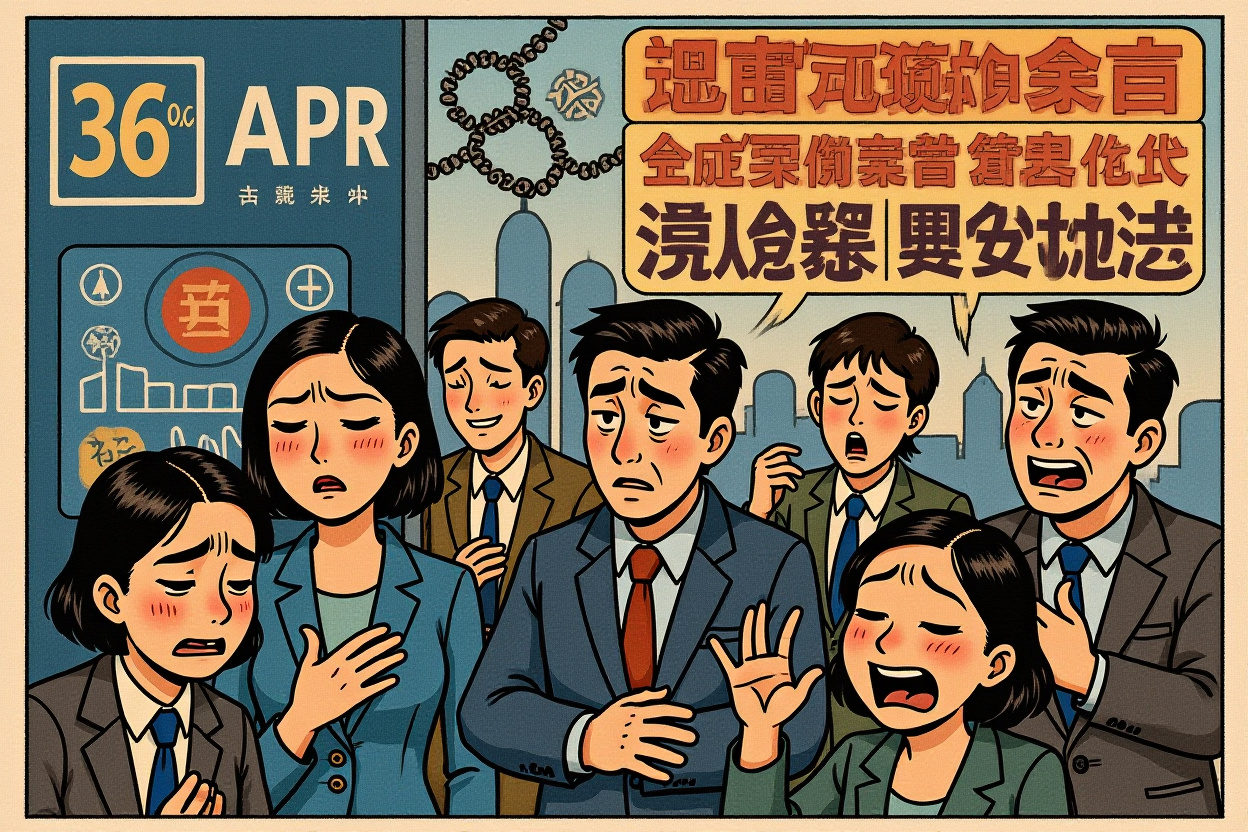
Executive Summary: Key Takeaways on China’s Mini-Loan Crisis
– Mini-loans from platforms like 分期乐 (Fenqile) offer low initial payments but ensnare borrowers with effective annual percentage rates (APRs) nearing 36%, far exceeding regulatory caps.
– Despite guidelines from 中国人民银行 (People’s Bank of China, PBOC) and 国家金融监管总局 (National Financial Regulatory Administration, NFRA) capping comprehensive financing costs at 24%, enforcement gaps allow hidden fees and prolonged repayment terms to inflate debt.
– Consumer complaints on platforms like 黑猫投诉 (Black Cat Complaints) exceed 160,000, highlighting issues with opaque pricing, aggressive debt collection, and privacy violations targeting students and young adults.
– The business model, historically tied to 校园贷 (campus lending), continues to pose systemic risks, affecting youth financial health and raising ethical concerns for investors in Chinese fintech.
– Regulatory scrutiny is intensifying, with potential impacts on market stability and investment strategies in consumer credit sectors.
The Allure and Trap of Mini-Loans in Modern China
As Lunar New Year approaches, many young Chinese face pressure to fund celebrations, travel, and gifts, turning to digital lenders for quick solutions. Platforms like 分期乐 (Fenqile) advertise enticing offers such as “low interest” and “easy installments,” but beneath this facade lies a predatory reality. The focus on mini-loans reveals a cycle of debt that begins with small, manageable amounts but escalates into financial quagmires. For instance, a recent viral case involved a borrower who took out 13,674 yuan only to owe 26,859 yuan after years of compounding interest and fees. This stark doubling of debt underscores how mini-loans are designed to maximize lender profits at the expense of vulnerable consumers.
Case Study: Ms. Chen’s Debt Spiral
Ms. Chen, a university student at the time, fell into the mini-loan trap through 分期乐 (Fenqile), borrowing five loans totaling 13,674 yuan between 2020 and 2021. These included amounts as small as 400 yuan stretched over 36 months, with APRs ranging from 32.08% to 35.90%. Promised “low monthly payments” of just 18.23 yuan, she was lured by the accessibility. However, by 2022, unable to repay, she defaulted, leading to over 1,000 days of delinquency. Aggressive debt collectors harassed her family and friends, exacerbating mental health issues like depression. This case exemplifies how mini-loans exploit psychological vulnerabilities and lack of financial literacy among youth.
How Fees and Interest Compound Debt
The mechanics of mini-loans involve extending repayment periods and layering additional costs. For example, 分期乐 (Fenqile) often touts annual rates as low as 8%, but in practice, borrowers face hidden charges like membership fees,担保费 (guarantee fees), and credit assessment fees. These can push the comprehensive financing cost to the legal ceiling of 36%. A report by 《中国消费者》 (China Consumer) documented cases where borrowers like Mr. Meng from Zhejiang paid over 1,700 yuan extra on a 10,300 yuan loan due to undisclosed fees. Similarly, Mr. Sha from Sichuan was charged 1,102.14 yuan in担保费 (guarantee fees) without clear disclosure. Such practices highlight the opacity that fuels debt accumulation, making mini-loans a risky choice for short-term liquidity.
Regulatory Crackdown on High-Cost Lending: Progress and Pitfalls
In response to rising consumer debt, Chinese authorities have stepped up oversight. On December 19, 2025, the 中国人民银行 (People’s Bank of China, PBOC) and 国家金融监管总局 (National Financial Regulatory Administration, NFRA) jointly issued the 《小额贷款公司综合融资成本管理工作指引》 (Guidelines for Comprehensive Financing Cost Management of Small Loan Companies). These rules prohibit new loans with comprehensive costs exceeding 24% APR and mandate that by end-2027, all new loans must align with four times the one-year 贷款市场报价利率 (Loan Prime Rate, LPR). From 2026, violations will trigger corrective actions, suspension of new lending, and credit reporting implications. This regulatory push aims to curb the excesses of mini-loans and protect borrowers from usurious practices.
Enforcement Challenges and Evasion Tactics
Despite these guidelines, enforcement remains inconsistent. Platforms like 分期乐 (Fenqile) adapt by restructuring fees or using complex contract terms to obscure true costs. For instance, some lenders label excess charges as “service fees” rather than interest, bypassing direct caps. Additionally, the decentralized nature of online lending across provinces complicates monitoring. As noted in 《经济参考报》 (Economic Reference News) investigations, data sharing with third parties can mask fee structures. This regulatory arbitrage means that while rules tighten, mini-loan providers continue to exploit loopholes, necessitating stronger oversight and consumer education to bridge the gap.Fenqile and the Mini-Loan Business Model: From Controversy to Fintech
分期乐 (Fenqile) is operated by 吉安市分期乐网络小额贷款有限公司 (Ji’an Fenqile Network Small Loan Co., Ltd.), backed by the Nasdaq-listed 乐信集团 (Lexin Fintech Holdings Ltd.). Founded in 2013 by 肖文杰 (Xiao Wenjie), Lexin’s CEO, the platform initially gained traction through 校园贷 (campus lending), targeting students with easy credit. After regulatory bans on student loans in 2016, Lexin rebranded as a fintech innovator, partnering with licensed institutions like 上海银行 (Bank of Shanghai). However, mini-loans remain core to its revenue, with transactions scaling to trillions of yuan, raising questions about sustainability and ethics.
Privacy and Data Sharing Concerns
Beyond interest rates, mini-loans involve significant data risks. 《经济参考报》 (Economic Reference News) found that using 分期乐 (Fenqile) requires consent to collect sensitive information, including ID photos, bank details, income data, and facial recognition. This data is shared with third parties like payment processors and credit enhancers, often without explicit user awareness. Such practices not only invade privacy but also enable aggressive collection tactics, as seen in complaints where lenders contacted employers and community leaders. This ecosystem transforms borrowers into data commodities, amplifying the dangers of mini-loans beyond mere financial loss.
Consumer Backlash and Legal Recourse: Voices from the Ground
Public outcry against mini-loans is growing, with platforms like 黑猫投诉 (Black Cat Complaints) serving as a hub for grievances. Searches for “分期乐” (Fenqile) yield over 160,000 complaints, many detailing unauthorized fees and harassment. For example, a user reported on February 12, 2025, that a 36% APR loan violated the 24% cap, urging regulators to investigate fund sources. Another on January 20, 2025, cited hidden credit assessment fees adding 1,450 yuan to costs. These accounts underscore systemic issues in transparency and fairness, driving demand for legal remedies.
Legal Perspectives on Borrower Rights
Lawyers interpreting cases like Ms. Chen’s emphasize that under Chinese law, loans exceeding 36% APR may be deemed invalid for interest portions above the cap. The 《最高人民法院关于审理民间借贷案件适用法律若干问题的规定》 (Supreme People’s Court Provisions on Private Lending) supports claims against predatory terms. However, proving hidden fees requires meticulous record-keeping and legal action, which many young borrowers lack resources for. Enhanced consumer protection laws and financial ombudsman services could empower victims, but current gaps leave many trapped in mini-loan cycles.
Broader Implications for Society and Financial Markets
The proliferation of mini-loans has far-reaching consequences. Psychologically, debt stress contributes to anxiety and depression among youth, as seen in Ms. Chen’s case. Socially, it erodes trust in financial institutions and exacerbates wealth inequality. Economically, high default rates could ripple through consumer credit markets, affecting lenders and investors. For international stakeholders, understanding these dynamics is crucial, as regulatory shifts may impact valuations in Chinese fintech stocks like 乐信集团 (Lexin). The mini-loan phenomenon thus intersects with broader trends in digital finance and risk management.
Investment Considerations in Chinese Fintech
Investors eyeing China’s consumer credit sector must weigh regulatory risks against growth potential. While mini-loans drive short-term profits, tightening rules could compress margins and increase compliance costs. Due diligence should focus on platforms’ adherence to caps, fee transparency, and collection practices. For example, monitoring reports from 《南方日报》 (Southern Daily) and 《中国消费者》 (China Consumer) can provide insights into consumer sentiment. Diversifying into firms with robust risk controls and ethical lending models may offer safer exposure to China’s evolving credit landscape.
Navigating the Mini-Loan Landscape: Practical Advice for Stakeholders
For borrowers, avoiding mini-loan traps starts with financial literacy. Always read contracts thoroughly, calculate total repayment costs, and seek alternatives like savings or family support. Use regulatory resources, such as the 国家金融监管总局 (NFRA) hotlines, to report violations. For investors, conduct thorough ESG (environmental, social, and governance) assessments on fintech firms, prioritizing those with clear compliance records. Supporting advocacy for stronger consumer protections can also mitigate systemic risks. As mini-loans continue to evolve, proactive measures are key to fostering a healthier credit ecosystem.In summary, mini-loans represent a double-edged sword in China’s financialization drive, offering access but at a high cost. Regulatory efforts are paving the way for reform, yet enforcement and transparency gaps persist. Stakeholders—from young borrowers to global investors—must stay informed and vigilant. By advocating for fair practices and leveraging legal recourses, we can curb predatory lending and promote sustainable financial inclusion. The future of China’s credit market hinges on balancing innovation with protection, ensuring that mini-loans serve rather than exploit the next generation.