



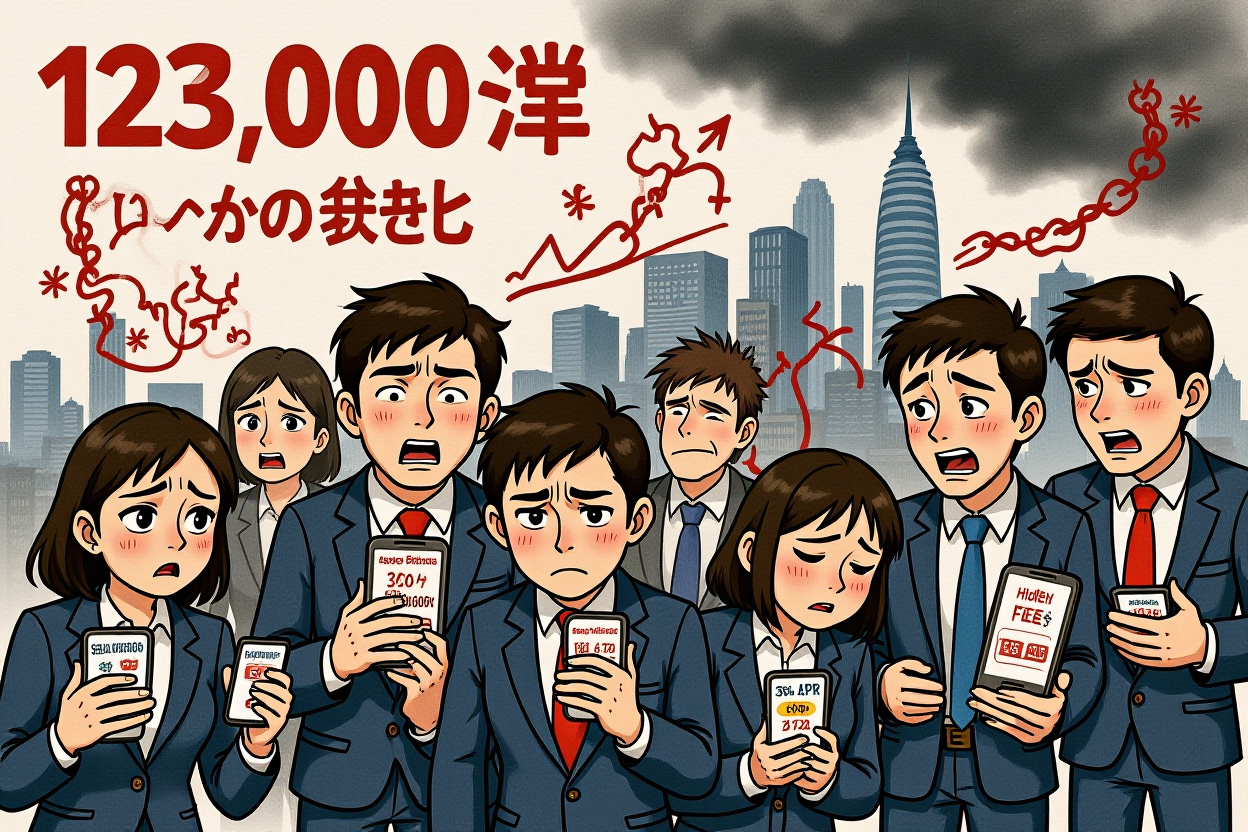
Executive Summary: Key Takeaways on China’s Mini-Loan Crisis
– Fenqile (分期乐), a prominent mini-loan platform, exemplifies predatory lending practices where borrowers can end up repaying nearly double their principal due to opaque fees and effective annual rates approaching 36%, far exceeding regulatory caps.- Despite guidelines from the People’s Bank of China (中国人民银行) and National Financial Regulatory Administration (国家金融监督管理总局) capping comprehensive financing costs at 24%, platforms exploit loopholes through extended tenures and hidden charges, raising compliance risks.- The platform’s roots in controversial campus lending persist, with ongoing complaints about targeting students and aggressive debt collection, highlighting ethical concerns in China’s fintech sector.- Consumer data privacy is severely compromised, with sensitive personal information shared across third parties without transparent consent, exacerbating borrower vulnerability.- For institutional investors, these practices underscore the need for rigorous due diligence on environmental, social, and governance (ESG) factors in Chinese consumer finance stocks, as regulatory scrutiny intensifies.
The Allure and Trap of Mini-Loans in China’s Consumer Finance Landscape
As Lunar New Year approaches, the cultural imperative for generous red envelopes and family trips places immense financial pressure on China’s youth. In this high-stakes environment, fintech platforms like Fenqile (分期乐) dangle enticing offers: instant mini-loans with seemingly manageable repayments. But behind the facade of convenience lies a harsh reality where easy credit morphs into debilitating debt. This phenomenon of mini-loans—small-amount, long-tenure credit products—is increasingly scrutinized for draining the financial health of young borrowers. The case of Ms. Chen, who borrowed 13,674 yuan only to face a 26,859 yuan repayment, starkly illustrates how these mini-loans operate at the edge of regulatory tolerance, leveraging psychological tactics and complex fee structures to maximize profitability while entrapping consumers.
Case Study: Ms. Chen’s Debt Spiral and the Psychology of Borrowing
Ms. Chen’s ordeal began during her university years, a period of life often marked by limited income and high consumption desires. Seduced by promotional language promising low monthly payments as minimal as 18.23 yuan, she took out five separate mini-loans on the Fenqile platform between 2020 and 2021, totaling 13,674 yuan. The loans, including one for a mere 400 yuan stretched over 36 months, carried stated annual percentage rates (APRs) ranging from 32.08% to 35.90%. By 2022, overwhelmed, she defaulted, entering a over 1000-day delinquency period. The psychological toll was compounded by aggressive debt collection tactics, where collectors contacted her family, friends, and even her spouse, leading to severe depression and social isolation. This case is not isolated; it epitomizes the mini-loan trap where extended tenures mask the true cost of borrowing, creating a snowball effect that doubles or triples the original debt.
Deconstructing the Mini-Loan Business Model: Fees, Tenure, and Effective APR
The core profitability of mini-loans hinges on stretching repayment periods and layering ancillary charges. On the surface, Fenqile’s platform advertises attractive terms like annual rates as low as 8% and daily interest as minimal as 2.2 yuan per 10,000 yuan borrowed. However, the effective comprehensive financing cost often soars near the 36% informal ceiling, driven by fees that are not transparently disclosed at the point of sale. Common add-ons include:- Membership fees: Charged for access to credit services or premium features.- Guarantee fees: Payments to third-party guarantors, often bundled without clear explanation.- Credit assessment fees: Costs for evaluating borrower risk, frequently inflated.- Service charges: Administrative costs applied per transaction or periodically.These fees are embedded within lengthy electronic agreements that most users do not thoroughly read. For instance, a borrower from Sichuan province reported an unexpected 1,102.14 yuan guarantee fee on a loan via Fenqile’s Lehua Borrowing (乐花借钱) product, highlighting the lack of upfront disclosure. The mini-loan model thus relies on cognitive biases—presenting small, periodic payments as affordable while obscuring the total repayment burden, which can be 200% of the principal over extended terms like 36 months.
Regulatory Framework: Navigating the Gap Between Rules and Reality
China’s regulatory bodies have moved to curb excessive lending costs, but enforcement remains a challenge. In December 2025, the People’s Bank of China (中国人民银行) and the National Financial Regulatory Administration (国家金融监督管理总局) jointly issued the Guidelines for the Management of Comprehensive Financing Costs of Small Loan Companies (小额贷款公司综合融资成本管理工作指引). These rules explicitly prohibit new loans with comprehensive costs exceeding 24% per annum and mandate that by the end of 2027, all new lending must stay within four times the one-year Loan Prime Rate (LPR). From 2026 onward, local financial authorities are required to correct violations, halt new loans, and incorporate dynamic credit reporting for breaches. Yet, the persistence of mini-loans with effective APRs near 36% indicates a significant compliance gap, where platforms innovate around regulations faster than they can be policed.
Enforcement Challenges and Platform Evasion Tactics
The regulatory crackdown faces headwinds from sophisticated financial engineering. Platforms like Fenqile often partner with licensed institutions, such as Shanghai Bank (上海银行), to distribute funds, creating a layered structure that obscures responsibility. When borrowers like those on the Black Cat Complaints platform (黑猫投诉) demand refunds for costs over 24%, they struggle to identify the actual funder, as platforms may withhold this information. This evasion tactic complicates regulatory oversight, requiring authorities to trace funds through settlement accounts—a process that is often slow and resource-intensive. Moreover, the guidelines primarily target new loans, leaving existing high-cost contracts in a gray area, allowing the debt snowball from past mini-loans to continue unchecked. The dynamic nature of fintech, with rapid product iterations and digital interfaces, further tests the capacity of traditional regulatory frameworks to keep pace.
Historical Context: From Campus Lending Scandal to Fintech Rebranding
Fenqile’s operator, Jiamgxi Fenqile Network Small Loan Co., Ltd. (吉安市分期乐网络小额贷款有限公司), is backed by Nasdaq-listed Lexin Fintech Holdings Ltd. (乐信集团). The group’s founder, Xiao Wenjie (肖文杰), launched the business in 2013 as a pioneer in installment shopping for electronics, rapidly scaling through aggressive marketing to university students. This early growth was fueled by the controversial campus loan (校园贷) market, which faced a regulatory clampdown in 2016 due to reports of predatory practices and student suicides. Lexin’s subsequent rebranding as a fintech giant and its 2017 U.S. IPO aimed to distance itself from that legacy. However, evidence suggests that mini-loans still permeate student circles. Searches for Fenqile combined with campus loan on Black Cat yield 922 complaints, including reports of on-campus promotion booths and loans issued to enrolled students, indicating that the platform has not fully shed its origins despite regulatory pressures.
Consumer Fallout: Complaints, Data Privacy, and Ethical Concerns
The human cost of mini-loans is vividly captured on consumer grievance platforms. On Black Cat Complaints, over 160,000 entries relate to Fenqile, detailing issues from opaque pricing to coercive collection. A sample from February 2025 shows a user protesting a 36% comprehensive APR and demanding a refund of excess fees, while another from January cites hidden credit assessment charges. These complaints align with investigations by Chinese media like Economic Information Daily (经济参考报), which found that Fenqile’s app requires consent to collect extensive personal data—including ID photos, bank details, income information, facial recognition data, and location—which is then shared with third parties like merchants, payment partners, and credit enhancers. This data pipeline not only facilitates targeted lending but also empowers aggressive collection tactics, where personal networks are exploited to pressure borrowers, blurring the lines between finance and privacy invasion.
Violations in Debt Collection and Psychological Impact
Beyond high costs, the collection methods employed for mini-loans often cross ethical boundaries. Over 20,000 complaints reference violent debt collection (暴力催收), involving harassment of borrowers’ relatives, colleagues, and even community leaders. Tactics include:- Phone bombing: Repeated calls to the borrower and their contacts.- Public shaming: Disclosing debt details to social circles.- Threats and intimidation: Using language that induces fear and anxiety.These practices, documented in reports by Southern Daily (南方日报), exacerbate mental health issues, with borrowers like Ms. Chen reporting depression and a desire to escape normal life. The psychological strain is compounded by the stigma associated with debt in Chinese society, making mini-loans not just a financial trap but a social and emotional burden. This aspect raises critical questions about the corporate social responsibility of fintech firms that profit from vulnerable demographics.
Data Privacy and the Hidden Costs of Consent
When users click agree on Fenqile’s terms, they inadvertently surrender control over their personal information. The privacy policy, as analyzed by Economic Information Daily, allows data sharing with a broad network of entities, from financial institutions to industry associations. This ecosystem enables micro-targeting for other financial products and increases the risk of data breaches. For young borrowers, often digitally native but less aware of legal nuances, this represents a hidden cost of mini-loans—their data becomes a commodity traded without transparent recourse. Regulatory frameworks like China’s Personal Information Protection Law (个人信息保护法) impose strict consent requirements, but enforcement in the fast-moving fintech sector remains inconsistent, allowing platforms to embed invasive clauses in dense agreements.
Market Implications for Investors and the Future of China’s Fintech Sector
For global institutional investors and fund managers, the mini-loan controversy signals both risk and opportunity in Chinese equities. Lexin’s stock performance, traded on Nasdaq under LX, is susceptible to regulatory shocks and reputational damage from ongoing complaints. The broader consumer finance sector, valued for its growth potential in a underbanked youth market, now faces heightened scrutiny from Chinese authorities keen on financial stability and social harmony. Investors must assess:- Regulatory tail risk: Potential for stricter caps on lending costs or operational bans.- ESG compliance: How platforms manage social factors like fair lending and data privacy.- Business model sustainability: Whether profitability reliant on high-interest mini-loans can endure amid tighter rules. As China prioritizes common prosperity, fintech firms that align with ethical standards may gain long-term advantage, while those exploiting gaps could see valuation pressures. The evolution of mini-loans will thus be a litmus test for the sector’s maturity.
Strategic Recommendations for Stakeholders
To navigate this landscape, stakeholders should consider proactive steps. For regulators, enhancing digital monitoring tools and cross-agency coordination can close evasion loopholes. For companies, transparent pricing, ethical collection practices, and robust data governance are essential to mitigate reputational risk. For investors, conducting deep due diligence on lending portfolios and compliance histories is crucial before allocating capital to Chinese fintech stocks. Consumers, meanwhile, should be educated on financial literacy, emphasizing the true cost of credit and the importance of reading terms carefully. Resources like the Black Cat Complaints platform offer a window into real-user experiences, while regulatory announcements from the People’s Bank of China (中国人民银行) provide guidance on permissible practices.
Synthesizing the Mini-Loan Dilemma: Paths Forward for China’s Financial Ecosystem
The mini-loan crisis underscores a pivotal moment in China’s fintech evolution. While these products fill a credit gap for young consumers, their predatory tendencies—exemplified by Fenqile’s practices—threaten financial health and social stability. Regulatory frameworks are advancing, but their effectiveness hinges on execution and the willingness of platforms to embrace ethical reform. For the global investment community, this scenario demands a nuanced approach: recognizing the growth potential of China’s digital finance while rigorously evaluating governance risks. As mini-loans continue to drain youth savings, the call to action is clear—regulators must enforce existing caps aggressively, companies must prioritize consumer protection over short-term profits, and investors must factor social impact into their calculus. Only through collective vigilance can the promise of fintech be realized without the peril of debt traps.