



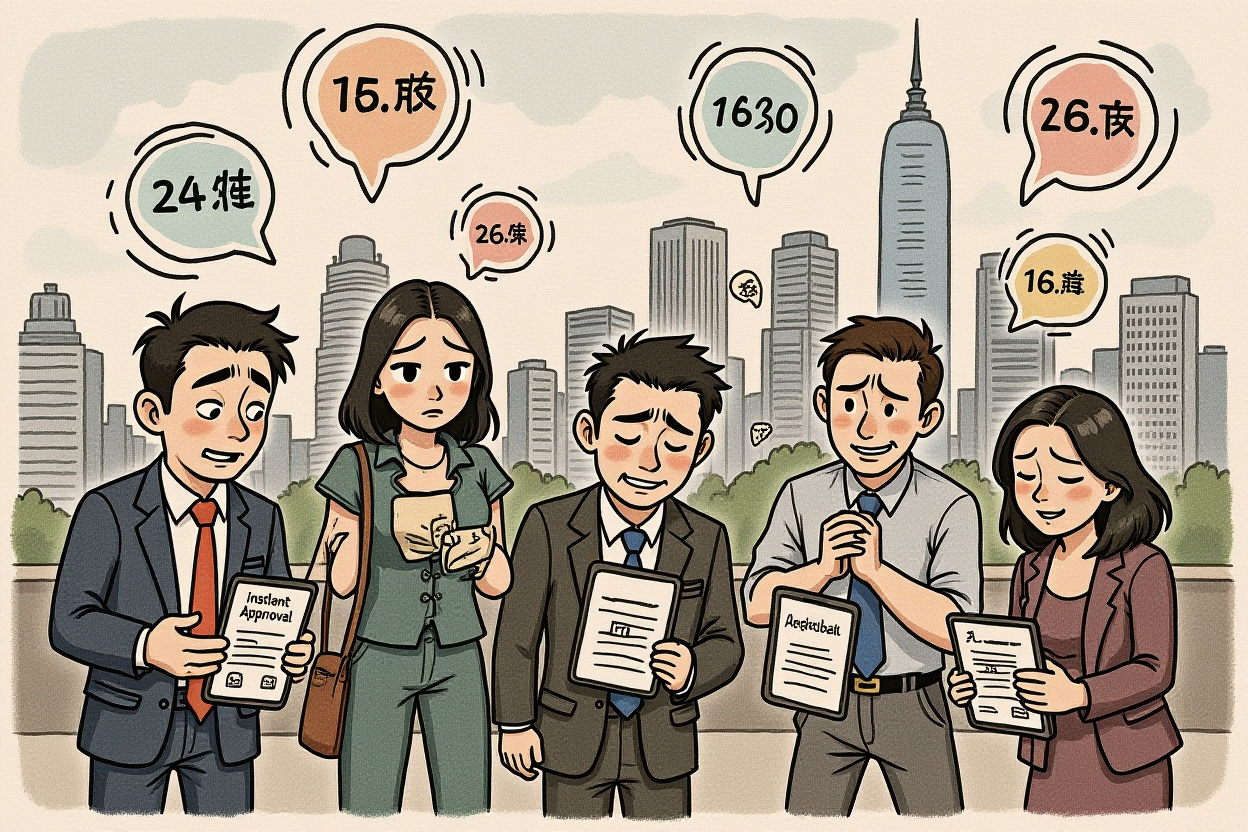
– Fenqile’s mini-loans, offering small amounts with extended terms, often conceal exorbitant interest rates that can double the principal, trapping borrowers in debt.
– Regulatory guidelines from the People’s Bank of China (中国人民银行) and National Financial Regulatory Administration (国家金融监管总局) cap comprehensive financing costs at 24%, but platforms use opaque fees to push costs near the 36% legal limit.
– The lender’s roots in controversial campus lending persist, with ongoing complaints about targeting students and aggressive debt collection practices, raising ethical concerns.
– Consumer data privacy is compromised through extensive information collection and sharing with third parties without clear consent, highlighting broader risks in fintech.
– Investors should monitor regulatory enforcement and ethical practices, as these mini-loans impact consumer trust and stability in China’s financial markets.
As Lunar New Year festivities ramp up financial pressures for young Chinese consumers, the allure of quick cash from online lenders becomes irresistible. Platforms like Fenqile (分期乐) promise easy access with slogans like “instant approval” and “low monthly payments,” but behind this facade lies a harsh reality. The case of Ms. Chen, who borrowed 13,674 yuan only to owe 26,859 yuan—nearly double the principal—exposes the predatory nature of so-called mini-loans. This phenomenon of mini-loans is increasingly under scrutiny for exploiting vulnerable borrowers, sparking debates on regulatory oversight and ethical lending in China’s rapidly evolving fintech sector. For international investors and market participants, understanding these dynamics is crucial to navigating risks in Chinese consumer finance.
The Opaque Cost Structure of Mini-Loans
Hidden Fees and Skyrocketing Debt
The mini-loan model, epitomized by Fenqile, often entices users with seemingly manageable repayments but masks exorbitant costs through complex fee structures. In the highlighted case, Ms. Chen took out five loans between 2020 and 2021 totaling 13,674 yuan, with annualized interest rates ranging from 32.08% to 35.90%. Despite promotional claims of “low interest” and “monthly payments as low as 18.23 yuan,” the extended 36-month terms ballooned her debt to 26,859 yuan. This debt snowball effect is common, where mini-loans leverage prolonged分期 (installment periods) and layered charges to inflate repayments beyond borrowers’ means. Complaints on the Black Cat Complaints Platform (黑猫投诉平台) reveal similar patterns, with users citing unexplained fees like membership,担保费 (guarantee fees), and credit assessment costs that push comprehensive annualized rates toward 36%.
Regulatory Red Lines and Compliance Gaps
Recent regulatory moves aim to curb such practices, but enforcement gaps persist. In December 2025, the People’s Bank of China (中国人民银行) and National Financial Regulatory Administration (国家金融监管总局) jointly issued the “Guidelines for Comprehensive Financing Cost Management of Small Loan Companies,” prohibiting new loans with costs exceeding 24% and mandating reduction to within four times the one-year Loan Prime Rate (LPR) by end-2027. However, platforms like Fenqile adapt by embedding fees in lengthy electronic agreements, making costs less transparent. For instance, users from Zhejiang and Sichuan reported actual repayments exceeding contracted amounts by thousands of yuan, as documented by 《中国消费者》 (China Consumer). This regulatory tension highlights the challenges in reigning in mini-loans while lenders innovate to maintain profitability.
Fenqile’s Business Model: From Campus Lending to FinTech
Historical Roots in Controversial Campus Loans
Fenqile’s parent company, Lexin Group (乐信集团), has a storied past intertwined with China’s campus lending boom. Founded in 2013 by Xiao Wenjie (肖文杰), the platform最初 (initially) gained traction by offering loans to university students for消费 (consumption) like smartphones, rapidly scaling to trillion-yuan transaction volumes. After regulatory crackdowns on校园贷 (campus loans) in 2016, Lexin rebranded as a fintech firm and listed on Nasdaq in 2017. Despite this shift, mini-loans retain echoes of those early days, with the operational entity—Jian’an Fenqile Network Small Loan Co., Ltd. (吉安市分期乐网络小额贷款有限公司)—still facing allegations of targeting young, inexperienced borrowers. This history underscores the ethical quandaries in the mini-loan sector’s evolution.
Persistent Issues with Student Targeting and Collection Practices
Complaints suggest Fenqile hasn’t fully shed its campus-lending skin. On the Black Cat platform, over 922 complaints reference “分期乐 校园贷” (Fenqile campus loans), detailing promotions within universities and even on-campus stalls. Aggressive debt collection exacerbates the problem, with more than 20,000 complaints citing暴力催收 (violent collection tactics), such as harassing borrowers’ families, friends, and colleagues. These practices not only violate regulatory norms but also contribute to mental health issues, as seen in Ms. Chen’s experience of depression due to public shaming. For investors, this reputational risk is a red flag in assessing companies reliant on mini-loans for growth.
Consumer Complaints and Legal Challenges
Volume of Complaints on Platforms like Black Cat
The scale of discontent is staggering: searching “分期乐” on Black Cat yields over 160,000 complaints, reflecting widespread frustration with mini-loans. Users allege deceptive practices, such as unapproved fee deductions and refusal to disclose actual lenders, complicating recourse. In one February 2025 complaint, a user demanded refunds for costs exceeding 24%, citing Fenqile’s opacity on funding sources. This volume signals systemic issues in the mini-loan ecosystem, where consumer protection lags behind innovation, potentially inviting stricter regulatory intervention that could impact market valuations.
Specific Cases Highlighting Unfair Practices
Detailed cases illuminate the mini-loan pitfalls. For example, a borrower from Zhejiang took two loans via Fenqile: one for 10,300 yuan at a 6% stated rate, but实际 (actual) repayments totaled 12,425.4 yuan—1,782 yuan extra. Similarly, a 15,000-yuan loan at 7.5% resulted in 2,053 yuan in overpayments. These discrepancies, often from hidden担保费 (guarantee fees) or service charges, demonstrate how mini-loans exploit information asymmetry. 《中国消费者》 (China Consumer) notes that platforms fail to prominently disclose non-principal fees, violating transparency standards and eroding trust in China’s consumer finance market.
Data Privacy and Ethical Concerns
Extensive Data Collection and Sharing
Beyond financial costs, mini-loans pose significant privacy risks. An investigation by 《经济参考报》 (Economic Reference News) found that Fenqile’s software collects dozens of personal data points upon user agreement, including ID photos, bank details, income, and facial recognition data. This information is共享 (shared) with third parties like payment processors,增信机构 (credit enhancement agencies), and自律组织 (self-regulatory bodies), often without explicit consent. Such practices, embedded in冗长的 (lengthy) privacy policies, create a chain where consumers lose control over their data from the moment they click “agree,” raising alarms for regulators focused on data security in fintech.Impact on Consumer Autonomy
The convergence of high-cost mini-loans and invasive data harvesting undermines consumer autonomy, trapping individuals in cycles of debt and surveillance. This dual exploitation is particularly acute for young borrowers, who may lack financial literacy. As China tightens data laws under frameworks like the Personal Information Protection Law, lenders face mounting pressure to reform. For global investors, these ethical lapses could translate into compliance costs and brand damage, affecting the long-term viability of mini-loan-driven business models.
Regulatory Landscape and Future Outlook
Recent Guidelines from PBOC and NFRA
The December 2025 guidelines mark a pivotal step in curbing mini-loan abuses, emphasizing phased reductions in financing costs and动态征信管理 (dynamic credit reporting management) for违规 (non-compliant) lenders. By 2026, local financial authorities must correct loans exceeding 24%, suspend new issuances, and integrate oversight. This aligns with broader efforts to stabilize China’s financial system, as seen in measures targeting shadow banking and peer-to-peer lending. For mini-loan providers, adaptation is inevitable, with potential shifts toward更透明的 (more transparent) pricing and responsible lending practices.
Implications for Lenders like Fenqile and Market Trends
The regulatory squeeze could reshape the mini-loan landscape, forcing platforms to diversify or enhance compliance. Fenqile’s partnership with licensed institutions like Shanghai Bank (上海银行) may offer a pathway to legitimacy, but persistent complaints suggest deeper reforms are needed. Market trends indicate growing consumer awareness and advocacy, potentially driving demand for ethical alternatives. Investors should watch for earnings impacts from fee restrictions and litigation risks, as well as opportunities in regulated fintech segments. The mini-loan saga underscores a critical lesson: sustainable growth in China’s consumer finance requires balancing innovation with consumer protection.
The mini-loan crisis, highlighted by Fenqile’s practices, reveals systemic vulnerabilities in China’s consumer credit market. While regulations are tightening, lenders continue to exploit gaps through opaque fees and aggressive tactics, endangering young borrowers’ financial health. For international stakeholders, this signals both risk and opportunity—scrutinizing ethical standards and regulatory compliance is essential for informed investment decisions. Consumers must remain vigilant, seeking transparent options and reporting abuses. As China marches toward a more regulated fintech environment, the future of mini-loans hinges on aligning profit motives with social responsibility, a transition that will define the sector’s stability and growth.