



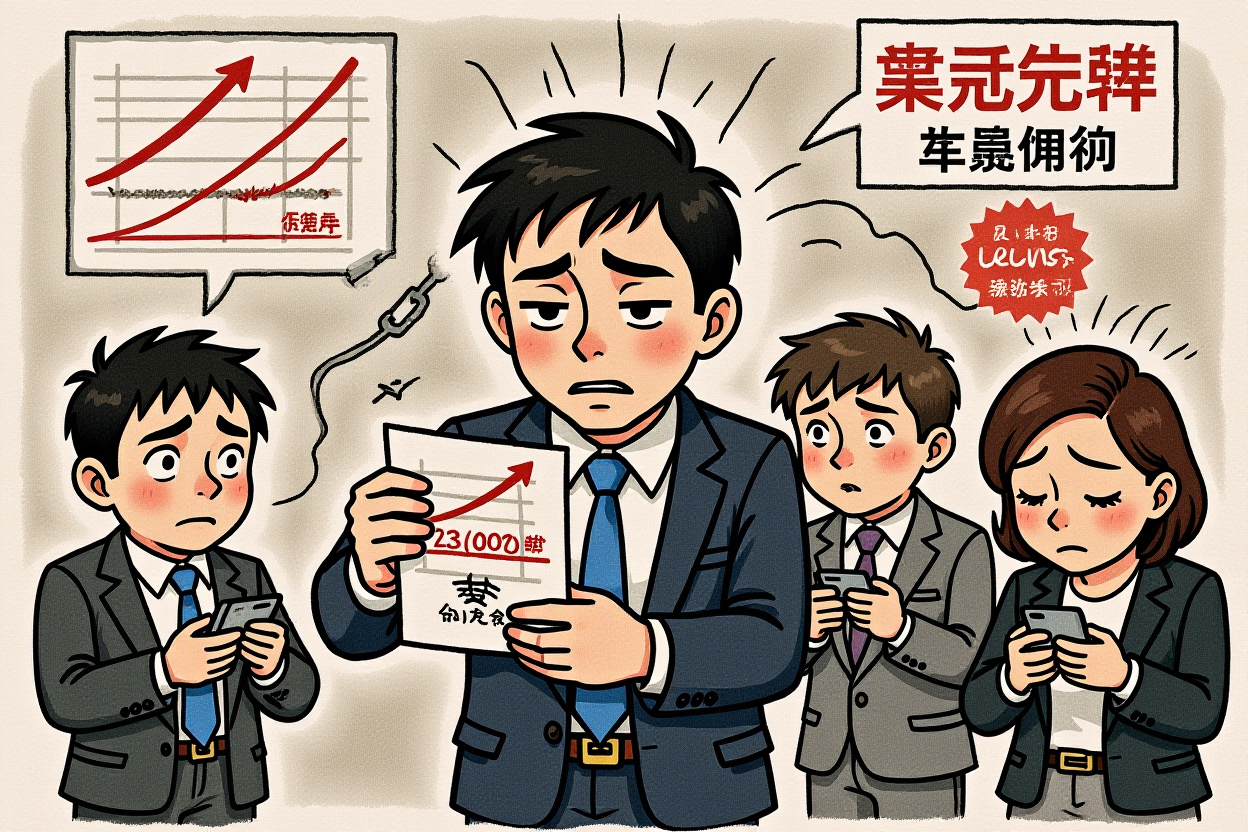
Executive Summary: Key Takeaways on the ‘Mini Loan’ Crisis
As Chinese regulators tighten rules on consumer lending, platforms like Fenqile continue to exploit regulatory gaps with high-cost ‘mini loans’ targeting young and financially vulnerable individuals. This article delves into the mechanics, risks, and regulatory challenges of this growing issue.
- Case Study Revelation: Borrowers like Chen, who took out 13,674 yuan in loans, face repayment demands of 26,859 yuan—nearly double the principal—due to interest rates approaching 36%, far above the regulatory cap of 24%.
- Opaque Fee Structures: Fenqile and similar platforms often hide additional charges like membership,担保费 (guarantee fees), and信用评估费 (credit assessment fees) within complex agreements, inflating the true cost of borrowing.
- Regulatory Loopholes: Despite new guidelines from the中国人民银行 (People’s Bank of China) and国家金融监管总局 (National Financial Regulatory Administration) capping综合融资成本 (comprehensive financing costs), enforcement remains inconsistent, allowing ‘mini loans’ to proliferate.
- Legacy of Campus Lending: Fenqile’s parent company, Lexin Group, built its empire on controversial校园贷 (campus loans), and evidence suggests ongoing targeting of students despite regulatory bans, coupled with aggressive催收 (debt collection) practices.
- Consumer Backlash: Over 160,000 complaints on platforms like黑猫投诉 (Heimao Tousu) highlight widespread issues with transparency, high costs, and privacy violations, urging tighter oversight and borrower education.
The Viral Debt Trap: When 13,000 Yuan Balloons to 26,000
As the Lunar New Year approached, many young Chinese sought quick cash for festivities, only to find themselves ensnared in a cycle of debt from so-called ‘mini loans’. The recent social media storm over Fenqile—where a borrower’s 13,674 yuan debt escalated to 26,859 yuan in repayments—has thrust these high-cost lending products into the spotlight, revealing how他们 (they) exploit financial desperation.
Chen’s Story: A Cautionary Tale of Financial Distress
Chen, a university student at the time, fell into the ‘mini loan’ trap through Fenqile’s enticing offers. Between 2020 and 2021, she borrowed five times for amounts as small as 400 yuan, spread over 36-month terms, with annual rates ranging from 32.08% to 35.90%. Promoted as ‘low interest’ with ‘monthly payments as low as 18.23 yuan’, these ‘mini loans’ seemed manageable, but the long tenure and compounded fees led to a snowball effect. By 2022, she defaulted, facing over 1,000 days of逾期 (overdue payments) and intense psychological pressure from催收人 (debt collectors) who alerted her family and friends, exacerbating her distress.
The Alarming Math Behind ‘Mini Loan’ Costs
Fenqile’s model exemplifies how ‘mini loans’ mask true costs. For instance, a 400 yuan loan over 36 months at 35% APR results in total payments far exceeding the principal. This case underscores why regulators are concerned: such practices push综合融资成本 (comprehensive financing costs) to the legal极限 (limit), often breaching the 24% cap set by recent guidelines. The ‘mini loan’ allure of small, frequent repayments distracts from the long-term financial burden, making it a predatory tool for年轻消费者 (young consumers).
Decoding the ‘Mini Loan’ Business Model: Attraction vs. Reality
Fenqile, operated by吉安市分期乐网络小额贷款有限公司 (Jian Fenqile Network Small Loan Co., Ltd.), leverages flashy marketing to draw users. Its platform promises ‘up to 200,000 yuan in loans with annual rates as low as 8%’, but hidden clauses reveal a different story. This section explores how ‘mini loans’ are structured to maximize lender profits while minimizing borrower awareness.
The Illusion of Low Costs and High Accessibility
Upon accessing Fenqile’s mini-program, users are greeted with appealing数字 (numbers): ‘1万元借1天2.2元起 (borrow 10,000 yuan for one day from 2.2 yuan)’. However, this front-end simplicity belies后端 (back-end) complexities. The ‘mini loan’ model relies on extending loan terms—sometimes up to 36 months—for trivial amounts, which dramatically increases total interest. For example, a 1,000 yuan loan over 24 months at 30% APR can double the repayment amount, trapping borrowers in a debt spiral. This tactic is central to the ‘mini loan’ strategy, targeting those with limited financial literacy.
Hidden Fees and Opaque Contracting
Complaints on黑猫投诉 (Heimao Tousu) reveal that Fenqile often adds unauthorized fees. Users report charges like会员费 (membership fees) and担保费 (guarantee fees) that are not disclosed upfront, pushing effective annual rates toward 36%. A case from浙江省杭州市 (Hangzhou, Zhejiang) involved a borrower whose 10,300 yuan loan at a stated 6% rate actually cost 12,425.4 yuan due to hidden附加费 (surcharges). Similarly, in四川省凉山彝族自治州 (Liangshan, Sichuan), a user was charged 1,102.14 yuan in担保费 (guarantee fees) without clear consent. These practices highlight how ‘mini loans’ use fine print to evade transparency, making it difficult for borrowers to assess true costs.
Regulatory Scrutiny: Can Rules Tame the ‘Mini Loan’ Beast?
In response to rising consumer debt, Chinese authorities have introduced stricter measures. The December 2025 joint guideline from the中国人民银行 (People’s Bank of China) and国家金融监管总局 (National Financial Regulatory Administration) caps new loan综合融资成本 (comprehensive financing costs) at 24%, with plans to reduce them to four times the 1-year LPR by 2027. However, enforcement gaps allow ‘mini loans’ to persist, raising questions about regulatory effectiveness.
New Guidelines and Their Limitations
The 2025 directive mandates that地方金融管理机构 (local financial authorities) correct loans exceeding 24%, halt new issuances, and incorporate them into征信动态管理 (dynamic credit management). Yet, as seen with Fenqile, platforms may circumvent these rules by restructuring fees or targeting loopholes. For instance, by labeling high interest as ‘service charges’, ‘mini loans’ can technically comply while still burdening borrowers. This regulatory ambiguity is why ‘mini loans’ remain a contentious issue, necessitating tighter oversight from bodies like the国家金融监管总局 (National Financial Regulatory Administration).
Enforcement Challenges in the Digital Lending Space
Despite rules, reports indicate slow implementation. Fenqile’s continued offering of high-cost ‘mini loans’ suggests that监管 (supervision) is lagging behind innovation. Experts argue that without real-time monitoring and harsh penalties, lenders will continue to exploit ‘mini loans’ for profit. The case of Chen, whose debts predate the guidelines but remain unresolved, underscores the need for retroactive action. As ‘mini loans’ evolve, regulators must adapt to close gaps, perhaps through enhanced technology audits and borrower education campaigns.
The Lingering Shadow of Campus Lending in ‘Mini Loan’ Operations
Fenqile’s origins trace back to校园贷 (campus loans), a controversial practice that fueled the growth of its parent, Lexin Group. Founded in 2013 by肖文杰 (Xiao Wenjie), Lexin rapidly expanded by targeting students with easy credit, until a 2016 crackdown forced a rebranding. However, evidence suggests that ‘mini loans’ still indirectly reach young, inexperienced borrowers, perpetuating risks associated with predatory lending.
From Campus Loans to ‘Mini Loans’: A Troubled Evolution
Lexin Group, listed on Nasdaq, has tried to distance itself from its past, but Fenqile’s平台 (platform) retains ties to student targeting. Searches on黑猫投诉 (Heimao Tousu) for ‘分期乐 校园贷 (Fenqile campus loans)’ yield 922 complaints, with users citing promotions on university campuses and loans issued to students. This indicates that ‘mini loans’ may serve as a successor to banned campus lending, using similar tactics under a new guise. The aggressive催收 (debt collection) methods—including harassment of family and peers—mirror past scandals, highlighting an unethical continuum in the ‘mini loan’ ecosystem.
Privacy Concerns and Data Exploitation
Fenqile’s privacy policy, as reported by《经济参考报》 (Economic Reference Report), involves collecting extensive personal data—from身份证号码 (ID numbers) to人脸信息 (facial recognition)—and sharing it with third parties like支付服务合作商 (payment service partners) and增信机构 (credit enhancement agencies). For ‘mini loan’ users, this means surrendering隐私权 (privacy rights) from the moment they click ‘agree’, potentially leading to data misuse in催收 (debt collection). This integration of data harvesting with lending amplifies the risks of ‘mini loans’, making them not just a financial trap but a privacy threat.
Consumer Backlash and the Future of Digital Lending
With over 160,000 complaints on黑猫投诉 (Heimao Tousu), Fenqile faces mounting scrutiny from borrowers demanding transparency and fairness. These grievances, coupled with legal actions, could reshape the ‘mini loan’ landscape, pushing for reforms that protect vulnerable consumers while fostering responsible innovation.
Voices from the Ground: Complaints and Legal Recourse
Users frequently cite issues like利率不透明 (opaque interest rates) and提前还款遇阻 (obstacles to early repayment). For example, a February 2025 complaint accused Fenqile of charging 36% APR and refusing to disclose the actual放款方 (lender), hindering regulatory recourse. Legal experts, quoted in sources like《南方日报》 (Southern Daily), advise borrowers to document all communications and report violations to地方金融管理局 (local financial bureaus). As ‘mini loan’ disputes rise, class-action lawsuits and regulatory fines may become more common, urging platforms to reform.
Charting a Path Forward: Recommendations for Stakeholders
To mitigate the ‘mini loan’ crisis, a multi-stakeholder approach is essential. Regulators should enhance enforcement of existing caps, possibly through real-time APR monitoring systems. Lenders like Fenqile must improve transparency, clearly disclosing all fees upfront and adhering to ethical collection practices. Borrowers, especially young adults, should seek financial education to avoid ‘mini loan’ pitfalls—considering alternatives like savings or正规银行贷款 (formal bank loans). Industry bodies could develop self-regulatory codes to standardize ‘mini loan’ offerings, ensuring they serve as genuine financial tools rather than debt traps.
Synthesizing the ‘Mini Loan’ Dilemma: Risks and Responsibilities
The ‘mini loan’ phenomenon, exemplified by Fenqile’s practices, reveals systemic issues in China’s consumer credit market. While these products offer short-term liquidity, their high costs and opaque terms often lead to long-term financial harm, particularly for youth. Regulatory strides are promising, but without robust enforcement, ‘mini loans’ will continue to exploit gaps, undermining financial stability.
Key takeaways include the need for greater borrower vigilance—always calculating total repayment costs before committing—and stronger regulatory action to close loopholes. Investors in firms like Lexin Group should monitor compliance risks, as tighter rules could impact profitability. Ultimately, the future of ‘mini loans’ hinges on balancing innovation with consumer protection, ensuring that digital lending empowers rather than impoverishes.
As a call to action, stakeholders must collaborate: report predatory ‘mini loan’ cases to authorities, support financial literacy initiatives, and advocate for transparent lending practices. By doing so, we can transform the ‘mini loan’ sector from a predatory trap into a responsible component of China’s financial ecosystem.