



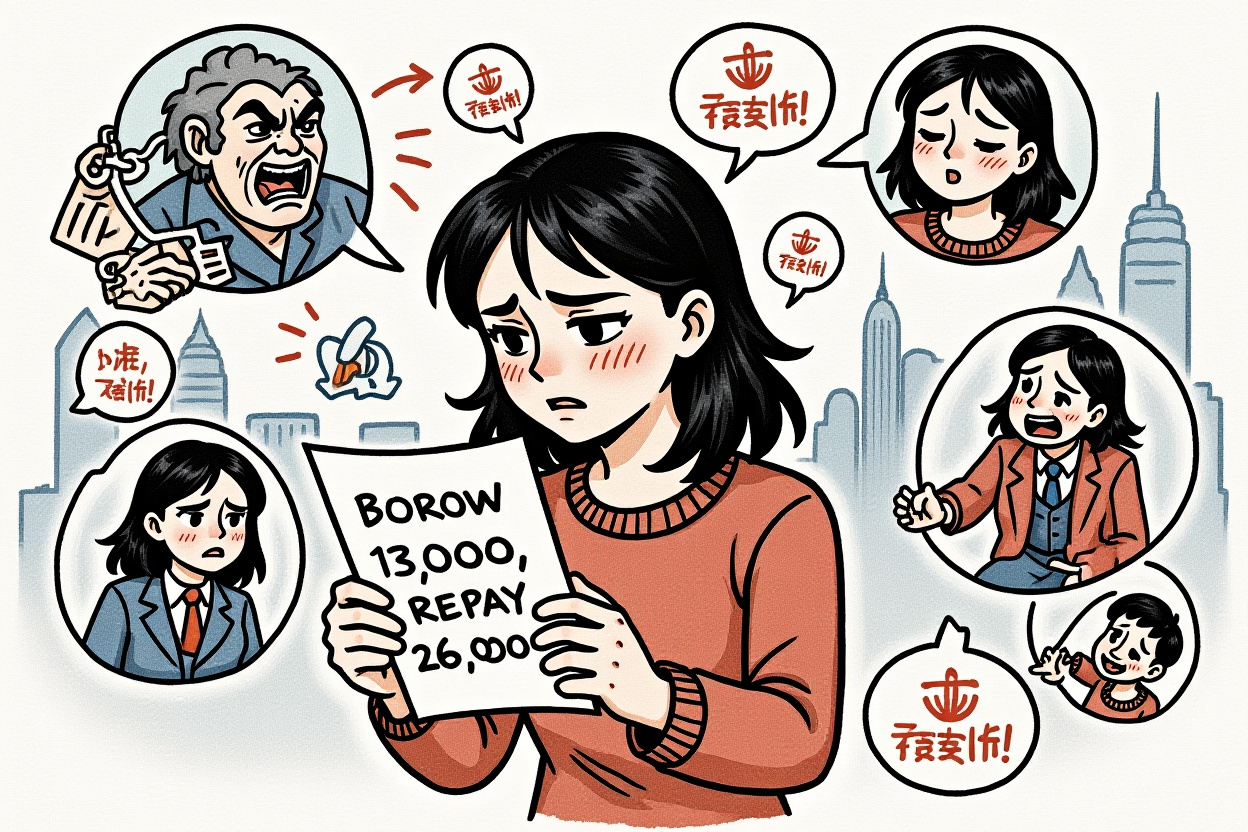
As the Lunar New Year drives consumer spending, easy credit offers from platforms like Fenqile (分期乐) are tempting young borrowers, but behind the facade of financial technology lies a harsh reality: predatory mini-loans are crippling a generation with debt. This article delves into the alarming practices of China’s mini-loan industry, revealing how borrowers like Ms. Chen (陈女士) face doubled repayments, aggressive collection tactics, and regulatory evasion. With insights from market data and expert analysis, we explore the implications for investors, consumers, and the broader fintech sector.
Key Takeaways:
- Mini-loan platforms such as Fenqile (分期乐) are charging effective annual interest rates up to 36%, often doubling debt through opaque fees and elongated tenures, despite regulatory caps aimed at protecting consumers.
- These predatory mini-loans persistently target students and young adults, leveraging aggressive marketing and data harvesting, with complaints on platforms like Black Cat Complaints exceeding 160,000 cases.
- Recent guidelines from the People’s Bank of China (中国人民银行) and National Financial Regulatory Administration (国家金融监管总局) set stricter cost limits, but enforcement gaps allow platforms to circumvent rules through hidden charges.
- Investors in Chinese fintech, including companies like Lexin Fintech (乐信集团), must navigate heightened compliance risks as regulatory scrutiny intensifies on unethical lending practices.
- Borrowers are advised to scrutinize loan terms, seek alternatives, and report violations to avoid falling into debt traps exacerbated by these mini-loans.
The Opaque Fee Structure and Snowballing Debt
At first glance, mini-loan platforms like Fenqile (分期乐) offer attractive deals, such as “annual interest rates as low as 8%” or “borrow 20,000 yuan with daily costs from 2.2 yuan.” However, the reality for borrowers like Ms. Chen (陈女士) reveals a different story—one where mini-loans transform small debts into financial nightmares through hidden costs and extended repayment periods.
A Case Study in Financial Distress: Ms. Chen’s Loan Journey
Ms. Chen (陈女士), a university student at the time, borrowed 13,674 yuan from Fenqile (分期乐) between 2020 and 2021 for everyday expenses, including a 400-yuan purchase split over 36 months. Her five loans carried annual interest rates ranging from 32.08% to 35.90%, far above the regulatory cap of 24%. Despite initial promises of “low monthly payments,” she now faces a total repayment of 26,859 yuan—nearly double her principal. After defaulting in August 2022, she endured over 1,000 days of harassment from debt collectors, who contacted her family and friends, leading to severe depression. This case underscores how mini-loans can escalate manageable debts into unpayable sums through deceptive practices.
Regulatory Red Lines and the Art of Circumvention
In December 2025, the People’s Bank of China (中国人民银行) and National Financial Regulatory Administration (国家金融监管总局) issued the “Guidelines on Comprehensive Financing Cost Management for Small Loan Companies,” which prohibit new loans with annualized costs exceeding 24% and aim to align rates with four times the one-year Loan Prime Rate (LPR) by 2027. However, mini-loan platforms often evade these rules by adding opaque fees. For instance, complaints on Black Cat Complaints (link) highlight charges like membership fees, guarantee fees, and credit assessment fees that inflate costs to nearly 36%. A user reported on February 12, 2025, that Fenqile (分期乐) refused to disclose the actual lender, complicating efforts to seek redress. Such tactics demonstrate how the mini-loan industry exploits regulatory loopholes to maintain profitability at consumers’ expense.
The Lingering Shadow of “Campus Loans”
Despite rebranding as a fintech pioneer, Fenqile (分期乐) and its parent company Lexin Fintech (乐信集团) have deep roots in the controversial “campus loan” sector, which targeted students with high-interest credit. This legacy continues to haunt the mini-loan market, raising questions about ethical lending and consumer protection.
From Campus Beginnings to Nasdaq Listing: Fenqile’s Controversial Rise
Founded in 2013 by Xiao Wenjie (肖文杰), Fenqile (分期乐) started as a分期 shopping platform, leveraging student loans to achieve rapid growth. After regulatory crackdowns on campus lending in 2016, Lexin Fintech (乐信集团) shifted its focus, listing on Nasdaq in 2017. However, the company’s operational entity, Jian Fenqile Network Small Loan Co., Ltd. (吉安市分期乐网络小额贷款有限公司), still faces accusations of targeting youth. Searches for “campus loans” on complaint platforms yield over 922 results, with users reporting that Fenqile (分期乐) promoters openly solicited loans on university campuses. This history highlights how mini-loans remain intertwined with vulnerable demographic groups, despite corporate efforts to distance themselves from past scandals.
Persistent Targeting and Aggressive Collection Tactics
Beyond marketing, mini-loan platforms employ harsh collection methods that exacerbate borrower distress. Over 20,000 complaints describe Fenqile (分期乐) using violent催收, including threats to family members, colleagues, and even village leaders. One borrower recounted how collectors爆通讯录 (exposed their contact list), leading to social ostracization and mental health issues. These practices not only violate ethical standards but also contravene China’s consumer protection laws, which prohibit harassment. As mini-loans proliferate, such aggressive tactics underscore the urgent need for stronger enforcement and borrower education to curb abuse.
Data Privacy: The Hidden Cost of “Convenient” Credit
When users click “agree” on mini-loan apps, they often unknowingly surrender vast amounts of personal data, which platforms then share with third parties. This data exploitation adds another layer of risk to the already predatory nature of these loans.
Extensive Data Harvesting and Third-Party Sharing
An investigation by Economic Reference News (经济参考报) revealed that Fenqile (分期乐) collects dozens of data points, including ID photos, bank details, income information, and facial recognition data. The platform’s privacy policy allows sharing this sensitive information with第三方商家 (third-party merchants), payment partners, and credit enhancement agencies. For example, a borrower from Sichuan reported being charged a 1,102.14-yuan guarantee fee without clear disclosure, buried in冗长的电子协议 (lengthy electronic agreements). This lack of transparency turns mini-loans into tools for data monetization, where consumers lose control over their financial and personal security from the moment they apply.
Regulatory Crackdown: Will New Rules Curb the Excesses?
As authorities tighten oversight, the mini-loan industry faces mounting pressure to reform. However, the effectiveness of these measures depends on enforcement and industry adaptation, posing challenges for both regulators and market participants.
Understanding the PBOC and NFRA Guidelines
The 2025 guidelines mandate that by 2026, local financial管理机构 (management agencies) must correct loans exceeding 24% annualized costs, suspend new issuances, and incorporate动态征信管理 (dynamic credit management). Yet, mini-loan platforms continue to innovate around these rules. For instance, Fenqile (分期乐) extends repayment periods to 36 months, reducing monthly payments but increasing total interest. Legal experts cite cases like that of Ms. Chen (陈女士) to argue that such practices may constitute unfair contract terms under China’s Consumer Rights Protection Law (消费者权益保护法). To stay compliant, platforms must prioritize transparency, but historical evasion suggests a rocky path ahead for regulatory alignment.
Enforcement Challenges and Consumer Protection
Despite regulatory strides, gaps persist. The China Consumers’ Association (中国消费者) has documented multiple complaints where borrowers like Meng from Zhejiang and Sha from Sichuan faced hidden fees that inflated costs by over 2,000 yuan per loan. These cases illustrate how mini-loans exploit enforcement weaknesses, especially in remote regions. Strengthening consumer protection requires not only stricter penalties but also enhanced financial literacy programs. As noted in a Southern Daily (南方日报) report, borrowers often lack awareness of their rights, making them easy targets for predatory mini-loans. Moving forward, collaborative efforts between regulators, educators, and fintech firms are essential to build a safer lending ecosystem.
Market Implications: Risks for Fintech Investors and the Broader Economy
The predatory practices surrounding mini-loans carry significant implications for investors in Chinese equities, particularly in the fintech sector. As regulatory scrutiny intensifies, companies relying on high-interest lending may face valuation pressures and operational hurdles.
Assessing the Viability of Mini-Loan Business Models
For investors, the mini-loan segment presents both opportunity and risk. Lexin Fintech (乐信集团), with its Nasdaq listing, has seen growth driven by分期乐 (Fenqile)’s lending volume, but its reliance on high-margin loans could backfire if regulations tighten further. Analysis of financial reports shows that such companies often derive substantial revenue from fees that push effective rates toward 36%. However, as consumer backlash mounts and authorities clamp down, profitability may decline. Investors should monitor compliance metrics and diversification efforts, as firms that fail to adapt could see stock volatility or even delisting threats in extreme cases. The mini-loan crisis thus serves as a cautionary tale for those betting on unbridled fintech expansion.
The Impact on Consumer Confidence and Financial Stability
Beyond corporate risks, predatory mini-loans threaten broader economic stability. By saddling young borrowers with unsustainable debt, these loans can reduce disposable income, dampen consumer spending, and increase systemic credit risks. According to market data, youth debt levels in China have risen sharply, with mini-loans contributing to a growing household debt burden. This trend could undermine financial inclusion goals and erode trust in digital finance. For institutional investors and fund managers, understanding these macro implications is crucial when evaluating Chinese equity markets. The mini-loan phenomenon highlights the need for balanced growth strategies that prioritize consumer welfare over short-term gains.
Navigating the Minefield: Advice for Borrowers and Investors
In light of the mini-loan crisis, both consumers and market participants can take proactive steps to mitigate risks. From due diligence to financial education, practical guidance can help navigate this complex landscape.
How Consumers Can Protect Themselves from Predatory Mini-Loans
To avoid falling victim to mini-loans, borrowers should:
- Read loan agreements carefully, focusing on annualized percentage rates (APRs) and all附加费用 (additional fees). Use online calculators to verify total repayment amounts.
- Report suspicious practices to authorities like the National Financial Regulatory Administration (国家金融监管总局) or consumer protection agencies. Platforms like Black Cat Complaints (link) offer channels for grievance redressal.
- Explore alternatives, such as low-interest bank loans or credit unions, and build emergency savings to reduce reliance on high-cost credit.
- Seek financial counseling if already entangled in debt, as organizations like the China Banking and Insurance Regulatory Commission (中国银行保险监督管理委员会) provide resources for debt management.
Due Diligence Checklist for Fintech Investors
For investors eyeing the mini-loan sector, consider these factors:
- Review regulatory compliance reports: Assess whether companies like Lexin Fintech (乐信集团) adhere to PBOC guidelines on financing costs and disclosure requirements.
- Analyze complaint data: Monitor platforms like Black Cat Complaints for trends in consumer grievances, which can signal operational risks.
- Evaluate diversification: Look for firms that reduce reliance on high-interest mini-loans by expanding into regulated services like wealth management or insurance.
- Engage with management: Question executives on ethical lending practices and long-term sustainability plans during earnings calls or investor meetings.
Synthesizing the Path Forward for China’s Lending Landscape
The mini-loan crisis epitomizes the darker side of China’s fintech boom, where innovation often outpaces regulation, leaving young borrowers vulnerable. Cases like Ms. Chen’s (陈女士) underscore the urgent need for transparency, enforcement, and consumer education. As regulators push for cost caps and ethical standards, the industry must evolve or face escalating backlash. For investors, this presents a pivotal moment to reassess risks in consumer finance equities, while borrowers must arm themselves with knowledge to avoid debt traps. Ultimately, a collaborative approach—involving government, industry, and consumers—can transform mini-loans from predatory tools into responsible financial products that support, rather than drain, China’s economic future. Take action today by advocating for stronger protections and making informed choices in the market.