



– Over 30 Chinese automakers have collapsed in the past decade, leaving an estimated million-plus car owners with unsupported "orphaned vehicles."
– Owners of brands like Neta (哪吒), WM Motor (威马), and HiPhi (高合) face voided warranties, exorbitant repair costs, and service blackouts, forcing them into self-reliance.
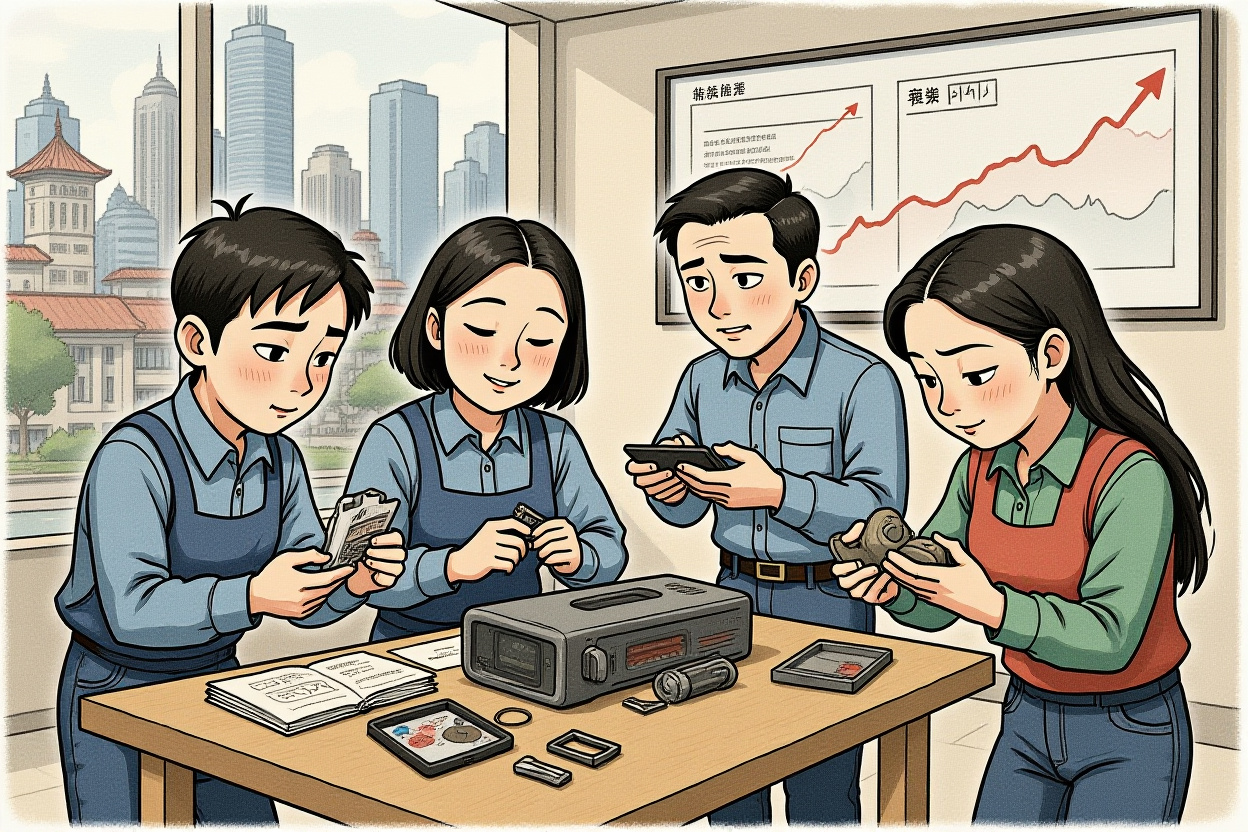
– A grassroots DIY repair movement has emerged, with online communities, parts sourcing from secondary markets, and specialized third-party repair shops filling the void.
– Deeply discounted "orphaned" cars are attracting risk-tolerant buyers, creating a paradoxical market for luxury EVs at bargain prices.
– Regulatory frameworks like the 10-year parts supply rule are poorly enforced, highlighting systemic gaps in consumer protection as China’s EV market matures.
The Silent Crisis of China’s Orphaned Electric Vehicles
China’s electric vehicle (EV) boom has been a global spectacle, marked by breakneck innovation and cutthroat competition. Yet, beneath the glittering sales figures and technological promises lies a burgeoning human crisis: the plight of orphaned vehicle owners. Over the past decade, more than 30 sizable automakers have vanished from the scene through bankruptcy or de facto shutdowns, abandoning an estimated million or more cars on the road. Brands that once captivated consumers with bold designs and lifetime warranties—such as Neta (哪吒), WM Motor (威马), HiPhi (高合), and Jiyue (极越)—are now ghosts, leaving their customers to fend for themselves in a landscape devoid of official support. This article delves into the harsh realities these owners face, the ingenious, community-driven solutions they are crafting, and the urgent questions this phenomenon raises about sustainability and consumer rights in the world’s largest auto market.
The Scale of Abandonment: Millions Left in the Lurch
The collapse of automotive startups is not new, but the sheer velocity and volume in China’s EV sector are unprecedented. The intense competition, fueled by capital influx and rapid technological iteration, has created a graveyard of brands. These orphaned vehicle owners are the unintended casualties, holding assets that have rapidly depreciated into liabilities.
A Catalog of Collapse: From Neta to HiPhi
Take Neta Auto (哪吒汽车) as a poignant example. By the first half of 2025, the company was exposed as carrying over 26 billion yuan in debt with mere millions left on its books, leading to operational paralysis and entry into bankruptcy restructuring. Despite selling approximately 500,000 vehicles, owners like a Beijing woman found her car’s battery range halved within two years. With the brand’s collapse, official warranty promises became void; repair shops, if still operating, demanded full payment from customers—her battery repair cost over 20,000 yuan out-of-pocket.
WM Motor (威马), which ceased production in 2022 after selling around 110,000 units, saw its entire vehicle connectivity service shut down due to unpaid bills, stranding owners without remote functions. Insurance premiums skyrocketed, with some providers refusing coverage altogether due to the inability to source parts for repairs. For HiPhi (高合), the erstwhile champion of Chinese luxury EVs, its 20,000+ delivered cars became nightmares. Their complex designs—featuring gull-wing doors, elaborate LED faces, and electronic mirrors—require specialized tools and proprietary parts that are now virtually unobtainable.
Even恒大汽车 (Hengchi Auto), which delivered only about 1,000 vehicles before its parent company’s well-publicized troubles, left owners with cars that are essentially unrepairable, lacking any foundational service network. These stories underscore a brutal truth: for orphaned vehicle owners, the promise of modern mobility has turned into a daily grind of uncertainty and expense.
The Daily Struggles: Warranty Woes and Systemic Breakdowns
For owners of cars from bankrupt brands, the challenges are multifaceted and often escalate quickly. The immediate loss of manufacturer support triggers a domino effect, impacting everything from basic repairs to insurance and digital services.
The High Cost of Being Orphaned
Central to the ordeal is the evaporation of warranties. Many consumers were drawn to nascent EV brands by promises of "lifetime battery and electric drive unit warranties" (三电终身质保). When a company like Neta folds, these contracts become unenforceable. Repair outlets, no longer reimbursed by the manufacturer, shift costs directly to owners. Simple diagnostics can run 800-1,000 yuan, with battery pack repairs starting at 10,000 yuan and full replacements reaching 70,000-80,000 yuan.
Beyond cost, parts scarcity is a crippling issue. Wait times for components—from data collection units to seat ventilation modules—stretch for weeks or months. Some parts simply cease to exist in the supply chain. Furthermore, the shutdown of backend servers leads to connectivity loss, disabling features like remote unlocking, over-the-air updates, and even real-time battery status monitoring. Owners must purchase data plans independently to restore basic functions, adding another layer of financial burden.
Insurance Discrimination and Safety Concerns
The risks extend to insurance and safety. Insurers, wary of unrepairable claims, often hike premiums or deny comprehensive coverage altogether. For instance, some WM Motor owners reported their annual premiums jumping from 3,800 yuan to 6,800 yuan, excluding collision damage, as insurers cited the impossibility of sourcing parts for repairs. This leaves orphaned vehicle owners financially exposed in the event of an accident. More alarmingly, delayed repairs on critical components like degraded battery cells—which can swell and become fire hazards—pose significant safety risks to owners and the public, turning these vehicles into potential "flaming chariots" on the road.
From Victims to Virtuosos: The DIY Repair Renaissance
Confronted with systemic abandonment, orphaned vehicle owners are not passively accepting their fate. Instead, they are spearheading a remarkable grassroots movement of self-help and innovation, effectively becoming DIY repair experts. This collective response is reshaping post-sales service dynamics in China’s automotive landscape.
Building Digital Communities and Knowledge Networks
The first line of defense has been the formation of tight-knit online communities. On platforms like WeChat and QQ, owners of specific defunct brands have created dedicated groups where knowledge is freely shared. Technically adept members produce video tutorials on common fixes—from replacing air filters and manually resetting fault codes to diagnosing minor electrical issues. Others offer "free online clinics," where they diagnose problems for fellow owners based on symptoms shared in comments. This peer-to-peer support system reduces diagnostic costs and empowers owners with practical skills.
The Art of Parts Sourcing and Third-Party Repair Evolution
With official channels dry, owners have become adept at scavenging for parts. They frequent online secondary markets like Xianyu (闲鱼) and physical hubs like the famed Chengtian (陈田) auto parts district in Guangzhou. Here, they seek out:
– 拆车件 (Chai Che Jian / Salvage Parts): Components harvested from wrecked or irreparably broken-down cars of the same model, sometimes even from manufacturers’ original test vehicles.
– 平替 (Ping Ti / Direct Alternatives): Through diligent research, owners identify components that are cross-compatible with parts from other, still-active manufacturers. This can range from simple clips to major items like PTC heaters or motor controllers.
– Creative Repair Over Replacement: For prohibitively expensive items like HiPhi’s intelligent headlights (once scalped for 50,000 yuan each on secondary markets), owners opt for precision repairs of cracks or commission custom-made casings from small workshops instead of full replacement.
This demand has spurred entrepreneurial opportunities. Some repair shop owners, acquiring former dealership tools and hiring laid-off technicians, have established specialized "third-party repair teams" focused exclusively on single defunct brands. Shops branded as "Neta Specialists" or "WM Motor Experts" now dot the landscape, serving orphaned vehicle owners from across regions, proving that where there is a need, a market will emerge.
The Discounted Dream: The Risky Allure of Orphaned Car Bargains
In a paradoxical twist, the very vehicles that represent a nightmare for their original owners are becoming objects of desire for a new cohort of bargain hunters. The mantra "be fearful when others are greedy, be greedy when others are fearful" has found a new application in China’s used EV market.
Luxury for Pennies: The New Buyers’ Calculus
When a brand collapses, its unsold inventory and barely-used二手車 (Er Shou Che / used cars) are liquidated at staggering discounts. A WM Motor that once sold for over 150,000 yuan might now be had for 60,000 yuan. Jiyue models, originally priced above 200,000 yuan, are finding buyers at 120,000 yuan. The most dramatic examples are luxury offerings like HiPhi: a 600,000-yuan flagship can now be purchased for 180,000 to 200,000 yuan—a 70% discount. For younger buyers or enthusiasts who coveted these designs but were previously priced out, these "orphaned" cars offer an irresistible entry point to high-end EV features and performance.
Weighing the Risks Against the Rewards
These "bottom-fishers" are typically under no illusions about the challenges. They view the purchase as a calculated gamble. The logic is simple: if the car runs problem-free for three to four years, the low acquisition cost justifies the investment. If a major failure occurs, the car can be parted out for salvage, potentially recouping much of the initial outlay. As one dealer specializing in such vehicles noted, discounted HiPhis can sell 20 units a month, and the increased visibility of defunct-brand cars like Jiyue on roads post-collapse is a form of "black humor." For these buyers, the experiential joy of driving a technologically advanced vehicle outweighs the potential hassles, embodying a "you get what you pay for" mentality in an extreme form.
Regulatory Shortfalls and the Quest for a Mature Automotive Ecosystem
The plight of orphaned vehicle owners exposes significant gaps in China’s automotive regulatory framework and aftermarket infrastructure. While rules exist on paper to protect consumers, their enforcement in the face of corporate failure remains weak, highlighting the growing pains of a market in hyper-drive.
The 10-Year Rule: A Paper Tiger?
China’s 《汽车品牌销售管理实施办法》 (Automobile Brand Sales Management Implementation Measures) stipulates that automakers must publicly announce any model’s discontinuation and guarantee the supply of spare parts and corresponding after-sales service for at least 10 years thereafter. In theory, this should prevent the emergence of orphaned vehicles. In practice, when a company is bankrupt and asset-poor, enforcing this rule against a entity with no operating income is nearly impossible. Creditors, employees, and suppliers stand in line before consumers, leaving little recourse for car owners seeking accountability.
The EV Revolution Exacerbates Aftermarket Vulnerabilities
The contrast with the traditional internal combustion engine (ICE) era is stark. The ICE market was dominated by a handful of large, stable manufacturers with slow technological cycles, high production volumes, and vast保有量 (Bao You Liang / vehicle parc). This created a robust independent aftermarket where parts were readily available and affordable. The EV landscape is fragmented, with rapid iteration and lower volumes per model. Critical components like电池 (Dian Chi / batteries),电机 (Dian Ji / motors), and电控 (Dian Kong / electronic control units) are complex, proprietary, and often supplied by a limited number of tier-1 suppliers. This makes reverse-engineering or independent reproduction by the aftermarket far more difficult and less economically viable for low-volume orphaned models.
Navigating the New Normal in Car Ownership
The saga of China’s orphaned vehicle owners is more than a collection of individual hardships; it is a stress test for the entire automotive industry’s transition to electrification and digitalization. It underscores that a mature market requires not just vibrant competition and innovation but also mechanisms for orderly exit and enduring consumer protection.
For prospective car buyers, especially in the volatile EV space, due diligence must now extend beyond range and price to include assessments of a manufacturer’s financial health, technological roadmap, and long-term viability. For regulators, there is a pressing need to strengthen the enforcement of existing rules, perhaps through mechanisms like mandatory after-sales service bonds or clearer protocols for the transfer of service obligations in bankruptcy proceedings. The industry itself must consider collaborative solutions, such as standardized components or open-repair platforms, to mitigate the risks of abandonment.
Ultimately, the resilience and ingenuity displayed by orphaned vehicle owners—transforming from helpless consumers into empowered repair experts—offer a powerful lesson. It signals the birth of a more self-reliant automotive culture in China. However, the responsibility for ensuring that car ownership does not become a high-stakes gamble should not rest on consumers alone. As China’s automotive revolution charges ahead, building a framework that allows companies to fail gracefully while protecting customers must become a cornerstone of a truly sustainable and trustworthy market. The call to action is clear: stakeholders must collaborate to ensure that the excitement of the EV revolution is not forever shadowed by the fear of being left behind.