



Executive Summary
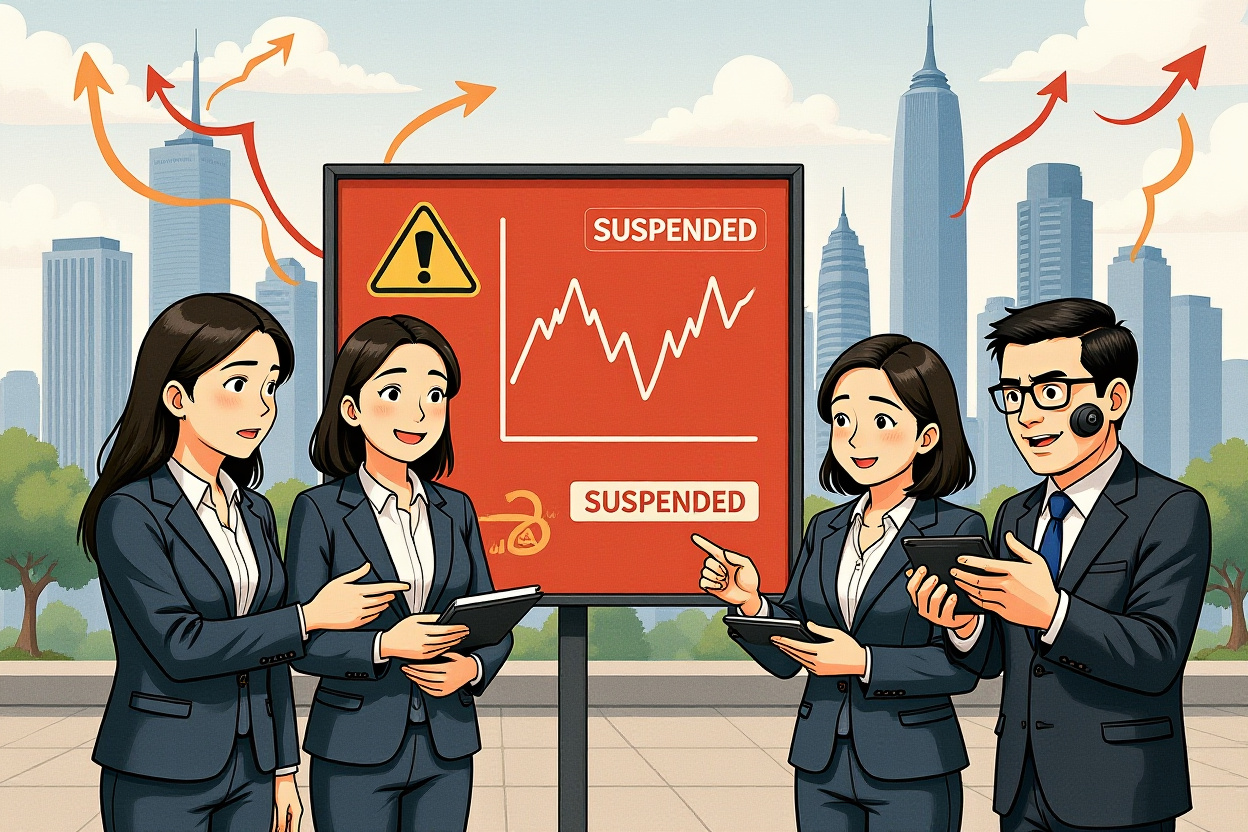
– Four prominent oil-related LOF funds from Guangfa Fund, Harvest Fund, E Fund, and Huaan Fund will suspend trading from market open until 10:30 AM on January 30, 2026, due to significant premiums in secondary market prices.
– Two funds, Huaan Fund and Guangfa Fund, are simultaneously implementing drastic cuts to daily subscription limits, reducing them to 2 yuan and 10 yuan respectively, to curb influxes and manage risk.
– The suspensions are proactive measures by fund managers to protect investors from potential heavy losses associated with buying at inflated prices far above net asset values.
– This event underscores the unique dynamics and risks of QDII-LOF products in China’s capital markets, where arbitrage mechanisms can break down during periods of high volatility or strong commodity sentiment.
– Investors are urged to exercise extreme caution, reassess positions in affected funds, and consider the broader implications for energy sector investments amid geopolitical and supply-demand factors.
A Sudden Halt in Oil Fund Trading
In a coordinated move that has captured the attention of institutional and retail investors alike, four of China’s largest asset managers have announced an unprecedented one-hour trading suspension for key oil-linked funds. This oil fund suspension is not a routine market adjustment but a direct response to alarming price distortions that have emerged in recent days. The affected funds—all structured as Listed Open-Ended Funds (LOFs) under the Qualified Domestic Institutional Investor (QDII) scheme—have seen their secondary market trading prices soar to premiums as high as 27% above their net asset values (NAVs). Such dislocations pose severe risks, prompting fund houses to step in with forceful interventions to safeguard investor interests.
This oil fund suspension event highlights a critical vulnerability in the Chinese financial ecosystem: the sometimes-tenuous link between the NAV of internationally-focused funds and their domestically traded prices. When sentiment runs hot for commodities like oil, driven by geopolitical tensions or supply shocks, Chinese investors piling into these LOFs can push prices to unsustainable levels. The announced halt aims to cool this frenzy, providing a circuit breaker that allows the market to recalibrate. For global investors monitoring Chinese equity markets, this development serves as a stark reminder of the regulatory and market mechanics that can abruptly alter trading landscapes.
Decoding the Fund Announcements
Each fund manager issued detailed statements outlining the rationale and specifics of the suspension. Guangfa Fund pointed to “a large幅度溢价” (large幅度 premium) for its Guangfa Dow Jones U.S. Oil Development & Production Index Securities Investment Fund (QDII-LOF), with the suspension set from open until 10:30 AM on January 30. Harvest Fund cited similar conditions for its Harvest Crude Oil Securities Investment Fund (QDII-LOF), emphasizing the risk of “significant losses” if investors blindly chase prices. E Fund provided a concrete data point: its E Fund Crude Oil Securities Investment Fund (QDII) A-Class RMB Share had a NAV of 1.1315 yuan on January 27, but traded at 1.437 yuan by January 29—a premium exceeding 27%. Huaan Fund echoed these concerns for its Huaan S&P Global Oil Index Securities Investment Fund (LOF).
The uniformity in messaging is deliberate. All announcements stress that if premiums fail to recede after the initial halt, further measures like intraday temporary suspensions or extended停牌时间 (suspension times) may be sought from the Shenzhen Stock Exchange. This layered approach demonstrates a commitment to dynamic risk management, signaling that fund houses are prepared to escalate actions to protect their份额持有人 (shareholders).
The Anatomy of a Premium: Why Oil LOFs Are Overheating
Understanding the drivers behind these premiums is essential for any investor active in Chinese markets. QDII-LOF funds are designed to offer domestic investors exposure to overseas assets, such as U.S. oil equities or futures, through a structure that allows both primary market subscriptions/redemptions and secondary market trading on exchanges. Normally, arbitrageurs keep prices aligned with NAVs by buying at NAV in the primary market and selling at a higher price in the secondary market, or vice versa. However, several factors can disrupt this equilibrium, leading to the kind of oil fund suspension we see today.
First, quota limitations under China’s QDII program can restrict the supply of new fund shares. When demand surges—as it often does during oil price rallies—and primary market creations are constrained, secondary market prices can detach from NAVs. Second, trading halts or liquidity issues in the underlying overseas assets (e.g., U.S. oil stocks) can cause delays or inaccuracies in NAV calculations, exacerbating mispricings. Third, retail investor behavior in China, characterized by momentum chasing and sometimes limited understanding of premium risks, can fuel bubbles. The current oil fund suspension is a textbook case of these forces colliding, with funds becoming vehicles for speculative fervor rather than pure investment tools.
Historical Precedents and Market Psychology
This is not the first time Chinese LOFs have experienced such dislocations. During the oil price crash of 2020 and subsequent rebounds, similar premium events occurred, leading to temporary suspensions and investor losses. For example, in early 2022, several commodity LOFs faced halts as Russia-Ukraine tensions sparked volatility. These episodes serve as cautionary tales, reminding market participants that structural arbitrage can break down under stress. The psychology at play is crucial: investors, eager to capitalize on rising oil prices, may overlook the fact that buying a fund at a high premium means paying more for the same underlying assets, eroding potential returns and magnifying downside risks.
Authoritative insights from industry experts underscore this point. As noted by a senior analyst at China International Capital Corporation Limited (中金公司), “LOF premiums in the QDII space are often a sign of market inefficiency driven by capital controls and sentiment. When premiums exceed 10%, the risk-reward profile becomes highly unfavorable for new buyers.” This analysis aligns with the fund managers’ warnings, reinforcing why the current oil fund suspension is a necessary intervention.
Subscription Limits: A Second Line of Defense
Parallel to the trading halts, two funds have implemented sharp reductions in daily subscription limits, adding another layer of risk control. Huaan Fund has slashed the limit for its Huaan S&P Global Oil Index Securities Investment Fund(LOF) to just 2 yuan per day per account, effectively curtailing new inflows. Guangfa Fund has set a 10 yuan limit for its Guangfa Dow Jones U.S. Oil Development & Production Index Securities Investment Fund (QDII-LOF). These moves are designed to prevent further capital from exacerbating premiums by limiting primary market creations that could, in theory, help narrow gaps through arbitrage.
However, in practice, such low limits act more as a signal than a functional cap. By making subscriptions nearly impossible, fund managers are broadcasting extreme caution and discouraging speculative inflows. This tactic is often used in Chinese funds when managers perceive that additional money could harm existing investors by amplifying valuation distortions or straining liquidity management. For investors, these limits mean that accessing these funds through normal channels is now highly restricted, pushing demand even more toward the secondary market—where premiums are the issue.
Mechanics and Implications of the Caps
The subscription limit adjustments are governed by fund rules that allow managers to modify terms to protect份额持有人利益 (shareholder interests). In regulatory filings, both Huaan and Guangfa cited the need to “maintain stable operation” and “prevent套利资金” (arbitrage capital) from distorting prices. From a practical standpoint, these caps force investors to reconsider their strategies:
– Direct subscriptions are effectively halted, so new exposure must be acquired via secondary markets at potentially risky premiums.
– Existing holders may face reduced liquidity if the suspensions prolong, impacting exit options.
– The measures could set a precedent for other commodity LOFs if similar premium conditions arise, affecting broader market sentiment.
Data from past episodes shows that such limits, when combined with trading halts, can help premiums收敛 (converge) over days or weeks, but they also introduce uncertainty. Investors should monitor announcements closely, as extensions or further actions are possible if the oil fund suspension does not achieve its intended effect.