



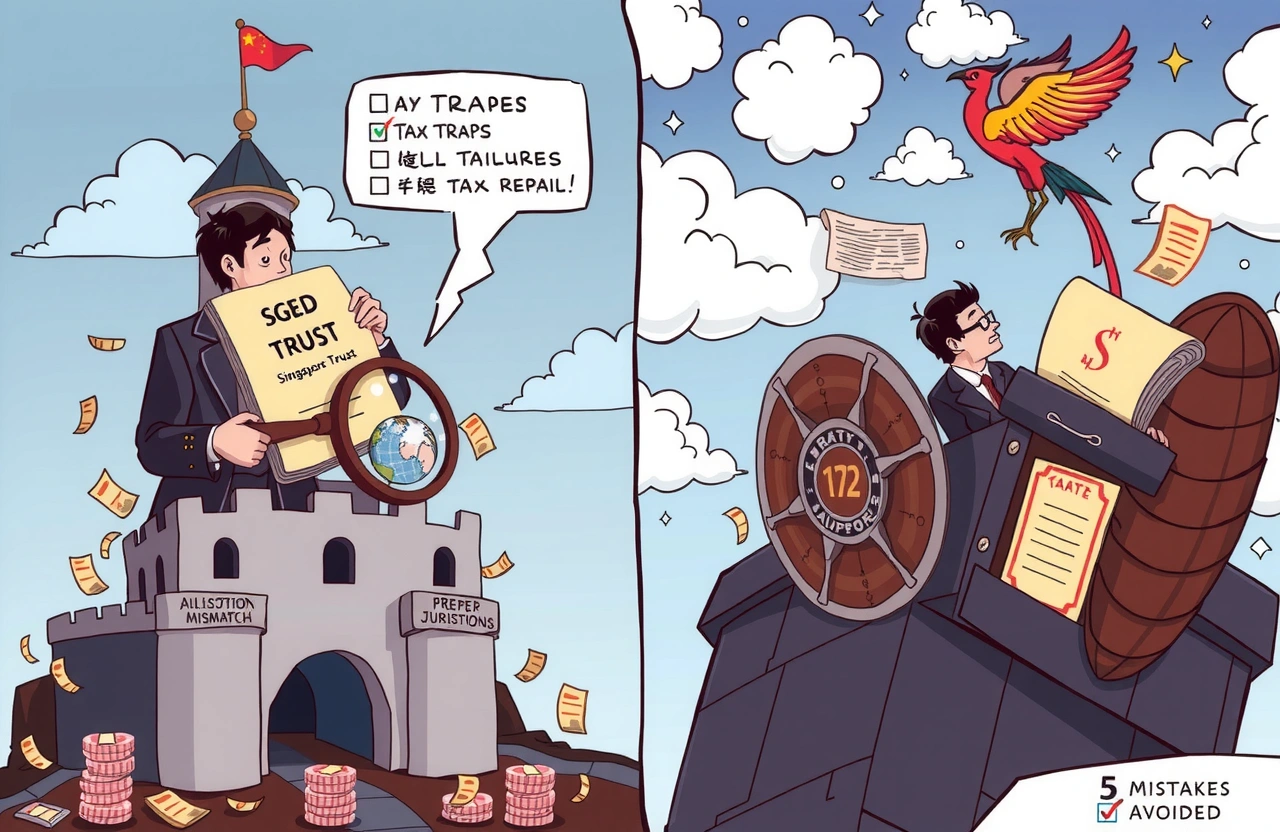
The Hidden Vulnerabilities of Offshore Trusts
Recent high-profile failures of offshore trusts protecting billions have shocked wealthy families globally. Differing legal frameworks, improper structures, and changing tax regulations create unexpected traps even for sophisticated investors. Many entrepreneurs learned too late that offshore trusts function dramatically different from conventional assets—missteps lead directly to devastating ‘trust piercing’ lawsuits where courts expose protected assets to creditors. Here’s what competent wealth protection requires.
Key Trust Failure Patterns
- Equity trust structures enabling unauthorized asset access
- Catastrophic tax implications for U.S. resident beneficiaries
- Retained control mechanisms invalidating legal protection
- Jurisdictional mismatches between assets and governing law
Fundamental Design Flaws: Cash vs. Equity Trusts
The asset type within your offshore family trust determines vulnerability. Cash trusts maintain strong defenses because reputable trustees physically control funds. Yet equity trusts—holding shares of offshore special purpose vehicles (SPVs)—create dangerous structural loopholes when improperly executed.
Cash Trust Protection Mechanisms
Reputable corporate trustees like HSBC Trustee hold legal title to deposited funds requiring explicit authorization for transfers. This operational barrier physically isolates assets from creditors under British Virgin Islands and Cayman laws respecting trusts’ separateness even during lawsuits.
Equity Trust Control Pitfalls
When trusts hold shares rather than cash, real control often stays with family-appointed SPV directors who can directly access company bank accounts according to TC GROUP executive director Thomas Chen Dongchao (陈东超). “Many Chinese entrepreneurs unknowingly preserve effective ownership through director appointments,” explains former banker Nie Junfeng (聂俊峰). Cases reveal adult heirs initiating transfers bypassing trustees entirely, destroying legal barriers within days.
The U.S. Beneficiary Tax Trap
American beneficiaries trigger uniquely severe tax risks within Foreign Grantor Trusts (FGTs). Missteps impose retroactive taxes exceeding 50% on accumulated earnings.
FGT-to-FNGT Transition Dangers
Upon the grantor’s death, Foreign Non-Grantor Trust status activates instantly. Unaware families often miss taxation tipping points triggering “Throwback Rule” penalties. Cumulative earnings become taxed as if distributed annually plus compounding interest. “Waiting 18 months for distributions risks 70% effective tax rates,” warns JING Partners advisor Li Nan (李南).
Strategic Timing Solutions
Proactive adjustments during the grantor’s lifetime or immediately after death preserve options. Common safeguards include:
- Establishing parallel Singaporean trusts lacking U.S. beneficiary exposure
- Preemptive distributions clearing earnings before taxation
- Converting trust structures before triggering events
The IRS offers detailed guidance for complex trusts holding US beneficiaries.
Five Deadly Trust Planning Mistakes
Analyzing failed trusts reveals consistent legal oversights undermining structural integrity.
Retaining Direct Control
The infamous South Beauty case saw Zhang Lan’s (张兰) trust pierced because Hong Kong courts confirmed her simultaneous SPV directorship demonstrated retained ownership despite trust documentation. Similarly, purposeful commingling personal expenses through trust accounts provides creditors litigation ammunition.
Ignoring Source-of-Funds Proof
Establishing illegal fund origins like tax evasion proceeds invalidates trusts retroactively. Singapore requires forensic documentation tracing asset histories submitted during trust establishment.
Jurisdictional Misalignment
Seeking offshore family trust protection for mainland China assets proves fundamentally flawed according to Chen Dongchao. Local courts persistently disregard foreign trust claims against mainland-held assets. Physical real estate and RMB cash accounts require parallel China-based trust structures coordinated via licensed domestic trustees.
Poorly Drafted Trust Provisions
Ambiguous succession terms fuel family disputes while weak protector clauses prevent correcting unauthorized distributions. “Overly restrictive beneficiary exclusion lists often spur lawsuits,” notes Nie Junfeng referencing inheritance disputes unraveling asset protection.
Reactive Rather Than Proactive Timing
Establishing trusts facing imminent litigation or creditor pressure invites courts to favor claimants. Successful trusts commence shielding assets during financial stability periods.
Strategic Protection Frameworks
Enduring trust structures share fundamental architectural principles proven across jurisdictions.
Implementing Distributed Control Points
Sophisticated trusts appoint:
- Professional independent directors managing operating companies
- Separate protector committees approving trustee distributions
- Bank co-signers preventing unilateral transactions
Aligning Assets and Governing Law
Tiered asset management remains essential as highlighted in British Virgin Islands rulings. Hong Kong assets operate optimally under Hong Kong trusts while Singapore trustees best manage ASEAN holdings.
Professionalizing Governance Frameworks
Multi-generational resilience requires dedicated family offices conducting annual:
- Tax compliance verification audits
- Trustee performance assessments
- Beneficiary alignment reviews
Zedra provides integrated governance support across Asian markets.
Safeguarding Generational Legacies
Properly structured offshore trusts effectively shield assets for centuries through disciplined jurisdictional alignment and third-party governance controls. However, rushing planning or imperfect execution transforms protections into vulnerabilities overnight—especially facing growing global transparency demands. As China’s pioneering entrepreneurs prepare generational transfers, coordinated advisory teams prove crucial for navigating complex cross-border realities. Work with specialized attorneys and trustees admitting no jurisdictional shortcuts today to defend family legacies tomorrow.