



The Unstoppable Ascent
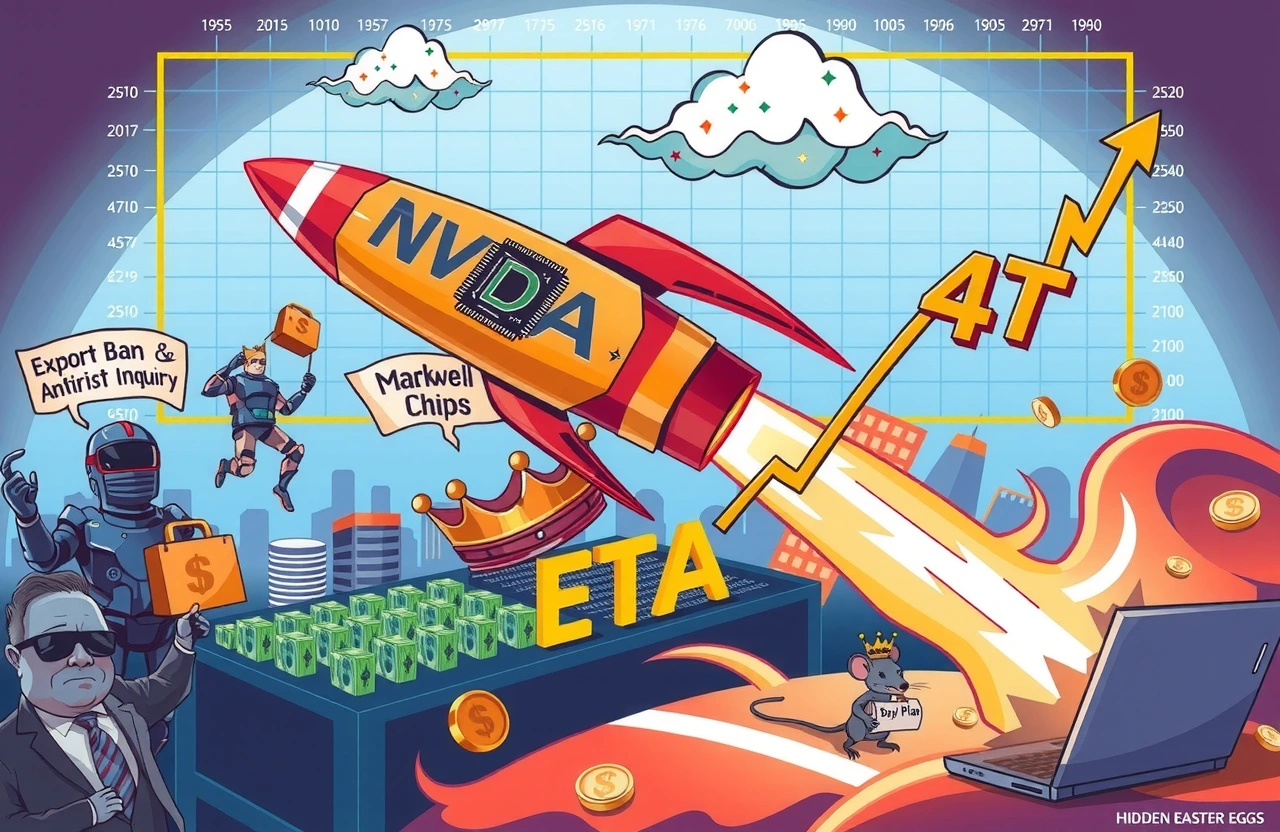
Nvidia’s stock hits new high after new high, propelling the AI chipmaker to a staggering $3.85 trillion market valuation. This milestone comes just days after it dethroned Microsoft to reclaim the title of world’s most valuable public company. Since April’s market dip, Nvidia shares have skyrocketed over 60%, fueled by unprecedented demand for artificial intelligence processors. The Nasdaq and S&P 500 both reached record levels alongside Nvidia’s surge, signaling broader market confidence in the AI revolution. With the $4 trillion threshold within reach, investors wonder how much higher this rocket can fly.
Breaking Records: The Path to Market Dominance
Nvidia’s stock hits new high territory repeatedly throughout June 2025, culminating in a historic market cap achievement. On June 25th, shares closed at record levels, pushing valuation to $3.76 trillion – surpassing Microsoft’s $3.66 trillion. This marked Nvidia’s return to the top spot after briefly holding the crown earlier in the year.
Technical Triumphs
The Nasdaq Composite’s breakthrough past its December 2024 peak to 20,311.51 points created ideal conditions for tech leaders. Meanwhile, the S&P 500’s 20% rebound since April provided tailwinds. Nvidia capitalized on this momentum, with its stock hitting new high marks in six of June’s final ten trading sessions. The company now represents nearly 7% of the entire Nasdaq index.
Growth Trajectory
Nvidia’s journey to this pinnacle includes:
- 60% share price appreciation since April lows
- First $1 trillion valuation reached in 2023
- $2 trillion milestone achieved in February 2025
- $3 trillion breached just three months later in May
Fueling the Fire: Catalysts Behind the Rally
Nvidia’s stock hits new high points thanks to converging technological and market forces. The AI boom shows no signs of slowing, with demand for advanced processors far outstripping supply.
Blackwell Architecture Revolution
The imminent mass production of Nvidia’s next-generation Blackwell chips represents a quantum leap. Early benchmarks show single-rack performance improvements up to 30x over previous systems. Tech giants are scrambling to secure supply before October’s full production launch, creating a feeding frenzy that pushes Nvidia’s stock to new highs.
Global GPU Arms Race
Major players are making unprecedented investments in Nvidia hardware:
- Meta plans 350,000 H100 chip deployment by year-end
- Elon Musk’s xAI placed emergency orders for 100,000 units
- Saudi Arabia announced $40 billion initiative for Nvidia-based supercomputing clusters
- Microsoft, Google and Amazon collectively ordered over 500,000 next-gen processors
Insider Activity: Executives Capitalize on Peak
As Nvidia’s stock hits new high levels, company leadership has engaged in substantial share sales. These transactions follow predetermined trading plans but raise eyebrows at current valuations.
CEO Jensen Huang’s (黄仁勋) Strategic Moves
SEC filings reveal Huang’s systematic divestment throughout June:
- June 20: Sold 50,000 shares worth $7.21 million
- June 23: Sold 50,000 shares worth $7.19 million
- June 24: Sold 50,000 shares worth $7.36 million
- June 25: Sold 75,000 shares worth $11.44 million
- June 26: Sold 75,000 shares worth $11.70 million
These sales totaling $44.9 million represent part of Huang’s 10b5-1 plan established in March, which schedules up to 6 million shares for sale through 2025. Such plans allow executives to sell predetermined amounts at set times, avoiding insider trading allegations.
Boardroom Exodus
Director Mark Stevens sold over 600,000 shares on June 18, netting $88 million. He’s halfway through a planned 4 million share divestment. Additionally, 14 key stakeholders sold 10.2 million shares collectively over three months. While not unusual during valuation peaks, the scale of selling warrants investor attention.
Storm Clouds: Challenges to Continued Dominance
Despite Nvidia’s stock hitting new high marks, significant headwinds could threaten its trajectory. The company faces multiple fronts of potential disruption.
Valuation Concerns
Nvidia trades at 50.1x forward earnings – substantially above Microsoft (38.1x) and Apple (30.9x). This premium reflects sky-high growth expectations. Should AI adoption slow or competition intensify, the valuation could prove unsustainable. History shows that companies reaching such extreme multiples often face painful corrections.
Regulatory Onslaught
Two major regulatory challenges loom:
- U.S. export restrictions neutered China-specific H20 chips, cutting performance by 50% in a crucial growth market
- EU antitrust regulators launched probe into Nvidia’s CUDA software ecosystem, potentially forcing architectural changes
Technological Disruption
Emerging computing paradigms threaten Nvidia’s hardware dominance:
- Quantum computing advances accelerate with Google and IBM breakthroughs
- Custom AI chips from Amazon, Google and Microsoft gain traction
- Open-source alternatives challenge CUDA’s industry stranglehold
Wall Street’s Verdict: The $6 Trillion Horizon
Despite challenges, major institutions remain overwhelmingly bullish. Loop Capital analyst Ananda Baruah recently set Wall Street’s highest price target at $250 per share, implying a staggering $6 trillion market cap.
The AI Spending Tsunami
Baruah projects generative AI and accelerated computing will drive $2 trillion in spending by 2028 across four key areas:
- Hyperscale cloud providers (AWS, Azure, GCP)
- Sovereign AI initiatives (national computing projects)
- Emerging cloud platforms
- Enterprise AI adoption
Growth Catalysts Ahead
Multiple near-term drivers could push Nvidia’s stock to new highs:
- October’s Blackwell chip production ramp
- Explosive growth in AI inference workloads
- AI factory deployments scaling globally
- Software ecosystem expansion beyond hardware
Navigating the AI Gold Rush
Nvidia’s stock hits new high territory amid one of history’s most remarkable corporate ascents. The company stands at a crossroads: regulatory threats and valuation concerns counterbalance unprecedented AI demand and technological leadership. While insider sales merit monitoring, the Blackwell architecture rollout and global GPU shortage create powerful tailwinds. For investors, maintaining exposure to the AI revolution remains crucial, but diversification across the ecosystem provides stability. Monitor quarterly data center revenue growth and Blackwell adoption rates as key indicators. As AI transforms every industry, position your portfolio for this technological watershed moment – but maintain prudent risk management amid the euphoria.