



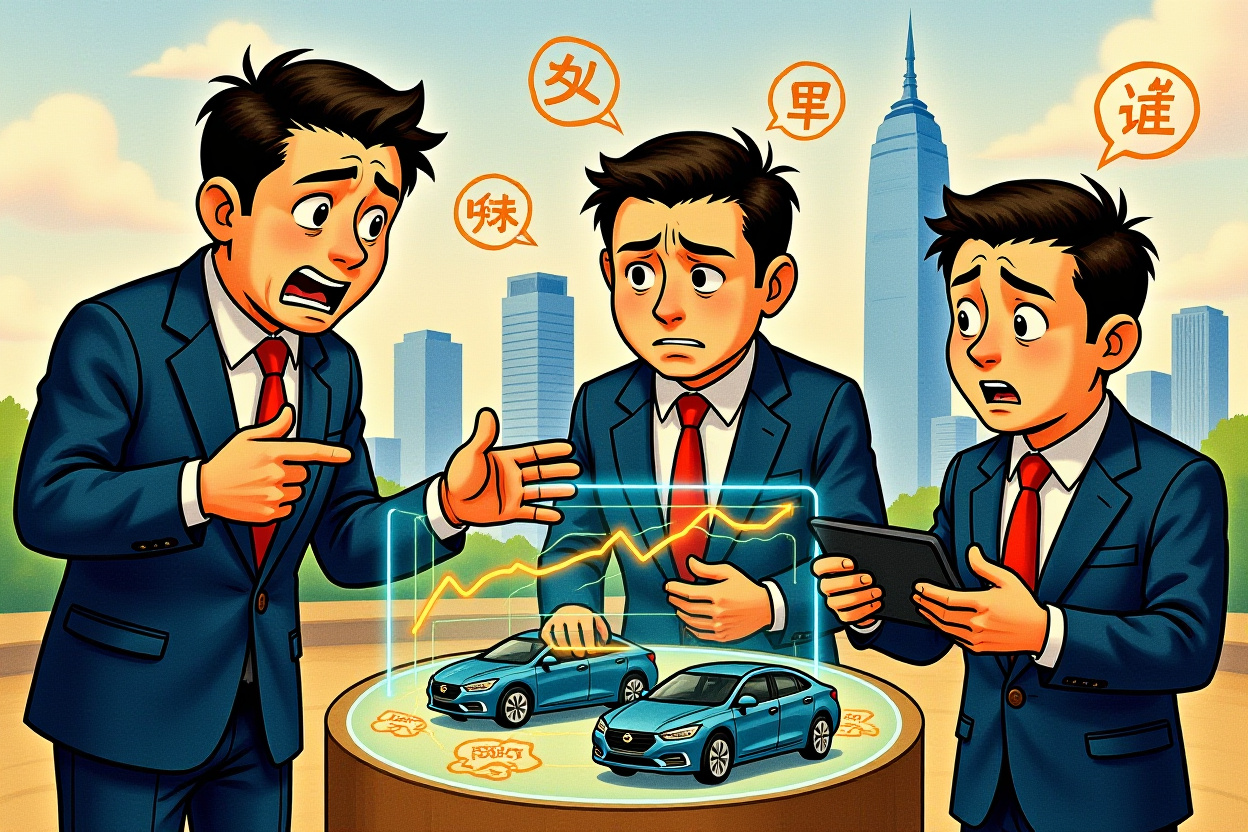
China’s electric vehicle market is witnessing an unprecedented shift as its three most prominent homegrown EV makers—NIO, XPeng, and Li Auto—abandon long-held pricing strategies in a bid to stay competitive. Once celebrated as pioneers of the country’s EV revolution, these companies are now slashing prices across their lineups, signaling a new phase of intense market pressure and strategic recalibration. This article explores the reasons behind this dramatic turn, its implications for consumers and investors, and what the future may hold for China’s EV industry.
Breaking the Price Floor: A Strategic U-Turn
For years, NIO, XPeng, and Li Auto positioned themselves as premium brands, often drawing comparisons to established global giants like BMW and Tesla. However, recent market dynamics have forced a stark reversal.
NIO’s LeDao and Mainline Models
NIO’s sub-brand LeDao has emerged as a volume driver, with the L60 model now accessible at around ¥150,000 when opting for the Battery-as-a-Service (BaaS) rental plan. Even its flagship L90 model sits in the ¥200,000 range, underscoring a sharp pivot toward affordability. More strikingly, NIO’s core models have followed suit. The third-generation ES8, once a premium offering, now starts at just over ¥300,000 with BaaS—a significant reduction from previous iterations.
Li Auto’s Aggressive Revisions
Li Auto’s pure electric i8 SUV launched with disappointing reception, prompting an urgent price cut to ¥339,800. The company also simplified its trim offerings and added premium features as standard, acknowledging missteps in its initial strategy. The upcoming i6 model is expected to push prices even lower, potentially undercutting Li Auto’s own L6 model.
XPeng’s Deep Cuts
XPeng moved early and aggressively, with the MONA M03 now priced between ¥110,000–140,000, placing it in direct competition with mass-market brands like BYD and Geely. The new P7, once a ¥400,000+ vehicle, now starts at ¥219,800 while offering improved specifications.
Why the Sudden Shift?
The collective move to lower price points is not a voluntary gesture but a response to mounting pressures.
Fierce Competition
– Huawei’s Aito brand and Xiaomi’s SU7 have captured significant consumer attention and orders.
– BYD and Geely continue to dominate the affordable EV segment.
– Traditional automakers are launching competitive electric models with aggressive pricing.
Financial and Operational Strain
– Deliveries have slowed for all three companies.
– Profit margins are under severe pressure.
– Investors are growing impatient with cash burn and lack of profitability.
Implications of the Price War
Lower prices may boost short-term sales, but they come with long-term risks.
Brand Perception
Consumers who bought into the premium image of these brands may feel alienated, especially as resale values plummet.
Profitability Challenges
While volume may increase, thinner margins could make it harder for these companies to achieve profitability—a critical goal for sustainability.
Market Consolidation
As price wars intensify, smaller EV makers may struggle to survive, leading to further industry consolidation.
What’s Next for NIO, XPeng, and Li Auto?
The path forward is fraught with challenges.
Innovation vs. Affordability
These companies must balance cost-cutting with continued investment in R&D to stay technologically relevant.
Global Ambitions
Price reductions in China could affect how these brands are perceived internationally as they expand into markets like Europe and Southeast Asia.
Leadership Under Pressure
Executives like Li Bin (李斌), He Xiaopeng (何小鹏), and Li Xiang (李想) are facing some of the toughest decisions of their careers.
Survival of the Fittest
The EV market in China is entering a Darwinian phase where only the most efficient and adaptable players will thrive. NIO, XPeng, and Li Auto have taken a bold step by breaking their own price floors, but the real test lies ahead. Can they sustain growth, achieve profitability, and retain consumer trust amid cutthroat competition? For now, one thing is clear: the era of easy growth is over, and the battle for EV supremacy is just beginning.
If you’re considering buying an electric vehicle, now may be an ideal time to explore options—but keep a close eye on how these brands evolve in the coming months.