



Executive Summary
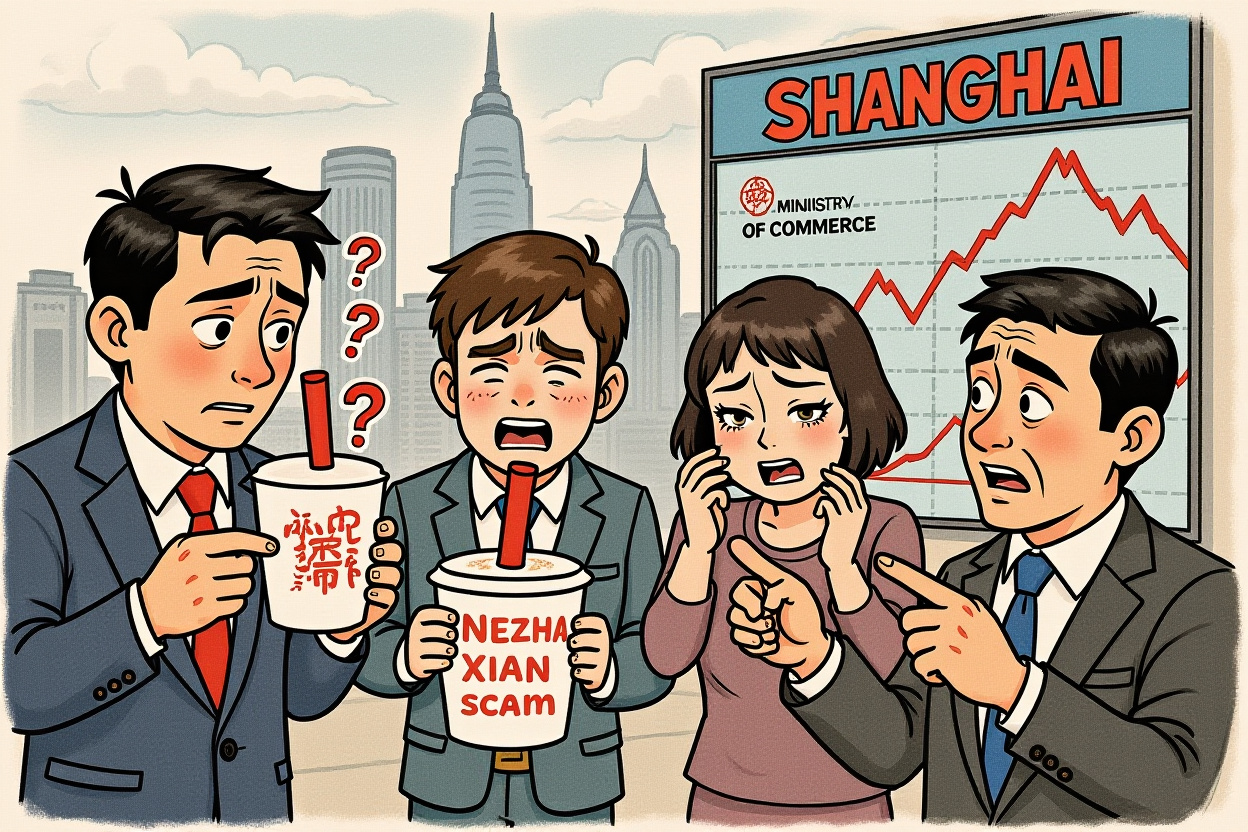
Key insights from the Nezha Xian Yin phenomenon:
- Nezha Xian Yin has gained notoriety for challenging established players like Mixue Ice City, but its business model raises serious red flags for investors.
- The brand’s corporate background involves deregistered entities and opaque ownership changes, highlighting regulatory risks in China’s franchise sector.
- Franchisees face high costs and poor support, with many falling victim to fast-join scams that promise low barriers to entry.
- International investors must enhance due diligence to navigate similar pitfalls in China’s rapidly evolving consumer markets.
- The case underscores the importance of verifying特许经营 (franchise) licenses and avoiding hype-driven investment decisions.
The Viral Rise of Nezha Xian Yin in China’s Bubble Tea Wars
In the hyper-competitive landscape of China’s bubble tea industry, a new contender has captured public attention—not for its quality, but for its audacity. Nezha Xian Yin (哪吒仙饮), a relatively unknown brand, has dared to position itself against giants like 蜜雪冰城 (Mixue Ice City), sparking a wave of online mockery and investor curiosity. This phenomenon reflects broader trends in Chinese consumer markets, where viral sensations can quickly influence market sentiment and investment flows. For global investors monitoring 中国股市 (Chinese equity markets), understanding the dynamics behind such brands is crucial to identifying genuine opportunities versus speculative bubbles.
The story of Nezha Xian Yin began with social media users coining exaggerated titles like ‘the true new emperor of bubble tea’ and ‘the only deity in the sweet beverage world.’ However, these accolades were steeped in irony, as netizens highlighted the brand’s numerous flaws. From its name, which borrows from the popular film 哪吒之魔童降世 (Nezha: Birth of the Demon Child), to its加盟 (franchise) model, Nezha Xian Yin became a case study in how not to build a sustainable business. Despite the humor, the underlying issues pose real risks for those considering investments in China’s food and beverage sector.
Online Mockery and Market Perception
Social media platforms have amplified the Nezha Xian Yin narrative, with users predicting the brand’s swift demise through memes and sarcastic endorsements. Comments like ‘I don’t love 沪上阿姨 (Hushang Auntie), 古茗 (Guming), 茶百道 (Cha Bai Dao), 雪王 (Snow King), 瑞幸 (Luckin Coffee), or 霸王茶姬 (Bawang Tea Ji)—I only want Nezha Xian Yin’ are typical of the反向安利 (reverse marketing) campaign that has gone viral. This digital frenzy has inadvertently boosted the brand’s visibility, but it has also exposed its lack of substance. For investors, such trends serve as a reminder that viral popularity does not equate to financial stability or sound business practices.
Data from 天眼查 (Tianyancha), a leading corporate information platform in China, reveals that Nezha Xian Yin’s parent company, 哪吒仙饮(山东)饮品集团有限公司 (Nezha Xian Yin (Shandong) Beverage Group Co., Ltd.), was deregistered in December 2024. This development underscores the importance of verifying corporate credentials before committing capital. As one industry expert noted, ‘In China’s fast-moving consumer goods sector, due diligence is not optional—it’s a necessity to avoid costly mistakes.’
Corporate Background and Regulatory Red Flags
Behind the viral facade of Nezha Xian Yin lies a tangled web of corporate entities that should raise concerns for any astute investor. The original company, 哪吒仙饮(山东)饮品集团有限公司 (Nezha Xian Yin (Shandong) Beverage Group Co., Ltd.), was owned by 济南坤祥新材料有限公司 (Jinan Kunxiang New Materials Co., Ltd.), a firm with no apparent connection to the food and beverage industry. This disconnect between ownership and operations is a common red flag in schemes designed to exploit unsuspecting franchisees. Moreover, the current entity promoting加盟 (franchise) opportunities, 杭州风火轮餐饮管理有限公司 (Hangzhou Feng Huo Lun Catering Management Co., Ltd.), has its own set of issues.
According to 天眼查 (Tianyancha), 杭州风火轮餐饮管理有限公司 (Hangzhou Feng Huo Lun Catering Management Co., Ltd.) reported zero social security contributions in 2024, indicating a lack of legitimate employees. This ‘ghost company’ status, combined with frequent ownership changes—such as the shift from 浙江鹏展文化创意有限公司 (Zhejiang Pengzhan Cultural Creativity Co., Ltd.) to individual shareholder 黄汉国 (Huang Hanguo)—suggests a pattern of evasion rather than growth. In June 2025, the company rebranded from 杭州勇慧餐饮管理有限公司 (Hangzhou Yonghui Catering Management Co., Ltd.) to its current name, shortly before announcing a 10 million yuan angel round funding. However, investigations revealed that its flagship store in Hangzhou had been shut down by mall management for not conducting genuine business, further eroding credibility.
Lack of Transparency and Compliance Issues
The case of Nezha Xian Yin highlights critical gaps in China’s regulatory framework for特许经营 (franchise) operations. Under Chinese law, companies engaging in franchising must obtain a特许经营备案 (franchise filing) from the 商务部 (Ministry of Commerce). However, many fast-join operators bypass these requirements, relying on deceptive marketing instead. For instance, Nezha Xian Yin’s加盟 (franchise) fees reportedly reach 138,000 yuan, with additional costs for equipment and materials pushing total investments over 200,000 yuan. Yet, franchisees often receive little to no support, as seen in cases where locations are chosen in abandoned malls with minimal foot traffic.
Investors should note that the 中国证监会 (China Securities Regulatory Commission) and 国家市场监督管理总局 (State Administration for Market Regulation) have stepped up efforts to curb such practices, but enforcement remains challenging in a rapidly expanding market. As one regulatory official stated, ‘We urge investors to verify特许经营资质 (franchise qualifications) through official channels and avoid deals that seem too good to be true.’ For those eyeing Chinese equities in the consumer sector, this advice is paramount to mitigating risks.
The Fast-Join Scam Model in China’s Bubble Tea Industry
Fast-join scams, or快招 (kuai zhao) schemes, have proliferated in China’s bubble tea market, capitalizing on the industry’s rapid growth and high consumer demand. These operations typically involve creating a ‘pseudo-brand’ with catchy names and copied packaging, then using high-pressure sales tactics to lure franchisees. Nezha Xian Yin exemplifies this model, with招商 (recruitment) agents often misleading prospects by claiming it is a sub-brand of established players like 蜜雪冰城 (Mixue Ice City). This deception preys on the认知缺口 (knowledge gap) among first-time entrepreneurs, particularly in lower-tier cities where economic opportunities are scarce.
Data from industry reports indicate that the bubble tea market in China is valued at over 100 billion yuan, with brands like 蜜雪冰城 (Mixue Ice City) and 喜茶 (Heytea) dominating. However, the allure of quick profits has made the sector a breeding ground for fraud. Fast-join companies often promise comprehensive support—including site selection, training, and marketing—but deliver minimal assistance once fees are paid. For example, one Nezha Xian Yin franchisee reported daily sales of only 300-400 yuan after investing 400,000 yuan, a stark contrast to the projected returns. Such cases underscore the need for investors to scrutinize business models beyond surface-level hype.
Case Studies of Affected Franchisees
Real-world examples illustrate the human cost of fast-join scams. In a live broadcast with blogger 勇哥餐饮创业说 (Yongge Catering Entrepreneurship Talk), a self-described ‘rich second generation’ franchisee shared that his Nezha Xian Yin store generated 1,300 yuan in daily sales only through aggressive promotions like ‘buy one get one half-off’ and scratch cards. Without these incentives, revenue plummeted to zero. Despite advice to pursue legal action, the franchisee expressed reluctance, reflecting a common psychological barrier among victims who blame themselves rather than the schemers.
Another case involved a middle-aged woman who invested 400,000 yuan after being told the brand had deep ties to the Nezha IP. Her store was located in a defunct shopping mall, resulting in abysmal sales and eventual closure. These stories highlight the importance of实地考察 (on-site inspections) and independent verification before investing. As 勇哥 (Yongge) emphasized in his直播 (live stream), ‘Entrepreneurs must look beyond the glossy brochures and assess the long-term viability of any franchise opportunity.’
Investment Risks and Due Diligence for Chinese Equities
For institutional investors and fund managers, the Nezha Xian Yin saga offers valuable lessons in risk management within Chinese capital markets. The brand’s rise and potential fall mirror broader vulnerabilities in sectors driven by consumer trends and speculative investment. Key risks include regulatory non-compliance, corporate governance issues, and market saturation. In 2024, the 中国连锁经营协会 (China Chain Store and Franchise Association) reported a 15% increase in complaints related to franchise fraud, signaling a need for heightened vigilance.
To mitigate these risks, investors should adopt a multi-faceted due diligence approach. This includes verifying特许经营备案 (franchise filings) with the 商务部 (Ministry of Commerce), analyzing financial statements through platforms like 天眼查 (Tianyancha), and assessing market positioning against competitors. For instance, while 蜜雪冰城 (Mixue Ice City) requires significant capital and rigorous screening for加盟 (franchisees), it offers proven systems and support—a contrast to the empty promises of fast-join brands. Additionally, monitoring regulatory updates from bodies like the 国家市场监督管理总局 (State Administration for Market Regulation) can provide early warnings of emerging threats.
Identifying Red Flags in Franchise Models
Common warning signs in franchise investments include unrealistically low barriers to entry, vague operational support, and frequent corporate restructuring. In the case of Nezha Xian Yin, the lack of a functional website, zero employee social security contributions, and abrupt ownership changes all point to a unsustainable business model. Investors should also be wary of claims tying brands to popular IPs without verified licensing agreements, as these can lead to legal disputes and reputational damage.
Statistical evidence from the 中国饮料工业协会 (China Beverage Industry Association) shows that bubble tea brands with solid foundations typically achieve breakeven within 6-12 months, whereas fast-join operations often collapse within three. By incorporating these metrics into investment analyses, stakeholders can make more informed decisions. As one seasoned fund manager noted, ‘In China’s equity markets, the flashiest opportunities often carry the highest risks—due diligence is your first line of defense.’
Market Implications and Future Outlook
The Nezha Xian Yin phenomenon is more than a cautionary tale; it reflects evolving dynamics in China’s consumer and investment landscapes. As the country’s middle class expands and disposable incomes rise, demand for trendy beverages like bubble tea will continue to grow. However, this growth attracts both legitimate operators and opportunistic fraudsters. For international investors, understanding these nuances is essential to capitalizing on genuine opportunities while avoiding pitfalls.
Looking ahead, regulatory bodies are likely to intensify scrutiny of特许经营 (franchise) models, potentially leading to stricter licensing requirements and penalties for non-compliance. Brands that prioritize transparency and sustainability, such as 蜜雪冰城 (Mixue Ice City) and 奈雪的茶 (Nayuki’s Tea), are better positioned for long-term success. Meanwhile, the fallout from Nezha Xian Yin may prompt a market correction, weeding out weak players and reinforcing the importance of ethical business practices. Investors should monitor these trends closely, as they could influence sector valuations and merger activity.
Lessons for International Investors
Key takeaways from the Nezha Xian Yin case include the importance of grassroots market research, the value of local partnerships, and the need to look beyond viral trends. By engaging with on-the-ground experts and leveraging data analytics, investors can identify brands with solid fundamentals rather than fleeting popularity. Additionally, diversifying portfolios across multiple consumer segments can reduce exposure to sector-specific risks.
The bubble tea market in China remains a promising arena, but it requires a disciplined approach. As the global investment community deepens its engagement with Chinese equities, stories like Nezha Xian Yin serve as reminders that success hinges on thorough analysis and strategic patience. By applying these principles, stakeholders can navigate the complexities of China’s capital markets and achieve sustainable returns.
Navigating the Bubble Tea Investment Landscape
The rise and scrutiny of Nezha Xian Yin underscore critical lessons for investors in Chinese consumer markets. While viral sensations can create short-term opportunities, long-term value depends on robust business models, regulatory compliance, and genuine consumer demand. The fast-join scams associated with brands like Nezha Xian Yin highlight the risks of inadequate due diligence and the perils of chasing quick profits in emerging sectors.
As China’s economy continues to evolve, investors must prioritize transparency and sustainability in their portfolios. By conducting thorough research, verifying corporate credentials, and staying informed about regulatory developments, you can avoid the pitfalls that have ensnared many Nezha Xian Yin franchisees. Take action today: review your investment strategies, consult with local experts, and ensure that your approach to Chinese equities is both informed and resilient. The future of bubble tea investing holds promise, but only for those who navigate it with care and insight.