



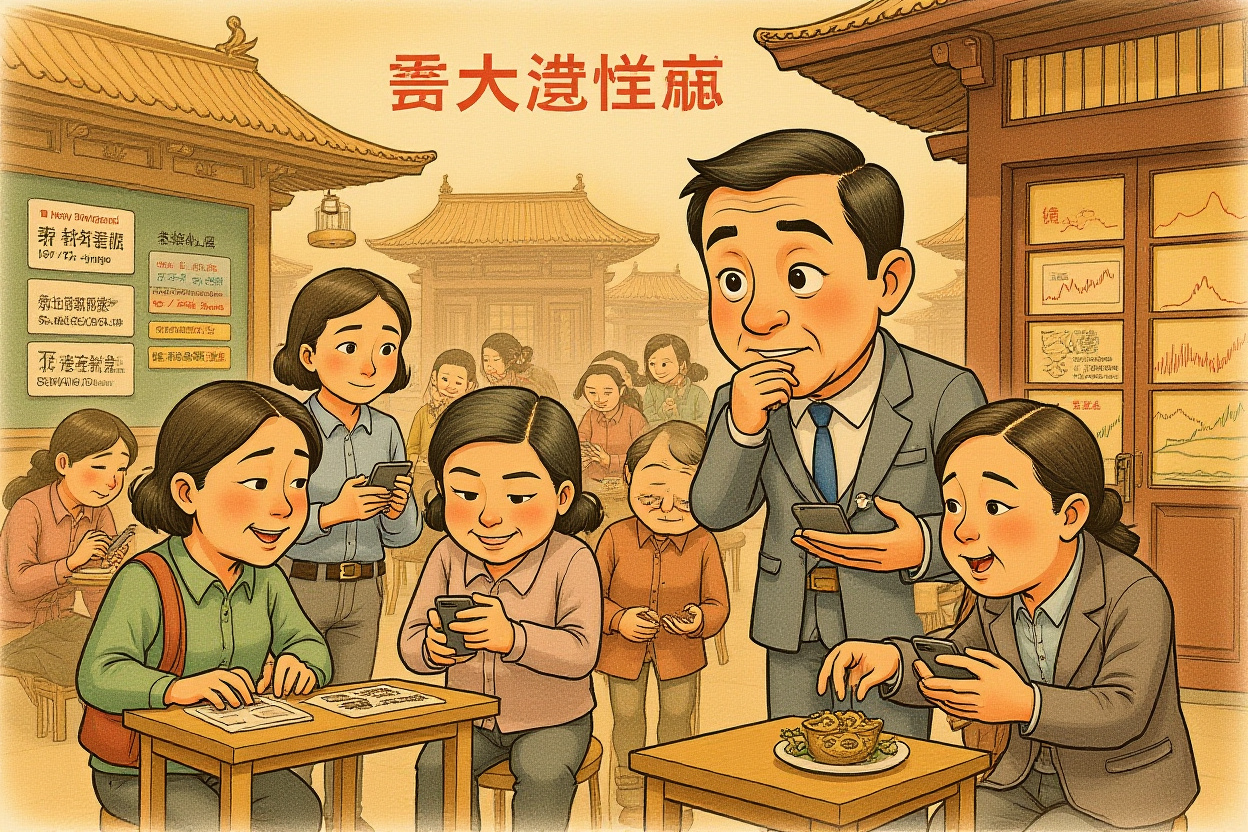
– New Oriental Education (新东方), under founder Yu Minhong (俞敏洪), has launched a retirement club in Beijing, marking a strategic pivot into the silver economy.
– The initiative offers low-cost interest courses and social activities for seniors, leveraging New Oriental’s educational resources and brand trust.
– This move aligns with New Oriental’s search for new growth drivers, as the silver economy in China is projected to be a trillion-dollar market.
– Competition is intensifying, with players like Angli Education and online platforms, but New Oriental’s established infrastructure provides a competitive edge.
– Success hinges on understanding fragmented elderly needs and balancing standardization with customization in service delivery.
In a strategic shift that underscores the growing importance of the silver economy, New Oriental Education (新东方) is quietly targeting China’s elderly population with a new retirement club initiative. Spearheaded by founder Yu Minhong (俞敏洪), this move taps into the lucrative market of retirees seeking enrichment and social connection, as the company diversifies beyond its core education and retail businesses. With China’s aging population exceeding 320 million, the silver economy represents a vast opportunity for growth-savvy firms. New Oriental’s foray into this space signals a calculated bet on demographic trends, aiming to replicate its past success in new domains. This article explores the implications for investors and the broader market.
New Oriental’s Retirement Club: A Calculated Entry into the Silver Economy
The launch of the “Beijing New Oriental Retirement Club” on social platforms like Xiaohongshu and Douyin represents a well-orchestrated move into the silver economy. Yu Minhong (俞敏洪) has personally overseen this project for six months, with weekly closed-door meetings emphasizing its strategic priority. The club targets individuals aged 50-75 in Beijing, offering free online courses and affordable offline experiences at 19.9 yuan, covering activities from mobile photography to traditional exercises like Baduanjin.
Strategic Preparation and Service Design
New Oriental’s approach is rooted in its educational expertise, designed to meet retirees’ core demands for mental stimulation and social interaction. The service model revolves around three pillars: local social events, interest-based courses, and health wellness programs. For instance, activities are led by younger “playmates” from the 80s and 90s generations, fostering intergenerational engagement. This design minimizes entry barriers, with material fees capped at 500 yuan for courses like handicrafts, making it accessible compared to traditional elderly education providers.
Initial Market Response and User Engagement
Financial Context: Why New Oriental is Betting on the ElderlyNew Oriental’s pivot into the silver economy comes amid robust financial performance, yet the need for sustainable growth drivers persists. In Q2 of fiscal 2026, New Oriental reported a 244.4% surge in operating profit, with domestic new businesses like non-academic tutoring growing by 21.6%. Simultaneously, its subsidiary Oriental Selection achieved a net profit of 239 million yuan, turning profitable. These gains, however, mask underlying challenges in technology reliance and retail scalability, pushing the firm to seek stable secondary growth curves.
Recent Performance and Growth Pressures
The Silver Economy as a Second Growth CurveThe Silver Economy Landscape: Opportunities and CompetitionChina’s silver economy is rapidly evolving, driven by demographic shifts and changing consumer preferences among “new elderly” cohorts—those born in the 1960s to 1980s. According to the Tongcheng Travel “2025 Silver Hair Group Travel Consumption Trend Report,” seniors spend 30% more on accommodation than younger groups, highlighting their purchasing power. This trend extends beyond travel to include lifelong learning and social activities, creating a market gap that traditional elderly care fails to address.
Market Size and Demographic Trends
Key Players and Existing ModelsChallenges and Differentiators for New OrientalWhile New Oriental holds advantages in brand recognition and resource reuse, its success in the silver economy is not guaranteed. The company lacks systemic experience in elderly services, and the heterogeneous needs of retirees—varying by age, region, and health status—pose operational complexities. For example, as noted by Qingyun, founder of the Tukaiixin Silver Age Club, southern retirees may prefer novel experiences like script-killing games, whereas northerners lean toward cultural depth, highlighting the necessity for localized adaptation.
Leveraging Brand Trust and Existing Resources
Addressing Service Gaps and Operational HurdlesFuture Outlook: Standardization vs. Customization in the Silver EconomyThe silver economy is poised for bifurcated growth, with large firms like New Oriental driving standardization while smaller entities fill niche gaps. Qingyun predicts a coexistence of “small and beautiful” clubs with standardized chains, where collaboration across sectors—such as healthcare, real estate, and tourism—will unlock new revenue streams. For New Oriental, the retirement club initiative could set industry benchmarks, but its long-term impact depends on capturing the essence of retirees’ desires for a meaningful “second youth.”