



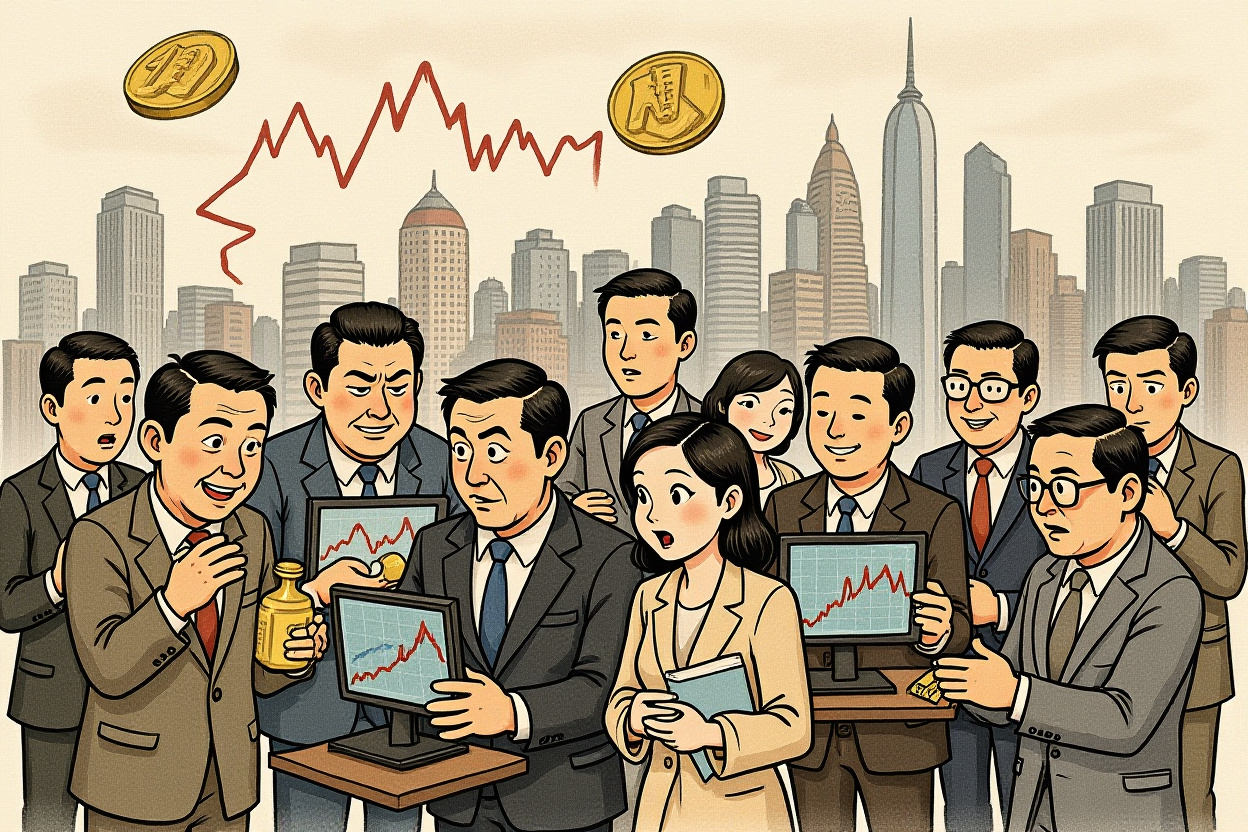
The Unprecedented Surge in Precious Metals
Global markets are witnessing one of the most turbulent periods for precious metals in decades, with gold and silver price volatility reaching historic levels. According to the World Gold Council (世界黄金协会), 2024 marks the largest annual gold price increase since 1979, with prices soaring over 60% year-to-date. The intensified gold and silver price volatility during the traditional ‘Golden September and Silver October’ season has left investors and analysts scrambling to adapt to rapid market shifts.
This gold and silver price volatility isn’t just numbers on a screen—it’s affecting real portfolios and investment strategies worldwide. The dramatic swings have created both significant opportunities and substantial risks for market participants, from individual retail investors to institutional players and central banks.
Historical Context and Current Trends
The current gold and silver price volatility represents a departure from historical patterns. Since 2000, London gold spot prices have averaged approximately 10.21% annual gains, with only 2007 exceeding 30% growth. The current surge is unprecedented in both scale and velocity.
International gold prices climbed from $1,000 to $2,000 per ounce over 12 years, then from $2,000 to $3,000 in just over four years. The jump from $3,000 to $4,000 occurred in merely six months, highlighting the accelerated pace of recent gold and silver price volatility.
Drivers Behind the Rally
Multiple factors have converged to create the perfect storm for gold and silver price volatility. Zhu Zhigang (朱志刚), Vice President and Chief Analyst of the Guangdong Gold Association (广东省黄金协会), identifies several key drivers: ‘Global trade tensions have intensified market避险需求 (risk aversion needs), positioning gold as the ultimate safe-haven asset. Geopolitical tensions, Federal Reserve interest rate cuts, Sino-US trade negotiations, and continuous central bank gold purchases have collectively propelled this bull market.’
Silver has followed a similar trajectory, with Goldman Sachs (高盛) reporting in their October 12 analysis that concerns about potential US tariff increases triggered significant silver flows from London to US markets, depleting London inventories and driving prices higher.
Market Reactions and Investor Experiences
The extreme gold and silver price volatility has triggered diverse responses across market segments. Retail investors, institutional players, and industry participants have all been forced to recalibrate their strategies in response to the rapidly changing landscape.
This gold and silver price volatility has separated opportunistic investors from those caught unprepared, with outcomes ranging from substantial gains to significant losses within remarkably short timeframes.
Stories from Retail Investors
The human impact of gold and silver price volatility is evident in investor experiences. Meng Li (梦璃), a first-time gold investor, decided to ‘board the train’ when domestic gold prices breached the 1,000 yuan per gram threshold. ‘I did extensive research and believed prices could reach 1,200 yuan per gram long-term, so I invested 200,000 yuan in virtual gold without hesitation,’ she shared.
However, the gold and silver price volatility quickly turned against her. ‘The next day prices fell, and over the following week, I checked price movements dozens of times daily. Watching daily losses exceeding 1,000 yuan, I lost nearly several thousand yuan within a week. The psychological pressure became unbearable, and I exited my positions.’
In contrast, Jie Ning (杰宁) entered the market mid-year when prices hovered around 800 yuan per gram. Despite two significant corrections pushing prices below 700 yuan, she maintained her positions. ‘I treat it as savings. When prices broke 1,000 yuan, my profits reached over 9,000 yuan, though they’ve since corrected to 5,000-6,000 yuan.’
Impact on Gold Recycling and Retail
The gold and silver price volatility has also stimulated activity in secondary markets. Mr. Chen (陈先生), a gold recycling professional, notes increased transactions: ‘Recently, we’ve seen noticeably more clients selling heavy gold jewelry items—typically wedding bracelets and necklaces purchased three to five years ago at 200-300 yuan per gram. These clients typically sell 50-60 grams at once, believing prices have peaked.’
Similar patterns emerged in silver markets, with some consumers reporting substantial paper losses shortly after purchasing physical silver, creating hesitation about continued holding during periods of intense gold and silver price volatility.
Analysis of Market Dynamics and Expert Perspectives
Understanding the forces driving gold and silver price volatility requires examining both macroeconomic factors and market-specific dynamics. The convergence of global economic uncertainty, monetary policy shifts, and industrial demand has created a complex web of influences on precious metal valuations.
This gold and silver price volatility reflects broader market uncertainties and shifting investment paradigms that extend beyond traditional safe-haven asset behavior.
Central Bank Strategies and Gold Accumulation
Central bank activity has been a significant contributor to gold and silver price volatility. The People’s Bank of China (中国人民银行) has continuously increased gold reserves for eleven consecutive months, with global central banks following similar strategies. By September end, China’s gold reserves reached approximately 2,300 tons, with expectations for further expansion.
Zhu Zhigang (朱志刚) emphasizes the strategic importance: ‘In the process of RMB internationalization, gold’s背书作用 (endorsement role) is crucial. The central bank’s continuous gold purchases, partly through reducing US Treasury holdings, genuinely require gold as credit support.’
Silver’s Unique Position in the Volatility Equation
While often overshadowed by gold, silver has demonstrated even more dramatic gold and silver price volatility in certain periods. Historically valued 5-8% below gold’s performance, silver began outperforming gold following the popularity of ‘Trump TACO trades’ in May, with year-to-date increases exceeding 70%.
Zhu Zhigang (朱志刚) notes silver’s dual character: ‘Silver remains偏向于工业金属的属性 (biased toward industrial metal properties), with participation mainly from upstream and downstream industry chains and large investment institutions. Particularly in photovoltaic and battery sheet industries, silver serves as core material.’ He believes silver remains undervalued with significant potential upside, despite the current gold and silver price volatility.
Investment Strategies for Volatile Markets
Navigating the current gold and silver price volatility requires disciplined approaches and risk-aware positioning. The extreme price movements have created both danger and opportunity, demanding sophisticated strategies from market participants.
Successful navigation of gold and silver price volatility depends on understanding one’s investment horizon, risk tolerance, and the fundamental drivers behind price movements.
Risks and Opportunities in Current Conditions
The gold and silver price volatility presents distinct challenges for different market segments. Huang Cheng (黄成), operating a jewelry store in Guangzhou’s Daluo Jewelry City, explains the retail perspective: ‘A common misconception is that higher gold prices mean more profit for jewelry merchants. Actually, merchants maintain fixed inventory levels—I purchased 1,000 grams when entering the industry in 2018, replenishing based on daily sales. Raw material price changes don’t directly affect jewelry merchant profits.’
However, indirect effects are significant: ‘Rapidly rising gold prices suppress jewelry consumption, reducing our processing fee income. If prices fall sharply, merchants who stocked at high prices face asset depreciation. Some merchants invest directly, borrowing to buy gold for差价 (price differences), but unexpected price movements frequently cause failures.’
Expert Recommendations for Various Investor Profiles
Zhu Zhigang (朱志刚) offers strategic advice for navigating gold and silver price volatility: ‘Investment carries risk, and gold and silver price回调风险 (correction risk) cannot be ignored. Buying after corrections represents a better strategy, while chasing rallies carries certain risks. Investors should operate cautiously, avoiding追涨杀跌 (chasing rallies and selling dips).’
For investors with actual needs, he recommends: ‘- Long-term holding approaches – Small-amount, batch-by-batch purchasing methods – Focus on fashionable, exquisite gold product demand – Consideration of existing gold product reprocessing – Exploration of hard gold, ancient method gold, ‘pain gold’ or creatively enhanced small-weight, high-value-added gold products – Attention to silver bars and silver jewelry offerings’
Future Outlook and Market Guidance
The trajectory of gold and silver price volatility remains subject to numerous influencing factors, making precise predictions challenging. However, analyzing current trends and expert opinions provides valuable guidance for forward-looking investment decisions.
While short-term gold and silver price volatility may continue, understanding the fundamental drivers can help investors position themselves advantageously regardless of market direction.
Predictions and Market Sentiment Analysis
Zhu Zhigang (朱志刚) maintains a cautiously optimistic outlook: ‘The factors benefiting gold haven’t changed, and future uncertainty remains substantial, so gold still has significant upside potential. Short-term, gold has become oversold, creating potential for price corrections.’
World Gold Council (世界黄金协会) reports indicate that rising prices have driven explosive trading volume growth, with global gold market average daily transaction volume reaching $388 billion in September, a 34% month-over-month increase. This trading activity both responds to and contributes to ongoing gold and silver price volatility.
Strategic Considerations for Different Time Horizons
For long-term investors, the current gold and silver price volatility may represent noise in a broader upward trend. Historical patterns suggest that despite corrections, the fundamental case for precious metals remains strong given ongoing geopolitical tensions, monetary policy uncertainty, and central bank accumulation.
Short-term traders must develop sophisticated risk management strategies to navigate the gold and silver price volatility. Techniques might include: ‘- Setting strict stop-loss orders – Diversifying across precious metals – Monitoring geopolitical developments and central bank announcements – Maintaining liquidity to capitalize on correction opportunities – Avoiding over-leveraged positions given the unpredictability of price movements’
Synthesizing Market Intelligence for Informed Decisions
The dramatic gold and silver price volatility during the ‘Golden September and Silver October’ period has highlighted both the risks and opportunities in precious metal markets. Understanding the interplay between global economic factors, investor psychology, and market mechanics is essential for successful navigation of these turbulent conditions.
The extreme gold and silver price volatility has separated disciplined investors from impulsive speculators, reinforcing the importance of strategic positioning and risk management. While short-term movements may be unpredictable, the fundamental drivers supporting precious metal valuations—geopolitical uncertainty, monetary policy shifts, and industrial demand—suggest continued relevance in investment portfolios.
Moving forward, investors should monitor central bank policies, global trade developments, and technical indicators to anticipate potential shifts in gold and silver price volatility. Consider consulting with financial advisors specializing in commodity investments and maintaining diversified exposure to mitigate the impact of sudden price movements. The current environment demands vigilance, but also recognizes the enduring value proposition of precious metals in uncertain times.