



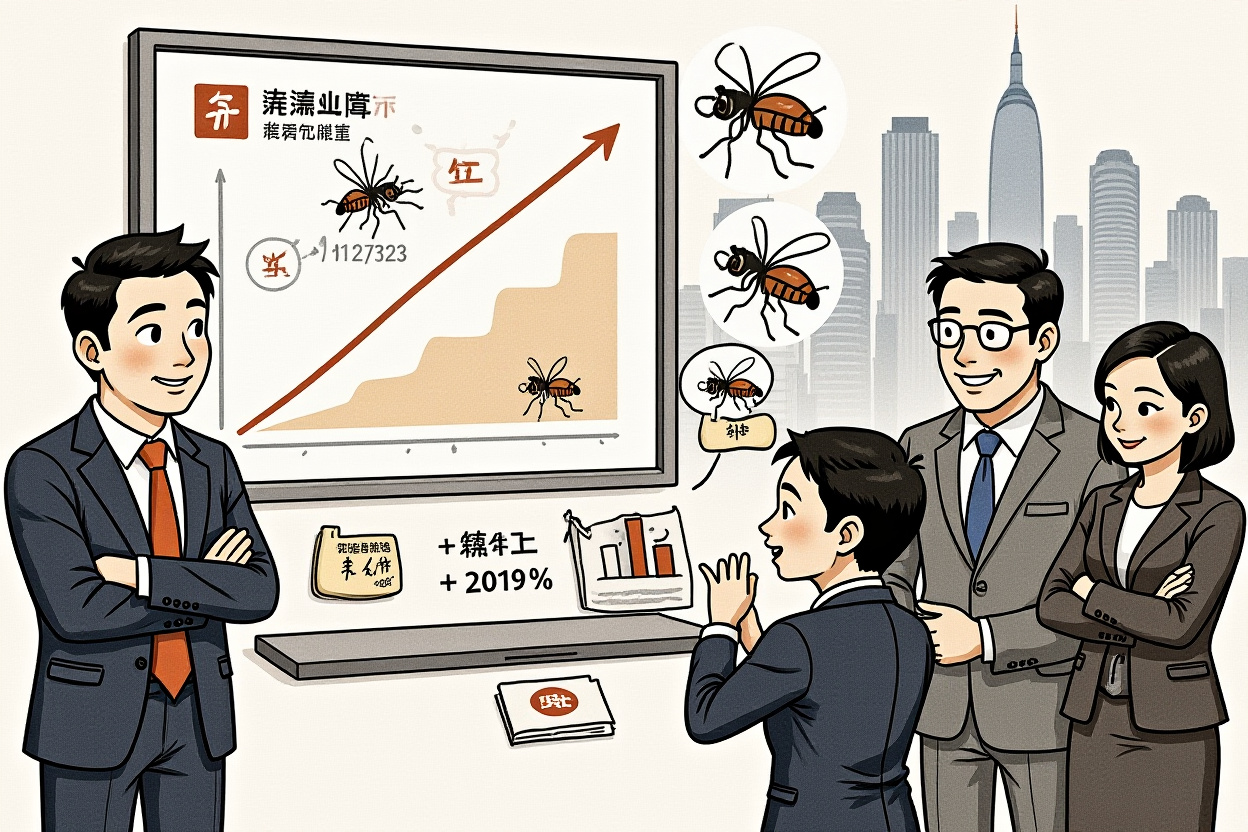
For investors tracking consumer goods and the broader FMCG (Fast-Moving Consumer Goods) sector in China, a persistent trend has emerged in a seemingly mundane product category: mosquito repellent. The sticker shock at the supermarket checkout for a bottle of repellent spray is not an illusion. Market data and retail audits confirm a startling trajectory where prices for leading brands have nearly doubled over the past four years, with steady annual increments becoming the norm. This price doubling in four years phenomenon transcends simple inflation and speaks to deeper currents within China’s manufacturing ecosystem, raw material dependencies, and evolving consumer markets. For portfolio managers and analysts, understanding the drivers behind this sustained price inflation offers a microcosmic view of broader pressures facing Chinese consumer brands, from cost structures to competitive moats and pricing power.
Executive Summary: The Core Drivers of Repellent Price Hikes
- The price doubling in four years is primarily fueled by volatile and rising costs of key active ingredients like pyrethroids, alongside broader petrochemical inputs for packaging.
- Supply chain disruptions, regulatory changes, and industry consolidation have empowered major brands to pass costs onto consumers with minimal pushback.
- Brands are strategically moving upmarket, using R&D in “green” formulas and child-safe products to justify premium pricing and enhance margins.
- Changing consumer behavior, driven by health consciousness and travel, has increased demand elasticity, making the category less price-sensitive.
- This trend presents a case study in the resilience and pricing power of established FMCG brands in China, with implications for related sectors like agrochemicals and packaging.
The Sting of Rising Costs: A Price Trajectory Unpacked
Walk down the aisle of any major Chinese supermarket or browse popular e-commerce platforms like 京东 (JD.com) or 天猫 (Tmall), and the trend is unmistakable. A standard 200ml bottle of a leading national brand like 雷达 (Raid) or 超威 (Chaowei) that retailed for approximately 15-18 RMB in 2019 now consistently carries a price tag of 28-35 RMB. This represents a compound annual growth rate in price well above the general consumer price index. This price doubling in four years is not an anomaly but a calculated response to a perfect storm of input cost pressures.
The increase is particularly pronounced during the peak summer season, but the baseline price has been ratcheted up year-on-year. Industry reports from entities like 中国日用杂品工业协会 (China Daily-Use Miscellaneous Goods Industry Association) indicate that the average factory-gate price for repellent liquids has increased by over 60% since 2020, with these increases being systematically passed through to the retail level.
Breaking Down the Bill of Materials
The core of the price surge lies in the bill of materials. Mosquito repellent efficacy hinges on active ingredients, predominantly synthetic pyrethroids like 氯氟醚菊酯 (meperfluthrin) and 四氟甲醚菊酯 (dimefluthrin). These are derived from complex chemical processes tied to the petrochemical and agrochemical industries.
- Raw Material Volatility: The prices of these intermediates have been highly volatile, influenced by environmental policies limiting chemical production, global supply chain bottlenecks, and fluctuations in crude oil prices. For instance, production cuts in key chemical zones to meet environmental targets have constrained supply, pushing prices up.
- Packaging Pressures: Beyond the formula, the aerosol canister itself—comprising aluminum, steel, and propellants—has seen significant cost increases. The global surge in metal prices and the rising cost of liquefied petroleum gas (LPG), a common propellant, have added substantial overhead. Data from 上海有色网 (SMM) shows aluminum prices have experienced major fluctuations, directly impacting canister costs.
Beyond Commodities: Structural and Regulatory Catalysts
While rising input costs provide the initial push, the ability for brands to execute a sustained price doubling in four years hinges on structural factors within the market and the regulatory landscape. The industry has evolved from a fragmented, highly competitive space to one dominated by a few powerful players with significant pricing power.
The competitive landscape is now characterized by deep moats. Giants like 上海庄臣 (SC Johnson, owner of 雷达 Raid) and 朝云集团 (Chaoyun Group, owner of 超威 Chaowei and 威王 Weiwang) benefit from massive scale, extensive distribution networks, and strong brand recognition. This market concentration means that when leading players raise prices, others can follow suit without triggering a price war, creating a new, higher industry price floor.
The Regulatory Thumb on the Scale
Government regulation has unintentionally contributed to this consolidation and pricing power. China’s stringent regulations on pesticide management classify many mosquito repellents as 卫生用农药 (sanitary pesticides), requiring brands to obtain official registration from the Ministry of Agriculture and Rural Affairs.
- High Barriers to Entry: The registration process is lengthy, technically demanding, and expensive, effectively blocking new, small-scale entrants from challenging the incumbents. This protects established brands from disruptive low-price competition.
- Formula Standards: Regulatory pushes for safer, more environmentally friendly formulas, while positive for consumers, require significant R&D investment. These costs are then factored into the pricing of new product lines, further elevating the average selling price across the category. The launch of “deuterated” or “green plant” based repellents often comes at a 30-50% premium to traditional products.
Brand Strategy: Repositioning from Commodity to Premium Care
Savvy brand managers have not merely been passive recipients of cost pressures; they have actively leveraged the situation to reposition their products and capture higher margins. The narrative has shifted from selling a basic chemical deterrent to marketing a product for family health and comfort, a far more defensible premium proposition.
This strategic repositioning is a textbook response to cost inflation: instead of competing on price, compete on perceived value. The price doubling in four years period has coincided with a marked shift in product innovation and marketing messaging.
The Premiumization Playbook
Leading companies are executing a clear premiumization strategy:
- Specialized Formulations: Introducing sub-brands or lines specifically for 婴幼儿 (infants & toddlers) or 孕妇 (pregnant women), using milder, often more expensive ingredients, and packaging them with clinical-looking designs to command a premium.
- Scent and Experience: Moving beyond the traditional medicinal smell to offer floral, fruity, or fragrance-free options, framing the product as part of a pleasant home environment rather than a necessary evil.
- Efficacy Marketing: Highlighting longer protection times (e.g., “up to 7 hours”) or broader-spectrum efficacy (e.g., “repels mosquitoes, flies, and moths”) to justify a higher price per use. Marketing campaigns now emphasize 安心 (peace of mind) and 守护 (protection).
An industry analyst from 中金公司 (China International Capital Corporation Limited) noted, “The leading players have successfully navigated from a cost-push to a value-pull pricing model. Consumers are now paying for trust, safety, and brand assurance, which gives these companies remarkable resilience in their margins.”
Consumer Behavior and Market Elasticity: Willingness to Pay
The ultimate test of any price increase is consumer acceptance. The sustained price doubling in four years indicates that demand for mosquito repellent in China has proven to be relatively inelastic within the new price bands. Several sociodemographic and behavioral trends underpin this willingness to pay.
First, rising health consciousness, amplified by public health campaigns, has elevated the perception of mosquito-borne diseases like dengue fever. Consumers view effective repellent as a non-negotiable health expenditure rather than a discretionary purchase. Second, the growth of domestic tourism and outdoor leisure activities has expanded the usage scenarios beyond the home, increasing overall consumption.
The Digital Commerce Effect
E-commerce and social commerce platforms have also played a role in mitigating price resistance.
- Bundled Sales and Promotions: While the MSRP rises, platforms frequently run sales events (e.g., 618, Double 11) where consumers can stock up at a slight discount, creating a perception of savvy shopping while still accepting a higher annual average price.
- Direct-to-Consumer (DTC) Education: Brands use live streaming and KOLs (Key Opinion Leaders) on platforms like 抖音 (Douyin) to educate consumers on the value of their advanced formulas, directly justifying the premium to a captive audience. A livestream by a popular “parenting expert” can effectively persuade millions to trade up to a child-safe variant.
Data from consumer surveys suggests that while consumers notice the price hikes, the absolute cost remains low enough relative to household income that it does not provoke a major switch to alternatives like mosquito coils or nets for most urban households. The convenience and efficacy of sprays and lotions uphold their market dominance.
Investment Implications and Forward-Looking Analysis
For the international investment community, the saga of the price doubling in four years for mosquito repellent is more than a consumer curiosity. It serves as a revealing case study with implications for capital allocation in Chinese equities and related sectors.
The demonstrated pricing power of dominant FMCG brands like those under 朝云集团 (Chaoyun Group, HKEX: 6601) highlights their resilience in an inflationary environment. Investors should scrutinize the margin profiles and brand equity of similar consumer staple companies. The ability to pass on cost increases without significant volume erosion is a key quality in a challenging macroeconomic climate.
Looking Down the Supply Chain
The trend also directs attention to upstream players:
- Agrochemical and Fine Chemical Producers: Companies that manufacture pyrethroids and other active ingredients, such as 扬农化工 (Jiangsu Yangnong Chemical Co., Ltd.) and 新安股份 (Wynca Group), are critical beneficiaries of sustained demand and pricing for their specialized outputs. Their financial performance is directly tied to the health of the repellent market.
- Packaging Specialists: Manufacturers of aerosol cans and valves may also see stable, inelastic demand from this and similar categories (e.g., air fresheners, disinfectants).
However, risks remain. The price doubling in four years cannot continue indefinitely without reaching a consumer breaking point. Potential regulatory interventions on pricing, a significant breakthrough in cheaper alternative technologies (e.g., new physical repellant devices), or a severe economic downturn that reshuffles household spending priorities could alter the current dynamic.
Synthesis and Strategic Outlook for Market Participants
The near-doubling of mosquito repellent prices in China is a multifaceted story driven by the confluence of tangible cost pressures, strategic industry consolidation, savvy brand repositioning, and shifting consumer priorities. It is a clear example of how commodity inflation can be absorbed and transformed into value-added growth by established market leaders with strong distribution and brand trust. The price doubling in four years is a testament to the inelastic nature of demand for health-related products in a growing, health-conscious consumer market.
For institutional investors, this trend underscores the importance of identifying FMCG companies with similar attributes: pricing power derived from brand strength, regulatory licenses, and market consolidation. It also suggests a need to monitor upstream agrochemical suppliers as integral parts of the consumer goods ecosystem. As climate change potentially expands the geographic range and season length for mosquitoes, demand fundamentals for the category remain strong.
The key takeaway is that in China’s evolving consumer landscape, even the most traditional product categories are not immune to rapid transformation. The ability to decode the underlying drivers of such changes—be it supply chain shifts, regulatory impacts, or consumer sentiment—provides a critical edge in making informed investment decisions in the dynamic Chinese equity market. The next step for analysts is to apply this framework to other seemingly mundane but essential consumer categories to uncover similar pockets of resilience and hidden value.